South Africa’s Avant-Garde Takes Center Stage as Maison&Objet 2026 Spotlights Seven Rising Design Talents

The twice-annual Maison&Objet design fair on the outskirts of Paris has long served as a vital barometer for global interiors, a sprawling convergence where trade buyers, international journalists, visionary architects, and interior designers comb through thousands of square meters of novelty. Within this often-overwhelming landscape, the fair’s "Rising Talent" exhibition offers a much-needed focal point. By curating a tight, cohesive showcase dedicated entirely to the burgeoning creative output of a single nation, Maison&Objet provides an unvarnished window into the future of international design.
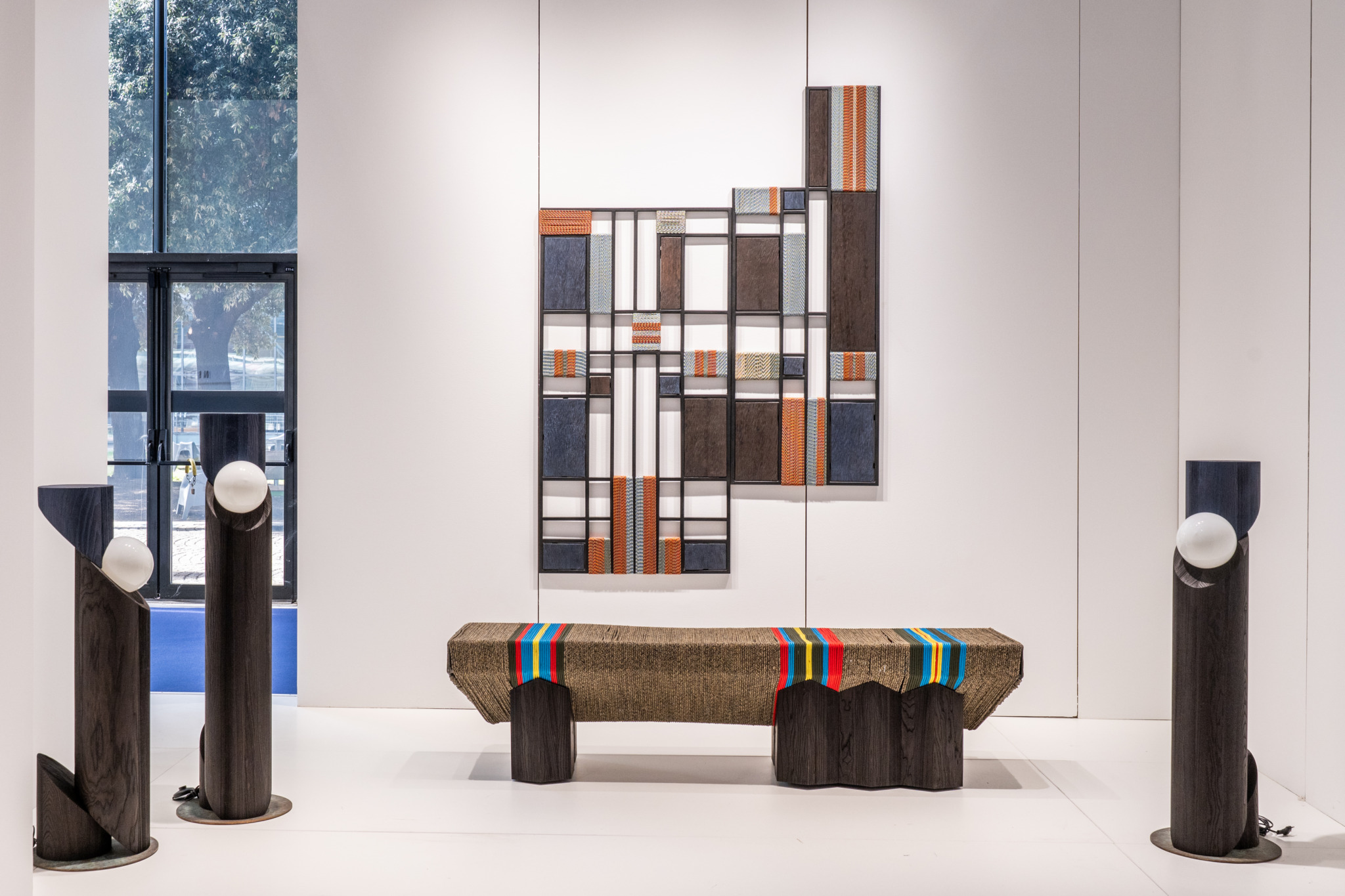
For the September 2026 edition, the international spotlight was beamed directly onto South Africa. Seven dynamic design studios and independent creators hailing from Johannesburg, Cape Town, Durban, Port Elizabeth, and beyond gathered in Paris to present a singular intersection of traditional craft, deep-rooted cultural heritage, and cutting-edge contemporary fabrication. Spanning bespoke furniture, tactile rugs, innovative lighting, and conceptual decorative objects, the showcase highlighted a generation of South African makers whose work is heavily informed by architectural rigor, generational histories, intense material curiosity, and, in some cases, direct environmental activism.
The Genesis of the Showcase: A Landmark Collaboration
The inclusion of South Africa’s design vanguard at Maison&Objet 2026 was not a random occurrence, but the result of a deliberate, strategic partnership between the Parisian trade show and Decorex Africa, the continent’s premier decor and design exhibition platform. This landmark collaboration was designed to bridge the gap between African creators and the lucrative European market, offering emerging artists unprecedented exposure to global distribution networks, high-end galleries, and international press.

Selecting the final roster of talent required a formidable panel of industry heavyweights. The 2026 Rising Talent Awards jury comprised Alan Hayward and Garreth Van Niekerk, co-artistic directors of Decorex Africa and 100% Design Africa; Juliet Kavishe, an acclaimed interior architect, design researcher, and academic; Thabisa Mjo, a celebrated South African furniture and lighting designer; and Donald Nxumalo, interior designer and creative director of Design Joburg 2020. Together, this committee scoured the country’s diverse urban centers to assemble a cohort that captures the true breadth of contemporary South African identity.
Meetlo Studio: Bridging Ancestral Customs and Modern Utility
Representing the bustling economic hub of Johannesburg, Oageng Manana and Tshegofatso Ramothibe of Meetlo Studio immediately commanded attention with their profound exploration of cultural continuity. The studio’s moniker is derived from an indigenous word meaning "customs and traditions," a conceptual framework that guides every piece they produce.

"We try to express our work through our African narrative and our cultural customs," Manana explains. "Our inspiration is drawn from how our indigenous people used to do things, and also the environment that is around us."
This philosophy materializes in striking creations such as the Abadimu server—a piece whose name translates to "for the ancestors." While paying homage to the wisdom and guidance of past generations, the studio maintains an unwavering commitment to functional utility, pairing elaborate, hand-carved wood elements with clean, modern silhouettes. Notably, Meetlo Studio maintains absolute control over its production pipeline, executing all carving and fabrication entirely in-house. This autonomy allows the founders to protect the cultural integrity of their work, ensuring that their narrative remains uncompromised as it translates to an international audience.

Studio Lloyd: Scaling Sculptural Resilience for the Residential Market
In Cape Town, Ashleigh Lloyd has spent years carving out a reputation for large-scale, high-impact installations tailored to the hospitality sector, including luxury eco-lodges and remote safari resorts. For Maison&Objet 2026, however, Studio Lloyd executed a strategic pivot, introducing a refined collection of limited-edition table and pendant lamps aimed squarely at the high-end residential market.
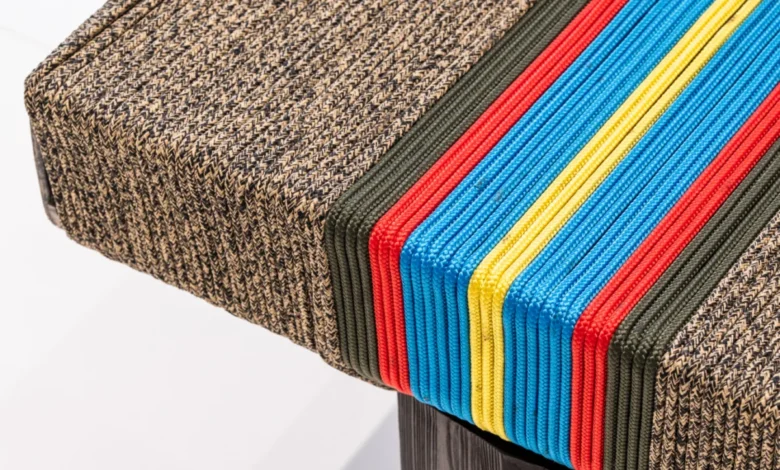
Known for utilizing industrial metals like aluminum and stainless steel wrapped in UV-protected, weather-resistant synthetic rope, Lloyd’s work sits at the intersection of architectural structure and textile art. Crucially, her creative process is deeply intertwined with community empowerment, specifically the support and upliftment of women artisans. By employing crochet—a technique historically marginalized as domestic "women’s work"—to shape rigid metallic structures, Lloyd produces pieces that challenge traditional hierarchies of craft.

"Crochet, through its natural flexibility, tactile quality, and almost meditative rhythm, offers a deeply human counterpoint to the rigidity of architectural lighting," Lloyd observes.
Simphiwe Mlambo: Weaving Personal History into Contemporary Forms
Also based in Cape Town, Simphiwe Mlambo brings a rigorous technical foundation to his independent studio practice. An interior design graduate of the Durban University of Technology with deep familial ties to the South African construction industry, Mlambo has spent years executing complex residential, commercial, and hospitality spaces since founding his practice in 2019.

For his Paris debut, Mlambo drew deeply personal inspiration from the grass mats meticulously woven by his late grandmother. Translating these nostalgic memories into a contemporary design vocabulary, he presented a series of benches that subtly evoke the structure of a traditional loom, wall panels referencing the woven texture of the mats, and ambient lighting designed to mirror the quality of light by which his grandmother worked.
"The whole idea is to take personal experiences and traditional techniques and translate them into a modern context," Mlambo states. While adapting traditional colorways for modern urban interiors, his work retains a palpable sense of tactility and origin. "It still has that African-ness. It still has that feeling of home for me, of course."

NISH: The Choreography of Materiality and Collage
Tanisha Neill’s journey into the upper echelons of South African design via her studio NISH is as unconventional as it is compelling. Beginning her professional life as a professional dancer, Neill channels her foundational understanding of spatial choreography, rhythm, and perspective directly into her physical creations.
"My material definitely drives my design, and understanding the capabilities and sometimes its restrictions is where the beauty of creation and my ideas come from," Neill notes.

This philosophy was most evident in a standout wool-and-silk hand-tufted rug presented in Paris. To develop the piece, Neill collaborated with a collage artist who physically tears and layers vintage magazine imagery. Eschewing a predetermined outcome, Neill adapted the collage directly into a textile format, utilizing varying pile heights to replicate the layered depth of paper. The resulting rug—which doubles as a striking wall hanging—depicts an emerging mountain and bird landscape, serving as a testament to the designer’s core methodology: remaining open to adaptation and allowing materials to bring themselves to life.
DEFT Studios: Architectural Geometry Meets Self-Taught Woodworking
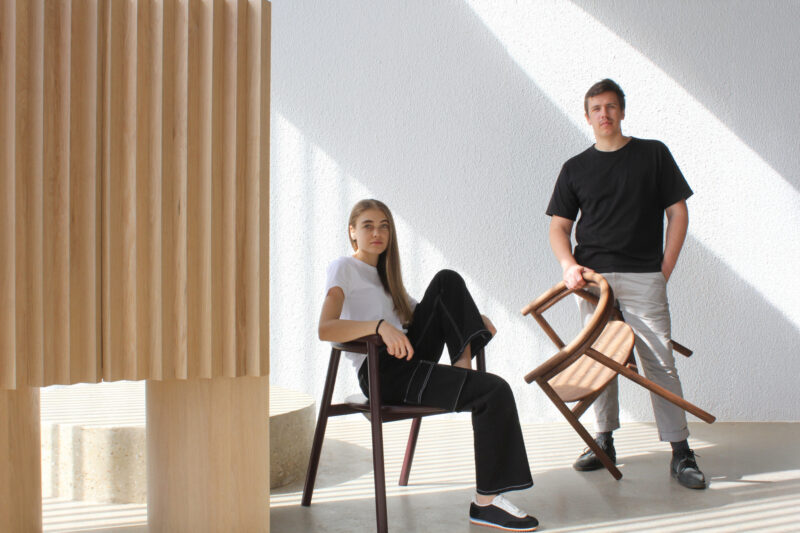
Operating out of Port Elizabeth in the Eastern Cape, Martin Tallie and Zani Alberts of DEFT Studios represent a familiar archetype of the modern pandemic-era pivot. Originally trained as architects, the duo transitioned into bespoke furniture design during the global lockdowns, relying on self-taught woodworking techniques rather than traditional apprenticeships.

"A lot of our influences were stolen from architecture, and we were self-taught in woodworking," Tallie explains. "Our unique vantage point is that we didn’t have a mentor teaching us."
This lack of formal orthodoxies gives DEFT Studios’ work a refreshing, uninhibited character. Their furniture exhibits a sophisticated tension between simple, pure architectural geometries and intricate, labor-intensive fabrication techniques. Pieces like the Étagère brune et claire, showcased at Maison&Objet, reflect their mission to craft singular objects imbued with enduring material value. Like many of their peers in the Rising Talent cohort, Tallie and Alberts maintain an in-house workshop with a dedicated team, ensuring that their identity as both conceptual designers and hands-on makers remains intact.
Karlien van Rooyen: Translating Neuro-Anatomy and Subaquatic Ecosystems
Karlien van Rooyen’s path to the international design stage is perhaps the most scientifically grounded of the group. With an academic background in neuroscience coupled with a passionate avocation for free diving, the Cape Town-based creator draws her sculptural inspiration from the microscopic architecture of the human body and the organic forms of marine life.
"Some of them look like lungs or neurons from the brain, but they also look like mushrooms or coral at the same time," van Rooyen explains.

Working across multiple mediums, van Rooyen hand-builds stoneware ceramic pieces that are subsequently glazed and fired. For her wooden sculptures, she collaborates with master woodworkers to translate initial two-dimensional sketches into three-dimensional forms carved from African teak—a dense hardwood notable for its deep red sap. By fusing multiple blocks of timber before carving away vast quantities of material, van Rooyen produces heavy, commanding objects that evoke the scale and permanence of brutalist monuments.
Pinda Interior Design: The Mathematical Rhythms of Zulu Culture
Rounding out the seven selected studios is Durban-based Siyanda Mbele, founder of Pinda Interior Design. Mbele’s trajectory began in engineering before pivoting toward professional design, a background that clearly informs the structural precision of his work. The studio’s name is drawn from the isiZulu word phinda, translating to "again," which speaks directly to the foundational role of mathematical repetition and visual rhythm in his practice.

Mbele’s creations draw heavily from indigenous Nguni, Zulu, and Ndebele cultural traditions, where geometry and pattern dictate structural form. At Maison&Objet, Mbele exhibited a sophisticated textile piece utilizing triangular and diamond motifs derived from historic Zulu beadwork traditions.
Detailing the rich cultural symbolism embedded in his work, Mbele explains: "The triangle is masculine; the diamond is feminine. When married, the symbols will be stacked. The shapes are made into beaded bracelets, and a woman will give one to a suitor she is interested in. He will wear the bracelet to prove he accepts and wants to spend his life with her."

Broader Economic and Cultural Implications
The successful presentation of South Africa’s Rising Talent cohort at Maison&Objet 2026 underscores a broader, accelerating shift in the global luxury interior market. For decades, the epicenters of high-end design production remained firmly anchored in Western Europe and North America. However, as international buyers increasingly demand authenticity, ethical production models, and narratives rooted in localized cultural heritage, African design studios are finding unprecedented commercial viability on the global stage.
Industry analysts note that initiatives like the Maison&Objet and Decorex Africa partnership do more than simply offer temporary exhibition space; they establish vital trade conduits, foster cross-cultural dialogue, and validate contemporary African craftsmanship as a formidable asset in the luxury sector. By maintaining tight control over in-house production pipelines—from sustainable forestry and hand-carving to bespoke textile tufting—these seven studios are not merely participating in the global economy; they are actively setting its new standard.