The contemporary fashion landscape is defined by a relentless push-and-pull between conceptual abstraction and commercial viability. For the emerging design duo Matt Empringham and Freddy Coomes, the creative minds behind the avant-garde label A Letter, the objective for their latest presentation was ostensibly to bridge that divide. Promising a collection rooted in wearable, everyday garments infused with idiosyncratic British character, the brand generated considerable anticipation ahead of its runway presentation. However, as the final looks traversed the intimate presentation space, a discernible gap emerged between the conceptual manifesto articulated backstage and the tangible realities of the garments presented to the fashion press, buyers, and industry critics.
Main Facts of the Presentation
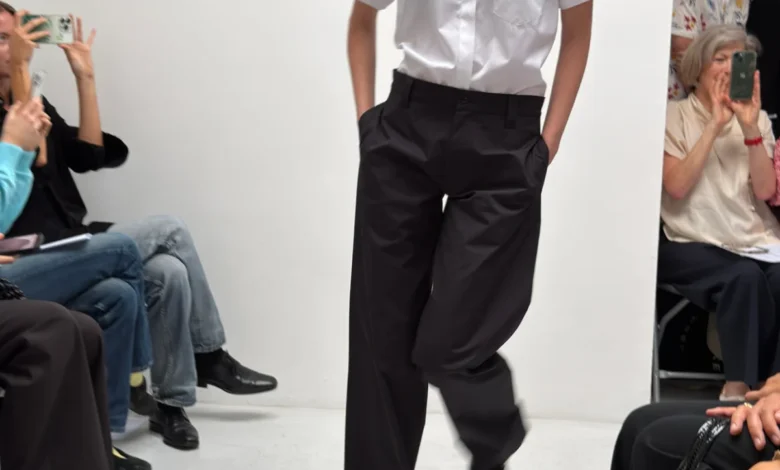
The showcase itself was characterized by an intimacy dictated both by logistical constraints and stylistic choice. Featuring a remarkably compact cast of just five models, the presentation utilized a repetitive choreography wherein each participant circled the venue twice. While this staging strategy served a practical purpose—maximizing the physical airtime and visibility of a limited wardrobe—it also placed intense scrutiny on the construction, detailing, and overall finish of each piece.
On paper, the collection’s blueprint read as an ambitious deconstruction of archetypal British working-class and heritage staples. Empringham and Coomes drew inspiration from a quintessentially domestic wardrobe, incorporating recognized markers of British life such as traditional donkey jackets, vintage men’s chinos, classic Ben Sherman gingham shirting, and St. Michael undergarments—a nostalgic nod to the high-street staple brand historically found in British households. This foundation was intended to be elevated and subverted through a series of meticulous, do-it-yourself detailing techniques. Among the proposed innovations were zigzag stitching applied directly to underwear elastic, the integration of raw-edged transparent jersey, and the inventive splicing of utilitarian calico into luxurious silk fabrics.
Despite the conceptual rigor outlined in the show notes, the execution faltered upon physical inspection. Rather than appearing deliberately deconstructed, several ensembles conveyed an impression of being simply unfinished. Slipdresses, intended to showcase a modern silhouette, suffered from boxy proportions featuring necklines that rested uncertainly against the body. Structural oversights, such as pocket linings protruding unintentionally from seams and hems left half-unstitched, detracted from the intended sophistication of the garments. Furthermore, stylistic choices—such as entirely transparent backs that stripped away any illusion of modesty or wearable utility—contradicted Coomes’s stated desire to craft realistic, accessible clothing. Consequently, foundational reference points like the donkey jacket and vintage trousers were frequently obscured or entirely swallowed by the erratic styling, leaving reviewers searching for the promised homage to British staples.
Chronology and Background Context
To fully understand the trajectory of A Letter, it is necessary to examine the brand’s evolution within the broader ecosystem of independent fashion design. Emerging as part of a new wave of talent seeking to challenge conventional runway formats, Empringham and Coomes previously captured the attention of the industry with a collection celebrated for its ethereal, diaphanous charm. That preceding season established a benchmark for the label, marked by delicate textures, cohesive storytelling, and a clear creative identity that resonated with critics looking for fresh perspectives outside the traditional fashion capitals’ mega-brands.
Buoyed by the positive reception of their prior work, the designers approached this latest outing with a self-professed sense of progression. Backstage before the show, Freddy Coomes spoke candidly to members of the press about the collection’s developmental arc. He framed the new garments as a deliberate and "really nice step forward" for the brand, characterizing the shift as an evolution toward grounding their surrealist tendencies in clothes that real people could practically wear and genuinely enjoy.
This chronology highlights a familiar crucible for young design partnerships: the pressure to transition from critically acclaimed conceptual art-pieces to commercially viable ready-to-wear. The anticipation built during the months leading up to the presentation was predicated on this maturation process. Stakeholders, retail buyers, and fashion journalists attended the showcase expecting to witness a brand solidifying its commercial footing without sacrificing its avant-garde ethos. Instead, the historical momentum established last season appeared to stall, as the transition from diaphanous delicacy to grounded utility resulted in a stylistic disjunction.
Supporting Data and Market Dynamics
The challenges faced by A Letter during this showcase reflect broader economic and operational realities confronting independent labels operating within the contemporary fashion economy. Producing a fashion presentation—even one scaled down to a five-model cast—requires significant capital allocation for venue hire, hair and makeup teams, public relations, and sample production. For micro-labels, these financial pressures are often exacerbated by supply chain bottlenecks and the rising cost of raw materials, such as the silk and specialized textiles utilized in Empringham and Coomes’s designs.
Furthermore, industry data consistently demonstrates that young brands face a narrow window to convert critical acclaim into sustainable retail orders. Independent designers typically operate on razor-thin margins, where each seasonal output must successfully balance artistic expression with the stringent demands of wholesale buyers. While the incorporation of accessible staples like chinos and gingham shirts represented a strategic nod toward marketability, the failure to execute these pieces with clean commercial finishes risks alienating the very buyers necessary for long-term business viability. The deliberate use of raw edges and unfinished hems, while a staple of high-concept runway styling, often translates poorly to the commercial showroom floor, where retail partners scrutinize garment durability and construction quality.
Official Responses and Backstage Insights
In the immediate aftermath of the presentation, the dialogue between the designers and the attending press underscored a tension between intent and execution. Backstage commentary from Freddy Coomes emphasized a democratic approach to fashion, focusing on the wearer’s relationship to familiar garments. The inclusion of items historically associated with everyday British utility—such as Ben Sherman shirts and St. Michael undergarments—was intended to evoke a shared cultural memory, reframing utilitarian garments through a contemporary, experimental lens.
However, independent industry analysts and style commentators noted a disconnect between these verbal declarations and the visual narrative presented on the makeshift runway. While the conceptual framework was articulated with clarity, the physical garments struggled to communicate that narrative effectively. The promised exploration of British staples was frequently eclipsed by erratic construction choices. Critics observed that experimental details, such as exposed zigzag stitching and transparent jersey panels, read less as a calculated subversion of heritage wear and more as signs of rushed craftsmanship.
No official statement was released by the brand addressing the specific technical criticisms following the event; however, the consensus among fashion reviewers suggested that the collection represented a transitional stumble rather than a fatal misstep. The candid nature of the backstage interviews revealed a design team actively grappling with the complexities of scaling their creative output, demonstrating an awareness of the commercial imperative even if the physical execution fell short of its mark.
Broader Impact and Industry Implications
The reception of A Letter’s latest showcase serves as a case study in the precarious nature of fashion incubation. For emerging labels, every season is heavily scrutinized not only for its aesthetic merit but as an indicator of brand longevity. When a collection fails to capitalize on the momentum of a successful predecessor, it initiates a critical period of internal reassessment for the designers and external re-evaluation by stockists and media outlets.
The primary implication for Empringham and Coomes lies in the necessity of refining their technical execution to match their conceptual ambition. The fashion market is currently saturated with brands attempting to deconstruct utilitarian workwear and domestic staples through DIY techniques. To stand out in this crowded field, designers must pair conceptual novelty with impeccable garment construction. Slipdresses with floating necklines and protruding pocket linings, while potentially defensible as expressions of anti-fashion or deliberate awkwardness, run the risk of being misread as technical carelessness by commercial buyers.
Looking forward, the trajectory of A Letter will likely depend on the duo’s ability to reconcile their exploratory impulses with rigorous atelier standards. The pivot toward wearable, everyday clothing remains a sound commercial strategy, particularly given current economic headwinds favoring versatile, enduring wardrobes over ephemeral trends. However, future collections will need to demonstrate that the designers can successfully anchor their avant-garde vision in garments of superior craftsmanship.
Ultimately, the showcase highlights the inherent risks of creative experimentation. While A Letter stumbled in its attempt to deliver a definitive step forward, the ambition underpinning the collection remains evident. By confronting the challenges of technical execution and bridging the divide between conceptual theory and physical reality, Empringham and Coomes retain the foundational elements necessary to recalibrate their vision for future seasons. The fashion industry will undoubtedly continue to watch how this promising young label navigates the demanding transition from experimental darling to established commercial entity.