Sharon Horgan Explores the Chaos of Midlife Transitions and Dual Coming-of-Age in Her New Comedy-Drama Series Youth

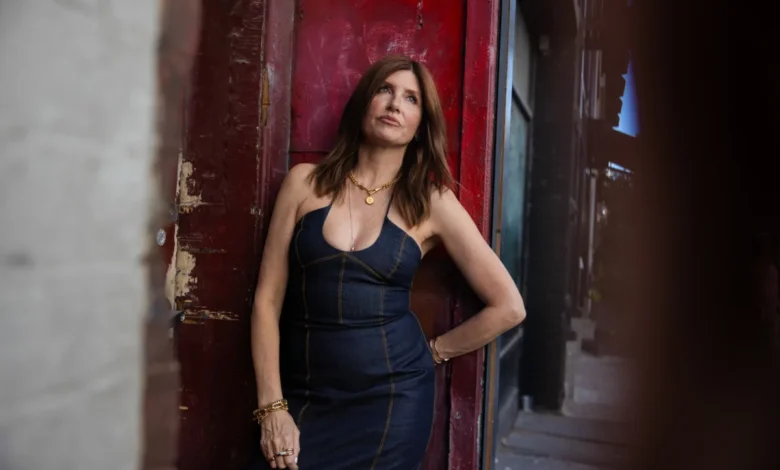
The landscape of contemporary television is continuously reshaped by creators who dare to blend the granular realities of middle age with sharp, unflinching humor. Sharon Horgan, the celebrated Irish writer, performer, and producer whose credits include the critically acclaimed series Catastrophe and Bad Sisters, has once again turned her perceptive lens toward the complexities of human relationships. Speaking the afternoon following the New York premiere of the first two episodes of her latest project, Youth, Horgan reflected on the nerve-wracking reality of presenting deeply personal and structurally ambitious storytelling to a live audience.
For Horgan, wearing multiple hats as the star, creator, and producer of a high-profile series fundamentally alters the psychological stakes of a premiere night. Describing the post-screening atmosphere, she characterized the experience as profoundly unrelaxing. The anxiety stems largely from the tonal tightrope walk that Youth performs, effortlessly sliding from sharp comedy into heavy, dramatic moments that catch viewers off guard. When a narrative pivots swiftly from explicit comedic absurdity in its opening minutes to sobering family crises, creators must rely entirely on the audience’s willingness to embrace the emotional turbulence. Fortunately, early indicators from the New York screening suggest that viewers are more than willing to lean into the chaos.
Navigating the Dual Coming-of-Age Narrative
At its core, Youth offers a distinct inversion of the traditional coming-of-age television narrative. The series follows Alex, a woman in her early 50s who is grappling simultaneously with the unfamiliar terrain of divorce and the looming reality of an empty nest as her teenage son prepares to depart for college. Rather than confining the coming-of-age designation to youth, the series posits that emotional maturation and existential reckoning are lifelong processes, occurring just as urgently for middle-aged adults as they do for adolescents.

The series stars Aran Murphy, the 19-year-old son of acclaimed actor Cillian Murphy, in one of his earliest major screen roles, portraying Alex’s son, Rauri. Horgan noted that the conceptual genesis of the show relied heavily on examining how these two distinct life stages collide. Watching an 18-year-old step out into the world while a 50-something parent attempts to reinvent her own identity creates a narrative friction that is both inherently comedic and quietly devastating. Horgan points out that traditional coming-of-age stories are almost invariably defined by a degree of tragedy or failure—moments where plans disintegrate—followed by the arduous process of picking up the pieces and finding a way forward. By applying this framework to a mother and son navigating simultaneous transitions, the series achieves a rare thematic symmetry.
A Six-Year Evolution: From Exhaustion to Perspective
The journey of bringing Youth to the screen spans nearly half a decade, reflecting significant shifts in Horgan’s personal and professional life. The initial concept took root roughly six years ago, catalyzed by Horgan’s own experience navigating a newly minted divorce. At the time, the prospect of re-entering the dating pool felt insurmountable. Overwhelmed by the sheer emotional exhaustion of starting over, she was privately convinced that her romantic life had concluded.
During this initial creative phase, her collaborators on Bad Sisters—where Horgan famously worked alongside a tight-knit ensemble cast—would frequently attempt to play matchmaker, only to be met with humorous declarations that she would likely never date or experience intimacy again. At the time, those sentiments were entirely genuine, born from the paralyzing intimidation that often accompanies late-life singlehood.
However, the runaway success of Bad Sisters, which enjoyed a celebrated two-season run on Apple TV+, temporarily pushed Youth to the back burner. When that production wrapped and Horgan finally found the bandwidth to return to her script, she did so with a transformed worldview. Now settled into a stable relationship, Horgan discovered that time had granted her a crucial narrative distance.

Writing love affairs and romantic heartache from a place of security, rather than raw vulnerability, allowed her to inject the series with a nuanced emotional depth that would have been impossible six years prior. Looking back at her initial state of mind, Horgan acknowledges the stark contrast between the exhausted creator of the past and the reflective storyteller of the present, noting the surreal nature of revisiting material born from such acute vulnerability.
Character Construction and the Necessity of Flaws
In shaping the protagonist Alex, Horgan drew heavily from her own life experiences, though she deliberately implemented creative adjustments to optimize the material for television comedy. In Horgan’s view, crafting a protagonist who is excessively virtuous or untainted by poor decision-making fundamentally undermines comedic storytelling.
While Horgan frequently writes deeply admirable supporting characters—such as Alex’s sister in the series, who represents the steadfast, self-sacrificing individuals who prioritize others—she maintains that a lead comedy character must possess visible faults, foibles, and a penchant for making catastrophic choices. Without these narrative stumbling blocks, the humor evaporates, and the character study loses its authenticity. By ensuring Alex is wonderfully flawed, Horgan mirrors the messy, unpolished reality of human behavior during periods of intense personal crisis.
Balancing Creation and Collaborative Acting
While Youth represents Horgan’s mastery as an auteur who builds a world entirely from scratch, her recent career has also seen her enthusiastically stepping into supporting acting roles across various high-profile projects. In recent years, Horgan has taken on television and film work in productions such as The Twisted Tale of Amanda Knox and the upcoming season of Hulu’s hit comedy-mystery series Only Murders in the Building.

This fluid movement between driving her own intellectual properties and surrendering creative control to other showrunners highlights a versatile approach to the entertainment industry. According to Horgan, relinquishing control on acting gigs provides a refreshing change of pace, but the act of architecting a television series from a blank page remains uniquely fulfilling. While the blank-page process carries a significantly higher degree of professional fear and exposure, the resulting satisfaction of bringing an original vision to life is entirely unmatched.
Industry Implications and Broader Cultural Resonance
The premiere of Youth arrives at a time when television networks and streaming platforms are increasingly investing in nuanced, female-led narratives that explore demographic shifts previously ignored or trivialized by mainstream media. Stories centering on women navigating middle age, divorce, and the empty nest syndrome are gaining critical traction, driven by audiences demanding authentic representation of their lived experiences.
By pairing this demographic exploration with a dual coming-of-age narrative featuring an emerging young talent like Aran Murphy, Youth bridges generational divides. Industry analysts note that series capable of appealing to both mature demographics and younger audiences through multi-generational casting often achieve greater longevity and cultural penetration. Furthermore, Horgan’s established track record with hits like Catastrophe and Bad Sisters positions Youth as a major strategic asset for its distributors, signaling a continued appetite for sharply written, dramedic storytelling that refuses to sanitize the messy realities of modern family life.
As Youth prepares for its broader rollout, the industry will be watching closely to see how audiences respond to Horgan’s signature blend of razor-sharp wit and emotional gravitas. For an artist who has consistently turned personal vulnerability into universally resonant television, Youth stands as a testament to the enduring power of storytelling that embraces life’s most unrelaxing, transformative moments.
Related posts: