Scotland Leads the Global Transition Toward Sustainable and Ethical Fashion Paradigms

The global fashion landscape has long grappled with the ecological and social tolls exacted by the fast-fashion model, an industry characterized by high-volume production, synthetic material dependency, and opaque global supply chains. In recent years, however, a profound counter-movement has emerged, prioritizing circularity, generational craftsmanship, and rigorous environmental accountability. Remarkably, this transformation is being spearheaded not by the traditional capitals of haute couture, but by Scotland. Despite a population of approximately 5.4 million, the country has cultivated a thriving ecosystem of sustainable and ethical clothing brands. These enterprises are redefining industry standards through zero-waste manufacturing, localized supply chains, and the championing of natural, biodegradable fibres.

An Examination of Scotland’s Sustainable Fashion Renaissance
The resurgence of Scottish ethical fashion is deeply rooted in the nation’s industrial heritage, specifically its long-standing mastery of textiles, wool, and cashmere production. Modern Scottish designers and manufacturers have successfully bridged historical techniques with contemporary circular economy principles. Rather than viewing sustainability as a mere marketing metric, these businesses have embedded environmental stewardship into their core operational frameworks.

The transition away from fast fashion comes at a critical juncture for the global textile industry. According to environmental data compiled by international trade and waste authorities, the fashion sector accounts for approximately 10% of global carbon emissions and nearly 20% of wastewater worldwide. By contrast, the Scottish sustainable apparel sector operates on a localized, low-impact scale. Many of these brands utilize regional spinning mills powered by renewable energy, source raw materials from farms adhering to strict animal welfare protocols, and design garments explicitly for longevity and recyclability.
Industry Pioneers and Brand Profiles

The breadth of Scotland’s sustainable apparel sector is reflected in its diverse array of enterprises, catering to demographics ranging from activewear consumers to luxury outerwear enthusiasts.
Brora: Established over three decades ago, Brora represents the enduring ethos of slow fashion. The brand constructs its collections using natural fibres such as Scottish cashmere, wool, linen, and organic cotton, minimizing synthetic inputs. Brora prioritizes localized manufacturing, collaborating with generational artisans who utilize traditional methodologies. For overseas production, the company enforces a stringent code of conduct governing worker welfare, health and safety, and environmental impact. In 2025, Brora achieved B-Corp certification, an independent verification of high social and environmental performance, transparency, and corporate accountability.

Findra: Headquartered in the Scottish Borders, Findra specializes in ethical activewear for women, producing cycling apparel, base layers, and outerwear from natural and recycled fabrics. Over half of Findra’s collection is manufactured within the United Kingdom, while international production partners are restricted to factories holding top-tier environmental and labor certifications. To extend product lifecycles, the company provides a dedicated garment repair service.
ERIBÉ Knitwear: Founded in 1986, ERIBÉ utilizes 100% natural fibres, including British wool and guaranteed non-mulesed Responsible Wool Standard (RWS) merino lambswool. Operating across Scotland and the European Union, the brand adheres to stringent European labor regulations. ERIBÉ minimizes industrial waste through small-batch production, made-to-order models, and the repurposing of faulty yarn panels, alongside the adoption of biodegradable packaging.

Hilary Grant: Based in Orkney, this textile design studio and knitwear factory produces accessories such as scarves and pom-pom hats. Utilizing machine-knitting and hand-finishing techniques in Orkney, alongside specialized production in Ayrshire, Hilary Grant sources high-grade lambswool from farms practicing progressive land management and adhering to the Responsible Wool Standard. Yarns are subsequently dyed and spun in Scotland using low-impact dyes.
Godiva: Located in Edinburgh near the historic Grassmarket, Godiva has functioned as a cornerstone of sustainable retail for over two decades. In addition to curating vintage garments, the boutique operates an in-studio "Reworked" program, transforming decommissioned textiles into contemporary apparel, alongside showcasing creations by local independent designers.

Second Cashmere: Based in Glasgow, Second Cashmere champions the circular economy by reclaiming waste cashmere garments destined for landfill. The enterprise cleans, reconditions, and restores salvaged materials. Unsalvageable textiles are unraveled into reclaimed yarn for zero-waste production and repair services, ensuring a closed-loop system.
Beira: Operating on a zero-waste model, Beira utilizes discarded materials, fabrics, trims, and hardware sourced from luxury manufacturers to construct limited-edition raincoats and knitwear. The brand provides unprecedented supply-chain transparency, detailing worker compensation rates, sourcing methods, and comprehensive video documentation of the manufacturing process for every item.

Totty Rocks: Operating out of Edinburgh, Totty Rocks specializes in bespoke occasion wear, wedding attire, and tailored outerwear. Each garment is handmade-to-order utilizing locally sourced fabrics, serving as a prominent example of localized slow fashion favored by international public figures.
The Croft House: Based in Peterhead, The Croft House manufactures natural-fibre knitwear for men and women. Sourcing 100% of its raw materials within the United Kingdom and designing garments locally, the company utilizes seamless knitting techniques to eliminate waste. Furthermore, the brand offers selections produced from pure, undyed yarns.

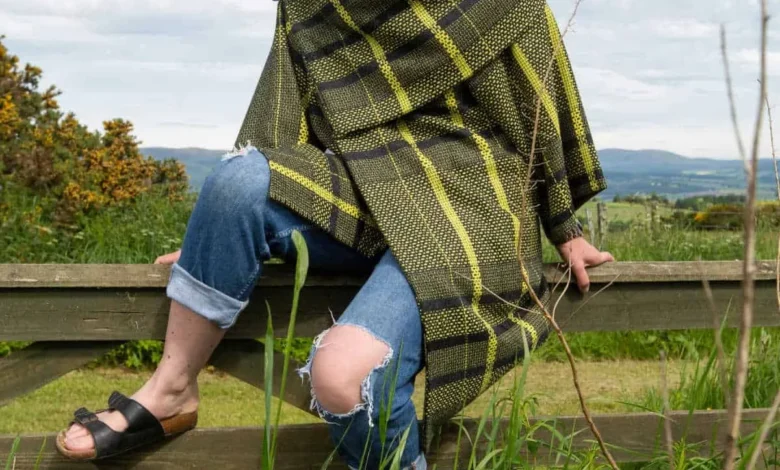
Prickly Thistle: Located in Dingwall, Prickly Thistle operates a Highland-based mill powered by renewable energy, utilizing century-old looms to produce ethical tartan textiles. As a certified B-Corp, the company avoids synthetic materials entirely. In an innovative structural departure, Prickly Thistle omits zips and buttons from its designs, utilizing adjustable straps and buckles to extend the wearable size range and facilitate future textile recycling.
Kestin: Concluding the roster, Edinburgh-based Kestin focuses on sustainable menswear, emphasizing UK-based production and durable fabrics. The brand maintains a transparent supply chain, partnering exclusively with facilities that guarantee fair wages, safe working conditions, and community integration.

Broader Economic and Environmental Implications
The clustering of sustainable fashion enterprises in Scotland offers significant implications for both the regional economy and the broader textile industry. Economically, the revival of traditional textile manufacturing in the Scottish Borders, the Highlands, and urban centers like Edinburgh and Glasgow revitalizes regional skill bases that were previously threatened by globalized offshoring. By fostering local employment and adhering to high labor standards, these businesses contribute to resilient regional economies.

Environmentally, the operational models adopted by these Scottish brands challenge the foundational tenets of fast fashion. Through the integration of the circular economy—exemplified by closed-loop cashmere recovery, zero-waste cutting techniques, and biodegradable packaging—these companies demonstrate that commercial viability can coexist with rigorous ecological boundaries.
Analysts note that as international regulatory frameworks increasingly penalize carbon-intensive industries and greenwashing, the proactive measures taken by Scottish brands—such as B-Corp certifications, RWS compliance, and absolute supply chain transparency—position the region as a blueprint for the future of global apparel manufacturing. While the sector remains modest in scale compared to multinational conglomerates, its cultural and methodological influence offers a viable pathway toward a more responsible and sustainable global fashion industry.