Designing for the Future: Kelli Donovan and the Evolution of Ethical Fashion

The modern fashion industry stands at a critical juncture, balancing the insatiable consumer demand for new trends against the urgent necessity of ecological preservation. At the forefront of this movement toward circularity and environmental accountability is Australian designer Kelli Donovan, whose thirty-year career offers a blueprint for reconciling aesthetic excellence with the harsh realities of global textile waste. By grounding her design philosophy in the natural landscapes of her upbringing and the technical rigor passed down by her Scottish grandmother, Donovan has emerged as a vocal critic of the "ultra-fast fashion" model that currently dominates the global supply chain.
The Environmental Cost of Modern Garment Production
To understand the necessity of Kelli Donovan’s work, one must examine the broader systemic issues currently plaguing the apparel sector. According to data from the United Nations Environment Programme (UNEP), the fashion industry is responsible for approximately 2% to 8% of global carbon emissions. Furthermore, the industry is a major contributor to microplastic pollution, with synthetic fibers like polyester, nylon, and acrylic shedding hundreds of thousands of tons of plastic microfibers into the oceans annually during washing.
The rise of ultra-fast fashion has exacerbated these statistics. Between 2000 and 2014, clothing production doubled, while the average number of times a garment was worn before being discarded decreased by 36%. This "take-make-waste" model has led to overflowing landfills, where textiles—often treated with toxic dyes and finished with non-biodegradable chemicals—leach pollutants into the soil and groundwater. Donovan’s work is a direct response to these systemic failures, emphasizing that the lifecycle of a garment must be considered from the initial sketch to its eventual end-of-life.
A Legacy of Craftsmanship: The Influence of Annie Muir
Donovan’s commitment to quality is not merely a marketing strategy; it is a hereditary principle. Her grandmother, Annie Muir, a professional tailor from Glasgow, Scotland, served as the primary catalyst for her career. In an era before the advent of mass-produced, low-quality garments, Muir operated on a philosophy of "slow fashion"—a term that has only recently entered the mainstream lexicon but was the standard practice of mid-20th-century tailoring.
"Every stitch was meaningful and was created with purpose," Donovan recalls. The instruction she received as a child regarding the futility of using "cheap cloth" to create beauty remains a cornerstone of her business model. This historical perspective allows Donovan to distinguish between fleeting trends and timeless design. By prioritizing high-grade, durable materials, she ensures that her garments have a longer utility period, directly countering the industry’s trend toward planned obsolescence.
Design Philosophy: From Canberra to the Global Stage
Donovan’s aesthetic is inextricably linked to the bush capital of Canberra, Australia. Growing up surrounded by rugged mountains and open landscapes fostered an early appreciation for the natural world—an appreciation that evolved into a protective instinct as she witnessed the environmental degradation caused by industrial manufacturing.
Her design approach follows a distinct chronology:
- Material Sourcing: Prioritizing organic, biodegradable, or deadstock fabrics to reduce the reliance on virgin resources.
- Zero-Waste Pattern Cutting: Implementing design techniques that minimize fabric scraps during the production phase.
- Intentional Production: Rejecting the seasonal, high-volume model in favor of limited-run, demand-based production.
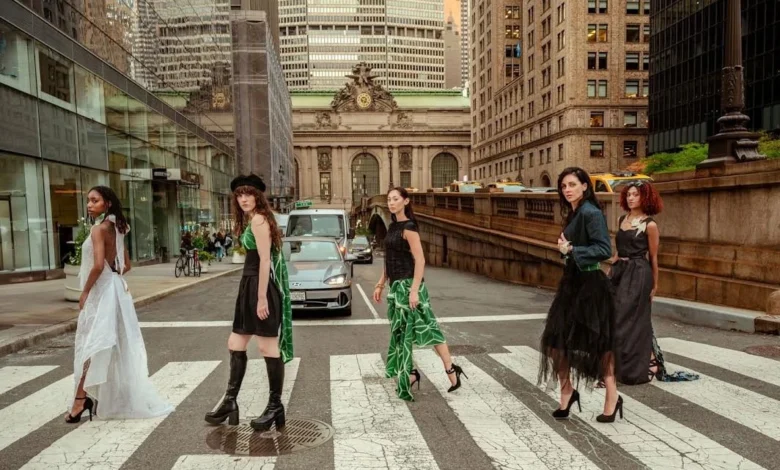
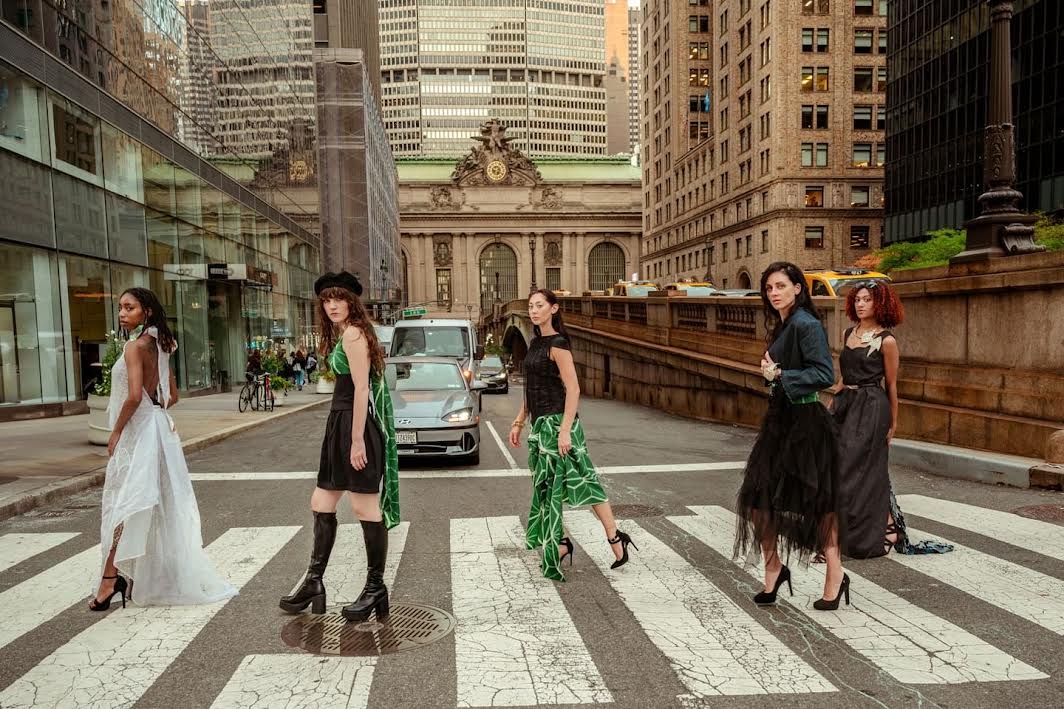
Her collection, "Sleeping Beauties," serves as a poignant example of this methodology. While the title shares a name with the 2024 Metropolitan Museum of Art Costume Institute exhibition, the conceptual foundations are distinct. While the museum exhibit explores the fragility of historical garments, Donovan’s collection uses the title to comment on the "oversupply" of modern fashion, creating a silent but forceful statement about the millions of garments that are produced, never worn, and eventually discarded.
Case Study: The Manta Ray Collection and Ocean Conservation
Perhaps the most vivid demonstration of Donovan’s intersectional approach to design is her "Manta Ray" collection. This project was conceived as an educational tool to highlight the impact of textile waste on marine ecosystems. The Giant Manta Ray, a creature that feeds on plankton and glides through the ocean with minimal environmental footprint, served as the visual and symbolic archetype for the collection.
The logic behind this project is rooted in the link between the garment industry and marine health. Synthetic textiles, which account for over 60% of clothing materials globally, are the primary source of primary microplastics in the oceans. By educating consumers on the composition of their clothing, Donovan hopes to shift purchasing habits. "The Manta Ray Collection was to educate the viewer about the bigger issue at hand," she notes, emphasizing that small, informed choices by consumers can lead to a cumulative reduction in the amount of synthetic waste flowing into waterways.
Industry Implications and Future Directions
The implications of Donovan’s career for the broader fashion industry are significant. For emerging designers, her path demonstrates that financial success and ethical integrity are not mutually exclusive. As governments globally begin to implement stricter regulations—such as the European Union’s Strategy for Sustainable and Circular Textiles, which aims to make all textile products on the EU market durable, repairable, and recyclable by 2030—designers who have already adopted these practices will be better positioned to navigate the changing legal landscape.
Furthermore, the shift in consumer sentiment, particularly among Generation Z and Millennial demographics, suggests a growing demand for transparency. A 2023 report by McKinsey & Company found that consumers are increasingly prioritizing sustainability in their purchasing decisions, with a notable willingness to pay a premium for items with verifiable ethical credentials.
Donovan’s advice to the next generation of designers is rooted in this shift: "Try not to follow trends, but find their unique superpower." She advocates for experimentation with waste management and sustainable textiles, suggesting that the most innovative design solutions often arise from the constraints of circularity rather than the freedom of unlimited, low-cost resources.
Conclusion: A Blueprint for a Sustainable Industry
The fashion industry is currently responsible for approximately 10% of global carbon emissions and is the second-largest industrial consumer of water. To mitigate these impacts, the industry must pivot from a linear model to a circular one. Kelli Donovan’s work represents a vital segment of this transition.
By marrying the technical expertise of her past with a forward-looking commitment to ecological preservation, she provides a replicable model for smaller, independent labels. Her trajectory—from the mountains of Australia to the front lines of global sustainability—proves that the future of fashion lies not in the speed of production, but in the intentionality of the design. As the industry faces mounting pressure to reform, the principles exemplified by Donovan—durability, ethical sourcing, and environmental advocacy—are likely to become the standard for the next generation of designers. The transition will not be instantaneous, but as Donovan’s career illustrates, the process begins with the commitment to create, as her grandmother did, with purpose and respect for the materials at hand.
Related posts: