If The Product Is Everything, Then Product Data Has To Be Everywhere


The modern e-commerce landscape is undergoing a fundamental structural shift, moving away from human-navigated storefronts toward a model dominated by agentic commerce. In this emerging paradigm, where AI agents act as the primary intermediaries between consumers and retailers, the traditional reliance on visual appeal and keyword-heavy marketing is being supplanted by a critical, high-stakes demand for comprehensive, accurate, and structured product data. This transition was the central focus of a recent discussion on The Interline Podcast, featuring Romain Fouache, CEO of Akeneo, who argues that product information has evolved from a secondary operational requirement into the primary currency of the digital economy.
The shift is driven by the reality that, for the modern consumer, the product exists as a digital representation long before it is ever physically handled. Whether through virtual mirrors, AI-powered shopping assistants, or automated procurement agents, the information attached to a garment—its composition, fit, sustainability credentials, and origin—determines the consumer’s purchase intent and, ultimately, the success of the transaction.
The Divergence of Product and Data Lifecycles
Historically, industry professionals have focused on Product Lifecycle Management (PLM), a discipline centered on the physical development of goods from design and prototyping to manufacturing and distribution. However, the data lifecycle, as defined by industry leaders like Fouache, operates on a distinct, albeit parallel, track. While the PLM process is largely inward-facing—governed by engineers, designers, and supply chain managers—the product data lifecycle is entirely outward-facing, designed to translate complex physical specifications into accessible, actionable intelligence for potential buyers and automated systems.

The lifecycle of product information typically encompasses four core pillars: collection, enrichment, distribution, and optimization. The collection phase involves aggregating disparate data points from various enterprise resource planning (ERP) systems and supplier portals. Enrichment involves refining this data for specific regional, cultural, or channel-based contexts. Distribution ensures this data is pushed to every touchpoint, from social media platforms to B2B procurement portals. Finally, the optimization phase utilizes business performance signals—such as return rates and click-through data—to feed back into the system, creating a continuous loop of improvement.
The AI Imperative and the Governance Challenge
The rapid integration of Artificial Intelligence into retail infrastructure has accelerated the need for institutionalized data governance. As AI agents increasingly handle procurement and discovery, the tolerance for error has effectively reached zero. A mistake in a product description that might have caused a minor inconvenience in the past can now result in a brand being filtered out of an agent’s search parameters entirely, leading to catastrophic losses in visibility.
Contrary to the belief that AI can solve governance problems autonomously, industry experts suggest that the relationship is inverse: robust human-led governance is a prerequisite for the effective use of AI. AI can process, structure, and scale data at a speed impossible for human teams, but it lacks the contextual judgment to ensure the truthfulness of the data it handles. Consequently, the most successful enterprises are adopting a "human-at-the-helm" model, where AI functions as an accelerator for data enrichment while human stakeholders maintain the authority to validate and greenlight the final information architecture.
Addressing the Crisis of "Product Slop"
A significant concern currently facing the industry is the proliferation of "product slop"—low-quality, AI-generated content that dilutes genuine product information. Because generative models can create text and images at near-zero cost, there is a risk that brands will flood the market with inaccurate or hallucinated content.

This issue is particularly acute in the fashion sector, where regulatory bodies in jurisdictions like the European Union are enforcing stricter mandates regarding product claims, such as environmental sustainability or material composition. To combat this, industry leaders are advocating for a "truth-first" approach. By capturing atomic, verified data points from the supply chain—such as specific fiber origins or manufacturing processes—brands can leverage AI to format this truth into various languages and styles without sacrificing accuracy. The objective is not to generate volume for the sake of SEO, but to create high-depth, high-trust information that satisfies the requirements of both regulators and AI agents.
The Rise of Agentic Commerce and GEO
The traditional Search Engine Optimization (SEO) playbook is rapidly giving way to Generative Engine Optimization (GEO) and Agentic Engine Optimization (AEO). In this new environment, the goal is not to rank high on a results page, but to be the definitive answer provided by an AI agent during a customer’s purchasing inquiry.
Recent market data indicates a notable shift in traffic sources, with some retailers reporting a 30% to 35% decline in organic search traffic as consumers shift toward conversational interfaces. This change has profound implications for digital advertising. In a classic web search, advertisements are often indistinguishable from organic results; in a conversational AI environment, sponsored content is more easily identified and, by many accounts, less trusted. As a result, the competitive advantage is shifting toward "activation"—the ability to make a product’s data so complete and accurate that it becomes the preferred selection for an agent aiming to maximize transaction success.
The Future of Software: The Era of Invisible Tools
The democratization of software development, often referred to as "vibe coding," is further complicating the retail landscape. With the ability to build custom tools and extensions through AI-driven natural language prompts, brands are no longer solely dependent on pre-packaged enterprise software. This shift is not necessarily leading to the obsolescence of platforms like Akeneo, but it is forcing a change in the software vendor’s value proposition.
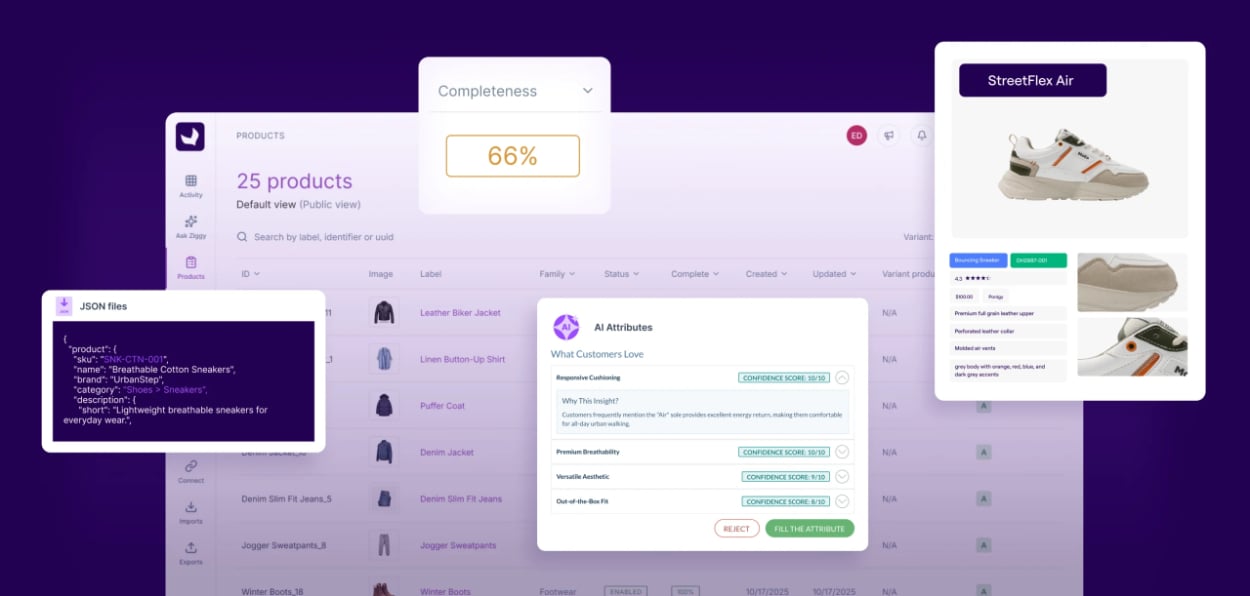
Instead of serving as rigid frameworks that require months of professional services to deploy, software platforms are evolving into "agentic workbenches." In this vision, the software itself becomes "invisible," acting as a background harness that provides governance and connectivity while the human user—now a CEO of their own agentic workforce—orchestrates tasks. The focus of future deployments is on speed, with AI-driven assessments now allowing for functional instances to be deployed in days rather than years.
Broader Economic and Industrial Implications
The implications of this transition extend far beyond retail operations. As businesses continue to scale their product portfolios and increase the frequency of updates, the manual labor traditionally associated with product information management is becoming unsustainable. The integration of AI agents is not necessarily a strategy to reduce headcount, but rather a mechanism to handle the exponential increase in expectations regarding data depth and accuracy.
The competitive landscape of the next decade will be defined by the ability to bridge the gap between physical reality and digital representation. Companies that invest in a "single source of truth" for their product data will likely emerge as the winners in an agentic economy. Conversely, those that continue to rely on fragmented, inaccurate, or poorly governed data will find themselves increasingly invisible in a marketplace where the "customer" is no longer a human, but a sophisticated piece of code seeking the most reliable and relevant information available.
As the industry barrels toward 2027 and beyond, the message from the sector is clear: the physical product remains the objective, but the digital data that defines it is the battleground. Organizations that master the lifecycle of this data—treating it with the same rigor as their supply chain—will be the ones capable of navigating the complex, automated future of global commerce.
Related posts: