Poundland crisis threatens a devastating domino effect across the British high street as insolvency looms

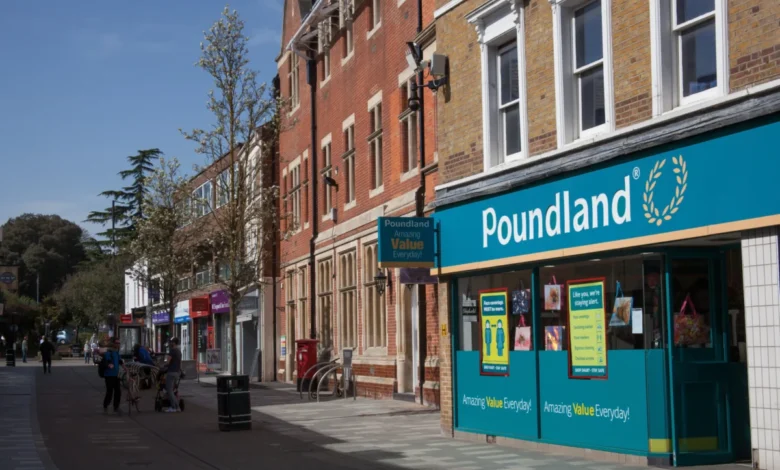
The precarious financial state of Poundland has sent shockwaves through the UK retail sector, with industry experts warning that the potential collapse of the discount giant could trigger a catastrophic domino effect across Britain’s high streets. As the retailer navigates the critical golden quarter—the period spanning the run-up to Christmas which typically accounts for a disproportionate share of annual revenue—the threat of insolvency hangs over its 600-strong store estate. The situation has intensified following a series of failed negotiations and a high-stakes standoff between the retailer’s owner, the US investment firm Gordon Brothers, and potential suitors, leaving thousands of jobs and hundreds of supply-chain partners in a state of deep uncertainty.
Molly Monks, a seasoned insolvency practitioner and founder of Parker Walsh, has cautioned that the fallout from a formal administration process would not be confined to the retailer’s corporate headquarters. "For many suppliers, a major retailer is not simply another customer," Monks observed. "It often represents a significant proportion of their total turnover. These businesses have already committed capital to the production, logistics, and delivery of seasonal inventory. If invoices remain unpaid or payments are frozen due to insolvency, these suppliers face an immediate liquidity crisis that threatens their ability to meet payroll, rent, and their own debt obligations."
A Chronology of the Impending Crisis
The current turmoil did not emerge overnight, though the formal filing on October 29, 2024, signaled a definitive turning point. The trajectory of the crisis can be mapped through a series of key developments:
- The Acquisition: Gordon Brothers acquired the business for a nominal £1, creating a capital structure that included a controversial £30 million shareholder loan.
- Operational Strains: Despite reporting a 3% increase in sales during the previous financial year, the company struggled to convert this top-line growth into sustainable bottom-line profitability amid inflationary pressures and rising operating costs.
- The Initial Bid: Martin Property Group attempted to intervene with a rescue bid, which was swiftly rejected by Gordon Brothers.
- The Moratorium: On October 29, 2024, Poundland filed a Notice of Intention to appoint administrators, triggering a 10-working-day moratorium that prevents creditors from taking immediate enforcement action while a buyer is sought.
- The Current Negotiations: London-based Xyra Group has emerged as the latest contender, reportedly proposing to settle 50% of the retailer’s outstanding debt—a figure that remains a sticking point in final negotiations.
The Anatomy of the £30 Million Shareholder Loan
At the heart of the controversy is the debt structure put in place by Gordon Brothers. By positioning itself as both the owner and the holder of the £30 million shareholder loan, the investment firm has placed itself in a privileged position within the capital stack. In the event of a formal administration, secured creditors—including the entity holding that loan—are typically prioritized for repayment from the proceeds of asset liquidations.
This creates a structural conflict of interest. As warehouses across the country are filled with high-value seasonal stock, there is an inherent tension between the need to pay unsecured suppliers and the desire of the investment firm to recover its own financial exposure. Analysts note that if the administration proceeds, suppliers—who have provided goods on credit—may find themselves at the bottom of the creditor hierarchy, likely receiving only pennies on the pound, if anything at all.
Economic Implications for the UK Retail Ecosystem
The wider implications of a potential Poundland collapse extend far beyond the balance sheet. The retail chain acts as an anchor for footfall in many secondary and tertiary high streets, often occupying prime locations in shopping centres that have already suffered from the long-term decline of department stores and the shift to online shopping.
"The uncertainty is a systemic risk for the high street," says retail analyst Simon Hedges. "Poundland provides an affordable shopping option that is particularly sensitive to the current cost-of-living crisis. If these stores close, the loss of footfall will be immediate. Neighbouring cafes, independent boutiques, and local services that rely on the synergy of a busy shopping parade will likely see a sharp decline in revenue, potentially triggering a secondary wave of business failures in towns already struggling to reinvent their town centres."
Data from the Office for National Statistics (ONS) underscores the fragility of the current retail environment. While retail sales have shown minor fluctuations, the cost-of-living crisis has shifted consumer behavior toward value-led retailers. Ironically, the very stores that consumers turn to for budget goods are now being squeezed by the same macro-economic forces of high interest rates and increased supply chain costs that they are designed to mitigate.
Official Responses and Government Intervention
The scale of the potential job losses—with over 11,000 staff members currently employed by the chain—has prompted direct intervention from the UK government. Business Secretary Jonathan Reynolds has held emergency discussions with Gordon Brothers, emphasizing the necessity of preserving jobs and ensuring that the interests of the workforce are prioritized.
However, the government’s ability to influence the outcome is limited. Under UK insolvency law, administrators have a legal duty to maximize the return to creditors. While they are tasked with seeking a rescue deal, they are not explicitly mandated to protect jobs if such an outcome conflicts with their fiduciary duties to the creditors. The ongoing negotiations with Xyra Group represent the most viable path to avoiding a total liquidation, but the reported demand that the buyer cover half of the outstanding debt creates a significant barrier to entry for any potential rescuer.
Analysis of the "Distressed Investing" Model
The situation at Poundland has reignited the debate surrounding private equity and investment firms entering the retail space. Critics argue that when firms acquire distressed assets with the primary intention of extracting value through debt restructuring rather than long-term operational improvement, the risk is shifted onto the supply chain and the workforce.
Supporters of this model, however, argue that administration is often the "least-worst" option. In many cases, a retailer is already technically insolvent when an investment firm steps in. By providing a short-term capital injection or a pathway to administration, these firms can sometimes save parts of the business that would otherwise collapse entirely under the weight of accumulated debt.
Regardless of the intent, the outcome remains the same for the individual business owner or employee: uncertainty. For the 11,000 staff members, the next few weeks will determine not only their immediate employment status but the stability of their livelihoods heading into the festive period.
Looking Toward the Future
As the 10-day moratorium nears its conclusion, the clock is ticking for all parties involved. If a deal with the Xyra Group or another investor fails to materialize, the administration process will enter a more aggressive phase. This could involve the selective closure of "underperforming" stores, the liquidation of stock, and a significant downsizing of the corporate structure.
The broader lesson for the British retail sector is the vulnerability of the supply chain in an era of rapid, debt-heavy acquisitions. When major retailers operate on thin margins, the reliance on credit-based supply chains makes the entire network susceptible to shocks. The Poundland case serves as a stark reminder that in the modern retail environment, corporate survival is no longer just about sales volume—it is about the integrity of the capital structure and the resilience of the ecosystem that supports it.
For now, suppliers are left in limbo, holding unpaid invoices and waiting for clarity from the administrators. The high streets, meanwhile, watch with bated breath, knowing that the loss of a major player like Poundland would not just be a corporate failure, but a permanent scar on the landscape of British retail. Whether this marks the end of a retail icon or the beginning of a painful restructuring, the ripples of this crisis will undoubtedly be felt long after the current inventory has been cleared from the shelves.
Related posts: