Digital Edition: Castore’s co-founders talk muscling up for the future


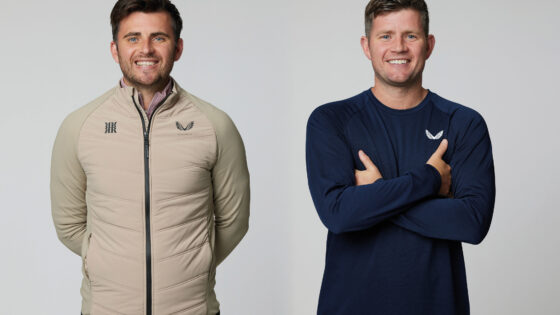
British sportswear disruptor Castore is marking a decade of rapid expansion by weighing strategic corporate options, including a potential sale, as the brand successfully transitions from an ambitious challenger label into a diversified global brand house. Founded in 2016 by entrepreneurial brothers Tom and Phil Beahon, the Liverpool-born company has spent the last ten years carving out a formidable niche in the highly competitive global athletic apparel market. By challenging legacy giants with high-performance fabrics, data-driven design, and a disruptive team-sponsorship model, Castore has rapidly evolved from a direct-to-consumer online startup into a multi-million-pound international enterprise.
As the brand commemorates its tenth anniversary, the leadership team is focusing on long-term scalability, operational resilience, and market positioning. In an exclusive discussion regarding the digital edition of their milestone corporate update, the founders reflect on the strategies that fueled their meteoric rise, the challenges of scaling a high-growth retail business in a volatile macroeconomic climate, and what the future holds as Castore transitions into a structured brand house capable of housing multiple sporting and lifestyle labels.
The Genesis and Evolution of a British Sportswear Challenger
The Castore journey began in 2016 when former professional athlete Tom Beahon and his brother Phil, a former professional cricketer, identified a glaring gap in the premium athletic wear market. Frustrated by the lack of high-performance sportswear that combined technical innovation with a tailored, luxury aesthetic, the brothers took matters into their own hands. Operating initially with limited capital and a relentless direct-to-consumer digital strategy, the founders leveraged their own athletic backgrounds to test and refine products that could withstand elite-level training regimens.
The core philosophy of the brand—encapsulated by its "Better Never Stops" mantra—resonated immediately with consumers looking for alternatives to established multinational conglomerates. By focusing heavily on lightweight, moisture-wicking, and durable engineering, Castore quickly built a loyal digital community. Unlike traditional sportswear brands that relied entirely on mass-market wholesale channels, Castore prioritized a data-centric digital infrastructure, allowing the company to understand consumer preferences in real-time, optimize inventory, and scale its product lines efficiently without accumulating legacy retail debt.
Chronology of Growth: Key Milestones from 2016 to 2026
To understand Castore’s current market standing and its contemplation of a corporate sale or restructuring, it is vital to examine the strategic milestones that defined its first decade:
2016: Tom and Phil Beahon launch Castore in Liverpool, initially focusing on premium men’s training apparel sold direct-to-consumer online.
- 2019: The brand secures high-profile endorsements, most notably partnering with British tennis icon Andy Murray, who subsequently becomes a shareholder and board advisor, dramatically elevating the brand’s global profile.
- 2020: Amid the global pandemic, Castore pivots smartly, capitalizing on the boom in athleisure and e-commerce while securing vital early-stage institutional funding.
- 2021: Castore makes its blockbuster entry into professional team sports by signing a multi-year kit supply deal with Scottish Premiership giants Rangers FC. This marks the beginning of an aggressive team-sponsorship strategy across football, cricket, rugby, and Formula 1.
- 2022–2023: The brand expands its footprint rapidly, securing major partnerships with English Premier League clubs (including Newcastle United, Aston Villa, and Wolverhampton Wanderers), as well as McLaren Racing in Formula 1 and England Cricket.
- 2024–2025: Castore begins transitioning its business model from a single-brand operation into a broader "brand house," introducing secondary labels, expanding its international brick-and-mortar retail footprint, and securing strategic private equity backing.
- 2026: Celebrating its 10th anniversary, the company evaluates high-level corporate options—including a potential sale or substantial outside investment—to fund its next decade of global expansion.
Market Disruption Through Elite Partnerships
A cornerstone of Castore’s rapid ascent has been its aggressive and unconventional approach to sports sponsorships. Rather than competing directly with the colossal marketing budgets of Nike and Adidas for mass-market legacy teams right out of the gate, Castore targeted ambitious clubs and organizations seeking higher financial returns and bespoke product designs.
By offering teams greater revenue-sharing models, superior product customization, and shorter design lead times, Castore successfully disrupted the traditional kit-supplier oligopoly. High-profile partnerships with McLaren Racing brought the brand onto the global Formula 1 stage, exposing Castore to hundreds of millions of television viewers worldwide. Similarly, deals with elite football clubs, international rugby unions, and tennis stars cemented the brand’s technical credibility.
However, rapid expansion into elite team sports is not without its operational hurdles. The sheer volume of manufacturing, global logistics coordination, and retail demand required to service multiple Premier League clubs and international racing teams placed immense pressure on the company’s supply chain. In response, Castore invested heavily in upgrading its operational infrastructure, onboarding seasoned retail executives, and refining its manufacturing partnerships across Europe and Asia to ensure consistent quality control and timely delivery.
Transitioning into a Brand House Model
As Castore enters its second decade, the strategic vision set out by Tom and Phil Beahon involves transforming the enterprise from a standalone label into a sophisticated brand house. This evolution mirrors the corporate structures of luxury and sportswear conglomerates that manage a portfolio of distinct consumer brands catering to different demographics and sporting verticals.
Industry analysts note that a brand house model allows companies to diversify risk, capture various price points, and scale administrative, technological, and logistical efficiencies across multiple operating units. For Castore, this means expanding beyond traditional high-performance athletic wear into lifestyle apparel, footwear, athleisure, and potentially acquiring complementary boutique fitness or outdoor brands.
The transition also requires a balancing act between maintaining the agile, entrepreneurial spirit of a disruptor and implementing the rigorous corporate governance expected of a multi-national retail group. The founders have steadily bolstered the company’s executive board with seasoned retail veterans, financial experts, and supply chain specialists to steer this complex maturation process.
Financial Performance and Investment Context
While private companies are not subject to the same public reporting standards as listed firms, financial disclosures and industry estimates indicate that Castore has experienced staggering compound annual growth rates over the past five years. Bolstered by millions of pounds in previous institutional funding rounds—backed by prominent private equity firms and high-net-worth investors—the company has consistently prioritized top-line revenue growth and international market penetration over short-term profitability.
The exploration of a potential corporate sale or strategic investment in late 2026 comes at a time when private equity and strategic trade buyers are actively hunting for resilient, high-growth consumer brands with proven omnichannel capabilities. Valuations for digitally native brands that have successfully bridged the gap into physical retail and international wholesale markets remain robust, provided they possess strong customer loyalty and proprietary product technology.
Market commentators suggest that a sale or a major secondary stake acquisition would provide the capital injection necessary for Castore to accelerate its expansion into North American and Asia-Pacific markets—regions that represent the final frontier for dominant global sportswear brands.
Industry Implications and Future Outlook
The trajectory of Castore over the past decade offers a compelling case study in modern retail entrepreneurship. By identifying white space in a saturated market, leveraging direct-to-consumer digital tools, and executing a high-risk, high-reward sports marketing strategy, the Beahon brothers have built one of the most talked-about British success stories of the decade.
As the brand evaluates its options for the future—whether through an outright acquisition by a global luxury or retail conglomerate, a private equity buyout, or continued independent growth as a diversified brand house—the core test will be maintaining brand authenticity. In an industry where consumer trust and technical credibility are paramount, preserving the performance-driven DNA that launched the brand in Liverpool ten years ago will be critical.
Ultimately, the dialogue surrounding Castore’s anniversary and its future corporate structure highlights the maturation of a homegrown challenger into an established industry force. As Tom and Phil Beahon prepare the business for its next chapter, the global sportswear market is watching closely to see whether this British upstart can successfully muscle its way into the absolute upper echelon of international athletic commerce.
Related posts: