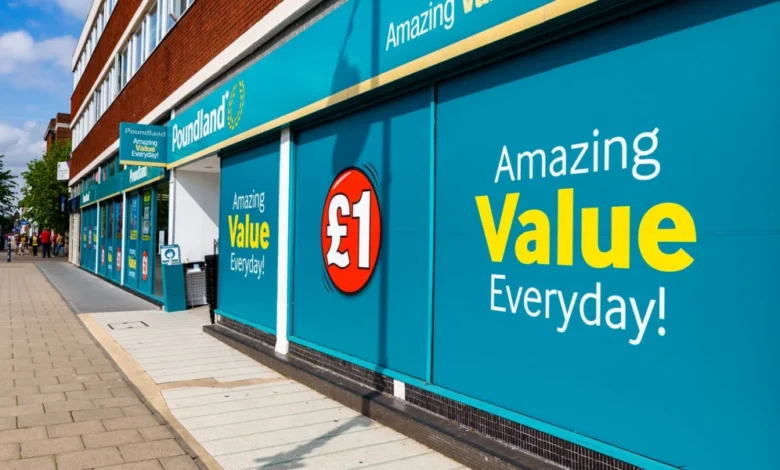
Poundland secures extra time to pursue rescue deal – but MP warns that jobs are still in jeopardy

A Chronology of the Crisis
The current instability facing Poundland represents the culmination of weeks of mounting financial tension. The retailer first signaled its precarious position at the end of October when it filed an initial notice of intention to appoint administrators. That filing triggered a statutory ten-day window for management and owners to secure a buyer or a restructuring agreement. As that deadline approached without a finalized deal, the filing of a second notice serves as a final, desperate attempt to stabilize the business before creditors move to force a liquidation process.
The timeline of the crisis has been punctuated by intense scrutiny from both the retail industry and the UK government. On November 11, the Business and Trade Select Committee convened a closed-door session, summoning representatives from Gordon Brothers—the American investment firm that owns the chain—to account for the company’s downward trajectory. This high-level intervention followed reports that the owners had extracted significant capital from the business despite its deteriorating financial health.
The Conflict Between Management and Ownership
A significant friction point has emerged between Poundland’s operational management team, led by managing director Barry Williams, and the firm’s private equity owners. The management team has consistently argued that the business remains a fundamentally viable enterprise. They point to a robust performance metric: Poundland has recorded a sales growth of over 3% during the last year, a period characterized by persistent inflation and a challenging macroeconomic environment. According to supporters of the current management, this growth demonstrates that the brand remains a staple of the British high street and maintains a loyal customer base.
Conversely, Gordon Brothers has taken a more cautious, and arguably defensive, stance. The firm has characterized the retailer as "challenged and vulnerable," suggesting that any minor downturn in future consumer spending could prove catastrophic. This divergence in outlook has led to reports that Gordon Brothers may be exploring a "break-up" strategy. By dismantling the chain and selling off individual assets—such as store leases, stock, and logistics infrastructure—the firm may believe it can achieve a higher recovery of its own capital than it could through a sale of the business as a going concern.
Financial Implications and Shareholder Loans
Central to the impasse is a £30 million shareholder loan held by Gordon Brothers. In the event that Poundland enters formal administration, Gordon Brothers would transition from an owner to a primary creditor. Under insolvency law, the proceeds from the sale of stock, furniture, and intellectual property would be prioritized to satisfy outstanding debts.
This hierarchy of repayment creates a significant risk for third-party suppliers. Many of these suppliers have provided goods on credit in anticipation of the lucrative Christmas trading period. Should the company collapse, these suppliers face the grim prospect of being left with substantial unpaid invoices, as they would likely fall lower on the list of priority creditors than the institutional lenders.
The rejected offer from the Martin Property Group serves as a case study in the current valuation deadlock. Reports indicate that the proposal involved an upfront payment of only £7 million, with the remainder of the deal structure falling short of the £30 million threshold required to clear the shareholder loan. Gordon Brothers’ rejection of this bid underscores the firm’s commitment to prioritizing its own financial recovery, a move that has drawn the ire of lawmakers.
Parliamentary Scrutiny and Ethical Concerns
The Business and Trade Select Committee meeting on November 11 was a watershed moment in the public discourse surrounding the retailer’s fate. Liam Byrne MP, the chair of the committee, did not mince words following the two-hour session. Byrne publicly expressed "deep concern" that the actions taken by Gordon Brothers might have jeopardized the livelihoods of 11,000 employees.
The committee’s frustration stemmed largely from the refusal of the ownership group to explicitly prioritize job retention over financial returns. While Gordon Brothers has officially stated that their preference is to sell the company as a whole, the lack of a guarantee regarding the long-term future of the workforce has cast a shadow over their intentions. However, there was a glimmer of cautious optimism from the committee chair, who acknowledged that the intense focus on the business over the past week has increased the likelihood of a constructive outcome.
Market Interest and Potential Buyers
Despite the looming threat of administration, the brand remains an attractive target for competitors looking to expand their footprint. The market is currently seeing interest from various entities. The Xyra group, a finance firm, is reportedly among those currently at the table with active proposals.
Furthermore, larger retail conglomerates such as B&M and The Range have been identified as parties interested in acquiring specific parts of the store estate. While such an acquisition would be a blow to the Poundland brand as a unified entity, it could offer a lifeline to specific locations and staff, preventing total store closures in regions where these competitors seek to bolster their own presence.
The Road to Survival
In an effort to keep the lights on while negotiations continue, Gordon Brothers has released an additional £10 million in funding. This capital is intended to secure fresh inventory, ensuring that the shelves remain stocked throughout the critical pre-Christmas trading weeks. Maintaining operations is vital; if the stores were to cease trading, the value of the business would depreciate rapidly, making a rescue deal even less likely.
The company is currently engaged in active discussions with three distinct parties, according to a recent statement. Gordon Brothers has reiterated its stated goal: "working to secure a credible plan that delivers certainty, preserves value and protects as many jobs as possible."
Analysis of Broader Retail Trends
The plight of Poundland is not an isolated incident but rather a symptom of the broader instability currently plaguing the UK retail sector. High operational costs, including business rates, energy, and wage pressures, have created a "knife-edge" environment for mid-to-large-scale retailers.
If Poundland were to collapse, the impact on the UK high street would be significant. The retailer operates a vast network of stores, many of which serve as "anchor" tenants in smaller town centers. The departure of such a significant operator would not only result in mass unemployment but would also likely trigger a decline in footfall for neighboring independent businesses, potentially leading to a localized economic contraction in several towns across the United Kingdom.
As the ten-day clock begins to tick, the pressure on all stakeholders—management, owners, and potential buyers—is at its zenith. The next few days will be characterized by intense due diligence and negotiation. For the 11,000 staff members, the outcome remains uncertain. The hope for a rescue rests on the ability of the parties to reconcile the valuation gap and find a path that balances the financial interests of the creditors with the socio-economic necessity of preserving a major British employer. The administration process, while a tool for orderly liquidation, is a last resort; the current extension suggests that there is still a window for a private deal that could avoid the more disruptive path of a court-led insolvency process. For now, the focus remains on the "credible plan" promised by the owners and the ability of the management team to prove the long-term viability of their retail model.