For decades, the luxury industry has operated under a rigid mandate: the value of an object is intrinsically tied to its pristine condition. Perfection has been the currency of high-end retail, where scratches, dents, and signs of use were historically viewed as depreciating factors. However, a seismic shift in consumer behavior and aesthetic philosophy is currently underway, championed by a high-profile collaboration between German luggage manufacturer RIMOWA and the Parisian avant-garde fashion house Maison Margiela. Their upcoming limited-edition travel set—slated for release on November 19, 2026—does not merely tolerate the passage of time; it places the inevitable degradation of material at the center of its design narrative.
This partnership represents a meeting of two icons of industrial and conceptual design. RIMOWA, founded in 1898 in Cologne, has spent over a century refining the aluminum suitcase, an object synonymous with the jet-set era. Maison Margiela, established in 1988 by the elusive Belgian designer Martin Margiela, has built its reputation on deconstruction, the exposure of inner workings, and a commitment to the "unfinished" aesthetic. By merging these two distinct DNA strands, the collection challenges the traditional luxury consumer to embrace the "patina of life" rather than the sterile sheen of a showroom floor.
The Anatomy of the Collection: Engineering Imperfection
The collaboration focuses on two primary silhouettes: the Classic Cabin suitcase and the 5AC XL bag. Each piece acts as a canvas for a deliberate intersection of aviation-inspired engineering and artistic subversion.
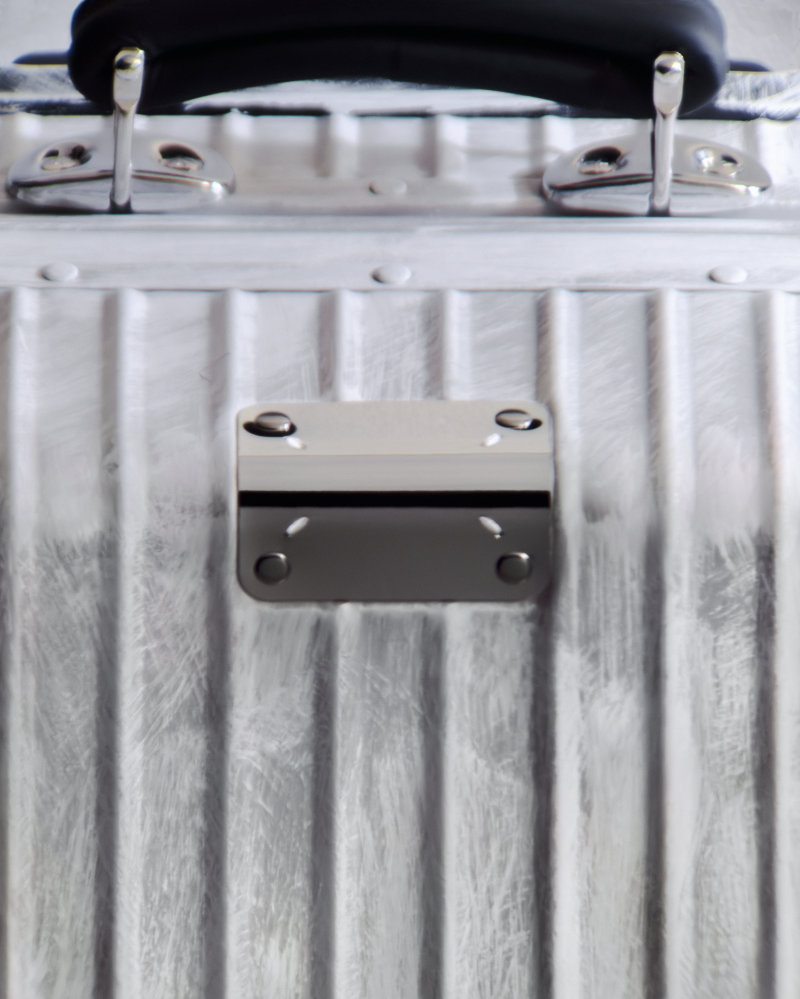
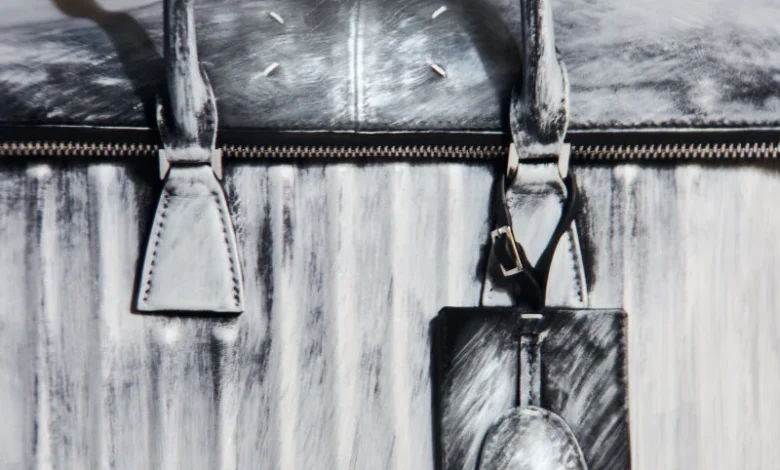
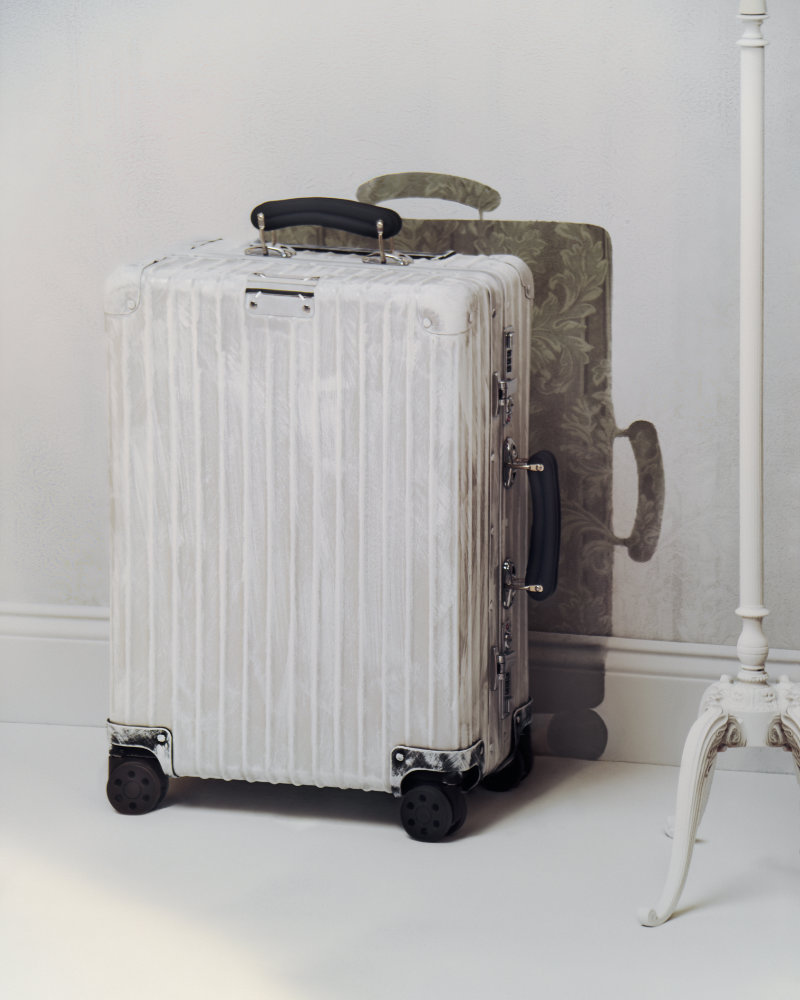
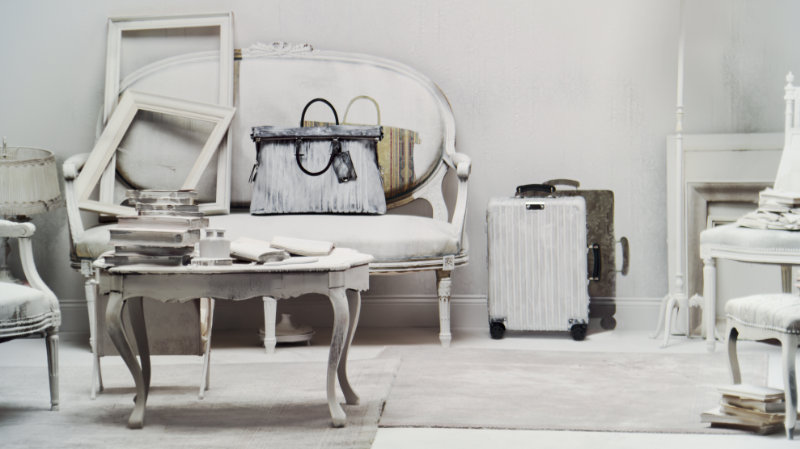
The Classic Cabin is a reimagining of the brand’s signature aluminum groove design, which first appeared in 1950. While the exterior retains the structural integrity that has made RIMOWA a staple of international travel, the surface is treated with Maison Margiela’s proprietary "Bianchetto" technique. This hand-applied white overpainting is a direct nod to the house’s origins; in 1988, Martin Margiela famously painted the furniture of his debut studio in white to create a sense of anonymity and focus. On the suitcase, this paint is designed to crack and flake over time, revealing the metallic grooves beneath. The result is a travel companion that matures with the owner, effectively documenting every trip through a unique map of surface wear.
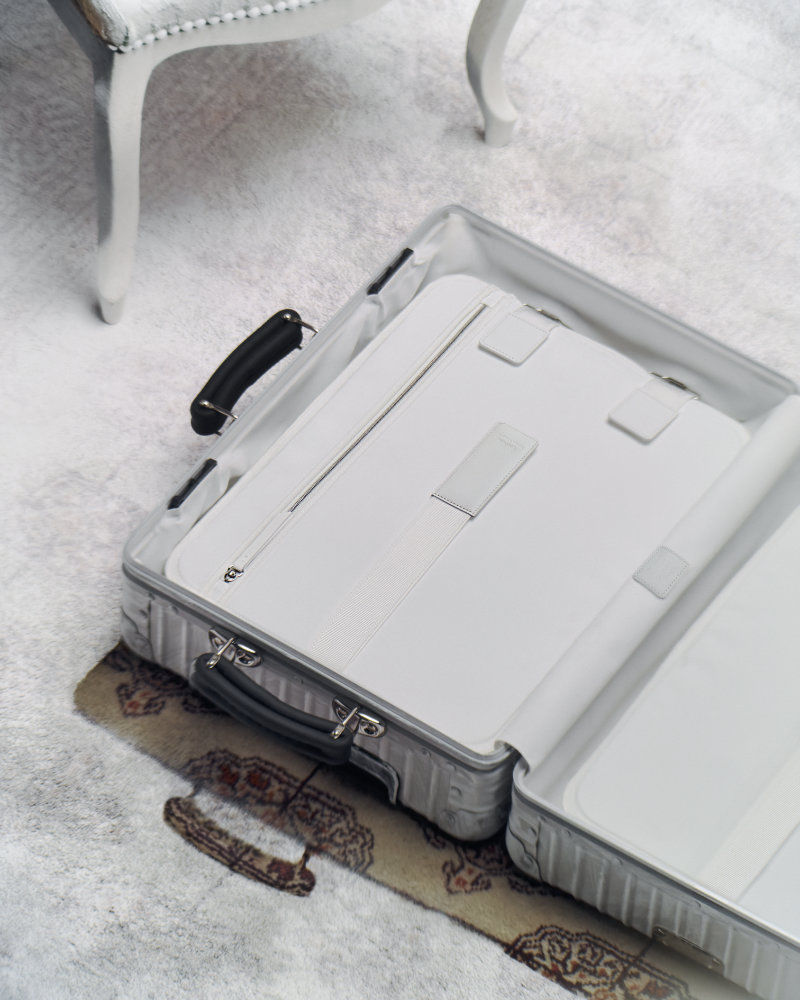
The interior of the cabin case is equally radical. Departing from the standard, hidden linings of traditional luggage, the piece features visible stitching, overlocked edges, and a stark white palette. This transparency mirrors Margiela’s long-standing tradition of "exposed construction," where the architecture of an object is treated as a design element rather than something to be concealed. The iconic RIMOWA logo badge has been modified to include the signature four white-thread stitches associated with the Maison Margiela brand, acting as a quiet, recognizable mark of the collaboration.
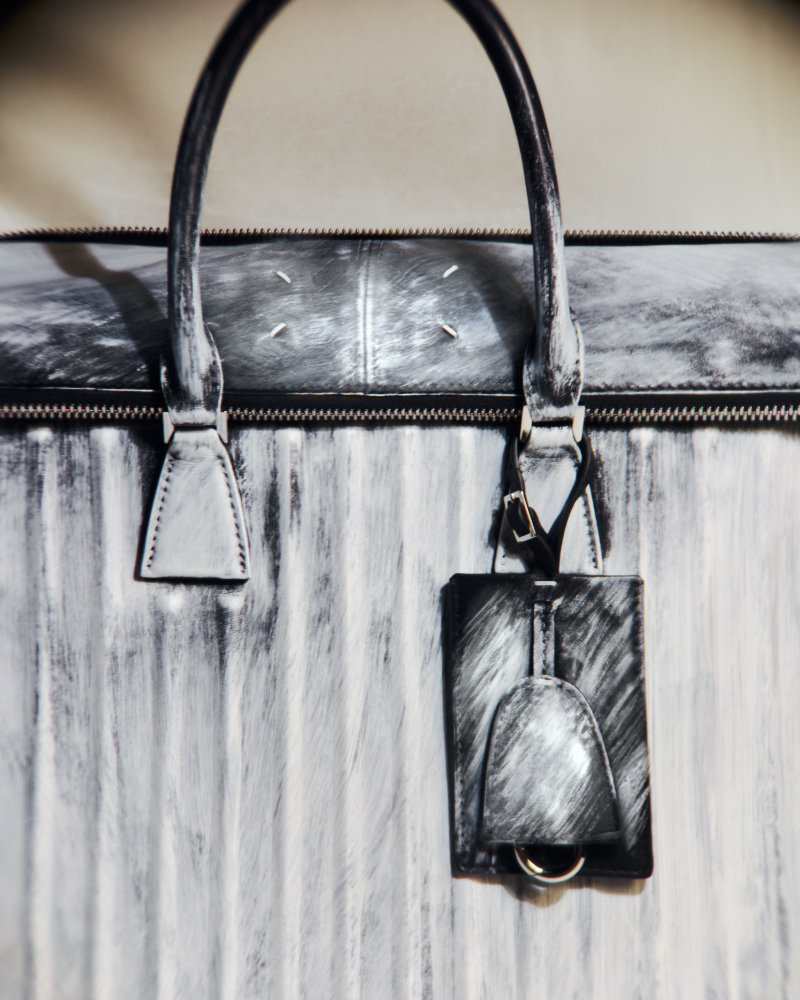
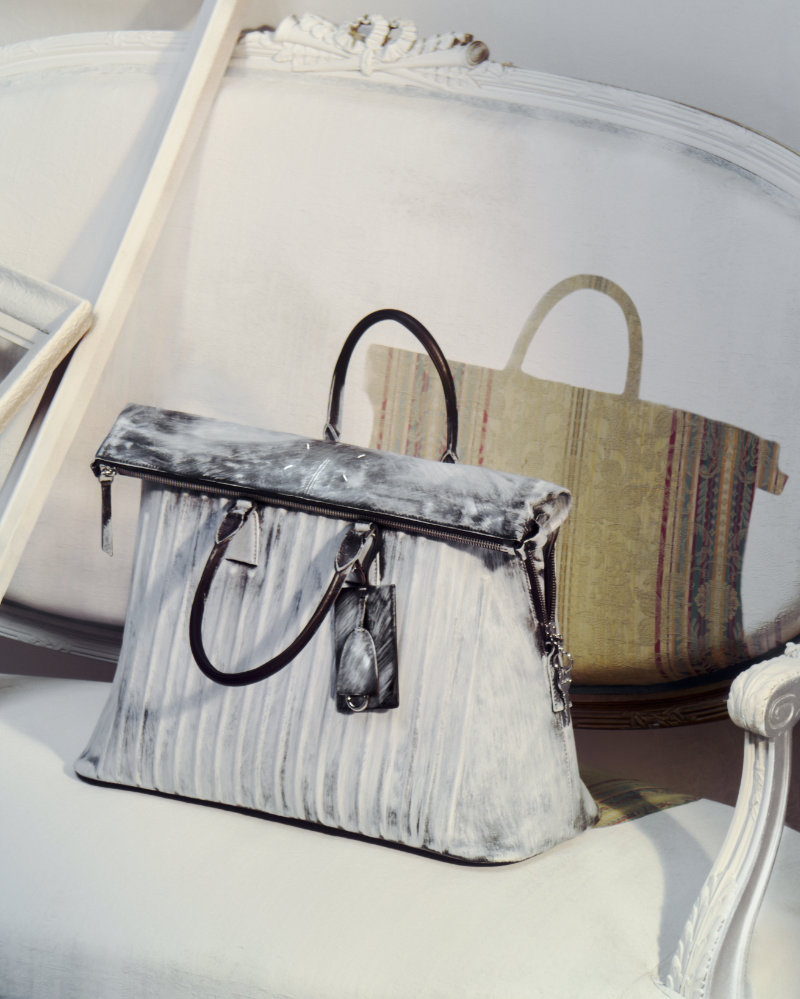
The 5AC XL bag complements the suitcase through a feat of material innovation. Using high-frequency technology, the iconic RIMOWA grooves are heat-pressed directly into the leather, creating a three-dimensional, rigid pattern without the use of traditional needlework. This allows the bag to harmonize visually with the hard-shell suitcase. Furthermore, the integration of removable leather loops enables the bag to be securely attached to the cabin case, ensuring that the alignment of the grooves across both items is seamless.
A Chronology of Collaboration and Conceptual Evolution
The partnership between these two brands is not merely a commercial endeavor; it is the culmination of a broader evolution in how high-fashion houses approach sustainability and longevity.
- 1988: Martin Margiela establishes his eponymous house in Paris, introducing the world to the "Bianchetto" technique and the deconstructionist movement.
- 1950: RIMOWA introduces its first aluminum suitcase with the characteristic grooves, inspired by the corrugated metal skin of the Junkers F.13 aircraft.
- 2023–2025: A growing market trend emerges favoring "lived-in" luxury. Data from secondary market platforms indicates an increasing premium on vintage items that display authentic signs of use, reflecting a shift away from the "disposable" nature of fast-paced trend cycles.
- November 2026: The official launch of the RIMOWA x Maison Margiela collection, marking the first time the Bianchetto technique has been applied to industrial aluminum luggage at this scale.
By acknowledging the history of these techniques, the brands are positioning the collection as a "living" artifact. When the paint chips away, the user is not seeing a defect; they are witnessing a performance of the object’s history.
Market Implications and the Luxury Narrative
The decision to lean into the concept of "wear and tear" carries significant implications for the luxury market. Traditionally, luxury goods have been sold on the promise of permanence—the idea that if you buy a high-quality item, it will remain unchanged forever. However, the success of "quiet luxury" and the rise of sustainable consumption have begun to rewrite this script.
Market analysis suggests that consumers, particularly Gen Z and Millennial buyers, are increasingly prioritizing "meaningful objects." A product that carries the marks of its owner’s experiences is perceived as having higher emotional utility. By intentionally creating an object that degrades, RIMOWA and Maison Margiela are effectively selling a narrative of experience. The suitcase is no longer just a vessel for clothes; it becomes a diary of the owner’s travels.
From a production standpoint, the collection also addresses the paradox of durability. Aluminum is a highly durable material, but its vulnerability to denting has always been a point of tension for travelers. By normalizing the "dent," the brands are removing the anxiety of travel. The suitcase is, by design, intended to be battered, scratched, and worn. This shifts the focus from the fear of damage to the pride of usage.
Artistic Direction: The Haussmannian Campaign
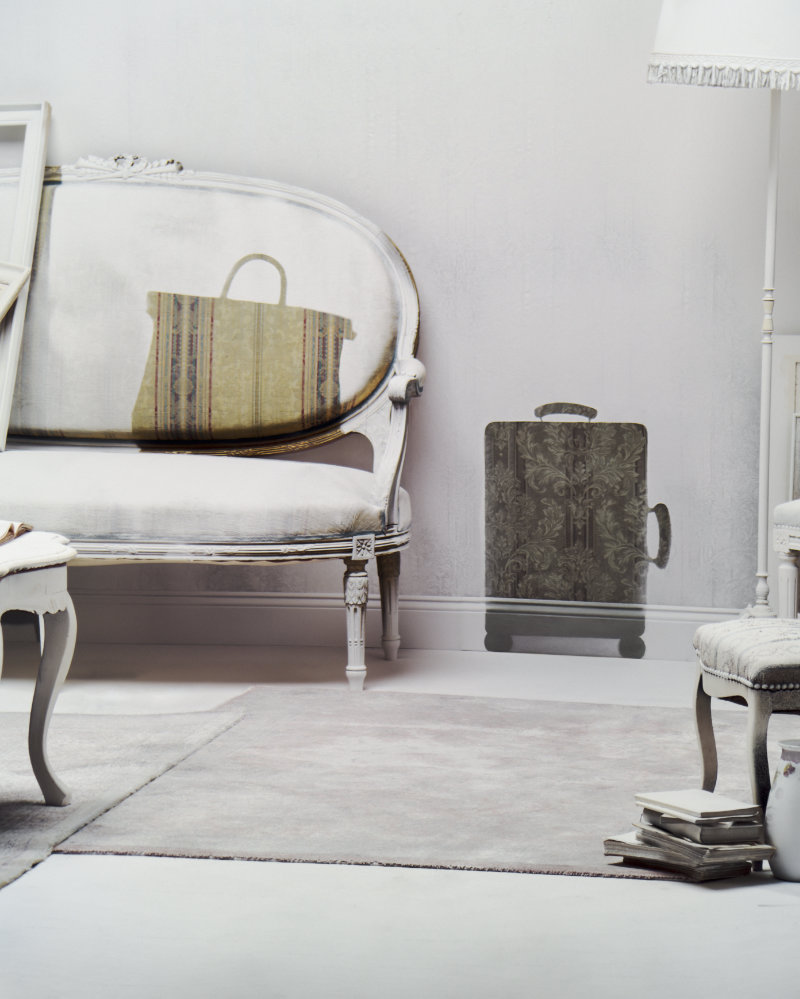
The campaign, directed and photographed by Dexter Lander, serves to contextualize the collection within the storied, architectural history of Paris. Set in a classic Haussmannian apartment—characterized by its high ceilings, ornate moldings, and tall windows—the campaign imagery takes the Bianchetto technique to an extreme.
The white paint that defines the luggage is seen bleeding into the environment itself. The walls and floors of the apartment are coated in a similar white finish, creating a monochromatic void that forces the viewer to focus entirely on the silhouette and texture of the products. This staging reinforces the idea that the collection is an extension of the environment, blurring the lines between the object and the space it occupies.
Official Stance and Consumer Access
While neither brand has released formal sales projections, industry experts anticipate strong interest from collectors of both heritage luggage and conceptual fashion. The alignment of RIMOWA’s manufacturing precision with the subversive creativity of Maison Margiela creates a product that sits at the intersection of utility and art.
"We wanted to create something that wasn’t just a container for your life, but a participant in it," a source close to the project indicated. The intent is to provide a counterbalance to the "pristine" culture of modern retail. By the time the collection reaches the public on November 19, 2026, it will have already been framed not as a temporary accessory, but as a long-term investment in a narrative.

The collection will be available at select boutiques globally and through the respective online platforms of both brands. For those who view travel as a transformative act, the RIMOWA x Maison Margiela set offers a rare opportunity to own a piece of functional art that encourages—rather than fears—the inevitable passage of time.
The Broader Shift in Luxury Design
This collection serves as a bellwether for where the luxury industry is heading. We are seeing a move toward "slow design," where the lifespan of an object is valued over its initial aesthetic perfection. As environmental concerns drive a more critical look at consumer habits, brands that can successfully market the beauty of aging will likely find themselves in a stronger position.
The RIMOWA x Maison Margiela collection is a testament to the fact that when it comes to objects of true quality, the most interesting parts of their life are the ones that happen after they leave the showroom. As the paint cracks and the aluminum sustains its first, inevitable dent, the owner is not losing value—they are, in the eyes of this collaboration, finally beginning to use the object as it was intended. It is a bold, intellectualized approach to the travel experience, and one that promises to set a new standard for luxury collaborations in the coming years.