Aimplas Plastics Technology Centre Pioneers Sustainable Skincare and Medical Solutions Through Bacterial Cellulose Innovation

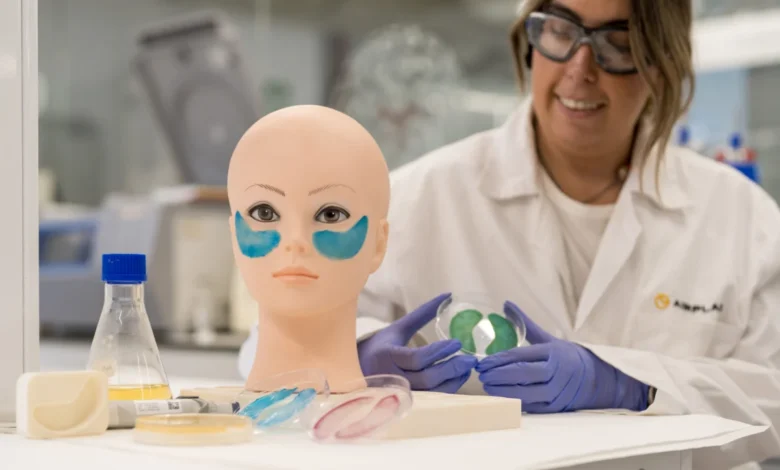
Researchers at the Aimplas Plastics Technology Centre in Spain have unveiled a breakthrough in material science, successfully utilizing bacterial cellulose to engineer biodegradable cosmetic facial masks and advanced medical dressings. This development represents a significant shift in the personal care and medical textile sectors, moving away from conventional plant-derived cellulose and synthetic fibers toward a more sustainable, high-performance bio-material produced through microbial fermentation.
The Science of Microbial Cellulose Synthesis
Unlike traditional cellulose, which requires extensive processing of wood pulp or cotton fibers—processes often associated with significant water consumption and chemical waste—bacterial cellulose is synthesized directly by microorganisms. Specifically, researchers at Aimplas are leveraging the capabilities of the Komagataeibacter genus. As these bacteria metabolize nutrients, they secrete a dense, three-dimensional network of ultra-fine cellulose nanofibrils.
This material is structurally distinct from its botanical counterparts. Because it is produced in a controlled fermentation environment, the resulting cellulose is remarkably pure, devoid of lignin, hemicellulose, and pectin. These plant-based impurities typically require energy-intensive chemical treatments to remove; their absence in bacterial cellulose simplifies production and enhances the material’s biocompatibility. The resulting hydrogel structure is characterized by its high porosity and exceptional water-retention capacity, allowing the material to hold many times its weight in aqueous solutions.
Chronology of Development and Research Milestones
The investigation into bacterial cellulose at Aimplas is part of a multi-year strategic initiative focused on circular economy principles within the plastics and textiles industries. While the specific project regarding cosmetic masks has gained traction throughout 2026, the underlying research has been developing for several years:
- 2022–2023: Initial laboratory trials were conducted to optimize the fermentation conditions of Komagataeibacter strains, focusing on yield consistency and the mechanical strength of the cellulose pellicles.
- Early 2024: Aimplas researchers began testing the material’s interaction with various skincare active ingredients, assessing how the nanofibrillar structure could effectively "load" and "release" substances like hyaluronic acid and antioxidants.
- Late 2025: Prototype development transitioned from basic material testing to the fabrication of thin-film hydrogel sheets, designed to mimic the tactile properties of high-end skincare masks.
- October 2026: The current status involves refining the scale-up process to ensure the product remains commercially viable for both the cosmetic industry and the specialized medical sector.
Technical Advantages: Hydration and Bio-Compatibility
The primary appeal of this bacterial-derived material lies in its performance metrics. In cosmetic applications, "sheet masks" are a staple of the global skincare market, yet many are constructed from non-biodegradable synthetic polymers that contribute to microplastic pollution. The Aimplas-developed masks offer a superior alternative.

"Bacterial cellulose has very interesting properties for the development of more sustainable, high-performance cosmetic products," notes María José de Manuel, a biotechnology researcher at Aimplas. "Its extraordinary water-retention capacity, together with its flexibility and ability to adapt to the skin, make it an ideal material for facial masks and as a support for incorporating cosmetic active ingredients."
The mask’s ability to "conform to the contours of the skin" is not merely a comfort feature; it is a functional requirement for effective transdermal delivery. By creating an occlusive barrier, the mask prevents the evaporation of active ingredients, forcing them into the stratum corneum. This makes the material particularly effective for post-sun exposure recovery, where the skin barrier is compromised and requires deep hydration.
Medical Implications: Wound Care and Tissue Engineering
While the consumer-facing cosmetic market provides a clear path for commercialization, the implications for the medical field are perhaps more profound. Bacterial cellulose is naturally biocompatible, meaning it does not trigger an adverse immune response when applied to damaged tissue.
The material’s nanoporous structure acts as an ideal scaffold for chronic wound management. For patients suffering from burns, venous ulcers, or pressure sores, maintaining a "moist wound environment" is the gold standard for accelerating epithelialization—the process by which new skin cells cover a wound. Bacterial cellulose dressings maintain this moisture while simultaneously allowing for the controlled release of therapeutic agents, such as antibiotics or growth factors, directly into the wound bed.
Furthermore, the material is currently being evaluated for its potential in tissue regeneration. By acting as a structural template, the cellulose scaffold allows healthy cells to migrate, proliferate, and eventually replace the scaffold with natural tissue. As the body heals, the cellulose can be engineered to degrade at a rate synchronized with the patient’s recovery, potentially reducing the need for painful dressing changes.
Economic and Environmental Impact
The global market for wound care and skincare is increasingly under pressure to adopt sustainable sourcing. Conventional cellulose production, while renewable, involves extensive land use and reliance on forestry. Bacterial cellulose, by contrast, can be produced in bioreactors. This allows for a decentralized production model where the material can be synthesized in facilities near the end-user, significantly reducing the carbon footprint associated with transport and raw material supply chains.

From an economic perspective, the shift to bacterial cellulose provides a unique value proposition for the European textile and chemical industries. By moving toward high-value, bio-based materials, manufacturers can capture higher margins compared to bulk commodities. Furthermore, the European Union’s tightening regulations on microplastics and single-use plastics provide a strong legislative tailwind for this technology, making it an attractive target for venture capital and industrial partnerships.
Challenges and Future Outlook
Despite the promising laboratory results, the path to mass-market adoption faces several hurdles. The primary challenge is the scalability of fermentation. While small-batch production is well-understood, scaling the production of uniform, high-quality cellulose sheets to meet the global demand of the cosmetics industry requires significant investment in bioreactor infrastructure.
Additionally, researchers must address the cost-competitiveness of these materials compared to traditional synthetic polymers. While the environmental benefits are clear, the industry remains price-sensitive. Aimplas continues to focus on optimizing the nutrient media used to feed the bacteria—specifically exploring the use of industrial or agricultural waste streams as a feedstock—to further reduce production costs and improve the overall sustainability profile.
As Aimplas continues to advance its research, the focus is shifting toward collaborative ventures with cosmetic brands and medical device manufacturers. The potential for a "cradle-to-cradle" life cycle for these masks—where the cellulose is grown from recycled nutrients and returns to the earth as compostable organic matter—represents the pinnacle of current material science innovation.
Conclusion
The development of bacterial cellulose-based hydrogels by Aimplas marks a critical intersection between biotechnology and industrial design. By successfully navigating the complexities of microbial growth to create a functional, high-performance material, the center has provided a blueprint for future developments in both the beauty and healthcare industries. As the research matures, the transition from prototype to commercial application will likely set a new benchmark for sustainable materials, proving that the future of skincare and wound healing may well be found in the microscopic work of the Komagataeibacter bacteria.
For industry stakeholders, this research serves as a signal that the era of bio-integrated materials is rapidly approaching. Whether through the lens of environmental stewardship or the pursuit of superior medical outcomes, the adoption of bacterial cellulose offers a robust, scientifically backed solution to some of the most pressing material challenges of the 2020s. Aimplas remains at the forefront of this shift, continuing its broader research into bio-based materials that promise to redefine the standards of the textile and cosmetic sectors for the coming decade.