Aisling Camps Returns to New York Fashion Week with a Masterclass in Artisanal Knitwear and Refined Deconstruction

The landscape of modern American fashion is constantly shifting, shaped by emerging talents who manage to balance traditional craftsmanship with contemporary sensibilities. Among the rising stars making a distinct mark on the industry is knitwear designer Aisling Camps. Following the critical acclaim of her New York Fashion Week debut last fall, Camps returned to the official runway circuit this season with a tightly curated, 20-look collection that underscored her technical mastery. Her sophomore NYFW presentation arrived on the heels of a major career milestone: earning a coveted spot as a contender in the prestigious CFDA/Vogue Fashion Fund. This dual achievement signals not only her creative viability but also her growing stature within the upper echelons of the commercial fashion landscape.
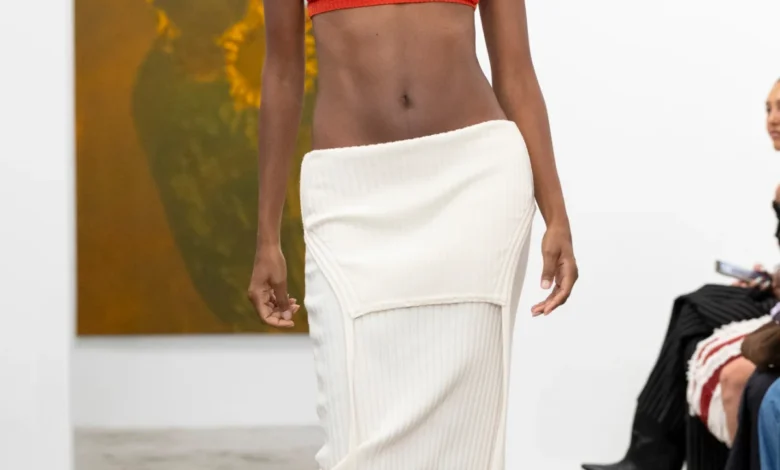
Staged within the intimate confines of the Bortolami Gallery, the presentation was visually anchored by a striking sunflower painting created by French-Lebanese artist Christine Safa. The artwork’s organic tones and textured brushstrokes mirrored the tactile nature of Camps’ garments, creating an immersive environment where fine art and wearable sculpture intersected. Against this backdrop, the designer took time to reflect on the immense network of support that has propelled her brand forward over the past year.
The Chronology of Growth: From Debut to the CFDA/Vogue Fashion Fund
To understand Aisling Camps’ current trajectory, one must examine the rapid acceleration of her brand over the past twelve months. Her breakthrough moment arrived during the previous New York Fashion Week season, where her debut collection caught the attention of seasoned critics, buyers, and industry insiders. The collection established her signature aesthetic: an uncompromising dedication to artisanal knitwear that values the integrity of individual threads and complex textile manipulation.
Following that successful introduction, Camps entered the rigorous application and evaluation process for the CFDA/Vogue Fashion Fund—an initiative historically known for nurturing and accelerating the careers of America’s most promising independent designers. Reaching this stage of the competition placed her in direct contact with industry leaders and corporate giants. Throughout the development of her latest collection, Camps engaged in mentorship and advisory sessions with executives from major global entities such as Meta, Nordstrom, and Bloomingdale’s.
Speaking on these high-level collaborations during her gallery presentation, Camps emphasized the invaluable nature of these professional relationships. These C-suite insights have provided her with a pragmatic foundation for scaling her business. While many independent designers struggle to bridge the gap between creative expression and commercial viability, Camps has proactively engaged with retail and tech executives to fortify her brand’s infrastructure. This strategic positioning has allowed her to scale sustainably while maintaining the artisanal quality that defines her work.
Deconstruction and Form: The Spring Collection Analysis
The fashion industry, much like Camps’ signature artisanal knitwear, operates as an intricate, interdependent system. It is a network in which no single component can function independently of the others. This metaphor of the interwoven web served as the conceptual blueprint for her spring collection. Rather than presenting pristine, hyper-finished garments, Camps chose to explore the beauty of imperfection, wear, and structural deconstruction.
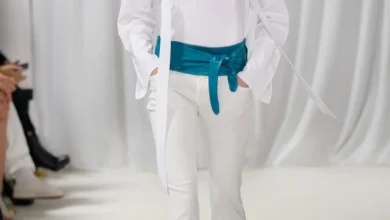
The runway featured pullovers deliberately styled to appear "schlubby" and elongated. Sleeves extended far past the models’ hands, invoking the casual, relaxed posture of garments stored improperly on hangers rather than neatly folded in drawers. This deliberate subversion of traditional tailoring norms challenged the audience to rethink the lifecycle and care of luxury knitwear.
Further demonstrating her technical versatility, Camps incorporated crocheted cotton pieces interspersed with delicate charmeuse. These garments featured calculated, gaping holes that played with notions of transparency and exposure. Fringed tops appeared to be actively unraveling, held together by precarious, thread-like halters that tested the structural limits of the material. Despite the apparent fragility of these pieces, the execution demonstrated a deep understanding of tension, drape, and textile engineering.
Cultural Roots and Subconscious Influences
While the collection’s structural techniques spoke to a global design vocabulary, the emotional core of the presentation remained deeply personal. Several key threads within the collection tied directly back to Camps’ upbringing and heritage in Tobago. When discussing the striking color palette—defined by prominent blocks of red, white, and black—Camps noted that her selection of the Trinidadian flag’s official colors was entirely "subconscious."
Nevertheless, the unintended patriotic resonance was warmly received, aligning closely with the timing of the island nation’s Independence Day celebrations. This organic blending of personal memory and national identity allowed the designer to honor her roots without falling into overt or clichéd tropes. The colors were integrated seamlessly into the advanced knitwear techniques, grounding the avant-garde silhouettes in a rich cultural narrative.
Balancing Past Nostalgia with Mature Sensibility
In addition to her Caribbean heritage, Camps infused the collection with a deliberate exploration of youth culture and early developmental markers of sex appeal. The designs captured the outré sensibilities of her teenage self—an era defined by bold, unapologetic fashion choices. Reflecting on her youth, the designer offered a lighthearted anecdote: she was unapologetically the teenager wearing a bikini while pumping gas on the way to the beach.
This playful nostalgia manifested in convertible "bikini" tops and miniature tank dresses. Some pieces were directly translated onto the runway from a photograph of her younger self that occupied a central space on her studio mood board. However, this was not merely an exercise in replication. Camps reconciled her teenage aesthetic with her present-day perspective as an adult woman. While the youthful silhouettes remained intact, they were tempered and updated through a modern lens—often paired with cool, low-slung boy shorts that provided a contemporary counterweight to the daring upper garments.
Economic Implications and Market Positioning
Although the presentation was tightly edited to a concise lineup of only 20 looks, it delivered remarkable breadth in terms of texture, technique, and narrative depth. By prioritizing quality and editorial focus over sheer volume, Camps demonstrated a mature approach to collection-building that resonates with modern luxury consumers.
The broader implications of Camps’ recent trajectory point to a shifting retail landscape where institutional backers like the CFDA/Vogue Fashion Fund are increasingly looking to support nimble, highly specialized independent designers. As major department stores and digital platforms seek out authentic, story-driven brands to capture the attention of discerning shoppers, designers who can successfully merge artisanal production with strategic corporate mentorship are exceptionally well-positioned for long-term survival.
By fostering close relationships with industry giants like Nordstrom and Bloomingdale’s early in her brand lifecycle, Camps is avoiding the traditional pitfalls of undercapitalized independent design. Her spring collection serves not only as a creative triumph of textured deconstruction and cultural storytelling, but also as a case study in how emerging creative talent can strategically navigate the complex machinery of modern fashion.