Digital Edition: Mithridate’s Daniel Fletcher: We need stores prepared to take risks on young brands

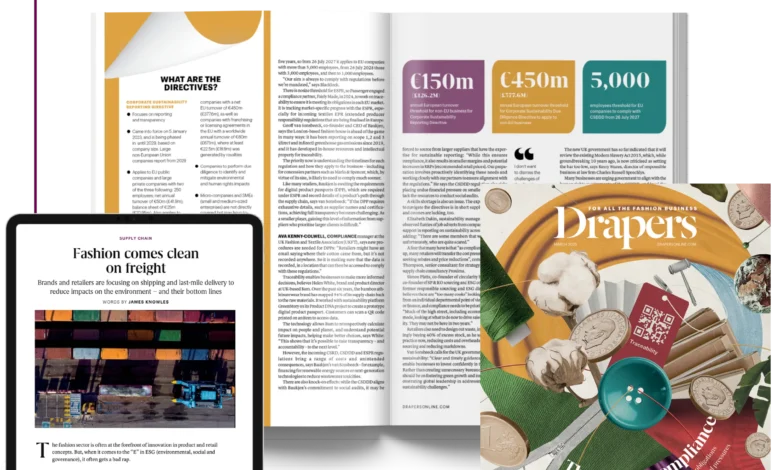
As London Fashion Week approaches its highly anticipated seasonal showcase, the intersection of heritage craftsmanship and contemporary retail strategy remains a critical focal point for the British fashion industry. Amidst the flurry of runway preparations, Daniel Fletcher, the visionary creative director of luxury label Mithridate, has articulated a pressing challenge facing the modern fashion ecosystem: the urgent need for physical retail stockists willing to champion emerging and independent design talent. Ahead of the unveiling of his fourth consecutive collection for the brand, Fletcher sat down with fashion trade publication Drapers to discuss the evolving dynamics of wholesale retail, the financial pressures on young labels, and why his latest line represents a deliberate, deeply personal double-down on the creative capital of London.
The dialogue underscores a broader, ongoing structural debate within the global fashion economy. While digital-first marketplaces and direct-to-consumer models have democratized access for up-and-coming designers, the traditional brick-and-mortar retail sector continues to play an irreplaceable role in establishing brand equity, tactile consumer engagement, and long-term viability. For Fletcher, who took the helm at Mithridate with a mandate to bridge the brand’s international manufacturing pedigree with a distinctly British design ethos, the health of the industry relies heavily on the courage of retail buyers. Without department stores and high-end boutiques willing to allocate floor space and financial commitment to riskier, non-conforming brands, the pipeline of creative innovation risks stagnation.
Background Context and the Evolution of Mithridate
Founded with a vision to merge Eastern manufacturing excellence with Western sartorial storytelling, Mithridate has steadily carved out a distinct niche within the contemporary luxury landscape. The brand is known for its uncompromising attention to detail, rich textile experimentation, and a design language that refuses to pander to fleeting micro-trends. However, like many labels operating in the high-end contemporary space, Mithridate has had to navigate a turbulent post-pandemic retail environment marked by inflationary pressures, shifting consumer spending habits, and a conservative approach from traditional retail buyers.
Daniel Fletcher’s appointment as creative director marked a significant turning point for the brand. Known for his eponymous label and his tenure as menswear artistic director for Fiorucci, Fletcher brought a distinct London sensibility to Mithridate, blending tailored precision with an effortless, youthful irreverence. Over his first three collections, he successfully harmonized Mithridate’s technical capabilities with his own narrative-driven design philosophy. As he prepares to debut his fourth collection, the focus has shifted from establishing the partnership to solidifying the brand’s identity within the global fashion capital.
The London Connection: A Strategic Choice
For his fourth outing at London Fashion Week, Fletcher has chosen to lean heavily into the city that has long served as his primary muse and professional base. While many contemporary brands diversify their presentation schedules across international hubs like Milan, Paris, or New York, Fletcher’s deliberate centering of London is both a creative choice and a statement of solidarity with the British fashion community.

London has historically functioned as an incubator for raw talent, celebrated globally for its art schools, subcultural history, and avant-garde spirit. Yet, the city’s fashion infrastructure has faced severe economic headwinds in recent years, exacerbated by the post-Brexit trading landscape, the elimination of tax-free shopping for international tourists, and soaring commercial rents. By anchoring his collection to the capital, Fletcher aims to leverage London’s enduring cultural cachet while drawing attention to the systemic challenges faced by the businesses operating within its borders.
The collection itself promises to explore the juxtaposition of structured tailoring and fluid, wearable art, utilizing a palette and textile selection that reflects the gritty, romantic duality of London life. According to preview insights, the garments are designed to challenge conventional gender boundaries while offering functional luxury for the modern consumer—a hallmark of Fletcher’s design career.
The Retail Crisis: Why Stores Must Take Risks
At the core of Fletcher’s interview with Drapers is a candid assessment of the current state of wholesale purchasing. In an era defined by economic uncertainty, major department stores and multi-brand boutiques have increasingly adopted risk-averse purchasing strategies. Rather than investing in emerging labels or avant-garde pieces that require customer education and storytelling, buyers are heavily leaning into safe, established heritage brands and basic, high-turnover merchandise.
This risk-averse pivot has created a formidable barrier to entry for young brands. Without initial stockist commitments, emerging designers struggle to secure the cash flow necessary for production, let alone maintain a physical presence on high-street or luxury avenues. Fletcher argues that this trend poses an existential threat to the future of fashion. If retailers refuse to take a chance on newness, the industry risks losing the next generation of creative voices, leading to a homogenized retail landscape devoid of genuine innovation.
Industry Analysts Weigh In on Wholesale Pressures
Economic analysts tracking the luxury and contemporary retail sectors note that Fletcher’s concerns are well-founded. According to recent retail data from the British Fashion Council (BFC) and independent market research firms, wholesale orders for independent designers have contracted by an estimated 15% to 20% over the past three years. Retailers are tightening inventory levels to mitigate the risk of unsold stock, a strategy that directly penalizes smaller brands with limited financial runways.
Furthermore, the collapse or restructuring of several prominent department store chains across Europe and North America has drastically reduced the number of open-to-buy budgets available for emerging talent. When traditional stockists fail, the ripple effect is felt deeply throughout the supply chain, impacting independent ateliers, fabric mills, and PR agencies that rely on a diverse ecosystem of brands.
Experts suggest that survival for young brands increasingly requires a hybrid approach: balancing wholesale ambitions with robust direct-to-consumer digital marketing, pop-up experiential retail, and strategic international partnerships. However, the prestige and validation associated with a major stockist placement remain unmatched, making Fletcher’s plea for buyer bravery a vital talking point for the industry.
The Role of London Fashion Week as a Platform
As London Fashion Week opens its doors, the event serves as more than just a visual spectacle; it is a critical business negotiation table. For designers like Fletcher, the runway is a high-stakes pitch to international buyers, press, and potential investors. The success of a collection is measured not only in column inches and social media engagement, but in the commercial orders written in the days and weeks following the show.
The British Fashion Council has continually introduced initiatives to support emerging talent, such as NEWGEN and various digital showroom collaborations, designed to bridge the gap between creative output and commercial viability. Yet, industry leaders agree that institutional support alone cannot replace the commercial validation provided by independent boutiques and major department stores committing to seasonal inventory orders.
Looking Ahead: Implications for Mithridate and the Broader Market
As Daniel Fletcher unveils his fourth collection for Mithridate, the stakes are undeniably high. The collection will serve as a litmus test for how effectively the brand can scale its creative vision while navigating a fractured global retail market. More importantly, Fletcher’s public call to action serves as a rallying cry for the wider fashion community.
The challenge laid down by the creative director extends far beyond the confines of Mithridate. It asks a fundamental question of the retail sector: Is the fashion industry willing to invest in its own future, or will it continue to prioritize short-term risk mitigation at the expense of long-term creativity? As buyers take their seats at the upcoming London Fashion Week shows, the industry will be watching closely to see if those in control of the purse strings are prepared to answer that call with the courage and vision the moment demands.
Related posts: