Documenting the Living Basalt: Dr. David S. Efurd’s Decades-Long Exploration of Western India’s Ancient Cave Monasteries

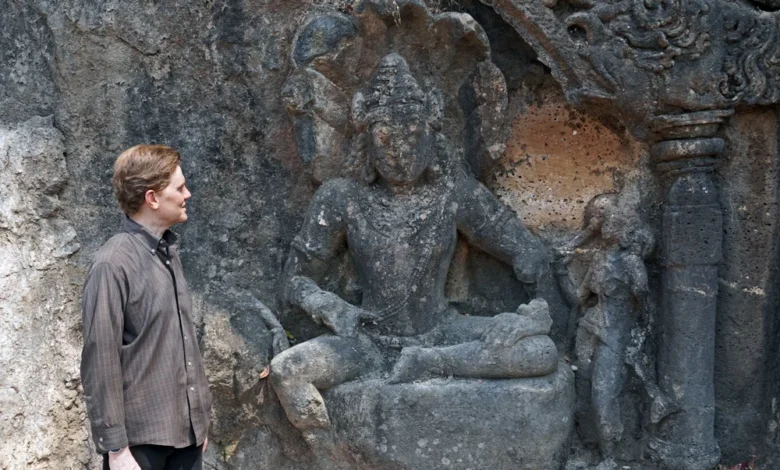
Dr. David S. Efurd, a two-time Fulbright recipient, associate professor, and chair of art and art history, has dedicated a quarter of a century to systematically documenting the monumental Buddhist, Hindu, and Jain cave complexes carved into the volcanic basalt cliffs of western India. Armed with a handheld camera, a field notebook, and a methodology rooted in contemplative observation, Efurd has surveyed more than 80 cave sites and amassed an archive exceeding 10,000 photographs. This comprehensive digital collection, now accessible globally through Artstor, preserves the intricate architecture, religious iconography, and structural evolution of sacred spaces dating back to the second century BC.

The scale of Efurd’s undertaking offers scholars, historians, and the public unprecedented access to monuments that have withstood millennia of environmental changes and shifting religious landscapes. By utilizing the practice of "slow looking"—spending consecutive days in single locations where casual tourists linger for mere minutes—Efurd captures not merely static archaeological ruins, but the nuanced interplay of light, geometry, and human interaction that defines these extraordinary subterranean spaces.

Chronology and Historical Context of the Western Ghats Excavations

The tradition of rock-cut architecture in western India developed against a backdrop of dynamic socioeconomic and religious expansion. Beginning around the second century BCE, monastic communities recognized the unique geological properties of the Deccan Traps, vast outcroppings of volcanic basalt formed millions of years ago. This durable stone allowed builders to carve massive halls, shrines, and residential cells directly into sheer cliff faces with minimal risk of structural collapse.

Historically, these monasteries served a dual purpose. During the vassa, the three-month monsoon season characterized by torrential rains, Buddhist monks ceased their nomadic wanderings to take up fixed residence within the protected cliffside cells. Simultaneously, the location of these sites along major historical trade routes ensured a symbiotic relationship with the secular world. Monasteries remained within walking distance of bustling trade hubs and agricultural villages, allowing the laity to provide physical sustenance and alms in exchange for spiritual guidance and merit-making opportunities.

Over subsequent centuries, as political dynasties and religious patronage shifted across the Indian subcontinent, these sites underwent continuous adaptation. While early sites such as Pitalkhora and the early phases of Ajanta emphasized minimalist monastic cells and symbolic representations—such as railings denoting sanctity and the Triratna (triple gem)—later centuries saw the introduction of elaborate figurative art. By the fourth and fifth centuries CE, complex anthropomorphic sculptures of the Buddha and enlightened beings known as Bodhisattvas populated the previously unadorned walls. As Buddhism gradually declined in the region, many accessible sites were appropriated and rededicated by Hindu and Jain communities, transforming structures like the Karla Caves into living centers of Brahmanical devotion.

Methodology and Architectural Precision

Efurd’s fieldwork is distinguished by a rigorous academic methodology that challenges long-held Western assumptions regarding ancient construction. Traditional architectural analysis often applies strict European standards of straight lines and plumb-line precision to ancient monuments. However, Efurd’s extensive measurements across various sites reveal that rock-cut architecture operates under entirely different spatial and mathematical parameters.

His research at the monumental caitya (shrine) hall at Karle demonstrates a sophisticated system of proportions, mathematical relationships, and decorative sequencing that spans multiple excavations. Furthermore, Efurd’s documentation highlights the profound sophistication of ancient engineering concerning natural illumination. Citing observations originally pioneered by scholar Walter Spink, Efurd notes precise architectural alignments with celestial phenomena. At Ajanta, specific caitya windows are engineered so that once a year during the winter solstice, sunlight illuminates the central relic monument. Similarly, at nearby Ellora, an annual March event known as Kirnotsav (the festival of the sun’s rays) features a narrow aperture that focuses a beam of sunlight directly onto the face of a carved Buddha image in the central hall.

Preservation, Management, and Contemporary Implications

Today, the vast majority of these rock-cut complexes function as protected historical monuments under the jurisdiction of the Archaeological Survey of India (ASI) and regional state departments. Preservation efforts are carefully balanced against the demands of active religious expression. Many sites maintain a dual identity, serving simultaneously as tourist attractions, archaeological subjects, and living spaces for contemporary gurus, saints, and local worshipers who continue the ancient tradition of utilizing the caves for meditation and ritual.

While the ASI regulates access to ensure the long-term conservation of fragile basalt surfaces and ancient painted murals, official protocols and research permits allow scholars like Efurd to conduct granular metric analysis. These administrative measures safeguard the structural integrity of sites that remain vulnerable to environmental erosion, water seepage during monsoons, and the accumulation of debris.

Broader Impact of the Artstor Archive

The inclusion of Efurd’s 10,000-image archive in digital repositories like Artstor carries profound implications for international education and academic research. By democratizing access to high-resolution visual data of remote monuments—some of which feature newly uncovered subterranean chambers or restricted lower levels—the archive facilitates cross-cultural and comparative studies in art history, religious studies, and geology.

Efurd’s ongoing documentation underscores the necessity of continuous field research. As isolated discoveries continue to emerge—such as the recent unearthing of a hidden serpent king (nagaraja) sculpture at the Ghatotkacha caves following debris clearance—the historical narrative of the Western Ghats remains dynamic. Through meticulous photography and the philosophy of deliberate, sustained observation, Efurd’s work ensures that the physical and spiritual legacy of these ancient basalt sanctuaries is preserved for future generations of scholars and global audiences.