From Fast Food to Fast Fashion: How Bag Charms and Branded Merch Are Redefining CPG Marketing Strategies

The modern landscape of consumer packaged goods (CPG) marketing is undergoing a seismic transformation, shifting away from traditional television and print advertising toward culture-driven, tangible lifestyle products. While fashion powerhouses like Coach, Vera Bradley, and Anthropologie have long capitalized on the accessorizing craze, a surprising new wave of players has entered the arena: food and beverage brands. From fast-casual dining chains to shelf-stable dairy giants, companies are shrinking their iconic products and packaging into miniature bag charms, keychains, and blind-box collectibles. This strategy is not merely an exercise in novelty; it represents a calculated shift toward positioning food brands as lifestyle arbiters, deepening consumer engagement, and maintaining brand relevance among younger, highly digitized demographics.
The Genesis of the Bag-Charm Craze and the CPG Pivot
To understand why food and beverage companies are investing in miniature accessories, one must first examine the broader cultural phenomenon of bag personalization. Over the past several years, Gen Z and younger millennial consumers have turned handbags and backpacks into canvases for self-expression. By adorning everyday carriers with pins, plushies, and whimsical keychains, consumers can broadcast their personal tastes, humor, and niche interests.
Market data underscores this surge. According to internal metrics provided by the global handmade and vintage marketplace Etsy, searches for purse bag charms jumped 27% over a recent three-month period compared to the same timeframe a year prior. Similarly, toy and collectible companies like Funko have reported double-digit growth driven entirely by their accessories lines, such as Loungefly bags, pins, and charms.
Recognizing this whitespace, food and beverage marketers realized that their iconic packaging and signature menu items possessed the exact visual traits required for successful miniaturization. By transforming takeout bags, mascot characters, and product containers into collectible charms, CPG brands are able to tap into the powerful psychology of FOMO (fear of missing out), turning everyday shoppers into walking billboards.
A Chronology of Culinary Collectibles: Key Industry Moves
The integration of food brands into the accessories market has accelerated rapidly through a series of high-profile product drops, pop-ups, and limited-edition releases:
- January: Fast-food chain Jack in the Box launched "Jibbis," an inventive series of blind-bag collectible charms that featured the restaurant’s iconic mascot, driving enthusiasm among fast-food collectors and social media users alike.
- August: Fast-casual Mediterranean chain Cava captured national attention by shrinking its staple yellow takeout bag into a limited-edition charm, distributed for one day only to participating in-restaurant customers. This followed a previous successful campaign featuring plushie pita chip bag charms designed in collaboration with New York City-based creator Thaddeus W. Coates, which highlighted four distinct characters: Peter Chip, Jimmy Harissa, Garlic Gus, and Sweet Sammy.
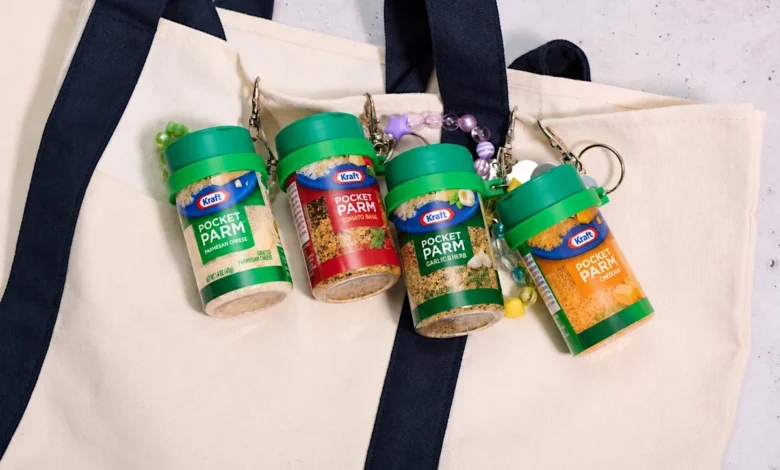
- October: Kraft Natural Cheese rolled out "Pocket Parm," a miniature, portable, shelf-stable version of its grated parmesan cheese designed specifically for consumers on the go, making appearances at movie theaters, malls, and targeted mobile truck tours in select cities.
Case Studies in Culpable Cool: Cava and Kraft Lead the Charge
The execution of these campaigns highlights how modern brands use hybrid marketing techniques—blending physical scarcity with digital virality—to drive measurable business outcomes.
For Cava, the decision to launch the yellow bag charm in August was rooted in a desire to give consumers a fresh incentive to visit physical storefronts. According to Silmo Bonomi, Cava’s vice president of brand and creative, the one-day drop resulted in an immediate, noticeable uptick in in-store traffic and daily sales.
"It becomes a new reason for people to come to Cava," Bonomi noted, explaining that the brand closely monitors consumer trends and guest feedback to dictate its creative output. The response online was equally explosive. Cava’s official Instagram announcement regarding the charm garnered nearly 2,000 likes and generated humorous, viral engagement from both consumers and competing lifestyle brands, such as skincare company Bubble. Bonomi emphasized that the brand approaches its merchandise with the exact same level of craft and care dedicated to its culinary menu items.
Meanwhile, Kraft Natural Cheese approached the trend through the lens of mobility and flavor experimentation. Rather than traditional nationwide distribution, the company deployed a branded food truck to select urban markets, including Los Angeles and Orlando, to distribute Pocket Parm free of charge. Fans could sample the classic parmesan alongside three innovative new flavors: Tomato Basil Parmesan, Garlic Herb Parmesan, and Cheddar.
Dhriti Batra, director of Kraft Natural Cheese at Lactalis Heritage Dairy, explained that Pocket Parm was engineered to speak directly to "the power of flavor on the move." As consumers increasingly demand fast, convenient meal solutions without sacrificing culinary quality, products like Pocket Parm offer portable flavor enhancements for late-night study sessions, travel, or quick lunches.
Crucially, the physical truck tour was amplified by aggressive social media marketing and influencer partnerships. Kraft’s initial Instagram announcement for Pocket Parm pulled in more than 48,000 likes, while subsequent videos tracking the truck’s cross-country route accumulated hundreds of thousands of views. Batra noted that consumer demand was so intense that fans routinely left fervent comments begging the brand not to "ghost" their cities, with teenagers even dispatching their parents to secure the limited-edition containers. Beyond driving short-term buzz, Kraft is utilizing the Pocket Parm charms as an agile, low-risk testing ground to gauge consumer demand for new flavor profiles ahead of a planned full-scale nationwide retail rollout.
The Broader Ecosystem of Branded CPG Merchandise
The craze for food-based bag charms and keychains sits within a much larger, highly lucrative ecosystem of branded consumer goods. Over the past decade, food and beverage companies have realized that traditional advertising alone is insufficient to build deep emotional resonance with modern buyers. Instead, they must function as lifestyle lifestyle brands.
Pioneers in this space include Grillo’s Pickles and H-E-B, both of which have cultivated passionate cult followings by treating merchandise as core products rather than afterthoughts. In 2021, canned water brand Liquid Death famously sold $3 million worth of branded merchandise, ranging from $14 dog toys to $500 mini-fridges. Similarly, Organic Valley launched an apparel and lifestyle store designed to give consumers a literal platform to wear their values—specifically supporting small family farms—"on their sleeves."
Furthermore, co-branded fashion and food collaborations have become a staple of summer marketing calendars. In recent months, Gap partnered with New York City cult-favorite eatery Los Tacos No.1 for an exclusive line of hoodies, t-shirts, and accessories. Simultaneously, Dunkin’ teamed up with influencer Chelsea Parke on a curated collection of specialty drinks, sweatshirts, and accessories tied to her eponymous clothing brand, Parke.
Strategic Implications and Future Outlook
The pivot toward bag charms and miniature merchandise offers several key takeaways for brand strategists and retail analysts alike:
- Bridging Physical and Digital Realities: Physical items that are small, visually striking, and inherently portable are exceptionally well-suited for social media algorithms. Platforms like TikTok and Instagram reward aesthetic novelty, allowing physical stunts to generate exponential digital impressions.
- Low-Risk Product Testing: As demonstrated by Kraft Natural Cheese, limited-edition merchandise drops and portable product variants can serve as live test markets for new flavors, formulations, or brand extensions before committing capital to massive supply-chain overhauls.
- Expanding Share of Mind Beyond Mealtime: For food and beverage companies, the ultimate challenge is remaining relevant when the consumer is not actively eating or drinking. By embedding a brand into a consumer’s daily accessory routine—via a keychain, a bag charm, or a miniature portable container—companies maintain a persistent psychological presence throughout the day.
As consumer desire for personalization and cultural novelty continues to outpace traditional advertising effectiveness, the intersection of fashion and food is expected to deepen. Whether through a miniature parmesan container or a scaled-down takeout bag, brands that successfully translate their core identity into collectible, wearable art will likely continue to dominate the modern retail and marketing landscape.
Related posts: