The Good American Pop-Up PR Fiasco Highlights a Growing Divide Between Influencer Expectations and Brand Reality

The recent activation hosted by Good American, the denim and apparel label co-founded by Khloé Kardashian and Emma Grede, has become a lightning rod for criticism regarding the evolving relationship between fashion brands and the creator economy. What was intended to be a high-visibility marketing activation in New York City turned into a public relations challenge when a segment of invited content creators reported feeling misled, marginalized, and subjected to poor treatment. The incident has since ignited a broader industry debate concerning the professional standards of public relations, the expectations of the micro-influencer tier, and the potential pitfalls of tiered brand management in the age of social media.
A Chronology of the Disconnect
The event in question took place this past weekend, drawing a significant crowd to a prime New York City location. According to reports from those in attendance, the marketing surrounding the event was framed as an "exclusive" experience. This framing led many content creators, particularly those operating in the nano-influencer (1,000 to 10,000 followers) and micro-influencer (10,000 to 100,000 followers) categories, to believe their presence was requested to provide high-value, bespoke coverage for the brand.
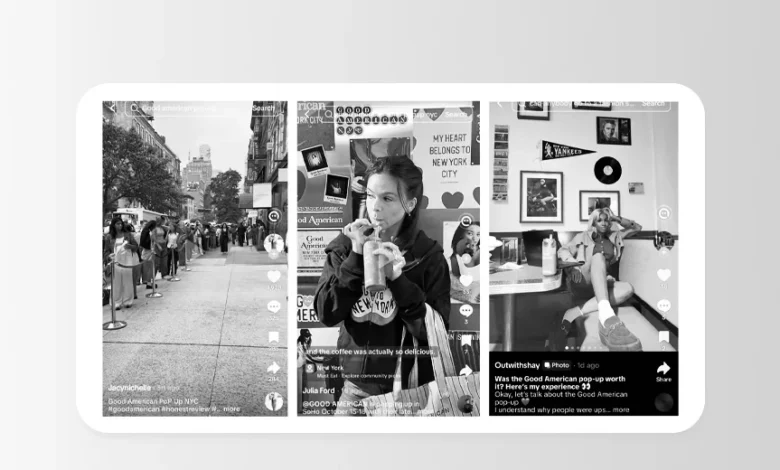
Upon arrival, however, the reality of the activation diverged sharply from these expectations. Attendees reported being met with long queues in inclement weather, standing alongside the general public rather than being ushered into a VIP-access stream. For many, the travel costs and time investment required to reach the venue were made under the assumption that they were part of a curated guest list. As the day progressed, the disparity in treatment became increasingly visible. While smaller creators were left waiting in the rain or turned away entirely, a separate, more streamlined entry process was observed for creators with significantly higher follower counts. The stark contrast between the two experiences fueled a wave of grievances posted across platforms like TikTok and Instagram, where creators shared their frustration, documenting the logistical failures and the perceived lack of professional courtesy.
The Anatomy of the PR Misalignment
Industry experts point to a systemic issue within modern public relations: the tendency for agencies to over-promise in their outreach. In an effort to generate "buzz" and ensure high attendance for their clients, PR representatives frequently employ hyperbolic language. Terms such as "VIP access," "exclusive," and "curated experience" are often used as standard marketing jargon, regardless of whether the event logistics actually support such claims.
As Danny Parisi, senior fashion reporter at Glossy, noted during a recent discussion on the Glossy Fashion Podcast, this linguistic inflation has reached a point where it borders on misrepresentation. When a brand invites a creator to an event, the creator is acting as a professional partner. By framing a general pop-up as an exclusive invite, the brand unintentionally sets a professional expectation of a controlled, high-touch environment. When that expectation is replaced by a chaotic, public-facing retail line, the creator’s perception of the brand is damaged, leading to the public backlash witnessed this past weekend.
Data and the Micro-Influencer Economy
To understand why this friction occurred, one must look at the current state of influencer marketing. Data from industry analysts suggests that brands are increasingly pivoting toward micro-influencers because of their superior engagement rates. While a celebrity with five million followers may reach a massive audience, a micro-influencer with 20,000 followers often boasts a more loyal, active, and trusting community.
According to reports from the Influencer Marketing Hub, micro-influencers can see engagement rates that are often three times higher than those of mega-influencers. Because these creators serve as trusted voices within niche communities, their endorsement is highly valuable to brands like Good American. However, this shift in strategy has not been matched by a corresponding shift in treatment. Brands are still operating under a legacy framework where "VIP status" is gated strictly by follower count, creating a tiered caste system that alienates the very creators who drive the most authentic engagement.
The Emotional and Professional Toll
The fallout from the Good American event also highlights the human element of the creator economy. For a professional, travel-weary influencer, being turned away from an event after a formal invitation is not merely an inconvenience; it is a professional slight. Jill Manoff, editor-in-chief of Glossy, highlighted this sentiment by comparing it to the experience of a fashion editor being denied entry to a show despite an invitation. The feeling of being "a loser" in a professional setting is a powerful motivator for the negative social media coverage that followed.
When creators feel their time and professional contribution have been devalued, they are likely to use their platforms—the very tools they were invited to use for promotion—to vent their frustrations. This creates a feedback loop that can damage a brand’s reputation faster than any traditional PR crisis. The bitterness is exacerbated when creators see their peers with larger followings gaining effortless access, signaling that the brand’s "exclusivity" is not about quality or professional relationship, but merely about the sheer reach of the creator’s follower count.
Broader Industry Implications
The situation with Good American serves as a case study for the entire fashion and retail sector. As brands continue to rely on a wide net of creators to maintain their relevance in a saturated market, they must reconcile their operational capabilities with their marketing promises.
There are three key areas where brands must refine their processes:
- Transparency in Communications: PR pitches must be stripped of hyperbolic language. If an event is open to the public, that must be clearly communicated. If an event has tiers of access, the invitations should explicitly define what those tiers entail to avoid confusion.
- Infrastructure for Scale: If a brand invites a large number of creators, it must be prepared to manage them as professional guests. This includes dedicated entry lines, clear check-in protocols, and on-site staff trained to handle guest relations.
- Consistency in Value Proposition: Brands need to acknowledge the value of micro-influencers not just in marketing materials, but in practice. If a creator is important enough to be invited, they are important enough to be treated with respect. Failing to provide a consistent experience across tiers creates a sense of hierarchy that can discourage long-term collaboration.
Conclusion
The Good American pop-up debacle is symptomatic of an industry in transition. As the barrier to entry for content creation continues to lower, the number of creators vying for a place at the table increases. Brands that fail to professionalize their outreach and event management will inevitably face similar public scrutiny. While Good American has not yet issued a formal, detailed apology, the incident stands as a warning to other luxury and retail brands: in an era where every attendee is a potential broadcaster, the distinction between a private VIP experience and a public activation must be handled with precision, honesty, and respect for the creators who serve as the brand’s modern-day ambassadors.
The future of influencer marketing depends on a more equitable and transparent framework. As the dust settles on this weekend’s events, it is clear that the industry is at a crossroads where the old, top-down approach to prestige is clashing with the reality of a decentralized, creator-led digital landscape. Brands that learn to navigate this, prioritizing clear expectations and authentic relationship-building, will likely find more success than those that rely on the dated, often misleading, tactics of the past.