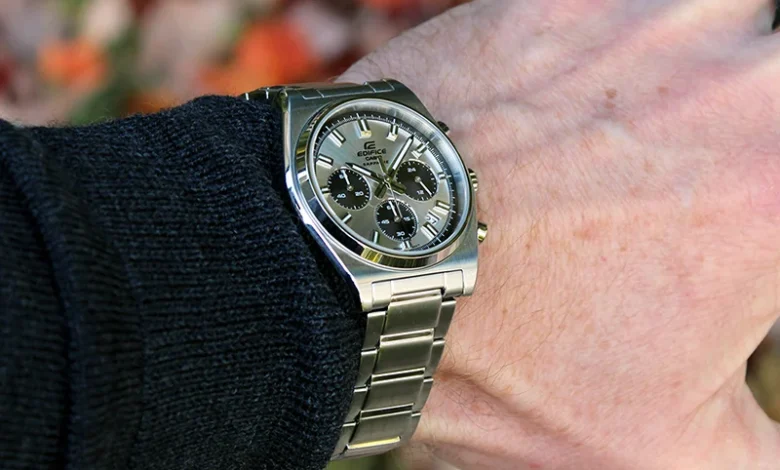
Historical Context and Design Evolution
The racing chronograph originated in the early 20th century, designed specifically to assist motorists and pilots in tracking elapsed time with precision. The architectural standard for these watches involves a series of pushers flanking the crown, which engage a start, stop, and reset mechanism for an internal stopwatch. This functionality, while seemingly straightforward, requires intricate internal calibration.
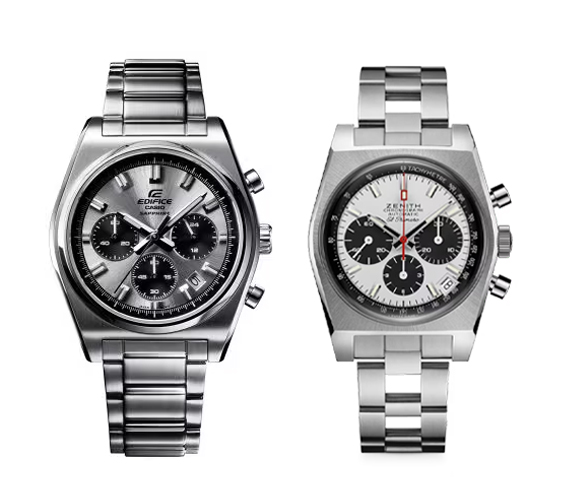
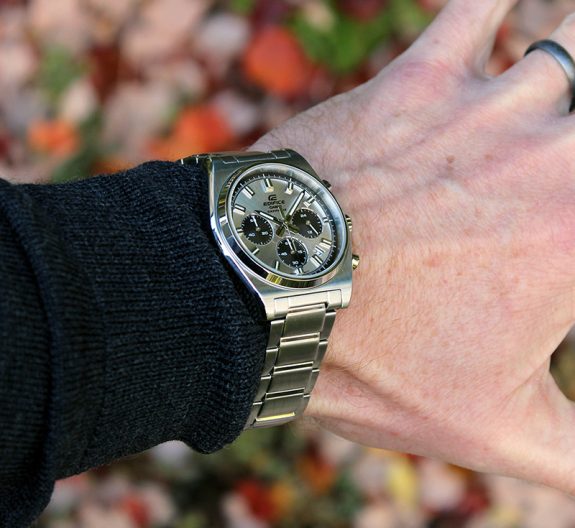
For decades, the "panda" dial has been considered the hallmark of the sports chronograph. Its design intent was rooted in legibility; high-contrast subdials allowed drivers to read elapsed minutes and hours at a glance, even under the high-vibration conditions of a race track. While luxury manufacturers such as Zenith, TAG Heuer, and Rolex have maintained this design language for over half a century, the EFB730D adopts these visual cues for a contemporary audience. Measuring 40mm in diameter, the watch reflects a shift away from the oversized "fashion watch" trends of the 2000s, aligning itself more closely with the proportions of mid-century racing chronographs, which favored compact, wearable dimensions that did not impede wrist movement during operation.
Technical Specifications and Movement Architecture
The EFB730D is powered by a Japanese-manufactured quartz chronograph movement. Unlike mechanical chronographs, which rely on a series of gears, springs, and levers, the quartz movement utilizes a battery-powered oscillator to maintain timekeeping accuracy. This choice of movement is a primary factor in the watch’s price point of approximately $120.
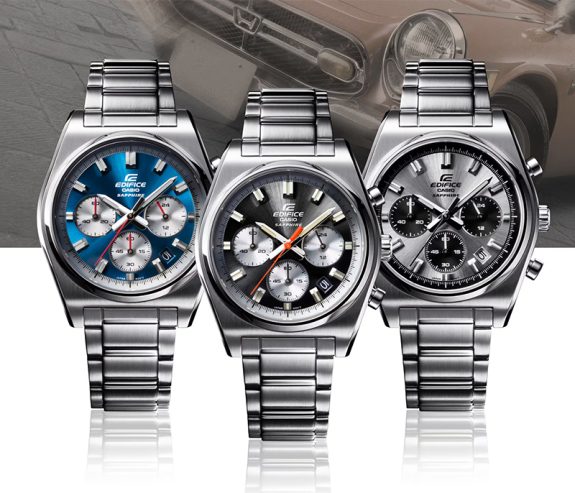
One distinct technical characteristic of the EFB730D that differentiates it from traditional mechanical chronographs is the configuration of the seconds hand. In many high-end mechanical chronographs, the central seconds hand acts as the chronograph runner, remaining stationary until the pusher is engaged. In this Casio model, the central seconds hand serves as the constant running seconds hand for the watch, while the chronograph seconds are tracked via the 6 o’clock sub-dial. This deviation from the industry standard may require an adjustment period for enthusiasts accustomed to mechanical setups; however, it ensures a constant visual indication that the watch is operational.
Material Construction and Build Quality
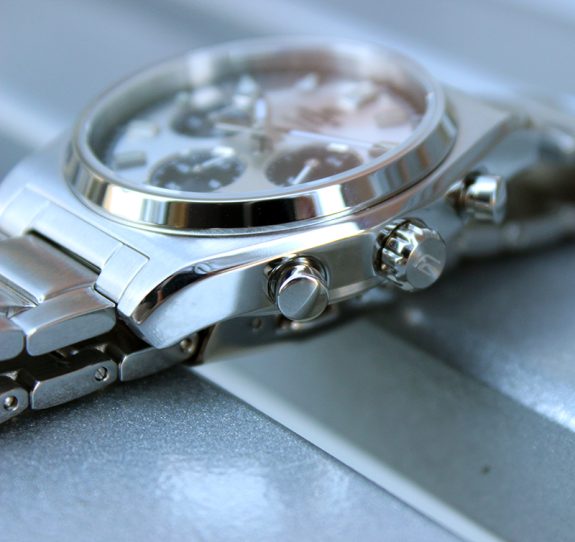
The watch features a stainless steel case and bracelet, with a design that emphasizes a mix of brushed and polished surfaces. The bracelet includes a double-push-button clasp, providing a secure fit that is relatively uncommon in the sub-$150 price category.
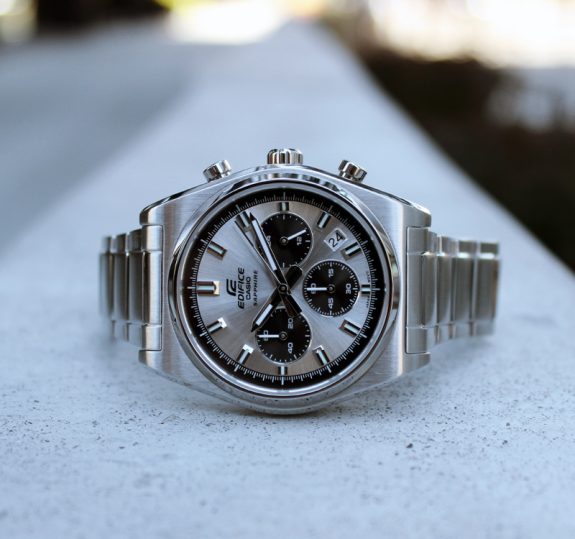
Perhaps the most notable feature of the EFB730D is the inclusion of a sapphire crystal. In the watchmaking industry, sapphire is prized for its extreme hardness—second only to diamond—making it highly resistant to the scratching that often plagues mineral glass or acrylic crystals. The use of sapphire in a watch at this price point is a significant manufacturing choice, suggesting that Casio is prioritizing long-term durability for its Edifice line. The recessed sub-dials and applied indices contribute to a sense of depth and dimensionality, further elevating the watch’s aesthetic beyond the "flat" appearance typical of lower-cost alternatives.
Market Implications and Consumer Trends
The launch and continued popularity of the EFB730D highlight a broader trend in the horological industry: the bifurcation of the market. While luxury watches continue to see price increases—often driven by brand prestige, limited production, and precious metal usage—a segment of the industry is focusing on "value-proposition" horology.
According to market analysts, there is a growing consumer demand for watches that mimic the aesthetic of "grail" pieces without the associated $5,000 to $10,000 price tags. The Casio Edifice series functions as an entry point for enthusiasts who admire the design language of the 1960s and 70s racing era but lack the disposable income for vintage or high-end modern luxury models. By leveraging economies of scale and efficient quartz technology, manufacturers are effectively closing the gap between functional timekeeping and high-fashion aesthetics.
Chronology of Development
- 1960s-1970s: The peak of the racing chronograph era, during which the panda dial became a standard in motorsport, popularized by brands like Zenith and Heuer.
- 2000s: The rise of the oversized watch trend, where chronographs often ballooned to 44mm or larger.
- 2020-2025: A notable return to "vintage-inspired" sizing, with 38mm to 40mm becoming the preferred standard for daily-wear chronographs.
- 2026: The release of the Casio Edifice EFB730D, designed to bridge the gap between historical aesthetics and modern quartz reliability.
Analysis of Value and Longevity
The longevity of the EFB730D is largely dictated by its quartz movement, which generally requires a battery change every 30 to 36 months. Unlike mechanical watches, which require periodic servicing and oiling of internal components to maintain accuracy, the quartz movement is essentially a "set it and forget it" system. This significantly lowers the total cost of ownership over a ten-year period.
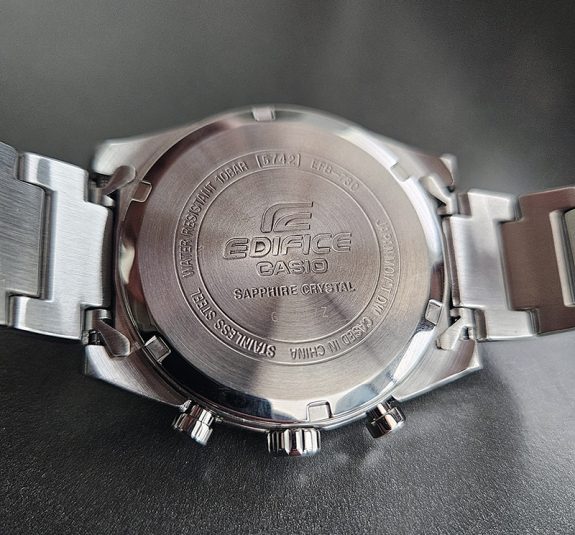
Furthermore, the choice of materials—specifically the stainless steel construction and the sapphire crystal—indicates that the watch is designed to withstand daily wear. While it lacks the "quick-release" spring bars or tool-less micro-adjustments found on more expensive pieces, these are rarely expected in this market segment. The build quality, particularly the tactile response of the pushers and the rigidity of the clasp, represents a significant improvement over the fashion-branded watches that often populate the $100–$200 price range.
Broader Impact on the Industry
The success of the EFB730D serves as a case study for how established manufacturers can maintain relevance in a digital age. With the ubiquity of smartphones providing accurate time, wristwatches have shifted from being strictly utility-focused tools to accessories of personal style and technical appreciation. Casio has successfully identified that the consumer is looking for more than just a watch; they are looking for a connection to the heritage of automotive sports.
By providing a high-quality, reliable, and aesthetically pleasing product, Casio is fostering a new generation of watch collectors. Many enthusiasts begin their journey with an Edifice or a similar, well-made entry-level piece before moving toward more complex mechanical timepieces. The Edifice line, therefore, acts as a gateway, maintaining the brand’s reputation for reliability while expanding its footprint into the competitive world of style-conscious sports watches.
Conclusion
The Casio Edifice EFB730D is not intended to compete with high-end mechanical chronographs in terms of horological complexity or investment value. Instead, it offers a functional, durable, and stylish alternative for the modern consumer. Its design, which carefully balances historical inspiration with modern manufacturing techniques, proves that one does not need to spend thousands of dollars to appreciate the aesthetics of the classic racing chronograph. In an era of rising costs and inflated luxury market prices, the EFB730D stands as a testament to the fact that high-quality, accessible horology remains a viable and highly sought-after commodity. Whether for the casual wearer or the budding collector, this timepiece provides a reliable, accurate, and aesthetically sophisticated option that remains true to the spirit of its high-octane predecessors.