Dolce & Gabbana Navigates Leadership Shake-Up and Deep Financial Pressures Amidst Shifting Luxury Landscape

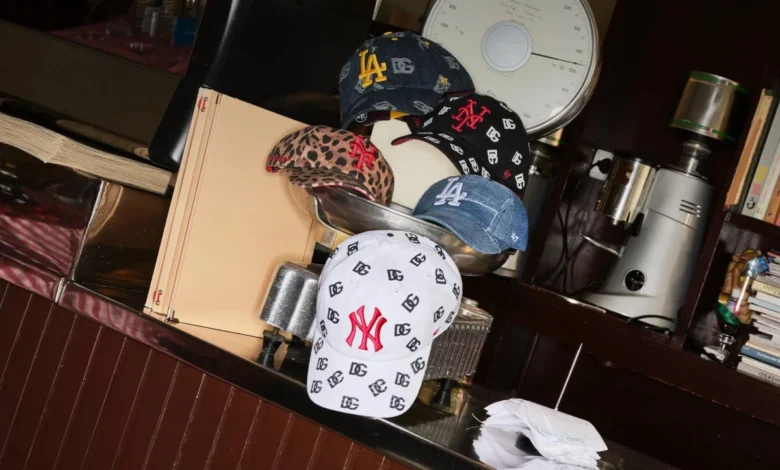
On Thursday, news broke regarding a significant leadership transition at the 41-year-old Italian luxury powerhouse, Dolce & Gabbana. Stefano Gabbana, one of the brand’s iconic co-founders, tendered his resignation as chairman in January, a move that only came to light publicly this week. This initial report, which suggested a complete departure, quickly evolved as further details emerged. It was clarified that Gabbana, while stepping down from his executive role as chair, would retain his crucial creative position within the company, continuing to shape the brand’s aesthetic direction alongside co-founder Domenico Dolce. Furthermore, the luxury label is reportedly exploring the future of Gabbana’s substantial 40% stake in the company and is said to be in discussions to potentially bring former Gucci CEO Stefano Cantino into a senior leadership role, signaling a potential shift towards more formalized corporate management.
The unfolding narrative surrounding Gabbana’s role and the subsequent clarifications underscore a period of profound uncertainty for Dolce & Gabbana. Like many independent luxury brands operating outside the umbrella of major conglomerates, the company is grappling with a confluence of formidable challenges. These include a global slowdown in luxury spending, the disruptive economic impacts stemming from geopolitical tensions in the Middle East, and the relentless escalation of operational costs. In an increasingly competitive global luxury market, independent entities like Dolce & Gabbana find themselves in a precarious position, struggling to maintain pace and market share against the formidable resources and diversified portfolios of industry titans such as LVMH Moët Hennessy Louis Vuitton and Kering.
The Evolving Narrative and Leadership Transition
The initial news of Stefano Gabbana’s resignation sent ripples through the fashion industry, sparking immediate speculation about the future of a brand synonymous with its founders’ distinctive vision. The subsequent clarification that Gabbana would remain in a creative capacity alongside Domenico Dolce was critical in mitigating fears of a complete detachment from the brand’s artistic core. This distinction is vital, as the creative synergy between Dolce and Gabbana has been the driving force behind the brand’s aesthetic identity since its inception in 1985. While the departure of a co-founder from an executive role can often signal a significant strategic pivot, Gabbana’s continued creative involvement suggests a desire to maintain the brand’s unique design DNA while perhaps bringing in new leadership for the business operations.
The consideration of options for Gabbana’s 40% stake, mirroring Domenico Dolce’s identical share, adds another layer of complexity. Such a significant stake could represent a considerable financial asset, and any decision regarding its future could have profound implications for the company’s ownership structure and long-term strategic direction. The potential recruitment of Stefano Cantino, a seasoned executive with a proven track record from his tenure at Gucci, further emphasizes Dolce & Gabbana’s apparent move towards strengthening its corporate governance and operational efficiency. Cantino’s experience in navigating the complexities of a major luxury house could be invaluable as Dolce & Gabbana seeks to solidify its business foundation amidst challenging market conditions.
The immediate void left by Stefano Gabbana as chairman has been filled by Domenico Dolce’s brother, Alfonso Dolce, who previously held a significant management role within the company. This internal promotion aims to ensure continuity in leadership while the brand navigates its current financial and strategic challenges. Alfonso Dolce, along with his sister Dorotea, collectively holds the remaining 20% stake in the company, cementing a family-centric ownership structure that has been a hallmark of Dolce & Gabbana.
Deep Financial Headwinds and Refinancing Efforts
Beneath the surface of leadership changes lies a more pressing concern for Dolce & Gabbana: a substantial debt burden. Regulatory filings in March revealed that the company had accumulated over $520 million in debt with its creditors. This considerable financial obligation has compelled the brand to enter into negotiations for a new round of refinancing, a critical endeavor aimed at securing the necessary capital to maintain its independence in a market increasingly dominated by financially robust conglomerates.
David Ratmoko, founder of the Swiss modeling agency Metro Models, articulated the severity of this situation, stating, "It’s losing him while the house is sitting on millions in debt and attempting to refinance with banks that are demanding millions in new capital before they will lend it. That is a very narrow spot to be in for any brand, but particularly one that has never been a conglomerate-backed brand." This perspective highlights the acute vulnerability of independent luxury brands when faced with significant financial pressures without the safety net of a larger corporate entity. Creditors are reportedly seeking approximately $176 million in new capital, a substantial sum that underscores the urgency of Dolce & Gabbana’s financial restructuring efforts.
To address this financial exigency, the company is reportedly exploring several strategic options, including the potential sale of valuable real estate assets and the expansion of brand name licensing agreements. With over 200 global stores, Dolce & Gabbana possesses a significant physical footprint, and judicious asset divestment could provide a much-needed injection of capital. Similarly, leveraging the strength of its brand name through licensing in categories such as fragrances, eyewear, or even hospitality could generate new revenue streams without requiring extensive capital outlay for direct operational expansion. However, such moves must be carefully managed to preserve the brand’s exclusive image and avoid dilution. The company has, to date, declined to comment on these financial developments, maintaining a cautious stance amidst ongoing negotiations.
Geopolitical Pressures and Market Specific Challenges
Dolce & Gabbana’s strategic investments in recent years have particularly focused on the burgeoning luxury markets of the Middle East, notably in its fragrance business. In the last quarter of 2025 alone, the brand opened four new stores in the Gulf region, including a dedicated beauty store in Dubai, signaling a strong commitment to this high-growth market. However, these ambitious expansion plans have now encountered unforeseen headwinds. The escalation of geopolitical tensions and conflicts in the broader Middle East region is exerting significant pressure on luxury retail across the area. Such instability typically leads to a contraction in consumer spending on discretionary items, impacting sales and profitability for brands heavily invested there. The volatility of the regional political landscape introduces an element of risk that independent brands like Dolce & Gabbana are less equipped to absorb compared to their conglomerate-backed counterparts.
Beyond the Middle East, Dolce & Gabbana has faced enduring challenges in the crucial Chinese market. The brand suffered significant damage to its reputation in China following a controversial 2018 advertising campaign that was widely condemned as racist by the Chinese public. The situation was further exacerbated by the leak of private messages attributed to Stefano Gabbana, which contained disparaging remarks about China. Despite subsequent apologies from the designers, the incident left a lasting stain on the brand’s image in one of the world’s most important luxury markets.
David Yan, founder of the brand consultancy Medinge Group and the international fashion magazine Lucire, pointed out this dual vulnerability: "The refinancing of upcoming debt obligations last year gives the brand some breathing space, but they are very exposed in the Middle East and, through their own missteps, not as strong in China." The repercussions of the 2018 controversy are still felt, though the brand has made efforts to rebuild its presence. While China has become a comparatively smaller part of its business since the incident, it remains a significant market, accounting for roughly 16% of Dolce & Gabbana’s total sales in 2024. With total revenue exceeding $2 billion last year, this 16% still represents a substantial portion of its global turnover, making a full recovery in China critical for sustained growth.
The Broader Luxury Landscape: A Period of Contraction
The challenges confronting Dolce & Gabbana are not isolated but reflect a broader trend impacting the global luxury industry. The market is currently undergoing a period of contraction, a phenomenon observed across various segments. Independent luxury brands, in particular, are finding it increasingly difficult to compete with the sheer scale, financial might, and strategic diversification of major conglomerates. These titans, like LVMH and Kering, possess vast resources for marketing, research and development, global retail expansion, and navigating economic downturns, allowing them to acquire promising brands and consolidate market power.
David Ratmoko’s observations from the agency side provide empirical evidence of this industry-wide squeeze. He noted that "Luxury is absolutely in a contraction period. I have seen it on the agency side where we are booking talent to do campaigns – the briefs have been getting sluggish in the last year. Brands are reducing editorial spending, cutting campaign budgets and reducing investment in new talent." This indicates a tightening of belts across the industry, with brands becoming more cautious about their discretionary spending on marketing and talent acquisition, which are crucial for maintaining brand visibility and relevance.
This dynamic has driven several independent luxury brands to seek external investment or even acquisition by larger groups. In November, Valentino secured a significant investment from Mayhoola, demonstrating a strategy to bolster financial strength while retaining a degree of independence. Other brands have opted for full integration into conglomerates: Prada acquired Versace, and Kering recently acquired the Raselli Franco Group, a leading jewelry manufacturer, both moves occurring in December. These examples underscore the strategic imperative for independent luxury brands to either find robust financial partners or risk being absorbed into larger entities to ensure their long-term viability. Dolce & Gabbana’s current situation, with its significant debt and urgent need for refinancing, places it squarely in this critical juncture, where strategic decisions about its ownership and future trajectory will be paramount.
Outlook and Implications for Dolce & Gabbana’s Future
With mounting debt, significant leadership adjustments, and external pressures impacting sales performance in key markets, the future trajectory of Dolce & Gabbana appears to be at a critical crossroads. The decision to retain Stefano Gabbana in a creative role while potentially bringing in seasoned corporate leadership like Stefano Cantino suggests a two-pronged strategy: preserving the brand’s artistic integrity while professionalizing its business operations. This could be a necessary evolution for a founder-led brand attempting to navigate the complexities of modern global luxury.
The immediate challenge remains financial solvency and successful refinancing. The ability to secure new capital and restructure its debt obligations will be fundamental to the brand’s capacity to invest in growth, innovate, and compete effectively. Should these efforts prove insufficient, the pressure to consider more drastic measures, including selling a controlling stake or even seeking a full acquisition, could intensify. While the founders have historically expressed a strong desire to maintain independence, the realities of the market may force difficult choices.
The long-term success of Dolce & Gabbana will also hinge on its ability to recover fully in markets like China and mitigate risks in volatile regions like the Middle East. Rebuilding trust and appeal in China will require sustained, sensitive, and strategic engagement, moving beyond past controversies. Diversifying its market exposure and strengthening its presence in more stable luxury markets could also be part of a robust risk management strategy.
In conclusion, Dolce & Gabbana stands at a pivotal moment. The current leadership changes, coupled with the intricate web of financial pressures and geopolitical headwinds, demand decisive strategic action. The coming months will reveal whether this iconic Italian brand can successfully navigate these turbulent waters, reaffirm its position in the competitive luxury landscape, and chart a sustainable path forward as an independent entity, or if it too will eventually succumb to the gravitational pull of the luxury conglomerates.
Related posts: