Milan’s Palazzo Marino Reclaims its Splendor Following Tod’s Group’s Philanthropic Restoration

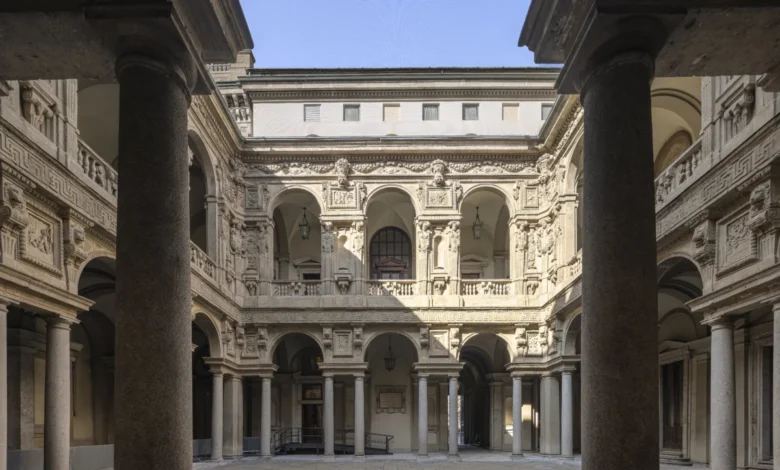
After 18 months of meticulous work, the scaffolding has finally come down from Milan’s historic Palazzo Marino, revealing a meticulously restored façade and internal courtyards. The grand unveiling marks the successful completion of a comprehensive €2.5 million restoration project, generously funded by the Tod’s Group. This significant philanthropic endeavor, which began in 2024 following a pledge made in 2023, breathes new life into the 16th-century edifice that has served as Milan’s city hall and the heart of its local administration since 1861. Situated prominently in central Piazza della Scala, directly opposite the iconic Teatro alla Scala, Palazzo Marino stands once again as a testament to Milanese heritage and the power of public-private partnership in preserving Italy’s invaluable cultural assets.
A Historic Landmark Reborn
Palazzo Marino, a masterpiece of Mannerist architecture, was originally designed by the esteemed architect Galeazzo Alessi in the mid-16th century. Commissioned by the Genoese banker Tommaso Marino, the palace was intended to be a symbol of wealth and power, a private residence grand enough to rival the ducal palace. Its construction, spanning several decades, saw contributions from various artists and architects, including Giovanni Seregni and Antonio Meda, who completed its ornate façade overlooking Piazza San Fedele. The palace’s intricate details, rich sculptural elements, and imposing structure quickly established it as one of Milan’s most significant private buildings.
In 1861, a pivotal year for Italy as it unified, Palazzo Marino assumed its current role as the seat of Milan’s municipal government. This transformation underscored its civic importance, transitioning from a symbol of private affluence to a beacon of public administration. For over a century and a half, it has housed the offices of the mayor and local council, witnessing countless decisions that have shaped the destiny of one of Europe’s most dynamic cities. Despite its central role, the building had not undergone a comprehensive restoration since the late 1980s. Decades of exposure to urban pollution, weather, and the inevitable wear and tear of time had taken their toll, necessitating urgent intervention to preserve its architectural integrity and historical grandeur. The recent 18-month project, therefore, was not merely a cosmetic facelift but a vital conservation effort, ensuring the palace’s continued splendor for future generations.

Tod’s Group: A Legacy of Cultural Patronage and Civic Responsibility
The Tod’s Group, a globally recognized Italian luxury fashion company, has long distinguished itself not only for its iconic leather goods and footwear but also for its profound commitment to cultural philanthropy and corporate social responsibility. Under the visionary leadership of its chairman and chief executive officer, Diego Della Valle, the group has consistently championed initiatives aimed at preserving Italy’s rich artistic and architectural heritage and supporting its communities. The restoration of Palazzo Marino is the latest, yet far from the first, example of this deep-seated philosophy.
Della Valle’s dedication to Italy’s patrimony gained widespread international attention in 2010 when he pledged an astonishing €25 million to finance the monumental restoration of the Colosseum in Rome. This ambitious project, which spanned over a decade, was a highly public and complex undertaking, demonstrating a sustained commitment to one of the world’s most iconic ancient wonders. Beyond Rome, Tod’s Group has established a well-entrenched relationship with Milan’s cultural institutions. The company is a founding member of the prestigious Teatro alla Scala Foundation, having supported the legendary opera house’s productions and global promotional efforts, including the short film "An Italian Dream."
The group’s philanthropic footprint extends further, encompassing diverse areas of Italian culture and society. It has provided crucial support to Milan’s contemporary art museum, PAC (Padiglione d’Arte Contemporanea), fostering modern artistic expression alongside historical preservation. Tod’s has also contributed significantly to FAI – Fondo Ambiente Italiano, The National Trust for Italy – notably aiding in the restoration of the hill that inspired Giacomo Leopardi’s famous 19th-century poem, "L’Infinito."
Beyond the arts, Della Valle’s vision of corporate responsibility encompasses direct social impact. The group has implemented various social initiatives, including supporting the education of underprivileged children in the Barra district of Naples, collaborating with Save the Children on its "Punti Luce" project to provide safe spaces and educational support, and partnering with the Patrignano community, a rehabilitation center, to offer vocational training and opportunities. In a powerful demonstration of solidarity, Tod’s Group also constructed a shoe manufacturing plant in Arquata del Tronto in 2017, a town devastated by a deadly earthquake a year prior, providing employment and rebuilding hope in a region in crisis. These varied initiatives underscore a holistic approach to "giveback," emphasizing that true corporate citizenship extends beyond commercial interests to encompass the well-being of the nation’s cultural fabric and its people.

The Restoration Project: Scope, Execution, and Vision
The restoration of Palazzo Marino was a project of considerable scale and complexity. The Tod’s Group financed the comprehensive revamp of all four external facades, as well as those overlooking the internal courtyard, covering an impressive total area of over 80,730 square feet (approximately 7,500 square meters). The work involved a meticulous process of cleaning, consolidation, and repair of the stone, marble, and stucco elements that adorn the palace, bringing out the original splendor of Alessi’s design. Historical research and diagnostic tests were conducted to ensure that the restoration adhered to the highest standards of conservation, respecting the building’s original materials and techniques.
During the 18 months of work, the palace was enveloped in scaffolding, which itself became a canvas. Adorned with the phrase "Tod’s for Milan" and featuring illustrations depicting the history of the Palazzo, this "sober visual" served as a discrete yet informative presence. Diego Della Valle specifically emphasized that this display was intended to communicate the initiative as a genuine "giveback" to the city and country, explicitly devoid of any direct commercial return for Tod’s. This approach resonated with the project’s philanthropic spirit, underscoring a commitment that transcended mere brand promotion.
The successful execution of the project, completed on budget and on time, was a testament to efficient collaboration. Several distinguished architectural and restoration firms were involved, pooling their expertise to ensure the highest quality outcome. These included Dontstop Architettura, the Andrea Borri Architetti studio, and architect Paolo Pecorelli. Pecorelli’s firm, in particular, has a strong track record in Milanese heritage restoration, having previously overseen the renovation of the façade of the storied luxury Galleria Vittorio Emanuele II, adding another layer of expertise to the Palazzo Marino project. Their combined efforts ensured that every detail, from the intricate carvings to the grand proportions, was carefully preserved and restored, returning the palace to its rightful glory.
A Model for Public-Private Synergy

The completion of the Palazzo Marino restoration has been lauded by both private and public sectors as a shining example of effective public-private partnership. At the press conference marking the unveiling, Diego Della Valle expressed immense satisfaction with the outcome, highlighting not just the aesthetic success but also the speed and efficiency of the project. "Being able to contribute to renovate the city hall was a tangible sign of how we feel towards the city, which is grateful," Della Valle stated, defining Milan as "the city that, from an entrepreneurial point of view, represents our second home." He further stressed the importance of "seeing how fast we managed to do everything: this happens when there’s a real common interest, with no speculations around it… This is an example of how public institutions and private companies can work."
Milan Mayor Giuseppe Sala echoed Della Valle’s sentiments, celebrating the project as a "little, big project" that he hoped would be widely replicated. Sala specifically praised "at least three virtuous aspects" of the initiative: Tod’s Group’s "sober and non-invasive sponsoring campaign," the remarkably "fast turnaround of the renovation," and the exemplary "synergy between public and private parties." The Mayor proudly declared this synergy "an indisputable quality of Milan," a trait that, he noted, propelled recent discussions with the administrations of Italy’s Piedmont and Liguria regions to collectively put forward a bid with Lombardy to host the 2036 or 2040 Summer Olympics. This connection underscores how successful collaborative projects, even in cultural heritage, contribute to a city’s broader reputation and future aspirations on the global stage.
Beyond Art: A Call for Broader Societal Engagement
Della Valle utilized the occasion of the Palazzo Marino unveiling to issue a powerful call to action for fellow entrepreneurs across Italy. He exhorted them to follow Tod’s lead and engage in similar projects, not just in arts and culture, but in broader societal issues, and crucially, "without asking anything in return." He emphasized that in the current global economic climate, compounded by various geopolitical challenges, entrepreneurs have an "obligation to focus also on things outside of our core business."
His vision extends beyond traditional philanthropy to a more active, hands-on form of corporate citizenship. "We need to be good entrepreneurs, making money with companies and helping them operate, but we also need to take a step further, which is to monitor the local communities and territory and ensure that everything that’s needed is done by us," Della Valle asserted. He highlighted the necessity of being "very fast, directly controlling what we do and achieving results that can change people’s lives very quickly." Citing examples like helping students in Milan with the cost of living as another potential area for intervention, he underscored the urgency of the situation: "We need to act fast, because there isn’t much time, poverty is growing and we can’t just stand by and [be indifferent]." This impassioned plea frames cultural preservation as part of a larger, interconnected web of societal responsibility, where business leaders play a vital role in addressing pressing community needs.

Implications for Milan and Italy’s Future
The successful restoration of Palazzo Marino carries significant implications for Milan and, by extension, for Italy’s approach to cultural heritage and urban development. For Milan, the renewed splendor of its city hall not only enhances the aesthetic appeal of Piazza della Scala, a vital cultural nexus, but also reinforces the city’s image as a vibrant hub that respects its past while embracing its future. The building, which attracts approximately 5,000 visitors annually, is now better equipped to welcome both citizens and tourists, offering a more engaging experience of Milan’s civic history and artistic achievements. This project further solidifies Milan’s reputation as a city capable of orchestrating complex urban improvements through effective collaboration, a factor that undoubtedly plays into its global competitiveness and attractiveness for international events.
More broadly, the Tod’s Group’s initiative sets a powerful precedent for corporate social responsibility across Italy. In a country rich with historical treasures but often constrained by public funding, the model of private patronage without overt commercial demands offers a sustainable pathway for preserving countless monuments and cultural sites. Della Valle’s consistent commitment, exemplified by projects like the Colosseum and now Palazzo Marino, serves as an inspiration and a challenge to other Italian and international businesses to invest in the nation’s collective heritage. Such endeavors not only contribute to the tangible preservation of art and architecture but also foster a sense of national pride and unity, strengthening Italy’s overall attractiveness and global appeal as a destination for culture, business, and quality of life. The collaboration demonstrated here acts as a blueprint, showing that when private enterprise and public institutions align their interests, remarkable and lasting positive change can be achieved, ensuring that Italy’s past continues to illuminate its future.
Chronology of Key Events:
- Mid-16th Century: Palazzo Marino is originally designed by Galeazzo Alessi and constructed as a private residence.
- 1861: Palazzo Marino officially becomes the seat of Milan’s municipal government.
- Late 1980s: The last comprehensive restoration of Palazzo Marino is carried out.
- 2010: Diego Della Valle pledges €25 million for the restoration of the Colosseum in Rome; Tod’s Group becomes a founding member of the Teatro alla Scala Foundation.
- 2023: Tod’s Group pledges €2.5 million to fund the restoration of Palazzo Marino.
- 2024: Restoration work on Palazzo Marino’s facades and courtyards officially commences.
- 18 Months Later (Implicitly April 2026 based on image dates): The restoration work is completed, and Palazzo Marino is unveiled.