Jacob Elordi Steals the Show at Bottega Veneta as Louise Trotter Unveils a Lighter, Craft-Driven Spring Collection

The intersection of celebrity culture and high fashion reached a fever pitch on Saturday night as Australian actor Jacob Elordi stepped into the blindingly white, futuristic expanse of the latest Bottega Veneta runway presentation. Sporting a newly grown goatee, a dark olive Harrington jacket, loose chinos, and a striking red intrecciato fold-over pouch, Elordi commanded the attention of social media influencers and normally stoic fashion editors alike. As the actor made his way to his seat, refusing to remove his sunglasses within the Kubrick-esque setting reminiscent of 2001: A Space Odyssey, the frenzy underscored the undeniable pull of Hollywood star power in contemporary luxury marketing. Yet, while the flashbulbs and smartphone screens fixated on the front row, the true narrative of the evening unfolded across the neatly aligned rows of crushed cardboard boxes that formed the runway’s minimalist foundation. Resting upon each stark white cube was a single parrot tulip, meticulously crafted entirely from leather—a subtle, tactile foreshadowing of a collection deeply rooted in homespun charm, artisanal heritage, and a distinctly summery sensibility.
Setting the Stage: A Cinematic and Minimalist Vision
The venue itself served as a deliberate aesthetic paradox. Stripped of traditional ornamentation, the cavernous white space emphasized raw textures and clean geometries. The crushed cardboard staging offered a gritty, industrial contrast to the immaculate precision of the venue’s lighting and the artisanal luxury of the garments to come. This juxtaposition of the raw and the refined became a central thesis for creative director Louise Trotter, who took the helm at Bottega Veneta with a mandate to honor the house’s legendary leatherworking traditions while steering the brand toward contemporary relevance.
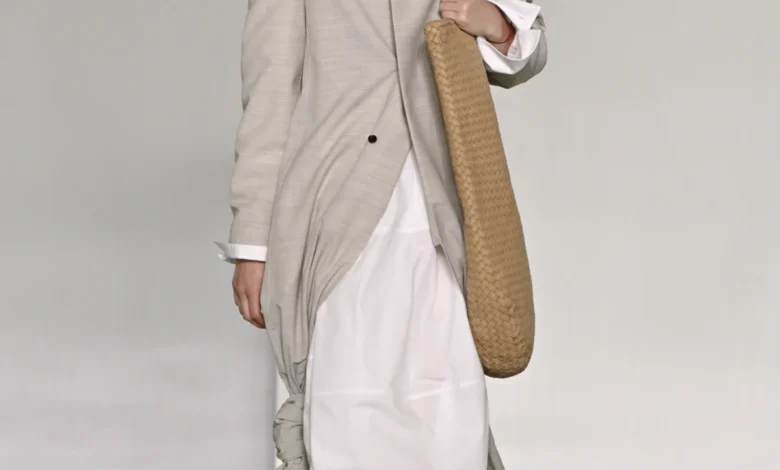
Since assuming her role, Trotter has leaned heavily into the label’s signature woven leather techniques. However, her initial runway presentations drew measured critiques from industry insiders who found the silhouettes overly heavy and structurally dense. Saturday night’s spring presentation marked a definitive pivot. While remnants of voluminous tailoring lingered—evidenced by select models nearly swallowed by scooped-neck sack dresses and satin pea coats—the overarching narrative of the collection was one of liberation, lightness, and technical refinement. Trotter successfully engineered a transition toward crisper, lighter fabrics, injecting a vibrant palette of colors and incorporating an expansive array of airy lace and intricate crochet techniques sourced directly from the storied textile traditions of the Venice region.
A Masterclass in Craft and Heritage
Speaking to a scrum of reporters backstage after the final look had traversed the runway, Trotter articulated the core philosophy guiding her design process. "We’re a house of craft," she stated, emphasizing the foundational ethos of the Italian luxury brand. "Craft really is our logo, but there was a lot of work this season on trying to find techniques that brought lightness and wearability, but still have all of the incredible handwork that this house is capable of doing."
This dedication to handwork was palpable throughout the presentation. The Venice region’s rich history of knitting and stitching was reinterpreted for a modern global luxury consumer. Rather than relying solely on the thick, opaque leathers that defined her earlier collections at the house, Trotter experimented with structural transparency and tactile diversity. Fringe—a dominant motif gaining significant momentum throughout the current fashion month—played a starring role in the collection’s theatrical high points. Fringing was seen dangling precariously from hip scarves, whorled into mesmerizing, sculptural bubble skirts, and trailing from a gargantuan straw bag whose elaborate tassels nearly swept the polished floor.
Silhouettes and Styling: Balancing Polish and Organic Ease
The sartorial architecture of the collection favored trim, elongated tailoring layered effortlessly over simple chinos or gauzy pink silk trousers. Trotter consciously reined in the excessive volume often associated with contemporary shirting, introducing sleek, abbreviated proportions. In one notable look, a short-sleeved white shirt was deliberately styled to allow a hint of bra to peek through, epitomizing the designer’s exploration of controlled imperfection.
"There is this sense of being a little bit undone," Trotter explained backstage, summarizing the interplay of textures and attitudes that defined the runway. She described the collection as an exploration of "a language between things being quite polished and a language with things being a little more organic." This duality allowed structured outerwear to coexist harmoniously with fluid, breathable underpinnings, creating a wardrobe tailored to the complexities of modern transitional dressing.
Menswear Evolution: Refined, Bohemian, and Effortless
The menswear offerings presented on Saturday night mirrored the women’s collection’s evolutionary leap. Receiving widespread praise from critics in attendance, the men’s looks were noticeably lighter, trimmer, and infused with a relaxed, bohemian spirit. Tailoring was softened, shedding the rigid formality of past seasons in favor of fluid cuts, breathable fabrics, and an effortless nonchalance that seemed to complement the relaxed aesthetic of high-profile attendees like Elordi. The masculine silhouettes struck a careful balance between sartorial discipline and laid-back luxury, suggesting a robust commercial viability for the upcoming retail season.
Broader Industry Implications and the Business of Bottega Veneta
Trotter’s strategic pivot away from heavy outerwear toward breathable, craft-intensive garments arrives at a critical juncture for Bottega Veneta and its parent company, Kering. As the global luxury market experiences a normalization of post-pandemic spending spikes, brands are increasingly pressured to justify high price points through visible craftsmanship and unique brand narratives. By emphasizing the artisanal pedigree of the Venice region, Bottega Veneta is doubling down on its unique selling proposition: timeless luxury anchored in exceptional hand labor.
Furthermore, the strategic deployment of celebrity influence—exemplified by Jacob Elordi’s front-row presence—highlights the enduring synergy between Hollywood iconography and heritage fashion houses. In an era dominated by digital engagement metrics, high-profile celebrity placements continue to drive immense earned media value, translating immediate social media buzz into long-term brand equity and customer acquisition.
As the fashion calendar progresses, Saturday night’s presentation positions Bottega Veneta not merely as a purveyor of luxury leather goods, but as a dynamic house capable of balancing historical reverence with forward-thinking design innovation. Through a successful synthesis of lightness, craft, and understated cool, Louise Trotter has charted a confident path forward for the brand, ensuring that its rich heritage remains vibrant and relevant on the global stage.