Nicole Tung on Photographing Overfishing in Southeast Asia: Inside Her Carmignac Award Project

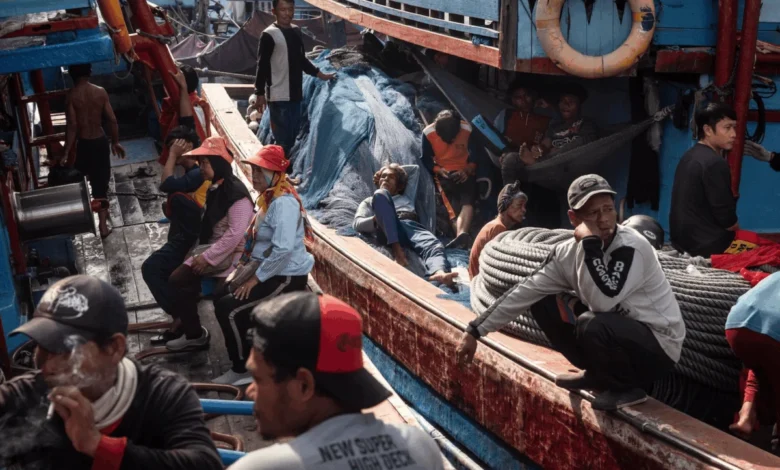
The global seafood supply chain operates largely out of sight, masking a complex web of environmental devastation, labor exploitation, and geopolitical tension. Bringing this invisible crisis into sharp focus, award-winning photojournalist Nicole Tung’s exhibition, Overfishing in Southeast Asia, offers a harrowing look into the realities of the commercial fishing industry. On display at the Bronx Documentary Center through April 26, 2026, the exhibition serves as the culmination of nine months of rigorous, on-the-ground reporting across Thailand, Indonesia, and the Philippines. As the laureate of the 15th Carmignac Photojournalism Award, Tung’s body of work bridges the gap between consumer plates in distant markets and the collapsing marine ecosystems and vulnerable coastal communities of Southeast Asia.
Main Facts and the Scope of the Crisis
Industrial overfishing represents one of the most pressing yet overlooked environmental emergencies of the 21st century. While consumers in Western markets and urban centers across Asia enjoy a steady supply of canned tuna, shrimp, and whitefish, the ecological toll in the Indo-Pacific region continues to mount at an alarming rate. According to global fisheries data, Southeast Asia accounts for a significant share of the world’s marine capture production, making its waters some of the most heavily exploited on Earth.
Tung’s project goes beyond standard wildlife or conservation photography by documenting the intersectional nature of the crisis. Her lens captures collapsing fish stocks, the plight of indigenous and small-scale fishermen who can no longer compete with industrial vessels, the systemic abuse of migrant laborers onboard commercial ships, and the broader geopolitical friction defining maritime boundaries. By anchoring her storytelling in the daily lives of dockworkers, veterinarians treating injured marine life, and struggling local fishers, Tung transforms abstract statistical data into undeniable human and environmental truths.
Chronology and Development of the Project

The journey behind Overfishing in Southeast Asia began when Tung secured the 15th Carmignac Photojournalism Award, a prestigious grant designed to support immersive reporting on human rights and environmental issues. Over a nine-month period spanning 2025, Tung traversed three countries—Thailand, Indonesia, and the Philippines—to document the vastly different regulatory landscapes and pressures facing each nation’s marine sectors.
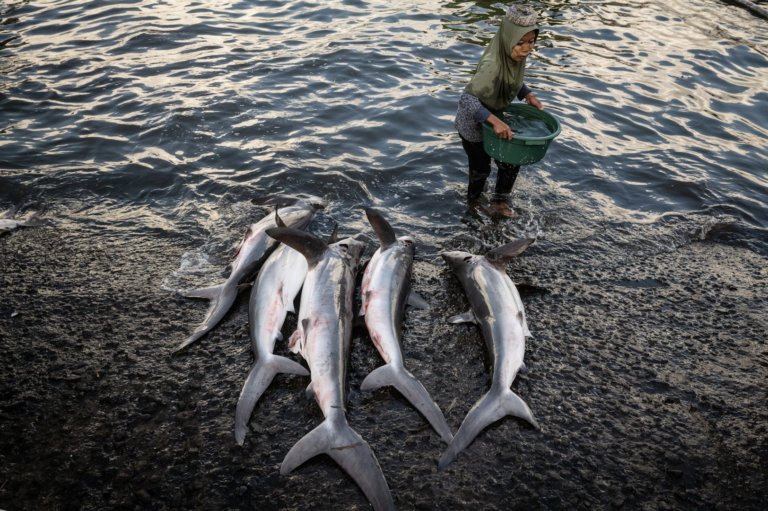
In January 2025, Tung documented landing sites in Ranong, Thailand, where Burmese dockworkers sorted catches from commercial vessels, and photographed veterinary efforts in Rayong province to rehabilitate a hawksbill turtle maimed by discarded fishing gear, commonly known as ghost nets. By May 2025, her reporting shifted to the Philippines’ General Santos fish port—the nation’s tuna capital—where fishermen unloaded months-long catches of Yellowfin tuna, Bigeye tuna, and Blue Marlin. That same month on Koh Lipe, Thailand, she captured the cultural impacts on the indigenous Urak Lawoi community, whose traditional fishing practices have been displaced by tourism and depleted waters. By June 2025, Tung’s focus turned to Indonesia, documenting the massive commercial fleets at Maura Angke port in Jakarta and the stark realities of the shark trade at Tanjung Luar port in East Lombok, culminating in comprehensive visual evidence of threatened species like sharks and wedgefish being brought ashore.
Country-by-Country Analysis: Regulations, Corruption, and Geopolitics

A critical component of Tung’s investigation involves dissecting how distinct national laws, or the complete absence thereof, dictate the health of marine ecosystems and the welfare of maritime workers across the region.
In Thailand, the aftermath of major fisheries reforms enacted around 2015 brought visible changes. The government introduced Port In Port Out (PIPO) checks to monitor crew manifests and vessel movements, which successfully allowed certain overfished areas to rebound. However, these regulations also placed heavy financial burdens on boat owners, leading many vessels to sit idle at docks. Furthermore, recent political pressures have mounted within the Thai parliament to roll back these hard-fought labor and environmental protections to appease commercial interests.
Indonesia presents a contrasting regulatory environment. While the country is a signatory to international conservation agreements such as CITES II—which regulates the trade of vulnerable species like certain sharks and rays—enforcement remains deeply compromised by corruption and oversight failures. Fishermen operating on commercial vessels, predominantly flagged to foreign entities such as China, South Korea, and Taiwan, frequently endure conditions reminiscent of pre-2015 Thailand, marked by severe labor abuses and unregulated harvesting.

Meanwhile, the crisis in the Philippines is inextricably linked to complex geopolitical disputes in the South China Sea. Beijing’s expansive territorial claims under the Nine-Dash Line have transformed traditional fishing grounds into zones of intimidation. Filipino fishermen routinely face harassment, aggressive maneuvering, and expulsion from their native waters by Chinese maritime militias. Consequently, the Philippine government struggles to enforce domestic conservation laws or protect its coastal citizens from foreign exploitation, leaving local fleets entirely outmatched.
Access, Obstacles, and the Realities of Field Reporting
Investigating the commercial fishing industry requires navigating immense logistical and physical barriers. For photojournalists like Tung, gaining access to the inner workings of commercial fleets remains nearly impossible without extensive, multi-month negotiations. Commercial captains and vessel owners operate in an industry frequently shadowed by illegality, making them deeply distrustful of independent media. As a result, Tung’s documentation primarily captured the periphery of the high seas—ports, landing sites, local markets, and coastal communities—where the devastating consequences of industrial over-extraction ultimately manifest.

Despite these hurdles, the imagery captured by Tung highlights the severe collateral damage of industrial practices. Images of endangered shark species hauled ashore at Tanjung Luar—a major export hub for shark fins bound for Hong Kong and China—and sea turtles entangled in ghost nets provide undeniable visual proof of marine degradation.
Broader Impact, Consumer Responsibility, and Future Implications
The positive critical and public reception of the Bronx Documentary Center exhibition underscores a growing public appetite for transparency within global food systems. Environmental scientists and human rights advocates have long warned that the degradation of marine biodiversity accelerates climate change by destroying vital ocean carbon sinks and destabilizing food security for millions of people globally.

When asked what everyday consumers can do in response to these systemic failures, Tung emphasizes the power of informed purchasing decisions. Beyond reducing seafood consumption or buying strictly local, consumers can utilize resources such as the Monterey Bay Aquarium’s Seafood Watch program to identify sustainable alternatives. Asking direct questions of fishmongers and restaurant operators regarding the origin of seafood products, as well as supporting robust legislative policies for marine conservation, are critical steps toward systemic reform.
Ultimately, Overfishing in Southeast Asia challenges the disconnect between modern consumption and ecological destruction. By rendering the invisible visible, Tung’s work forces a reckoning with the true cost of the global seafood trade, reminding audiences that the health of the world’s oceans is fundamentally intertwined with human survival.
Related posts: