Capturing the Sacred: Photographer and Director Lev L. Spiro Explores the Celtic Concept of Thin Places Through the Lens

The intersection of physical reality and spiritual resonance has long fascinated artists, philosophers, and travelers alike. In contemporary photography, few creators have investigated this threshold as deeply as Lev L. Spiro, an accomplished film and television director whose photographic explorations of "Thin Places" have garnered widespread critical acclaim. Rooted in ancient Celtic spiritual tradition, the concept of a thin place describes geographic or atmospheric locations where the boundary between the ordinary, material world and the sacred, otherworldly realm blurs. Through his exhibitions and highly sought-after workshops, Spiro has translated this ethereal phenomenon into a rigorous photographic discipline, prompting audiences and students to reconsider the relationship between observation, emotion, and the natural environment.
Main Facts and Conceptual Origins
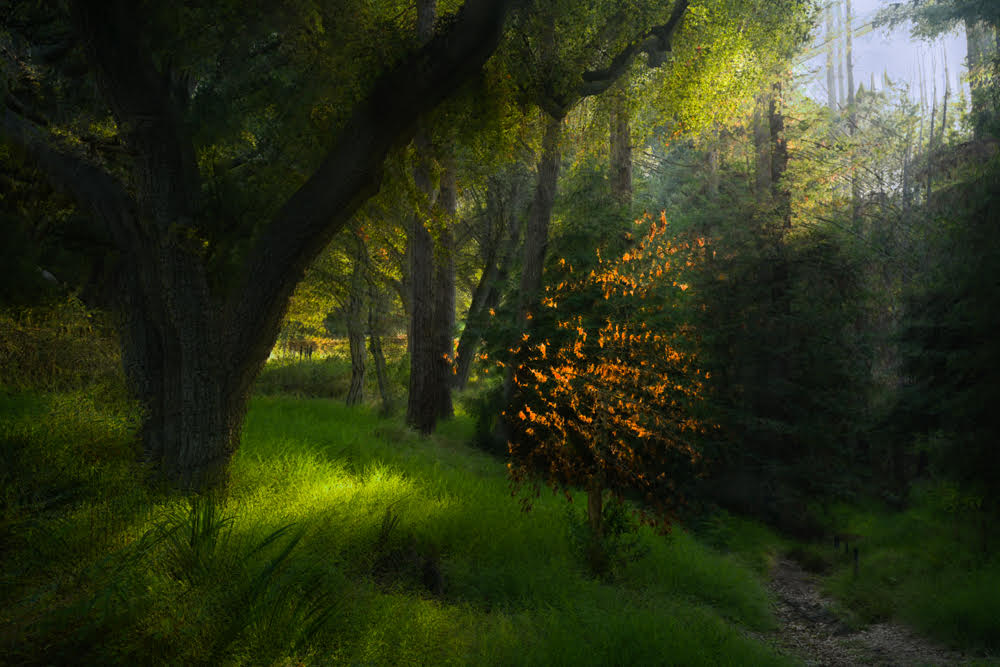
The term "Thin Places" originates from Celtic folklore and theology, historically denoting landscapes—such as remote islands, ancient groves, or misty mountaintops—where the spiritual veil is believed to be exceptionally fragile. While the phrase carries mystical connotations, Spiro applies it to contemporary visual art as a state of heightened perception. His artistic practice moves beyond mere topographical documentation, aiming instead to capture the internal, visceral experience of being arrested by a landscape.
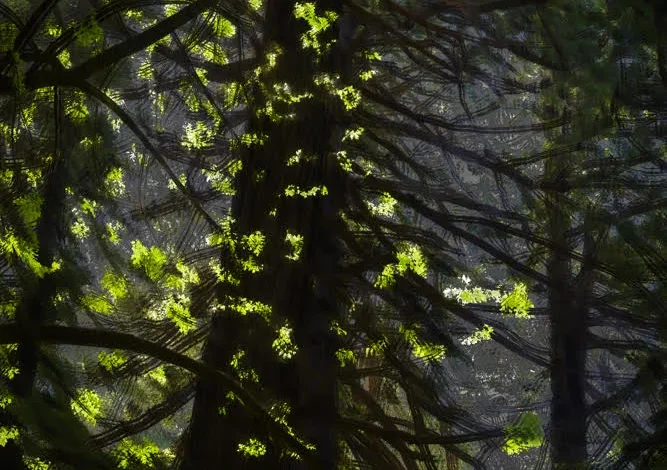
Spiro’s portfolio, which features striking bodies of work such as Thin Places and his more recent long-exposure series Elemental, emphasizes mood, light, texture, and temporal flow. Rather than seeking out grand, panoramic vistas, Spiro frequently discovers these zones in ordinary, overlooked corners of the natural world. His images—titled evocatively with terms like The Glen, The Stand, Cathedral, and Portal—utilize subtle plays of light, dense foliage, and moving water to evoke a sense of quiet transcendence.
Chronology and Artistic Evolution

Spiro’s journey toward conceptualizing and capturing thin places spans decades of personal and professional development. Long before he formally adopted the terminology, his formative aesthetic sensibilities were shaped during his youth. Between the ages of 11 and 13, Spiro spent his summers at a wilderness camp in Vermont modeled after the Outward Bound philosophy. Immersed in dense forests and remote mountain ranges far from urban centers, he experienced early encounters with awe and environmental stillness that would later inform his photographic philosophy.
Transitioning from a successful career in film and television directing into fine-art photography, Spiro integrated cinematic framing with contemplative stillness. His artistic development was heavily influenced by canonical masters of American photography, notably Minor White and Paul Caponigro, whose teachings prioritized receptivity, visualization, and allowing subjects to reveal themselves organically. Additionally, Spiro credits mentorship from renowned photographer Sam Abell for teaching him the discipline of allowing oneself to be physically and mentally "stopped" by an environment—a foundational skill for recognizing ephemeral moments of atmospheric significance before light and shadow shift.
Pedagogical Impact and Santa Fe Workshops

The resonance of Spiro’s artistic philosophy is perhaps best demonstrated by the overwhelming demand for his educational offerings. In collaboration with the prestigious Santa Fe Workshops, Spiro developed an intensive curriculum titled Thin Places: Photography and the Sacred in Nature. The program has achieved unprecedented popularity, selling out consecutive sessions and maintaining an extensive waiting list of professional and advanced amateur photographers.
Industry analysts and workshop participants note that the course fills a critical niche in contemporary photographic education. While many technical workshops focus heavily on equipment mastery, post-processing, and compositional rules, Spiro’s curriculum addresses the psychological and perceptual dimensions of image-making. The core pedagogical takeaway instructs students to transition from ordinary visual cataloging to deep, sensory receptivity. By learning to slow down and attune their senses to minute shifts in light, time, color, and spatial relationships, participants are equipped to elevate their imagery from descriptive illustration to emotional expression.
Supporting Data and Technical Methodology

The execution of Spiro’s vision requires a rigorous technical approach that balances meticulous preparation with spontaneous intuition. Depending on the conceptual framework of the series, his methodology shifts significantly. For his Elemental series, which investigates the kinetic properties of nature, Spiro employs long-exposure techniques. This approach necessitates specialized equipment, including sturdy tripods, specific focal-length lenses, and neutral density (ND) filters ranging from six to ten stops, designed to capture the fluid motion of running water and shifting cloudscapes.
Conversely, his earlier Thin Places series relied heavily on temporal lighting conditions, prioritizing the evocative, low-angle illumination occurring within the two hours immediately following sunrise and the two hours preceding sunset. Despite this technical scaffolding, Spiro frequently encounters operational friction between his premeditated shooting agendas and spontaneous discoveries. It is common for the photographer to set out with a rigid technical setup—such as heavy ND filters configured for long-exposure water studies—only to encounter an entirely distinct atmospheric phenomenon that demands an immediate reconfiguration of his gear. This friction serves as a practical lesson in his teaching: the necessity of maintaining enough perceptual flexibility to abandon preconceived intentions in favor of authentic engagement.
Environmental Stewardship and Ethical Considerations

As public interest in remote natural landscapes grows, discussions surrounding the ethical portrayal and conservation of delicate environments have intensified. Spiro’s approach to photographing thin places is grounded in a strict ethos of environmental responsibility and respect for indigenous and cultural histories.
Because thin places are defined by an intimate synergy between the observer and the environment, Spiro emphasizes a strict "leave no trace" philosophy. He notes that the physical intervention required to capture an image must remain non-destructive, ensuring that flora, fauna, and geological formations are left undisturbed. Furthermore, when working in regions holding ancestral, historical, or spiritual significance to Indigenous communities, Spiro advocates for heightened cultural awareness and deference to local traditions, ensuring that artistic pursuit does not compromise the sanctity of the land.
Broader Market Implications and Cultural Analysis

The commercial and critical reception of Spiro’s work highlights a broader cultural shift within contemporary art and photography markets. In an era dominated by hyper-saturated, algorithmically optimized digital imagery designed for rapid consumption, works that demand contemplation, silence, and emotional introspection have seen a resurgence in value.
Art critics suggest that the popularity of the "Thin Places" concept speaks to a collective psychological yearning for respite from hyper-connectivity and urban acceleration. By framing nature not merely as a resource or a recreational backdrop, but as a site of potential transcendence, Spiro’s photography taps into a universal human desire for reconnection.
Furthermore, the success of his educational model indicates a paradigm shift among modern practitioners. Photographers increasingly seek mentorship that addresses the internal psychology of creativity rather than purely mechanical execution. As Lev L. Spiro continues to exhibit his work and guide emerging artists through the intricacies of perceptual awareness, his contributions solidify photography’s capacity to serve as a bridge between the tangible world and the profound mysteries that lie just beneath its surface.