Scotland’s Quiet Revolution: 11 Ethical and Sustainable Fashion Brands Changing the Industry

The global fashion industry has long faced intense scrutiny for its heavy environmental footprint, contributing an estimated 10% of global carbon emissions and vast quantities of textile waste. Amid a shifting consumer landscape demanding greater corporate responsibility, Scotland has emerged as a surprising yet formidable leader in sustainable and ethical apparel manufacturing. Despite a population of just 5.4 million, the country is home to a robust network of independent businesses, mills, and boutiques that are systematically redefining the boundaries of slow fashion.
Historically celebrated for its rich textile heritage—particularly in wool and cashmere production—Scotland is leveraging its traditional craftsmanship to combat the pervasive, resource-intensive nature of fast fashion. Modern Scottish sustainable brands are actively pioneering localized supply chains, zero-waste manufacturing models, and strict circular economy principles. This comprehensive overview examines eleven prominent Scottish clothing and textile brands that are steering the industry toward a more accountable future through rigorous environmental standards, material innovation, and radical supply chain transparency.

The Evolution of Scottish Slow Fashion and Heritage Manufacturing
The contemporary focus on sustainability in Scottish apparel is deeply rooted in the nation’s industrial history. For centuries, rural and urban communities alike specialized in natural fibers, utilizing locally sourced wool and enduring textile techniques. However, the globalization of the fashion supply chain in the late 20th century drove much of the world’s apparel production overseas, resulting in massive carbon footprints, exploitative labor practices, and an over-reliance on synthetic, petroleum-based fibers.
In response to these ecological challenges, a new wave of Scottish designers and manufacturers has sought to revitalize domestic production. By keeping manufacturing local or strictly within the European Union, these brands reduce transportation emissions while supporting local artisans and maintaining direct oversight of working conditions. Furthermore, many of these enterprises have integrated rigorous third-party auditing systems, such as B-Corp certification and the Responsible Wool Standard (RWS), to validate their environmental claims and ensure consumer trust.
Brora: Marrying Heritage with B-Corp Standards
Founded over three decades ago, Brora operates on the foundational premise that style and sustainability must be mutually inclusive. Specializing in slow fashion, the brand emphasizes garment longevity by utilizing natural fibers such as Scottish cashmere, wool, linen, and organic cotton, while strictly minimizing synthetic alternatives.

Brora’s operational strategy prioritizes local manufacturing, partnering with skilled regional artisans who utilize traditional techniques passed down through generations. When international sourcing is necessary, the company mandates adherence to a strict code of conduct focusing on worker welfare, occupational health and safety, and environmental mitigation. Demonstrating its long-term commitment to these principles, Brora achieved B-Corp certification in 2025, independently verifying its high standards of social and environmental performance, transparency, and accountability.
Findra: Performance Activewear Rooted in Natural and Recycled Materials
Based in the Scottish Borders, Findra challenges the synthetic-dominant activewear market by engineering high-performance clothing for women from natural and recycled sustainable fabrics. The brand’s product catalog spans cycling tights, base and mid layers, technical trousers, and outerwear.
Demonstrating a commitment to regional economic support and emission reduction, Findra manufactures over half of its collection within the United Kingdom, dividing production between Scotland and England. For products manufactured outside the UK, the company relies exclusively on factories certified to rigorous international standards for environmental performance and labor conditions. To combat the pervasive issue of textile disposal, Findra provides a dedicated repair service, encouraging consumers to mend damaged garments and extend their functional lifecycle.

ERIBÉ Knitwear: Small-Batch Production and Zero-Waste Innovation
Established in 1986, ERIBÉ Knitwear is a recognized Scottish knitwear house that exclusively utilizes 100% natural fibers, including British wool and guaranteed non-mulesed RWS merino lambswool. Operating primarily out of Scotland and the European Union, the brand ensures its production cycles comply with stringent regional labor laws.
ERIBÉ minimizes material waste by executing production in smaller, targeted batches and utilizing made-to-order manufacturing models. Faulty or damaged panels are systematically unraveled back into yarn and repurposed, significantly reducing factory waste. Additionally, the company has phased out traditional plastic garment bags in favor of biodegradable packaging solutions.
Hilary Grant: Regional Craftsmanship and Certified Animal Welfare
Operating from the Orkney Islands, textile design studio and knitwear factory Hilary Grant specializes in cold-weather accessories such as scarves and pom-pom hats. The brand’s signature items are machine-knitted and hand-finished on-site in Orkney, while its expanded range of hats and mittens is produced by a specialized manufacturing partner in Ayrshire, southwestern Scotland.

Hilary Grant sources exclusively high-grade lambswool from farms adhering to progressive land management practices and stringent animal welfare standards. The raw materials are certified by the Responsible Wool Standard and are entirely free of mulesing. Dyeing and spinning processes are subsequently executed within Scotland utilizing environmentally conscious dyes designed to minimize aquatic pollution and ecological disruption.
Godiva: Grassmarket Pioneers of Vintage and Reworked Fashion
Located in Edinburgh’s historic Grassmarket district, Godiva has operated as a staple of sustainable retail for more than twenty years. Beyond offering a curated selection of quality vintage apparel, the boutique runs an in-house studio dedicated to its "Reworked" collection. This initiative transforms dated or unwanted garments into modern, functional pieces tailored to contemporary lifestyles.
In addition to its proprietary recycling efforts, Godiva functions as a regional platform for independent local designers, providing physical retail space that champions localized production and reduces the market share of mass-produced fast fashion.

Second Cashmere: Championing the Circular Economy in Glasgow
Glasgow-based Second Cashmere addresses the specific issue of luxury textile waste by intercepting discarded cashmere garments destined for municipal landfills or low-grade recycling streams. Operating strictly within a circular economic framework, the enterprise cleans, reconditions, and restores salvageable knitwear to commercial quality.
For items damaged beyond direct repair, Second Cashmere reprocesses the fibers into reclaimed cashmere yarns for original designs. The brand also offers a specialized hand-repair service utilizing unraveled yarn from un-mendable garments, alongside making reclaimed yarn available to consumers interested in autonomous mending projects.
Beira: Radical Supply Chain Transparency and Luxury Upcycling
Beira employs a zero-waste, circular production model by utilizing discarded materials—including fabrics, trims, zippers, and buttons—sourced directly from luxury fashion manufacturers. These residual materials are transformed into limited-edition technical raincoats and knitwear designed for durability.

A defining characteristic of Beira’s operational model is its exhaustive supply chain transparency. Every product listing on the company’s platform provides granular data regarding the maker’s identity, hourly wages, video documentation of the manufacturing process, and detailed sourcing origins for individual material components, setting a high benchmark for industry-wide accountability.
Totty Rocks: Slow Fashion Occasion Wear Crafted in Edinburgh
Edinburgh-based Totty Rocks specializes in women’s occasion wear, tailored outerwear, and bespoke wedding dresses. Operating on a strict made-to-order basis from its combined studio and retail space, the brand utilizes locally sourced fabrics to produce low-volume, high-craftsmanship garments. This slow-fashion approach has garnered international recognition from prominent public figures while maintaining a localized, low-impact operational footprint.
The Croft House: Plastic-Free Knitwear from Peterhead
Headquartered in Peterhead, The Croft House designs and manufactures natural-fiber knitwear for both men and women. The enterprise maintains a strict commitment to regional manufacturing, executing all design and production within Scotland while sourcing raw materials exclusively within the United Kingdom.

With the exception of specialized hosiery—which incorporates a minimal percentage of synthetic nylon to ensure structural integrity and elasticity—The Croft House’s apparel range is entirely plastic-free. Furthermore, the brand utilizes seamless knitting techniques to eliminate cutting waste and offers selections crafted from pure, undyed yarn to further reduce chemical processing impacts.
Prickly Thistle: Renewable Energy and Zero-Waste Tartan Innovation
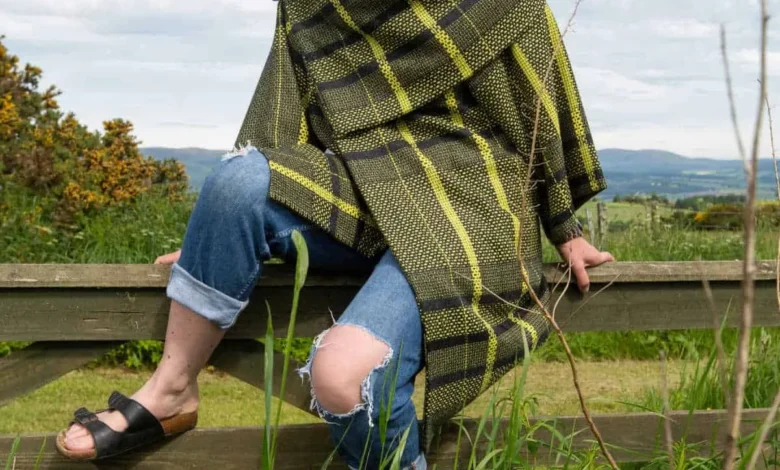
Located in Dingwall, Prickly Thistle operates a Highland-based textile mill focused on the production of ethical tartan using 100% natural, plastic-free materials and historical weaving machinery. The B-Corp certified mill runs entirely on renewable energy and sources its wool exclusively through Scottish spinners and dyers.
Prickly Thistle’s manufacturing ethos eliminates fabric waste entirely during the cutting process. In an innovative departure from conventional garment construction, the brand’s designs avoid the use of metal zippers and buttons—components that traditionally complicate garment recycling and impose rigid sizing limitations. By implementing adjustable strap-and-buckle systems, the brand’s garments feature built-in sizing flexibility, enhancing product longevity and ease of eventual recycling.

Kestin: Sustainable Menswear Grounded in UK Production
Concluding the overview of Scotland’s sustainable apparel sector is Edinburgh-based Kestin, a menswear brand dedicated to domestic production and durable fabric selection. Kestin maintains a transparent supply chain, partnering exclusively with suppliers and manufacturing facilities that guarantee fair living wages, safe working conditions, and robust community engagement. The brand’s collection ranges from formal tailoring to casual knitwear and overshirts, all engineered for timeless aesthetic appeal and long-term wearability.
Broader Implications for the Global Fashion Industry
The proliferation of these eleven Scottish enterprises highlights a viable commercial alternative to the prevailing linear models of global fast fashion. By prioritizing circularity, regional supply chain integration, material traceability, and fair labor practices, these brands demonstrate that environmental sustainability and commercial viability are not mutually exclusive.
As international regulatory frameworks increasingly target carbon emissions and textile waste within the fashion sector, the localized, transparent models pioneered in Scotland offer valuable blueprints for broader industry reform. While challenges remain regarding the scaling of artisan production and the higher price points associated with slow fashion, consumer demand for verifiable ethical standards continues to drive momentum across the market.