Sheila Chepkirui Triumphs at the 2026 New York City Marathon as Adidas and Nike Battle for Footwear Supremacy

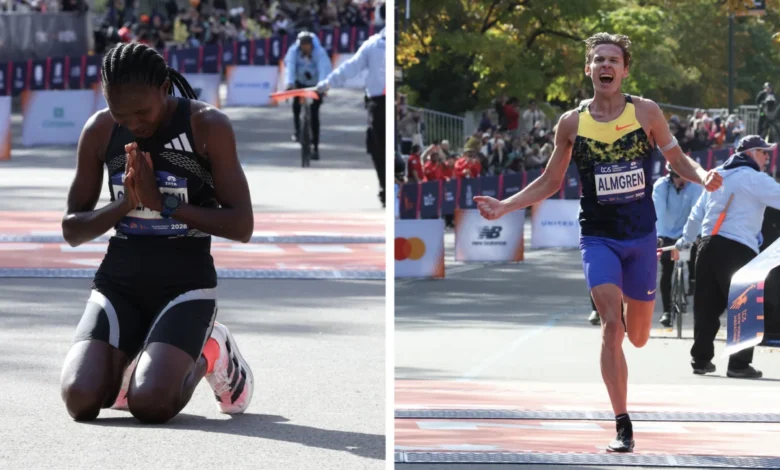
The global marathon calendar reached its dramatic climax on a crisp autumn Sunday in New York City, where elite distance runners, tactical masterclasses, and a high-stakes technological arms race converged. Sheila Chepkirui secured her second victory at the New York City Marathon, navigating the iconic five-borough course with precision to outpace reigning champion and compatriot Hellen Obiri. Meanwhile, the men’s division witnessed a historic breakthrough as Swedish standout Andreas Almgren captured his maiden World Marathon Major victory, rewriting the narrative for European distance running and shifting the spotlight toward an intensifying footwear rivalry.
Beyond the tactical surges, split-second finishes, and grueling physical tests, the 2026 race served as a definitive referendum on the state of elite running footwear. The race podiums underscored a multi-million-dollar battle for dominance between German sportswear titan Adidas and American athletic giant Nike. With engineering milestones pushing the boundaries of human physiology, the footwear choices of the champions have become just as scrutinized as their training regimens, transforming marathons into high-speed runways for cutting-edge sports science.
A Tactical Masterclass in the Women’s Division
The women’s elite race played out as a high-stakes tactical chess match among the world’s most decorated endurance athletes. Chepkirui, displaying exceptional poise and endurance, crossed the finish line in Central Park with a winning time of 2:24:36. Her victory not only reclaimed the crown she first captured in 2024 but also denied Obiri a historic consecutive title defense.
Obiri, who had established a formidable stranglehold on the event by taking the pole position in both 2023 and 2025—including a blistering course record of 2:19:51 set the previous year while wearing the On Cloudboom Strike LS—found herself tested by a relentless lead pack. As the race entered its punishing final miles through Manhattan, Chepkirui made her decisive surge.
However, the race for the remaining podium spots provided one of the day’s most thrilling subplots. American runner Jessica McClain delivered a phenomenal performance to clinch second place, stopping the clock at 2:24:42. McClain’s tenacity allowed her to edge out Obiri by a single second, with the defending champion rounding out the podium in third with a time of 2:24:43. With Chepkirui’s victory, Kenyan runners have now secured an unbroken four-year sweep of the women’s New York City Marathon, cementing their nation’s status as an undisputed powerhouse in women’s long-distance running.
Sweden’s Andreas Almgren Shocks the Men’s Field
In the men’s race, the absence of an established New York heavyweight opened the door for a new era of global competition. Swedish runner Andreas Almgren seized the moment, crossing the finish line first with a remarkable time of 2:06:01. Almgren’s triumph was all the more staggering given that it marked his debut appearance in a World Marathon Major event.

Almgren managed to hold off a fiercely competitive international chase group. Yemaneberhan Crippa of Italy claimed the runner-up position with a time of 2:06:14, demonstrating the resurgence of European elite marathoners on the world stage. Lesotho’s Kamohelo Mofolo rounded out the podium in third place, crossing the line in 2:06:26.
Defending champion Benson Kipruto of Kenya, who captured the hearts of fans the previous year in the closest-ever finish in the event’s history while wearing the Adidas Adizero Adios Pro Evo 2, fought valiantly to defend his title. Ultimately, Kipruto had to settle for a fourth-place finish, crossing just one second behind Mofolo in 2:06:27. Almgren’s victory not only signaled a changing of the guard in men’s marathoning but also served as a watershed moment for footwear development, as the winning shoe broke new ground for Nike.
The Footwear Engineering Arms Race: Adidas Adizero Adios Pro Evo 3
While the athletes provided the raw athletic power, the equipment on their feet dictated the parameters of modern racing performance. Sheila Chepkirui’s victory was achieved while wearing the Adidas Adizero Adios Pro Evo 3, capping off an extraordinarily dominant calendar year for the silhouette.
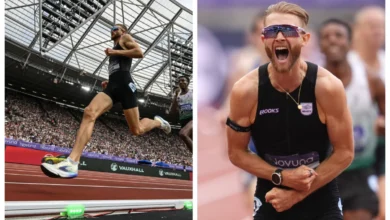
The Adios Pro Evo 3 has spent the 2026 racing season rewriting the record books. Earlier in the year, Kenyan runner Sebastian Sawe made history at the London Marathon by recording the first-ever official sub-two-hour marathon finish while wearing the model. At the same event, Tigst Assefa shattered the women’s world record, also trusting the engineering of the Pro Evo 3. Furthermore, Yomif Kejelch utilized the same shoe to become only the second man in history to break the two-hour barrier, following closely behind Sawe in London.
The statistical dominance of the silhouette across the 2026 World Marathon Majors is unprecedented. Of the 14 major marathon races held throughout the year, an astonishing eight titles were claimed by runners wearing the Pro Evo 3, with an additional victory secured in its predecessor, the Pro Evo 2. Furthermore, the Berlin Marathon witnessed a total sweep of all six podium finishers across both the men’s and women’s divisions wearing the Adios Pro Evo 3—a feat that eclipsed the legendary dominance of Nike’s original Vaporfly at the 2016 Olympic Games.
Engineering the Impossible: Inside the Anatomy of a Super Shoe
The secret behind the Adios Pro Evo 3’s market dominance lies in aggressive weight reduction and biomechanical efficiency. Tipping the scales at a featherlight 97 grams for a standard men’s size 9.5, the shoe is engineered to be approximately 30 percent lighter than its predecessor. Designers managed to achieve a 1.6 percent improvement in running economy, making it the lightest race-legal marathon shoe ever recorded in the history of the sport.
Charlotte Heidmann, Adidas category director for Adizero, reflected on the relentless push for innovation during an interview with Footwear News surrounding the shoe’s April launch. "When you think you’ve reached the limit, you actually haven’t. There’s always more you can achieve," Heidmann noted. "When we introduced the Pro Evo 1, 138 grams was exceptional, and now we’ve reduced it even more. It’s just me talking here today, but collaboration helps to achieve things you didn’t think were possible some years ago."

Nike Strikes Back: The Debut of the Nike Apex
Despite Adidas capturing a lion’s share of the major marathon victories in 2026, industry pioneer Nike refused to cede the spotlight entirely. Andreas Almgren’s historic victory in the men’s division was achieved while wearing the unreleased Nike Apex, handing the upcoming model a triumphant debut on the World Marathon Major stage ahead of its commercial release scheduled for January.
The Nike Apex represents the brand’s next evolutionary leap in hyper-foam and carbon-plate technology. The silhouette features an avant-garde construction highlighted by two Air Zoom units stacked directly on top of each other at the forefoot. According to brand specifications, the Apex delivers a staggering 40 percent improvement in energy return compared to the Alphafly 3, while offering a 10 percent increase in energy output over the Alphafly 4, which only recently debuted in September.
This rapid iteration cycle highlights the fierce competition taking place in research and development labs across Oregon and Germany. Brands are no longer just designing footwear for consumer comfort; they are building precision instruments designed to shave vital seconds off world records, altering the physiological limits of human endurance.
Broader Industry Implications and Market Trends
The events of the 2026 New York City Marathon illustrate a broader commercial and cultural shift within the athletic footwear industry. Marathons have transformed from simple endurance tests into high-visibility testing grounds for multi-billion-dollar product portfolios. Every record broken and every podium swept translates directly into consumer demand, driving sales for carbon-plated "super shoes" that retail at premium price points.
As running culture continues to experience a global boom, amateur runners increasingly look to replicate the gear worn by champions like Chepkirui, Almgren, and Obiri. The commercial success of the Adidas Adizero Adios Pro Evo series has propelled the brand to record financial quarters, while Nike’s aggressive pipeline—anchored by the impending rollout of the Apex—ensures that the battle for technological supremacy will only intensify in the years to come.
Looking ahead, the barrier-breaking performances seen on the streets of New York, London, Berlin, and Chicago suggest that human potential is far from tapped. As sports scientists and footwear engineers unlock new frontiers in weight reduction and energy return, the conversation around the sport inevitably turns to the future. With sub-two-hour marathons no longer an impossibility and footwear technology advancing at an exponential rate, the 2026 New York City Marathon will be remembered not only for the tactical brilliance of its champions, but as the moment the modern era of marathon running firmly established its technological foundation.