Tesco suffers major legal setback as Supreme Court rejects appeal in landmark equal pay dispute

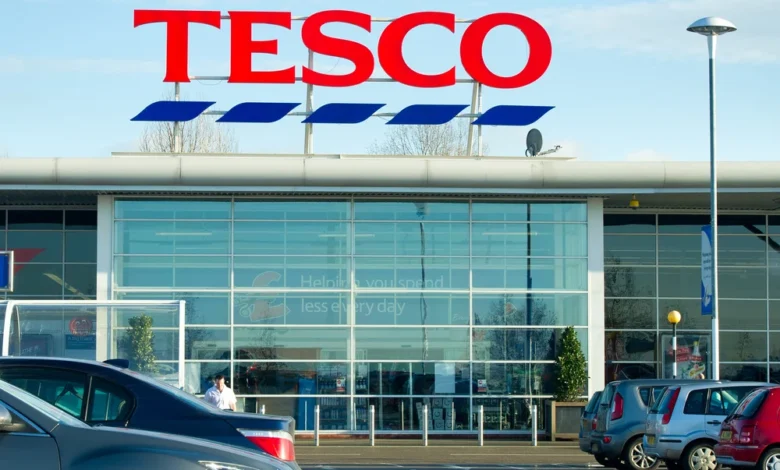
Tesco has been refused permission to appeal to the Supreme Court regarding a pivotal ruling in its long-running equal pay litigation, a decision that marks a significant milestone for more than 16,000 current and former shop workers. The move by the UK’s highest court brings to an end the supermarket giant’s attempt to challenge the methodology used by lower courts to compare the job roles of its retail staff against those in its distribution centers. By refusing to hear the appeal, the Supreme Court has effectively cemented the Court of Appeal’s judgment handed down in May, which validated the use of internal company documentation to establish the scope of employees’ duties.
This legal battle, which has spanned several years, centers on allegations that predominantly female shop floor staff have been paid less than their predominantly male counterparts in warehouse and distribution roles, despite performing work of equal value. As the case moves forward, the implications of this decision resonate far beyond Tesco, potentially reshaping the landscape for equal pay claims across the entire UK retail sector.
A Chronology of the Legal Conflict
The dispute is rooted in the fundamental principles of the Equality Act 2010, which mandates that men and women must receive equal pay for work of equal value. The claimants, represented by the law firm Leigh Day, argue that their roles as customer assistants, which involve complex tasks, customer service, and stock management, are comparable in value to the manual labor performed in the company’s distribution network.
The litigation has followed a rigorous path through the British judicial system:
- Initial Filings: The claims began to gain momentum several years ago as thousands of retail workers sought parity with the higher pay grades typically afforded to warehouse staff.
- The Employment Tribunal Stage: The initial challenge by Tesco focused on the evidentiary process. The supermarket argued against the Employment Tribunal’s reliance on internal training manuals and operational documents to define the "job requirements" of shop floor staff. Tesco maintained that these documents were not exhaustive reflections of the daily realities of the roles.
- The Court of Appeal Decision (May 2026): The Court of Appeal ruled decisively against Tesco, upholding the Tribunal’s approach. The judges concluded that internal documentation serves as a reliable proxy for what an employer expects of its workforce. Unless the employer can produce clear evidence to the contrary, these records are deemed admissible for assessing the nature of the work.
- The Supreme Court Refusal (September 2026): Following the May defeat, Tesco sought leave to appeal to the Supreme Court. On September 29, the court denied this application, citing that the appeal did not raise an arguable point of law that warranted the court’s intervention.
The Role of Internal Documentation in Equal Pay Litigation
The core of this specific legal struggle was not the pay gap itself, but the evidentiary framework used to analyze it. In large-scale employment disputes, determining whether two roles are of "equal value" is an arduous process. Employers have historically argued that the differences in working environments—such as the fast-paced, high-pressure atmosphere of a warehouse compared to the customer-facing demands of a store—make a direct comparison impossible.
By attempting to restrict the use of its own training and operational documents, Tesco aimed to complicate the claimants’ ability to define their roles formally. The Court of Appeal’s ruling, now final, establishes a critical precedent: if an employer has documented the responsibilities of a role in a training manual or operational handbook, they cannot later disavow those documents to argue that the role is less complex or demanding than it appears on paper.
Kiran Daurka, an employment partner at Leigh Day, described the Supreme Court’s decision as a "significant outcome" for the 16,000 workers involved. "This decision brings Tesco’s challenge on this issue to an end," Daurka stated. "The courts have confirmed that tribunals can rely on employers’ own training and operational materials when assessing job duties. This will ensure that equal pay claims are decided fairly, proportionately, and without unnecessary procedural obstacles."
Broader Implications for the Retail Industry
While this case is specific to Tesco, it is viewed by industry analysts as a bellwether for the wider retail sector. The "Equal Pay for Equal Value" argument is currently being tested against several of the UK’s largest employers. Asda, Sainsbury’s, and Morrisons are all currently navigating similar, multi-billion-pound litigation.

The retail sector has historically operated on a pay structure that rewards warehouse and logistics roles with higher hourly rates than retail store roles. Supermarkets often defend this by pointing to market forces—the difficulty of recruiting for warehouse roles, the physical nature of the work, and the specific operational requirements of logistics hubs. However, the legal tide appears to be shifting. If claimants across the board are successful in proving that their retail roles carry equivalent value to warehouse roles, the financial liability for the retail industry could reach into the billions of pounds in back pay and compensation.
For retailers, the financial risk is two-fold: the immediate cost of potential settlements or court-ordered pay adjustments, and the long-term cost of restructuring pay scales to ensure compliance with the Equality Act moving forward.
Official Responses and Economic Context
Tesco has consistently maintained that its pay practices are fair and non-discriminatory. In statements issued throughout the duration of the litigation, the retailer has emphasized that pay rates in its stores and distribution centers are set based on the specific market requirements for each role. A spokesperson for Tesco previously noted that the company respects the right of its employees to seek legal clarity but maintains that the work performed in stores and warehouses is fundamentally different.
However, the legal failure to reach the Supreme Court marks a tactical retreat for the company. Without the ability to challenge the evidentiary standards in the highest court, Tesco now faces the prospect of the case returning to the Employment Tribunal to address the substance of the equal pay claims. This will involve a detailed evaluation of job evaluations, pay structures, and the comparative value of thousands of roles.
Economic Analysis: The Cost of Compliance
For the UK retail sector, the outcome of these collective actions represents one of the largest potential financial liabilities in recent economic history. In an era of high inflation and tight margins, the retail industry is under immense pressure to manage operational costs. A ruling that mandates broad-based pay parity could force a significant increase in the wage bill for major supermarkets.
Economists observing the case suggest that this could lead to several structural changes within the retail sector:
- Increased Investment in Automation: To mitigate the cost of human labor in both warehouses and stores, supermarkets may accelerate the adoption of automated technology.
- Harmonization of Job Roles: Retailers may move to create more generic job descriptions to avoid the granular comparisons that form the basis of these legal challenges.
- Pricing Adjustments: Any sustained increase in the cost of labor is likely to be passed on to the consumer through price adjustments, though competitive pressures may limit how much of this cost can be absorbed by the customer.
The Path Forward for Claimants
The refusal of the Supreme Court to hear the appeal does not mean the litigation is over; rather, it means the procedural arguments are settled. The case will now proceed to the next stage of the Employment Tribunal, where the substantive arguments regarding whether the roles are of "equal value" will be heard in earnest.
This process will likely involve expert witnesses, extensive documentation audits, and further testimony regarding the daily tasks of staff. For the 16,000 workers represented by Leigh Day, the Supreme Court’s decision is a victory of momentum. It removes a significant procedural hurdle that could have stalled the case for years.
The legal community is watching closely, as this case will likely set the gold standard for how equal pay claims are handled in the future. The ability for employees to leverage their employer’s own internal documents as evidence provides a powerful tool in the pursuit of pay transparency. As the retail industry prepares for what promises to be a protracted period of litigation, the Tesco case stands as a stark reminder of the evolving legal standards regarding workplace equality and the judiciary’s commitment to ensuring that job evaluations remain rooted in objective, employer-provided facts.