The Carmen Lúcia Ruby A Testament to Eternal Love and Geological Splendor at the Smithsonian

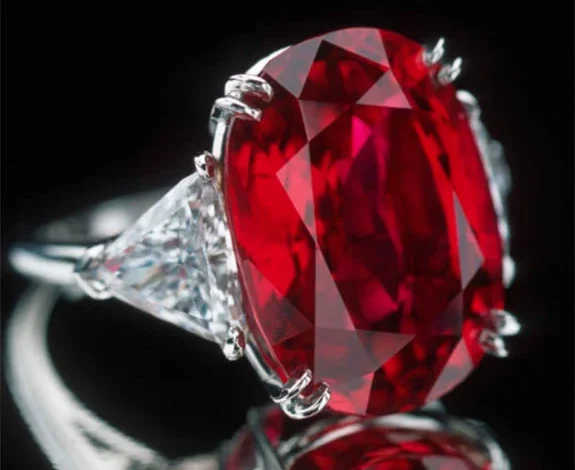
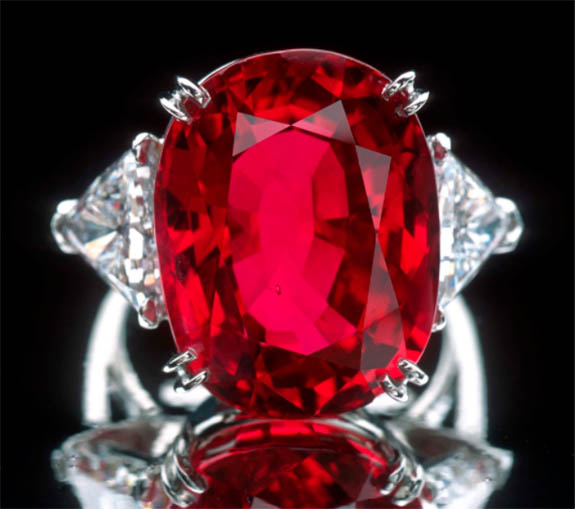
Since 2004, the National Gem and Mineral Collection at the Smithsonian Institution’s National Museum of Natural History in Washington, D.C., has served as the permanent home for one of the most extraordinary gemstones ever unearthed. The Carmen Lúcia Ruby, a staggering 23.10-carat Burmese gemstone, remains a focal point of the Janet Annenberg Hooker Hall of Geology, Gems, and Minerals. Known for its exceptional size, clarity, and "pigeon’s blood" hue, the ruby is not only a geological marvel but also a poignant symbol of a husband’s devotion to his late wife.
The gemstone’s arrival at the Smithsonian marked a significant milestone for the National Gem Collection. At the time of its acquisition, Dr. Jeffrey Post, the museum’s longtime curator of gems and minerals, described the ruby as the most important addition to the collection in two decades. Its presence alongside iconic treasures such as the Hope Diamond and the Logan Sapphire elevates the museum’s status as a premier repository for the world’s most significant mineralogical specimens.
A Geological Masterpiece: The "Pigeon’s Blood" of Mogok
The Carmen Lúcia Ruby is a premier example of the corundum mineral species, specifically the variety known as ruby. Its origins can be traced back to the legendary Mogok region of Burma (now Myanmar), often referred to as the "Valley of Rubies." Sourced in the 1930s, this oval-cut stone embodies the rarest qualities sought by gemologists and collectors alike.
The term "pigeon’s blood" is a traditional trade descriptor for the most desirable color in rubies: a deep, vibrant red with a hint of soft blue. This specific coloration is the result of the presence of chromium within the aluminum oxide crystal structure. In the Mogok Valley, rubies formed within metamorphic limestone (marble) that is notably low in iron. While iron can mute a ruby’s color and inhibit its fluorescence, the absence of iron in Mogok rubies allows them to exhibit a fiery, internal glow when exposed to ultraviolet light, including natural sunlight.
At 23.10 carats, the Carmen Lúcia Ruby occupies a rare echelon of size. While diamonds, sapphires, and emeralds can occasionally be found in sizes exceeding 100 carats, high-quality Burmese rubies rarely surpass 20 carats. The geological conditions required to form a ruby of this transparency and saturated color, without significant inclusions, are exceedingly rare. For a stone of this magnitude to remain intact and faceted to such a high degree of brilliance makes it a "once-in-a-lifetime" find for the scientific community.
The Legacy of Carmen Lúcia and Dr. Peter Buck
The provenance of the ruby is deeply intertwined with the life of Dr. Peter Buck, a nuclear physicist and philanthropist best known as the co-founder of the Subway sandwich chain. The gemstone is named in honor of his wife, Carmen Lúcia Buck, who passed away in 2003 following a battle with cancer.
The history of the ring is a narrative of hope and eventual tribute. In 2002, while undergoing medical treatments, Carmen Lúcia Buck learned of the ruby’s existence. It had been held in private collections for several decades and was rumored to be entering the market. Fascinated by its beauty and rarity, she expressed a desire to acquire the ring to celebrate her recovery and her love for fine gemstones.
Tragically, Carmen passed away before she could see the ruby in person or wear it. In the wake of her death, Dr. Peter Buck sought a way to honor her memory that would resonate beyond a private inheritance. Recognizing her admiration for the stone, he decided to provide the Smithsonian Institution with the necessary funds to purchase the ruby. His goal was twofold: to create a lasting memorial for his wife and to ensure that the American public could appreciate the gem’s beauty indefinitely.
In a 2004 interview with The New York Times, Dr. Buck reflected on the decision, stating that his wife would have appreciated the idea of the gem being shared with the nation rather than being "locked away in a vault." His donation ensured that the Carmen Lúcia Ruby would never again be subject to the fluctuations of the private market, but would instead serve as an educational and aesthetic resource for the millions of visitors who frequent the Smithsonian annually.
From Nuclear Physics to Philanthropic Giant
The story of the Carmen Lúcia Ruby is also a story of the American Dream, as embodied by Dr. Peter Buck. Born in 1930, Buck earned a Ph.D. in physics and spent his early career working for several laboratory and energy firms. However, his most famous contribution to American culture came from a $1,000 investment made in 1965.
Buck loaned the money to a family friend, 18-year-old Fred DeLuca, to help the teenager pay for his college tuition. The pair opened a sandwich shop in Bridgeport, Connecticut, named "Pete’s Super Submarines." This single storefront eventually evolved into Subway, which grew to become one of the largest restaurant chains in the world. By the time of the ruby’s donation, Buck’s success in the business world had provided him with the means to become one of the United States’ most significant philanthropists.
His donation of the Carmen Lúcia Ruby was not an isolated act of generosity. Through the Peter and Carmen Lúcia Buck Foundation, established in 1999, the couple supported numerous causes in education, medicine, and land conservation. The donation of the ruby to the Smithsonian, however, remains his most visible and glittering contribution to the preservation of natural history.
Market Context and Rarity: A Comparative Analysis
To understand the significance of the Carmen Lúcia Ruby, one must look at the global market for Burmese rubies. Because of political instability and trade sanctions involving Myanmar over the decades, the supply of high-quality "old-mine" Mogok rubies has become increasingly scarce.
In May 2015, the "Sunrise Ruby," a 25.59-carat Burmese stone, sold at a Sotheby’s auction in Geneva for a record-breaking $30.3 million. This sale highlighted the astronomical value placed on large, untreated rubies. While Dr. Peter Buck never publicly disclosed the exact purchase price of the Carmen Lúcia Ruby, the valuation of the Sunrise Ruby suggests that the Smithsonian’s treasure is worth tens of millions of dollars.
The rarity of the Carmen Lúcia Ruby is further emphasized by the "Carat-Price" curve. In the world of gemstones, the price per carat increases exponentially with the size of the stone. A one-carat Burmese ruby of high quality is expensive; a five-carat stone is rare; but a stone exceeding 20 carats is considered a world-class anomaly. Most rubies found in nature are heavily included or have "silk" (rutile needles) that clouds the stone. The Carmen Lúcia Ruby, by contrast, possesses a level of transparency that allows light to move through the stone and reflect off its facets with extraordinary fire.
Chronology of the Carmen Lúcia Ruby
- 1930s: The 23.10-carat ruby is discovered in the Mogok region of Burma. It is faceted into an oval shape and enters a private collection.
- 1930s–2002: The stone remains in private hands, largely out of the public eye and the gemstone trade.
- 2002: Rumors circulate in the high-end jewelry market that the stone may become available. Carmen Lúcia Buck expresses interest in the gem.
- 2003: Carmen Lúcia Buck passes away after a battle with cancer.
- 2004: Dr. Peter Buck coordinates with the Smithsonian Institution to acquire the ruby in his wife’s memory.
- October 2004: The Carmen Lúcia Ruby is officially unveiled at the National Museum of Natural History.
- 2015: The sale of the Sunrise Ruby provides a modern benchmark for the extreme value and rarity of large Burmese rubies.
- Present: The ruby remains one of the most visited exhibits in the Janet Annenberg Hooker Hall of Geology, Gems, and Minerals.
Institutional Impact and Public Education
The inclusion of the Carmen Lúcia Ruby in the National Gem Collection serves a purpose beyond mere display. For the Smithsonian, such specimens are vital for scientific research and public education. The museum uses these stones to teach visitors about plate tectonics, the chemistry of minerals, and the cultural history of human fascination with precious objects.
The Janet Annenberg Hooker Hall is designed to lead visitors through the "life cycle" of the earth, and the Carmen Lúcia Ruby serves as a pinnacle example of how heat, pressure, and specific chemical elements can create something of immense beauty over millions of years.
Furthermore, the donation highlights the critical role of private philanthropy in the sustainability of public institutions. Most of the world’s most famous museum gems—including the Hope Diamond (donated by Harry Winston) and the Logan Sapphire (donated by Mrs. John A. Logan)—were gifts from private individuals. Dr. Buck’s contribution ensured that a stone of this caliber would be protected by the Smithsonian’s rigorous conservation standards, making it available for future generations of gemologists to study.
Implications for Gemology and Conservation
The Carmen Lúcia Ruby stands as a benchmark for quality in the gemological world. It is frequently cited in textbooks and research papers as the "gold standard" for Burmese rubies. Its presence in a public collection also provides a reference point for the ethical and historical study of gemstones.
As the jewelry industry moves toward more transparent sourcing and synthetic alternatives, the "old-mine" rubies of the 1930s represent a specific era of geological discovery. The Carmen Lúcia Ruby is a "time capsule" of the Mogok Valley’s peak output, reflecting a period before modern mechanized mining changed the landscape of gemstone extraction.
In conclusion, the Carmen Lúcia Ruby is far more than a 23.10-carat piece of corundum. It is a intersection of geological perfection, massive economic value, and a deeply personal human story. Through the vision of Dr. Peter Buck and the stewardship of the Smithsonian, the stone continues to fulfill its purpose: serving as a radiant tribute to a life lost and a spectacular gift to the world. Visitors to the National Museum of Natural History are reminded that while the earth produces many wonders, it is the human stories of love and legacy that give these treasures their true luster.