The Legacy of Philanthropy Lives On Through the Record-Breaking Sotheby’s Auction of the Brooke Astor Estate

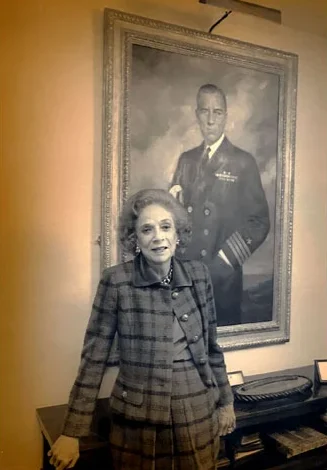
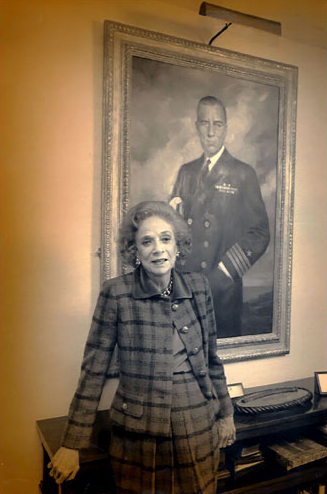
The late Brooke Astor, a titan of New York City society, once famously remarked that money is like manure—it is not worth a thing unless it is spread around. Years after her passing in 2007 at the age of 105, the socialite and philanthropist continued to adhere to her own philosophy, ensuring that her vast personal fortune would return to the public sphere. This week, an expansive auction hosted by Sotheby’s in New York served as the final chapter in her commitment to civic betterment, generating a staggering $18.8 million in proceeds designated for her favorite charitable institutions.
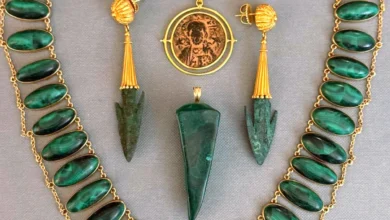
The auction event, which drew global attention from collectors, historians, and admirers of high jewelry, featured hundreds of items from her estate. While the collection spanned fine art, antique furniture, and personal ephemera, it was the jewelry—specifically her legendary emerald collection—that captured the imagination of the market. The 64 lots of jewelry alone fetched $5.7 million, a figure that obliterated original pre-auction estimates by more than $2 million, signaling both the enduring provenance of the Astor name and the fierce appetite for high-quality vintage gemstones.
A Legacy Defined by Generosity
Brooke Astor’s life was inextricably linked to the cultural fabric of New York City. As the wife of Vincent Astor, the heir to the massive Astor shipping and real estate fortune, she transitioned from a socialite into a formidable force for civic philanthropy. Upon her husband’s death in 1959, she inherited a significant portion of his wealth, which she managed with a singular goal: to improve the quality of life for New Yorkers.

Her beneficiaries were diverse and deeply embedded in the city’s identity. The proceeds from this Sotheby’s auction are earmarked for institutions that were the cornerstones of her life’s work, including the New York Public Library, the Metropolitan Museum of Art, the Pierpont Morgan Library, the Animal Medical Center of New York, and the New York City public school system. For these organizations, the infusion of capital represents more than just a donation; it is a final, decisive act of stewardship from a woman who viewed her wealth as a public trust.
The Crown Jewel: A Story of Lost and Found Romance
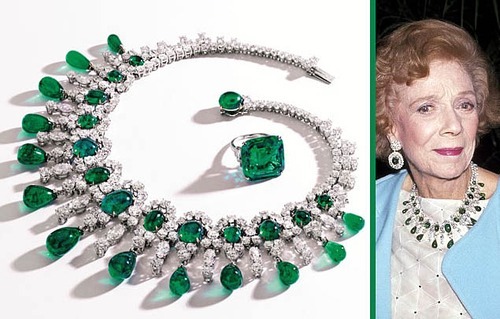
The pinnacle of the auction was undoubtedly a platinum necklace crafted by Bvlgari in 1959. This piece, which serves as a tactile record of the Astors’ marriage, realized $686,500—nearly double its high-end estimate of $350,000.
The story of the necklace, as recounted in Astor’s 1980 autobiography, adds a layer of poignant history to its material value. In the autumn of 1958, while visiting London, Brooke and Vincent Astor visited the Bvlgari showroom. During the visit, Vincent surreptitiously commissioned a bespoke set consisting of the necklace and matching earrings as a birthday surprise. Tragically, Vincent Astor passed away in February 1959, before the pieces were completed or delivered.
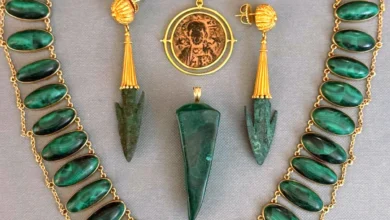
For two years, the commission remained in limbo. It was only through a formal letter from the house of Bvlgari that Brooke learned of the existence of the jewelry. The firm provided her with the design specifications and a note penned by her late husband requesting the delivery of the gift on her birthday. Upon receiving the pieces, Brooke Astor completed the transaction, wearing them as a final, intimate connection to her husband. The necklace, set with 13 drop emeralds totaling approximately 71 carats, 14 cabochon emeralds (41 carats), 14 marquise diamonds (8.5 carats), and 50 carats of brilliant-cut diamonds, stands as a masterwork of mid-century design.
Market Analysis and Appraisal Discrepancies
The performance of the Astor collection at auction highlights a recurring trend in the high-end jewelry market: the "provenance premium." When an item is associated with a figure of significant cultural stature, its market value often detaches from the purely physical appraisal of its components.
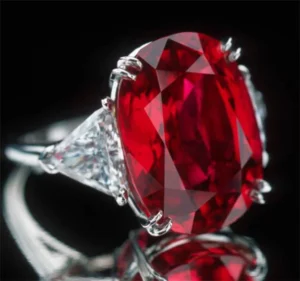
This was evidenced throughout the sale. A platinum and diamond engagement ring featuring a 22.84-carat emerald center stone was estimated to fetch between $100,000 and $150,000. When the gavel finally fell, the ring commanded $1.2 million. Similarly, a pair of Verdura platinum, emerald, and diamond earclips, originally estimated at $30,000 to $40,000, soared to $152,000. A brooch by Van Cleef & Arpels, estimated at $60,000 to $80,000, ultimately sold for $254,500.
Market analysts note that the Astor name acts as a multiplier for valuation. Because her collection was curated over decades and defined by personal sentiment rather than mere investment, the pieces carry a narrative weight that appeals to private collectors who seek items with a documented history. The disparity between estimates and final prices reflects the difficulty of quantifying "sentimental value" in an objective financial model.
Chronology of an Estate
The path to this week’s auction was a lengthy, and at times litigious, process. Following her death in 2007, the administration of the Astor estate became a point of public scrutiny. Legal battles concerning the mismanagement of her later years led to a restructuring of the estate’s holdings. The eventual decision to auction the personal effects was made to ensure that the liquidity could be transferred to the charitable foundations she established, effectively "spreading" the wealth as she had intended.
- 1958: The Bvlgari emerald necklace is commissioned by Vincent Astor in London.
- 1959: Vincent Astor passes away; Brooke Astor discovers the commission shortly thereafter.
- 2007: Brooke Astor passes away at age 105.
- 2007–2012: The estate undergoes probate and legal evaluation regarding the distribution of assets.
- 2012: Sotheby’s announces the auction of the personal property of the estate of Brooke Astor.
- Present: The auction concludes with $18.8 million raised for New York-based non-profits.
Institutional Responses and Public Impact
Representatives from the beneficiary organizations expressed deep gratitude for the donation. A spokesperson for the New York Public Library noted that the funds would support essential programming and infrastructure, ensuring that the library remains a vital resource for all citizens, a goal that mirrored Astor’s lifelong dedication to literacy and public education.
The Metropolitan Museum of Art, which frequently received support from Astor during her lifetime, highlighted that such legacy gifts allow institutions to plan for long-term conservation and curatorial projects that are otherwise difficult to fund through annual budgets. The ripple effect of these millions of dollars will be felt in classrooms and research halls across the city for years to come.
The Broader Implications of Philanthropic Liquidation
The successful sale of the Astor estate serves as a case study for the management of high-profile estates. By opting for a public auction rather than a private sale, the estate ensured transparency and allowed the public to participate in the history of a woman who was synonymous with the spirit of New York City.
Furthermore, the results suggest that the market for antique jewelry with significant provenance remains robust. In an era where many wealthy individuals are moving toward "impact investing," the Astor model—where the physical assets of a life well-lived are converted into a lasting social dividend—continues to be the gold standard for high-net-worth philanthropy.

Brooke Astor once said that she did not want to be remembered for her jewelry, but for her contributions to the city. By selling the jewelry, the executors of her estate have allowed her to be remembered for both: the glamour of her social life and the enduring, tangible impact of her generosity. As the dust settles on the Sotheby’s auction floor, the legacy of Brooke Astor is firmly cemented, not just in the annals of New York society, but in the ongoing vitality of the institutions she spent her life protecting. Her final act of "spreading" the wealth has ensured that while her necklaces and rings have found new homes, the value they represent remains in the public domain, benefiting the city she loved until the very end.