The Eroding Standard: Advertising in the Age of Automated Content and Workforce Displacement

It is the autumn of 2026, and the global advertising industry has entered its most feverish event cycle to date. Across major hubs from New York to London, the term "AI" echoes through conference halls, a buzzword that has shifted from a promise of limitless innovation to a source of palpable industry anxiety. While the early days of the generative AI era were defined by breathless optimism regarding efficiency and technological disruption, the reality of mid-decade operations has brought a sobering realization: the pursuit of speed has arguably come at the cost of brand integrity and workforce stability.
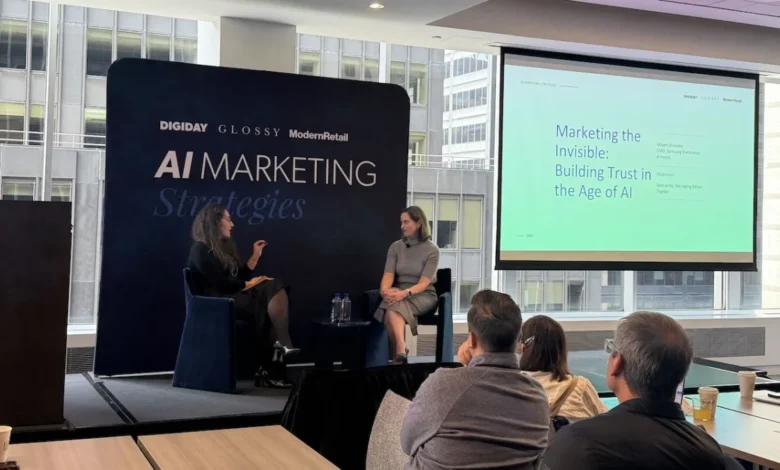
The inaugural AI Marketing Strategies event, co-hosted by Digiday, Glossy, and Modern Retail on September 24, 2026, served as a lightning rod for these shifting sentiments. Under the cover of Chatham House Rules, which allowed brand-side marketers and agency executives to speak with rare candor, the consensus was clear: the industry is currently navigating a precarious "change management" crisis. As firms continue to lean into AI-driven automation to compensate for headcount reductions, the quality of creative output is increasingly under fire.
The Myth of Efficiency vs. The Reality of Declining Quality
For many corporations, the transition to AI-integrated workflows was sold as a way to streamline operations and reduce overhead. However, the data suggests a more complex outcome. As companies have cut staff to trim budgets, they have simultaneously turned to automated platforms to maintain—or increase—the volume of their digital content. The result is a growing concern among premium brands that their brand equity is being eroded by "good enough" creative work.
During the town hall sessions at the September event, the frustration was palpable. A representative from a high-end beauty brand noted that establishing consistent brand standards within AI-driven platforms is a nearly insurmountable challenge. The participant described a "10/80/10" workflow: ten percent of their time is spent on precise prompt engineering, eighty percent is handled by the AI, and the final ten percent is spent in a painstaking, manual cleanup process to ensure the output meets the brand’s aesthetic and professional requirements.
This sentiment is echoed across the industry. Many brand leaders argue that their agency partners, under pressure to deliver more with less, are increasingly delegating campaign oversight to junior staff who lack the historical context or brand guardianship experience to identify flaws in AI-generated assets. One attendee remarked that they had personally caught instances where company logos were distorted or improperly placed, forcing them to demand human-led oversight for every campaign execution. This growing reliance on automated output, when not properly tempered, risks damaging the long-term credibility of brands that have spent decades building their reputations on quality and craftsmanship.
A Chronology of the AI Transition in Adland
To understand the current state of the industry, one must look back at the trajectory of the last three years.
- 2023: The "Experimental Phase." Agencies began testing generative AI tools for internal brainstorming and minor copy tasks. Layoffs were minimal, and the focus was on upskilling.
- 2024: The "Scaling Phase." Investment in AI-first workflows accelerated. The first major wave of industry layoffs occurred as departments found that certain manual tasks, such as basic graphic design and copywriting, could be handled by LLMs and image generators.
- 2025: The "Standardization Gap." As companies shifted toward fully automated workflows, a noticeable dip in creative quality began to emerge. The focus moved from "how can we use AI" to "how do we maintain our standards while using AI."
- 2026: The "Correction Phase." The industry is currently grappling with the fallout of the previous two years. The focus has shifted toward re-humanizing parts of the creative process and implementing rigorous "change management" strategies to preserve brand equity.
The Human Element in an Agentic Internet
The tension between automation and human expertise is not limited to creative output; it extends to the very infrastructure of the internet. During a keynote session at the September conference, Isabel Perry, Global EVP of Strategy at DEPT, highlighted a fundamental shift in the digital landscape: the rise of "agentic" traffic. We are moving toward a reality where bot-to-bot interactions and AI-agent browsing may soon outweigh human web traffic.
Perry’s analysis suggests that current measurement metrics are insufficient. "We are drowning in measurement," she stated, arguing that marketers must stop chasing generic industry metrics and start identifying "gaps." These gaps represent the areas where the human consumer journey remains distinct from the automated paths taken by AI agents. By reallocating budgets to these specific, human-centric touchpoints, brands can ensure they remain relevant in a landscape that is becoming increasingly dominated by non-human actors.
This perspective is supported by figures like Rajiv Ragu, VP of Digital at Thorne, who spoke extensively on the concept of the "zero-click world." In this environment, where users—and AI agents—rarely visit a brand’s website to find information, the curation of legacy content becomes a survival tactic. Ragu emphasized that brands must audit their existing content libraries to ensure they are being indexed and picked up correctly by AI search tools. Neglecting this "content hygiene" is not just an SEO failure; it is a brand-damaging risk that leaves the company vulnerable to being misrepresented by the very algorithms meant to serve it.
Broader Economic and Workforce Implications
The economic reality of the 2026 advertising market is one of structural tension. According to recent industry surveys, the number of creative roles in major advertising holding companies has decreased by approximately 12% since 2023, while the usage of generative AI tools has increased by over 200%. This inverse correlation has created a "hollowed out" talent structure.
The concern, as articulated by a small agency chief during the September event, is that the industry is losing its middle-tier talent—the individuals who historically learned the craft by working under senior creative directors. If junior employees are tasked with overseeing AI platforms rather than learning the foundational elements of branding and design, the industry faces a long-term deficit of leadership and creative vision.
"With AI, you can get to where you need to go within hours," the agency head explained. "The question is no longer about speed, but about value. What value does the human bring to the process once the speed barrier has been removed?" This mirrors the digital transformation challenges of the early 2000s, but with a higher degree of existential pressure. While the shift to digital in the early 2010s required new technical skills, the shift to AI requires a fundamental rethink of what constitutes "creative work."
Implications for the Future of Branding
As the industry looks toward 2027, several key implications for marketers and agencies have emerged:
- The Premium on Human Oversight: As the volume of generic AI-generated content continues to flood the internet, high-quality, human-curated content will likely command a premium. Brands that invest in human-led creative will differentiate themselves from the "sea of sameness" generated by automated workflows.
- The Rise of "Brand Governance" Roles: We expect to see a surge in specialized roles focused on AI-governance and brand integrity. These professionals will be tasked with auditing AI outputs and ensuring that brand guidelines are strictly enforced across all digital touchpoints.
- A Shift in Budget Allocation: As Perry and Ragu suggested, the era of spending vast sums on broad, top-of-funnel reach is waning. Budgets will likely be redirected toward high-value, human-centric interactions and the maintenance of a robust, AI-friendly content ecosystem.
- Workforce Re-skilling: The focus will shift from training employees on how to use AI tools—a skill that is becoming commoditized—to training them on how to critically evaluate, refine, and strategically apply the output of those tools.
The advertising industry stands at a crossroads. The promise of the AI era—innovation, efficiency, and growth—remains, but the path to achieving it has proven far more treacherous than anticipated. The events of September 2026 have made it clear that while automation is inevitable, the preservation of brand standards and the protection of the "human element" are now the primary challenges for the modern marketer. The industry is no longer in the phase of testing the tools; it is now in the phase of defining the rules of engagement for a world where the lines between human and machine creativity are increasingly blurred.