The Netflix Effect: How America’s Sweethearts Transformed the Dallas Cowboys Cheerleaders Into Global Fashion and Beauty Icons

The landscape of sports marketing has undergone a dramatic transformation over the past few years, largely accelerated by the intersection of streaming entertainment, high-fashion branding, and professional athletics. At the epicenter of this cultural shift are the Dallas Cowboys Cheerleaders (DCC), an institution that has transitioned from a traditional NFL sideline fixture into a globally recognized commercial powerhouse. According to former DCC group leader Megan McElaney, the single greatest catalyst for this evolution has been the release of Netflix’s critically acclaimed docuseries, America’s Sweethearts, which fundamentally altered public perception of the women who wear the iconic blue-and-white uniform.
While the squad already commanded a high level of domestic recognition and cultural clout prior to the streaming era, the Netflix series introduced the DCCs to a significantly broader international demographic. Beyond mere visibility, the show offered audiences an intimate look at the rigorous tryouts, intense physical demands, and personal lives of the performers. This deeper emotional connection transformed casual viewers into dedicated fans, shifting public perception away from static stereotypes and toward a modern understanding of the cheerleaders as elite athletes, dedicated dancers, and multi-faceted professionals. Consequently, major lifestyle, fashion, and beauty brands that previously overlooked sports-adjacent marketing have begun pursuing partnerships with unprecedented enthusiasm.
Measurable Audience Growth and the Rise of Streaming Influence
The commercial viability of the Dallas Cowboys Cheerleaders in the modern media landscape is supported by hard metrics. When Netflix premiered the first season of America’s Sweethearts, the series immediately captured global attention, drawing 2.3 million views worldwide in its initial four days alone. That figure surged to 3.7 million views the following week, proving that the appeal of the squad extended far beyond traditional American football fans.
This momentum continued into subsequent installments. Season three debuted at No. 4 on Netflix’s global English-language television chart during its launch window in June, accumulating 3.2 million views in its first six days. This steady and expanding viewership demonstrated to corporate sponsors that the DCC brand possessed a persistent, cross-demographic pull. Fashion and beauty companies quickly recognized an opportunity to leverage this engaged audience, viewing the cheerleaders as vital conduits to consumers interested in lifestyle, beauty, and entertainment who might not otherwise engage with traditional NFL broadcasts.
Major Brand Partnerships and Retail Integrations
The tangible results of this streaming-driven popularity are evident in a wave of high-profile corporate alignments. Sally Beauty recently announced its first-ever professional football partnership, securing its position as the official beauty retailer of both the Dallas Cowboys and the DCCs. Simultaneously, apparel giant Abercrombie & Fitch expanded its existing relationship with the organization, broadening its product offerings, introducing specialized athlete styling, and committing to year-round marketing activations.
Under the expanded Abercrombie agreement, the brand has installed a custom-branded apparel closet directly inside the DCC locker room at The Star in Frisco, Texas. The product assortment within this locker room is refreshed on a monthly basis, outfitting the squad for their off-field personal appearances and daily routines. Furthermore, the broader Abercrombie x Cowboys collection has gained widespread retail distribution through NFLShop.com and AT&T Stadium, supported by Fanatics’ robust merchandise infrastructure.
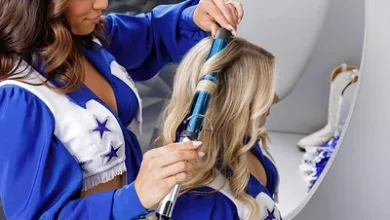
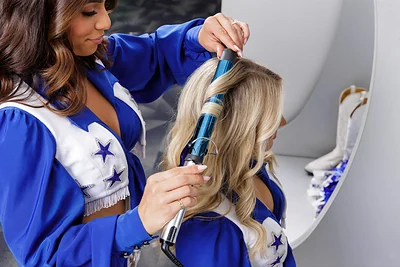
Sally Beauty is utilizing a different engagement strategy, relying on content creation, public appearances, and instructional product demonstrations to show consumers how to recreate the signature game-day hair and nail looks worn by the cheerleaders. In addition to showcasing feminine beauty trends, the partnership is deliberately designed to promote Sally’s expanding men’s hair-care product assortment.
Strategic Shifts in Retail and Consumer Perception
For corporate partners, aligning with the Dallas Cowboys Cheerleaders is a calculated move to modernize brand perception and capture new market segments. Chris Kobus, chief marketing officer of Sally Beauty, noted that the collaboration directly supports the retailer’s ongoing corporate transformation and customer-acquisition strategy. The overarching goal is to introduce Sally Beauty to younger, trend-conscious consumers who may still harbor outdated perceptions of the company.
Neil Saunders, managing director of GlobalData Retail, elaborated on this challenge. According to Saunders, a lingering general perception persists among consumers that Sally is primarily a functional, utilitarian retailer that majors strictly in professional hair care. While that narrow definition no longer reflects the company’s diverse inventory, capturing new shoppers requires active intervention. Retailers must intentionally position themselves as destinations for inspiration across multiple beauty categories—a feat that high-visibility partnerships with cultural icons like the DCCs can help achieve efficiently.
Economic Impact and the Sports-Beauty Crossover
The financial data underscores a broader industry trend toward sports and beauty integration. According to market research firm SponsorUnited, fashion and beauty sponsorship spending across the entire NFL rose by 16.9% year-over-year, reaching $58 million during the 2025-2026 season. Concurrently, the total number of deals within this category increased by 11.7%, totaling 105 active partnerships.
Even when excluding venue naming-rights agreements, the Dallas Cowboys consistently outperform league competitors in both fashion and beauty deal volume and overall revenue. During the 2025 season, the franchise attracted more than $8 million in category-specific sponsorship spending. Furthermore, the DCCs command an Instagram following that outpaces the total social media audience of 12 individual NFL franchises, highlighting their massive standalone digital footprint.
Academic and Industry Analysis
Industry experts emphasize that the DCCs provide a unique value proposition that separates them from standard sports properties. Bob Heere, a University of North Texas professor specializing in sports management, points out that the cheerleaders have historically acted as a bridge connecting the broader Cowboys organization to women, as well as the commercial beauty and fashion sectors. The global reach provided by Netflix has substantially widened that bridge, multiplying its commercial effectiveness.
Peter Carton, executive director of sport industry engagement and partnerships at Southern Methodist University (SMU), echoes this sentiment. While the Cowboys franchise as a whole offers brands enormous reach, Carton argues that the Dallas Cowboys Cheerleaders offer something fundamentally different: an authentic transition zone from sports directly into fashion, beauty, entertainment, and lifestyle.
The Complexities of Individual Compensation and Representation
Despite the surging commercial value generated by the DCC brand, a complex debate remains regarding how financial benefits are distributed among the women themselves. Team-level sponsorships naturally create heightened public exposure and open doors to new career opportunities, but industry veterans caution that these corporate deals do not automatically translate into direct financial compensation for individual cheerleaders.
Megan McElaney points to the organization’s high-profile relationship with Charlotte Tilbury as a prime example of a partnership that benefits the entire squad by supplying high-end products and making expensive game-day beauty routines more financially accessible. Additionally, the brand has occasionally hired individual cheerleaders to create targeted game-day promotional content. However, McElaney notes a vital nuance: not every member of the squad aspires to become a commercial influencer or build a public-facing personal brand.
This dynamic becomes increasingly intricate as the Cowboys segment their beauty business into distinct, specialized categories—such as partnering with Charlotte Tilbury as an official beauty partner while simultaneously naming Sally Beauty as an official beauty retailer. SMU’s Peter Carton notes that such partnerships can successfully coexist in the marketplace, provided that each corporate partner receives clearly defined product categories, distinct messaging, and non-overlapping activation rights.
Moving From Sponsorship to Real Commerce
As the commercial ecosystem surrounding the DCCs matures, industry leaders suggest that the next major test for brands is proving that these partnerships can generate genuine consumer transactions rather than relying solely on traditional metrics like signage visibility and social media impressions.
According to Carton, the real opportunity for modern brands lies in successfully migrating from passive sponsorship to active commerce. The central question for marketing executives is no longer simply tracking how many consumers viewed a corporate logo, but rather measuring how many individuals actively engaged with the brand, entered its retail ecosystem, or completed a purchase prompted by the relationship.
For the cheerleaders who build and sustain this cultural value, true commercial success must also be measured by equitable inclusion. As Megan McElaney and other advocates emphasize, the most valuable and enduring partnerships will be those that genuinely incorporate the women themselves into the fabric of the brand, rather than merely utilizing their likenesses as a superficial visual backdrop.
Related posts: