The Hidden Price of Style: Why London Fashion Week Must Confront the Global Supply Chain Crisis

As London Fashion Week unfolds from February 19 to 23, the global fashion community gathers to celebrate the pinnacle of British creativity, identity, and innovation. The event serves as a vital showcase for designers, influencers, and retailers, yet it increasingly serves as a backdrop for a necessary, uncomfortable conversation. While the industry touts a newfound commitment to sustainability and "ethical" production, the structural realities of the garment sector remain deeply entrenched in cycles of exploitation and environmental degradation. Beneath the veneer of the catwalk lies an urgent humanitarian crisis: an estimated 50 million people currently live in conditions of modern slavery, a significant portion of whom are trapped within the intricate, opaque networks of global fashion supply chains.
A Chronic Industry Failure
The narrative that exploitative labor is solely a "fast fashion" problem is increasingly viewed by human rights organizations and labor economists as a strategic deflection. While high-volume, low-cost retailers are frequently cited for their relentless production cycles, the luxury sector has not been immune to scandal. Recent investigations in Italy, for instance, have implicated high-end luxury labels in the use of subcontracted workshops that mirror the very conditions—poverty wages, unsafe environments, and excessive hours—often attributed exclusively to the budget end of the market.
The garment industry remains one of the most labor-intensive sectors in the global economy, employing between 25 and 60 million people worldwide. Since the liberalization of global trade in the 1980s, the drive to minimize costs has incentivized brands to offshore production to regions with minimal regulatory oversight. This "race to the bottom" has created a systemic reliance on vulnerable labor, where the complexity of multi-tiered supply chains allows parent companies to maintain plausible deniability regarding the conditions under which their garments are manufactured.
The Cotton Pipeline and State-Imposed Forced Labor
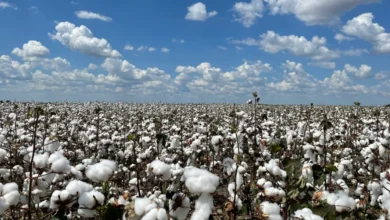
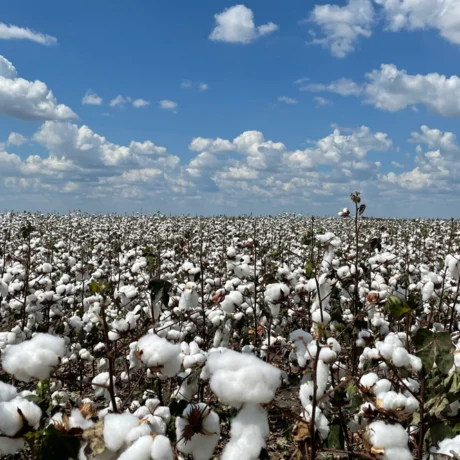
The exploitation begins long before fabric reaches a sewing machine. Cotton, the backbone of the global textile industry, is frequently sourced from regions where forced labor is state-mandated. Research conducted by Sheffield Hallam University has identified that more than 100 major global brands are potentially exposed to cotton produced in the Uyghur Region of China, where state-run labor programs have been documented by international monitors.
Furthermore, the situation in Turkmenistan remains a stark example of systemic abuse. The government continues to mobilize public sector workers, including teachers and medical professionals, to participate in the annual cotton harvest under threat of job loss or financial penalty. This state-coerced labor is then funneled into the global market, processed by spinning mills, and eventually woven into the very garments that reach the shelves of major Western retailers. Despite corporate pledges to sanitize their supply chains, the traceability of cotton remains notoriously poor. The current lack of rigorous, independent monitoring allows cotton linked to forced labor to enter international trade routes with relative ease, effectively laundering human rights abuses through the global supply chain.
Domestic Vulnerabilities: The Myth of Local Safety
The assumption that keeping production within the United Kingdom or Europe guarantees ethical standards has been systematically dismantled by recent investigative reporting. In 2020, reports emerged regarding garment factories in Leicester, UK, where workers were reportedly paid as little as £3 per hour—significantly below the national minimum wage—and forced to operate in facilities that violated basic health and safety protocols.
These incidents highlight a critical blind spot in the narrative of "Made in the UK" or "Made in Italy" labels. When brands prioritize speed and cost-reduction, they often rely on a network of third-party subcontractors. These subcontractors operate in the shadows of the formal economy, often employing migrant workers who are less likely to report abuses due to fear of deportation or lack of legal recourse. Consequently, geography does not act as a shield against exploitation; rather, it shifts the methods by which labor laws are circumvented.
Environmental Destruction: A Dual Crisis
The ecological footprint of the fashion industry is intrinsically linked to its labor practices. The current "take-make-waste" model, characterized by overproduction and a rapid turnover of seasonal trends, generates an estimated annual carbon footprint of 3.3 billion tonnes of CO2e—a figure roughly equivalent to the combined emissions of all 28 European Union member states.
The environmental impact extends far beyond carbon emissions. The depletion of water resources in arid regions to satisfy the high water-intensity of cotton farming has decimated ecosystems, most notably in the Aral Sea basin. Simultaneously, the proliferation of synthetic fibers—derived from fossil fuels—has led to the mass release of microplastics into global waterways. These environmental costs are not borne equally; they disproportionately impact the workers and local communities residing near production hubs, where toxic dyes and untreated chemical runoff contaminate local water supplies and degrade agricultural land.
The Legislative Gap: Voluntary vs. Mandatory Standards
For over a decade, the industry has relied on voluntary Corporate Social Responsibility (CSR) frameworks. However, as human rights advocates have noted, voluntary disclosure has proven insufficient to curb systemic abuse. The UK’s Modern Slavery Act 2015, while a landmark piece of legislation at the time of its inception, has been criticized for its lack of teeth. While it requires large companies to publish annual statements regarding their efforts to identify modern slavery, it does not mandate specific due diligence procedures or impose penalties for non-compliance.
In contrast, the European Union has moved toward a more robust model with the adoption of mandatory human rights due diligence rules, which legally require companies to identify, prevent, and mitigate human rights abuses within their operations. Similarly, the United States has implemented import controls under the Uyghur Forced Labor Prevention Act (UFLPA), which places the burden of proof on companies to demonstrate that their products are free from forced labor.
The UK currently lags behind these international standards. Without legislation that enforces accountability through legal sanctions, the status quo remains a low-risk, high-reward strategy for corporations. Organizations such as Anti-Slavery International have long advocated for a "Business, Human Rights and Environment Act," which would level the playing field by requiring all companies operating in the UK to conduct rigorous, transparent human rights and environmental due diligence.
A Turning Point for Industry Accountability
Recent parliamentary activity in the UK suggests that the political appetite for reform may be shifting. On February 12, 2026, a parliamentary debate on the onshoring of fashion and textiles underscored the growing urgency for reform. Minister Chris Bryant, in addressing the house, noted that the government’s ongoing "Responsible Business Conduct" review is nearing completion. The hope among advocates is that this review will catalyze policy recommendations that finally move beyond voluntary pledges toward mandatory protections.
Within the industry itself, a minority of emerging brands are pioneering new circular business models. These companies are prioritizing supply chain transparency, investing in safer production environments, and utilizing recycled or sustainable textiles to decouple growth from environmental and human harm. While these efforts represent a positive shift, they remain marginal compared to the scale of the global industry.
Conclusion: The Future of Fashion
London Fashion Week presents an opportunity to redefine the parameters of success. For the industry to maintain its cultural relevance, it must pivot from a model of extraction to one of accountability. The evidence is clear: without structural, legislative change, the hidden costs of fashion will continue to be paid by the most vulnerable workers and the environment.
The transition to an ethical fashion industry requires a tripartite approach. Policymakers must move beyond rhetoric and implement mandatory due diligence laws with enforceable penalties. Brands must move beyond voluntary reporting to establish full, transparent visibility into their supply chains, from the cotton field to the finished garment. Finally, consumers and the public must continue to demand that human rights and environmental stewardship are treated not as seasonal trends, but as non-negotiable foundations of the global trade. As the catwalks of London clear, the focus must shift to the fundamental question of what kind of industry the world is willing to support: one built on the exploitation of the many for the benefit of the few, or one grounded in the dignity of all who contribute to the clothes we wear.