The Shadow Beneath the Waves: Nicole Tung’s Gripping Exhibition Exposes the Hidden Costs of Overfishing in Southeast Asia

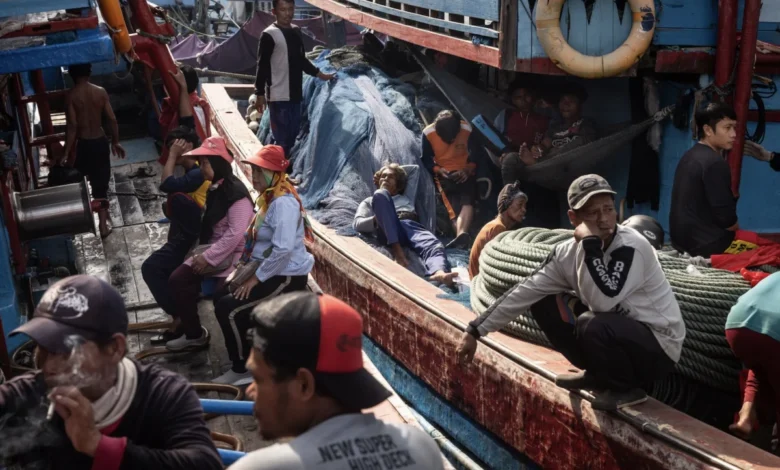
The Bronx Documentary Center is currently hosting Overfishing in Southeast Asia, a profound and multi-faceted exhibition by acclaimed photojournalist Nicole Tung, the recipient of the 15th Carmignac Photojournalism Award. This compelling body of work, the culmination of nine months of intensive reporting across Thailand, the Philippines, and Indonesia, meticulously documents the far-reaching and often unseen consequences of industrial fishing practices. The exhibition, on view until April 26, 2026, lifts the veil on an industry that frequently operates beyond public scrutiny, revealing the devastating impact on marine ecosystems, the accelerated loss of biodiversity, the pervasive exploitation of migrant labor, and the profound pressures faced by coastal communities.
At the core of Tung’s powerful narrative is a shared and stark reality resonating throughout the region: for countless small-scale fishing operations, the bounty of the seas near their shores has dwindled to near non-existence. This depletion leaves them critically ill-equipped to compete with the vast, industrial-scale fishing fleets that dominate the waters. The exhibition vividly illustrates how this ecological and economic imbalance is not merely an environmental concern but a human crisis, impacting livelihoods, traditions, and the very fabric of coastal societies.
A Deep Dive into the Interconnected Crises
Tung’s project was conceived with a deliberate intention to explore the complex and interwoven nature of overfishing. Her proposal for the Carmignac Award outlined a commitment to investigate the intersection of worker exploitation on commercial fishing vessels, the severe environmental repercussions, the intricate geopolitical dimensions, and the erosion of traditional fishing practices threatened by declining fish stocks.
"Yes, in the proposal I submitted when I applied for the award, I wanted to explore the intersectional nature of overfishing," Tung explained. "That included the exploitation of workers on commercial fishing vessels, the environmental impacts, the geopolitical aspects, and fishing traditions threatened by plummeting fish stocks."
During her extensive fieldwork, Tung encountered a consistent and troubling theme that emerged across all three nations. "I think one of the unexpected things that came up was really about how every single fishing community I visited, they faced a multitude of concerns, the prime one being that there just weren’t any fish of value to be caught near the shore anymore, and that they could not compete with industrial-scale fishing boats," she shared. "This was across the board in all three countries I visited." This pervasive sentiment underscores the systemic nature of the crisis, where local fishers are increasingly marginalized by a globalized industry.

Divergent Regulations, Common Exploitation: A Regional Snapshot
The regulatory landscape governing fishing practices varies significantly across Southeast Asia, yet the underlying issues of exploitation and environmental degradation often persist. Tung’s reporting sheds light on the specific challenges faced in each nation:
Thailand: In the period leading up to Tung’s investigation, Thailand was grappling with the potential rollback of regulations that had been implemented after 2015. These laws were designed to combat labor abuses and overfishing. The pressure on Parliament to relax these measures posed a significant threat to the fragile progress made in recent years. The exhibition captures the lingering effects of these debates and the ongoing efforts to maintain stricter controls.
Indonesia: In Indonesia, the situation on commercial fishing vessels mirrored conditions that Thailand had experienced prior to its reforms. The industry was, and in many instances remains, rife with abuses directed at fishermen. These exploitative practices are frequently associated with large, foreign-flagged vessels, particularly those from China, but also from South Korea and Taiwan. The exhibition highlights the vulnerability of Indonesian fishermen working on these ships, often subjected to harsh conditions and unfair compensation.

The Philippines: Overfishing in the Philippines is intricately linked to complex geopolitical disputes, most notably China’s expansive "Nine-Dash Line" claim. This assertion of territorial rights has resulted in Filipino fishermen facing intimidation and harassment at sea, often by Chinese maritime militias. Tung’s photographs illustrate the chilling impact of these tensions on the daily lives and livelihoods of Philippine fishing communities, who are caught between their need to fish and the encroaching presence of a powerful neighbor.
Thailand’s Reforms: A Comparative Analysis
Thailand has undertaken significant fishing reforms within the last decade, and Tung observed notable differences in operational practices compared to Indonesia and the Philippines. "I could see that Thailand had implemented what’s called Port In Port Out (PIPO) that were checks by authorities on what crew was going out and coming back in," Tung noted. "There were also a lot of fishing vessels that were left at their docks over the past decade because the restrictions made it impossible for some owners to continue covering costs of operating, so there were indeed some major differences." The PIPO system, designed to enhance transparency and accountability in crew management and catch reporting, represented a substantial shift.
While Indonesia also has a similar system, Tung found that "from the fishermen I spoke to who had been out on commercial vessels, it was not strictly enforced and the system was corrupt." This discrepancy highlights the challenge of implementing effective regulations without robust enforcement mechanisms and a commitment to eradicating corruption.

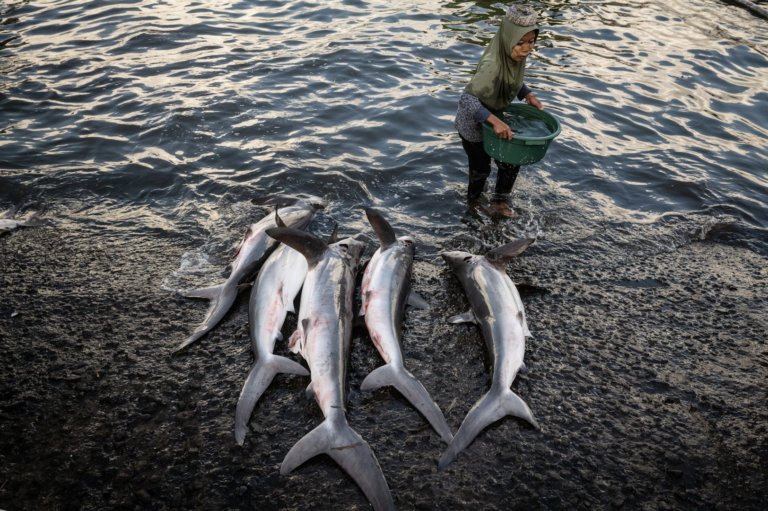
In terms of fisheries management, Tung observed that "Thailand was doing much better after 2015, and it allowed some areas to make a comeback as well – a point that environmentalists and small-scale fisherfolk argued was the reason why these areas should remain protected rather than open again to commercial fishing interests." This suggests that targeted conservation efforts, coupled with stricter regulations, can indeed lead to ecological recovery. Indonesia, despite signing international agreements such as compliance with CITES II appendix provisions, faces considerable difficulties in enforcing bans on the capture and sale of certain species, particularly vulnerable shark populations.
The Philippines, however, finds itself in a particularly precarious position. "The Philippines cannot compete with powers like China, Taiwan, and Vietnam, all seeking to exploit its waters, so enforcement of any laws preventing illegal fishing is near impossible there," Tung stated. This disparity underscores how national sovereignty and the ability to enforce maritime laws are critical factors in combating illegal and unsustainable fishing practices.
The Elusive Access: Documenting the Unseen
Access to commercial fishing vessels and the supply chains that support them remains a significant hurdle for photojournalists attempting to document the realities of the industry. Tung acknowledged these challenges: "Yes, access to get onto a commercial ship or onto a supply ship going out to sea was very difficult, and I did not manage to get access to that during the time I spent reporting. It would have taken many more months to negotiate that access, as many captains and boat owners are very wary of journalists." This inherent difficulty in accessing the operational heart of industrial fishing further emphasizes the need for projects like Tung’s to bring these hidden stories to light. The lack of direct visual documentation from within these vessels does not diminish the gravity of the situation, but rather highlights the pervasive secrecy that shrouds many aspects of global fishing.

The Human Cost: Exploitation and Displacement
The exhibition powerfully illustrates the human toll of overfishing, extending beyond the environmental impact to encompass the exploitation of labor. Migrant workers, often from impoverished backgrounds, are frequently employed on these vast fishing fleets under precarious conditions. They face long hours, dangerous work, and inadequate compensation, with little recourse for mistreatment. Tung’s work brings attention to the stories of these individuals, whose labor underpins a global industry but whose own well-being is often overlooked.
Furthermore, coastal communities, many of whom have historically relied on fishing for their sustenance and cultural identity, are being displaced and marginalized. As fish stocks dwindle, traditional fishing methods become untenable, forcing a transition towards less sustainable livelihoods, often dependent on tourism or other precarious economic activities. The Urak Lawoi indigenous group in Thailand, for instance, has seen their traditional way of life shift dramatically as commercial fishing depletes the fish stocks around their ancestral waters, pushing them towards tourism-based income generation.
A Call to Action: Empowering the Consumer
In the face of such a complex and widespread crisis, the question of what the average person can do becomes paramount. Tung offers practical advice for consumers seeking to make a difference: "I think the average person can just be more conscious of where their seafood comes from, including looking at resources like the Monterey Bay Aquarium that tracks which species are more suitable for seafood," she suggested. "I think consumers can also avoid species they know are overfished and look for species that are generally more sustainably caught. That also comes down to asking restaurants and fishmongers questions and supporting policies that align with sustainable fishing regulations."

This emphasis on consumer awareness and responsible purchasing highlights the power of individual choices to influence market demand. By understanding the origins of their seafood and supporting businesses committed to sustainable practices, consumers can contribute to a shift towards a more responsible and equitable fishing industry.
The Broader Implications: Climate Change and Biodiversity Loss
The consequences of overfishing extend far beyond the immediate depletion of fish stocks. The destruction of marine habitats through destructive fishing methods, such as bottom trawling, contributes to the loss of biodiversity and the degradation of crucial ecosystems. These impacts are intrinsically linked to the broader challenges of climate change. Healthy oceans play a vital role in regulating the Earth’s climate, and their degradation exacerbates the effects of global warming.
Tung expressed her hope that her exhibition will foster greater public understanding of these interconnected issues. "I really hope that it will bring some more awareness to this topic that is often so invisible to us as consumers," she stated. "Overfishing is a very complex issue and understandably seems very far away from us because we don’t see what occurs at sea, and under the ocean too, with the destruction of the sea floor, but it is a very real and present problem as this also feeds into issues of climate change, and loss of biodiversity, which ultimately hurts us all."

A Glimpse into the Future: Hope Amidst the Crisis
Despite the grim realities depicted in her work, Tung’s exhibition offers a crucial opportunity for reflection and dialogue. By exposing the hidden costs of our seafood consumption, she aims to inspire a collective re-evaluation of our relationship with the oceans. The exhibition serves as a powerful testament to the resilience of both marine life and the human communities that depend on it, while simultaneously issuing a stark warning about the urgent need for global action to ensure a sustainable future for our planet’s vital marine resources. The ongoing efforts in some regions, like Thailand’s regulatory reforms, offer a beacon of hope, demonstrating that change is possible when there is political will and public engagement. The story of overfishing is not just about depleted stocks; it is a story about human rights, environmental justice, and the interconnectedness of our global community.