VAER R1 Oceanracer II Chronograph Watch: A Strategic Shift in Accessible Horology

The watch industry has long been bifurcated between high-end luxury timepieces, often valued in the thousands of dollars, and the accessible market segment. The recent restock of the VAER R1 Oceanracer II Chronograph, priced between $549 and $669, represents a significant case study in how modern micro-brands are leveraging advanced technology to bridge this gap. By utilizing the Seiko VK63 meca-quartz movement and emphasizing robust construction, VAER has positioned this model as a direct, value-oriented alternative to heritage-brand chronographs, most notably the Omega Speedmaster Professional.
Chronology and Market Availability
The VAER R1 Oceanracer II was met with immediate market interest upon its initial release, leading to a rapid depletion of inventory. Following a period of unavailability, the brand announced a replenishment of stock, though quantities remain limited. As of the most recent data, approximately 45 units of the black dial variant remained available for purchase.

The pricing structure is modular, allowing consumers to customize their acquisition based on accessory preference. The base model, retailing at $549, includes an FKM rubber strap and a choice between an olive single-pass "recon" style strap or a khaki quick-release fabric strap. For a price point of $639, the watch is bundled with a 3-link stainless steel bracelet. These pricing tiers reflect a strategic effort by the company to maintain a premium feel while keeping the barrier to entry below the $700 threshold.
Technical Specifications and Movement Mechanics
At the heart of the R1 Oceanracer II lies the Seiko VK63 meca-quartz movement. This hybrid technology is central to the watch’s appeal. Unlike a standard quartz movement, which offers high precision but lacks mechanical tactile feedback, the meca-quartz utilizes a quartz crystal to regulate timekeeping while employing a mechanical module for the chronograph functions. This results in the "sweeping" motion of the chronograph hand and a crisp, tactile reset—features typically reserved for significantly more expensive mechanical watches.
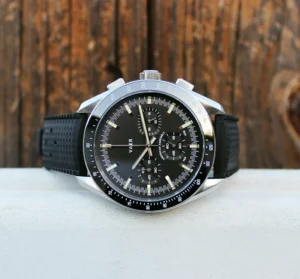
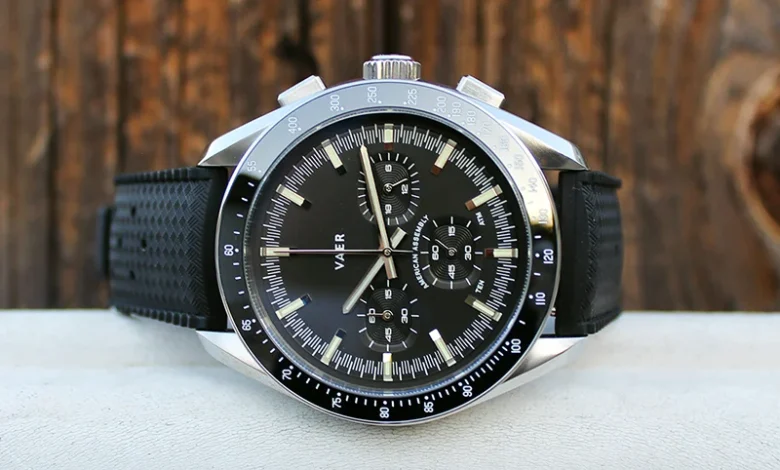
The case design further distances the R1 from the "cheap" perception often associated with lower-cost quartz watches. With an 11mm case thickness, the watch offers a refined profile that remains comfortable for daily wear. The inclusion of a ceramic tachymeter bezel—a material favored for its scratch resistance—and a screw-down crown provides a level of durability and water resistance (rated at 100 meters) that exceeds the specifications of many dress-oriented chronographs.

Comparative Analysis: The "Speedy" Benchmark
The comparison between the VAER R1 and the Omega Speedmaster is a frequent topic within horological forums. The Speedmaster, an icon of the space race with a retail price often exceeding $7,800, relies on a manual-wind mechanical movement and carries a legacy of NASA flight certification.
However, from an analytical perspective, the R1 offers distinct advantages for the modern consumer. First, the accuracy of the meca-quartz movement is significantly higher than that of a mechanical movement, which is subject to variances based on temperature, position, and power reserve. Second, the R1’s quick-release spring-bar system addresses a common pain point for enthusiasts who frequently rotate straps; such features are rarely standard on heritage luxury watches, which often require specialized tools and carry a higher risk of scratching the lugs during strap changes.
While the Speedmaster maintains its value through brand prestige and historical provenance, the R1 targets the functional consumer. The R1 provides a multi-layered dial and rounded rectangular sub-dials that mimic the aesthetic of 1960s-era chronographs, successfully replicating the "vintage" appeal without the prohibitive maintenance costs associated with servicing vintage or high-end mechanical calibers.

Assembly and Supply Chain Context
VAER has made "USA Assembly" a cornerstone of its marketing strategy. While components are sourced globally—a standard practice in the modern watch industry—the final assembly, testing, and quality control take place within the United States. This model provides a degree of oversight that is often difficult to achieve in mass-production environments. For consumers, this translates to a tangible difference in build quality; the R1 feels substantial on the wrist, with machining tolerances that align more closely with mid-tier luxury goods than entry-level fashion watches.
Broader Implications for the Watch Market
The success of the R1 Oceanracer II is emblematic of a broader trend: the democratization of high-quality design. For decades, the "entry-level" market was dominated by mass-produced, low-quality quartz watches. Today, micro-brands are utilizing the same high-grade materials—sapphire crystals, ceramic bezels, and FKM rubber—that were previously gated behind multi-thousand-dollar price tags.
The economic implications are clear. As luxury watch prices continue to climb due to inflation and brand positioning, a growing segment of the market is seeking "smart substitutes." These consumers are less interested in the resale value or historical legacy of a brand and more concerned with the daily performance, durability, and aesthetic versatility of their purchase.

Industry analysts suggest that this shift places pressure on established Swiss and Japanese manufacturers to innovate at the entry level. If a brand can offer a watch that is assembled in the USA, features a ceramic bezel, and utilizes a reliable meca-quartz movement for under $700, the "prestige gap" becomes increasingly difficult to justify for the average consumer.
Limitations and Considerations
Despite its positive reception, the R1 is not without limitations. Critics point to the inherent nature of the movement; because the chronograph module is not a fully mechanical movement, it lacks the "soul" or "horological purity" that collectors seek in a traditional timepiece. Furthermore, the reliance on a battery means that, unlike an automatic watch that charges through movement, the R1 will eventually require a battery change, which—while inexpensive—is a maintenance requirement that automatic watch purists find inconvenient.
Additionally, the limited production runs and direct-to-consumer model, while helping to keep costs low, can lead to frustrations regarding availability. As evidenced by the rapid sell-out of the initial release, interested buyers must act decisively, as the brand’s small-batch production cycle does not guarantee continuous availability.

Conclusion
The VAER R1 Oceanracer II stands as a testament to the current state of the watch market. It is a product that prioritizes the user experience, durability, and stylistic integrity over the traditional markers of luxury status. By successfully integrating the efficiency of quartz technology with the aesthetic and tactile expectations of the mechanical enthusiast, VAER has created a timepiece that serves as a functional, durable, and highly capable alternative to the industry’s most storied models. Whether this trend towards "accessible luxury" will permanently alter the dominance of high-end heritage brands remains to be seen, but for the modern wearer, the R1 represents a compelling intersection of value and performance.
Related posts: