Peter Pelsinski and the Architectural Evolution of SPAN Architecture Bridging Science Fiction and Structural Reality


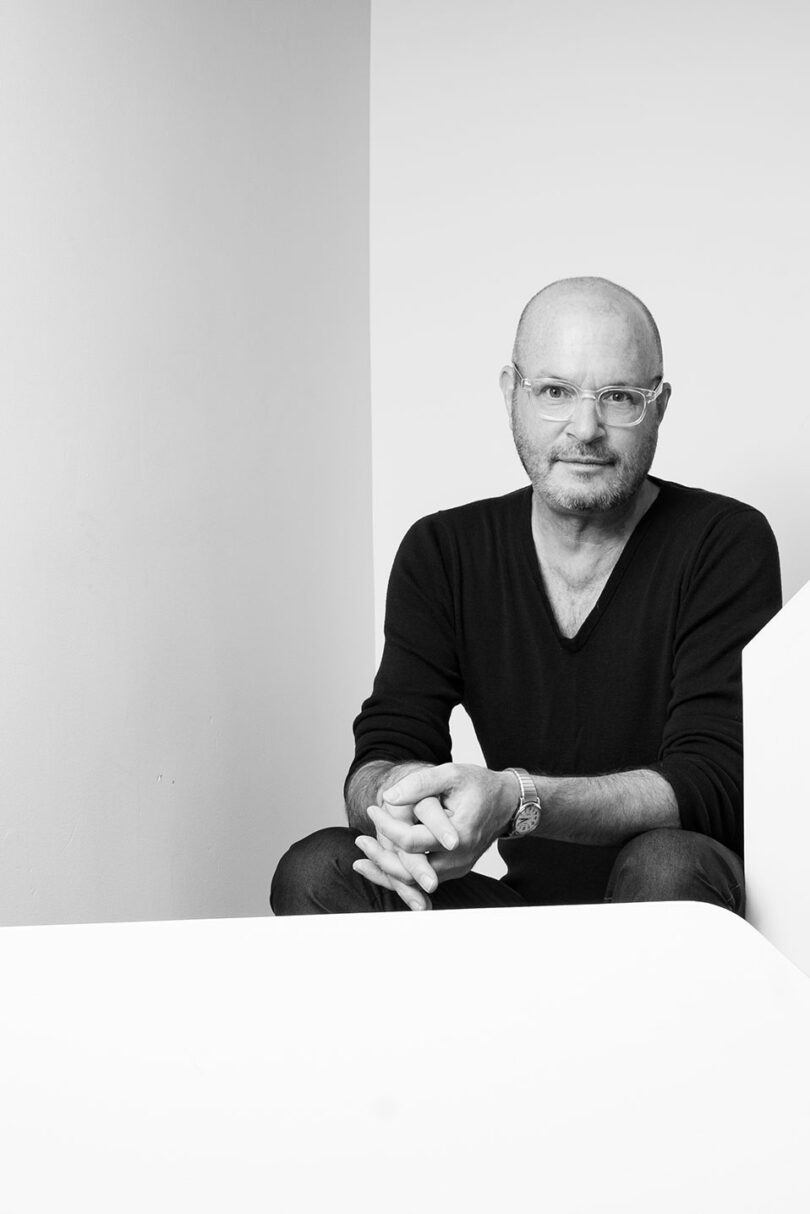
The trajectory of a creative career is often dictated by moments of profound serendipity, a fact exemplified by the professional origin story of Peter Pelsinski, the co-founder of SPAN Architecture. Long before he was an established figure in the New York architectural scene, Pelsinski’s ambitions were rooted in the tactile and the cosmic. As a child, he found himself captivated by the specialized utility of garbage trucks and the celestial promise of spacecraft—vehicles that represented, to his young mind, the pinnacle of functional design. This early fascination with science and complex machinery suggested a future in the hard sciences or perhaps aerospace engineering. However, the pivot toward his eventual vocation occurred not through a calculated academic shift, but through a chance encounter on a college campus.
While an undergraduate student without a declared major, Pelsinski entered a school of architecture for the utilitarian purpose of locating a payphone. The environment he discovered there—filled with elaborate hand-drawn renderings, physical models, and students deeply immersed in the labor-intensive process of design—provided an immediate clarity of purpose. This "click" moment, as he describes it, redirected his interest from the study of science as a purely objective discipline to the application of science and art within the built environment. Pelsinski subsequently entered the field during a transformative era for American architecture, securing an internship at the prestigious firm Diller Scofidio (now Diller Scofidio + Renfro). Working under the tutelage of Elizabeth Diller and Ricardo Scofidio, who were then known for their avant-garde, cross-disciplinary approach to space and performance, Pelsinski honed a perspective that viewed architecture as both a technical challenge and a narrative medium.
The Foundation and Philosophy of SPAN Architecture
In 1995, Pelsinski partnered with Karen Stonely to co-found SPAN Architecture. The mid-1990s represented a critical juncture in the industry; it was a period characterized by the transition from traditional drafting to digital modeling and a burgeoning interest in how residential and commercial spaces could better integrate with their natural surroundings. Based in New York City, SPAN established a reputation for rejecting solitary, "starchitect-driven" methodologies in favor of a deeply collaborative studio environment.
Pelsinski’s leadership style is defined by an emphasis on the collective creative process. He has frequently noted that he is energized by the diverse ways in which individual team members translate abstract concepts into tangible structures. This philosophy extends to the firm’s commitment to experimental building techniques. Rather than relying on standardized construction details, SPAN often treats each project as a laboratory for new materials and assembly methods. Pelsinski’s personal creative habit involves a cycle of "doodling and assembling," a process he describes as "shutting off the old mind" to allow speculative ideas the space to mature. This approach acknowledges that the most innovative design solutions are rarely fully formed at their inception; they require a period of physical and mental incubation to come to life.
The Conceptual Pillars of Design: A Friday Five Analysis
To understand the aesthetic and intellectual framework that guides Pelsinski’s work, one must look at the specific influences he cites as foundational to his worldview. These elements—ranging from radical 1970s art collectives to classical Japanese literature—inform the firm’s output, ensuring that their buildings are not merely functional shelters but intellectual inquiries.
1. The Intersection of Science and Fiction
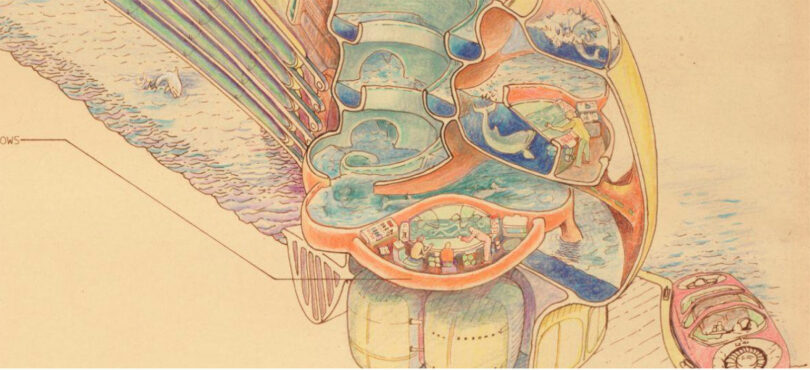
Pelsinski maintains a profound affinity for both science and science fiction, viewing them as two sides of the same coin. He observes that while science purports to offer objective, unassailable logic, human interpretation often introduces a layer of the fantastical. He cites the work of Ant Farm, a radical architecture and art collective founded in 1968, as a primary example. Their project "Dolphin Embassy" (1974–1975), which proposed a high-tech floating station designed to facilitate communication between humans and cetaceans, epitomizes the "Science-Fiction" blend Pelsinski admires. For a designer, this represents the earnest application of logic to achieve an outcome that may seem, on the surface, illogical or visionary. This duality allows SPAN to push the boundaries of what is technically possible while maintaining a sense of wonder.
2. The Duality of the Natural and Unnatural
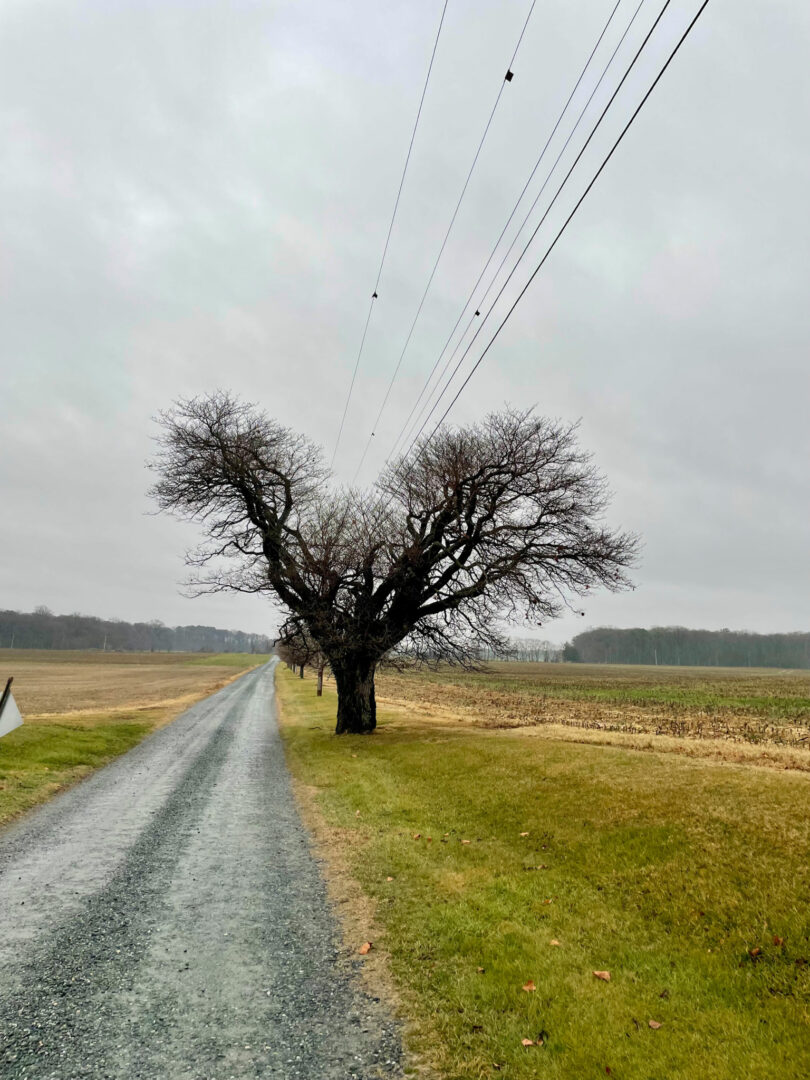
The relationship between human intervention and the natural world is a recurring theme in SPAN’s portfolio. Pelsinski views the human mark on the planet as a complex, often clumsy, yet occasionally beautiful interaction. He highlights the "Electric Tree Haircut"—the severe pruning of trees to accommodate power lines—as a visual metaphor for this coexistence. It is a state of constant contrast where the organic and the engineered are forced into a singular, sometimes jarring, composition. This awareness informs SPAN’s biophilic designs, where the goal is not to perfectly mimic nature, but to create a sophisticated dialogue between the built form and the landscape.
3. The Methodology of Play
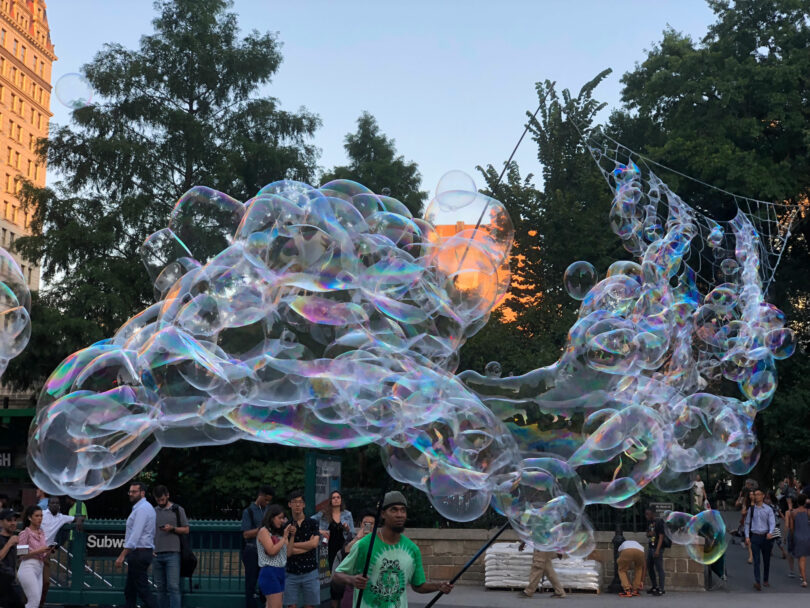
Rejecting the notion that "serious" architecture must be a somber pursuit, Pelsinski advocates for "play" as a primary paradigm for innovation. He defines play as an activity characterized by lightness and enjoyment, free from the immediate pressures of practical utility. In a design context, this mindset allows for the discovery of unexpected connections. By approaching a problem with the curiosity of a child or the spontaneity of a street performer blowing bubbles in a park, architects can bypass conventional limitations and arrive at more fluid, creative solutions.
4. Atmospheric Modulation: Shadows and Light
Architectural lighting is often treated as a technical requirement, but for Pelsinski, it is an essential aesthetic cornerstone. He draws inspiration from Jun’ichirō Tanizaki’s seminal 1933 essay, In Praise of Shadows. Tanizaki argued that the beauty of traditional Japanese aesthetics lay not in the light itself, but in the patterns of shadows and the "patina of age" created by the interaction of light and dark. Pelsinski applies this to modern design by focusing on the "churning atmosphere"—how wind, light, and weather modulate a space. This mindfulness of beauty, specifically the subtle and understated, is what elevates a structure from a mere building to a work of art.
5. The Spectrum of Color
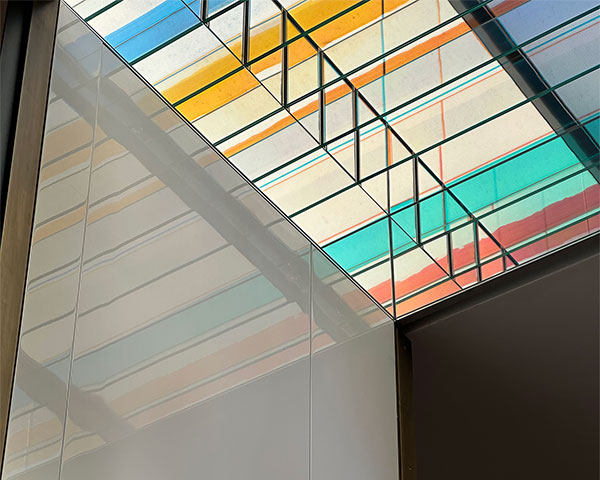
While many contemporary architectural firms lean toward monochromatic palettes, Pelsinski remains fascinated by the physics and emotional impact of color. He acknowledges the limitations of the human eye in perceiving the full electromagnetic spectrum but celebrates the profound beauty of what is visible. This interest manifests in SPAN’s work through the use of materials that react to light, such as dichroic glass, which shifts colors based on the angle of the sun, creating a kinetic and immersive environment.
Portfolio Highlights: Translating Theory into Form
The theoretical leanings of Peter Pelsinski and SPAN Architecture are clearly visible in their completed works, which span high-end residential projects to innovative commercial interiors.

- The Bindery: This project serves as a masterclass in minimalism and geometric restraint. By utilizing a sculpted white stair volume paired with floating black treads, the firm distilled the concept of vertical circulation into a study of shadow and light. It reflects the "Tanizaki" influence, where the absence of light is as important as its presence.
- Riverview: Designed for a family with a global lifestyle, this residence utilizes dark walnut screens and open-tread steel stairs. The design is choreographed to frame specific views of the surrounding landscape, effectively blurring the line between the "natural and unnatural" environments Pelsinski finds so compelling.
- August Moon: A 200-acre waterfront property, August Moon is perhaps the firm’s most ambitious biophilic undertaking. The interiors were designed to remain in a constant state of dialogue with the surrounding forest and bay, creating a sanctuary that feels like an extension of the ecosystem rather than an intrusion upon it.
- Dichroic Sky: In this installation, SPAN used dichroic glass panels on a ceiling to transform a standard interior into a painterly, shifting spectrum. As daylight moves across the sky, the interior colors change, embodying Pelsinski’s fascination with the visible spectrum and the atmospheric modulation of light.
- L. Samaras Homage Bathroom: Drawing inspiration from the "Infinity Rooms" of artist Lucas Samaras, this project utilized mirrored walls, ceilings, and polished chrome fixtures to create an optical illusion of endless space. It stands as a testament to the firm’s ability to merge art history with functional residential design.
Broader Impact and Industry Implications
The work of Peter Pelsinski and SPAN Architecture reflects a broader shift in 21st-century design toward "experiential architecture." As the digital world becomes increasingly pervasive, the value of physical space lies in its ability to provide sensory, tactile, and atmospheric experiences that cannot be replicated on a screen. By prioritizing collaboration, speculation, and a deep respect for both the scientific and the fantastical, Pelsinski has carved out a unique space in the industry.
The firm’s success suggests that there is a significant market for architecture that goes beyond "efficiency" to address the psychological and emotional needs of its occupants. Whether through the playful use of color or the sophisticated manipulation of shadows, SPAN’s projects encourage a state of mindfulness. As the industry continues to grapple with the challenges of sustainability and urban density, the principles championed by Pelsinski—curiosity, play, and a harmonious relationship with nature—offer a compelling roadmap for the future of the built environment. In the end, Pelsinski’s career proves that a search for a payphone can lead to a lifelong quest for beauty, proving that in both architecture and life, the most important structures are often built on a foundation of serendipity.