Stella International Accelerates Global Manufacturing Shift with Major Southeast Asian Expansion and Robust Q1 Performance

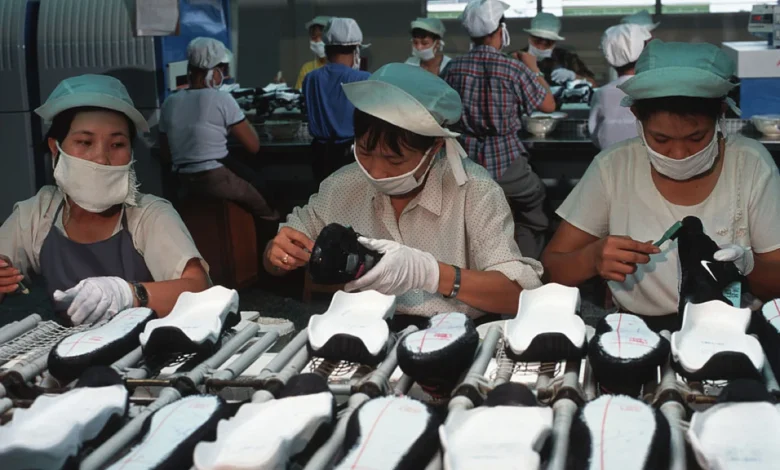
Chinese shoe manufacturing giant Stella International Holdings Ltd. is charting an ambitious course for the latter half of 2026, signaling a profound strategic pivot towards enhanced global diversification and increased production capacity. The Hong Kong-headquartered firm has articulated plans to significantly ramp up operations across three new state-of-the-art factories located in Indonesia, Bangladesh, and Vietnam, a move central to its recently unveiled comprehensive three-year strategic blueprint. This expansion is projected to inject an additional 20 million pairs into the company’s annual production capacity over the coming years, building upon its established manufacturing footprint, which includes an existing facility in Solo, Indonesia. This significant disclosure was made public within the company’s first-quarter revenue report for the period concluding March 31, 2026, offering a dual insight into both its forward-looking strategic initiatives and its recent financial performance.
Strategic Manufacturing Diversification: A Deep Dive into Stella’s Three-Year Plan
Stella International’s commitment to opening and scaling these new production facilities by the second half of 2026 is a cornerstone of its broader three-year strategic vision. This plan underscores a deliberate and proactive approach to reconfiguring its global supply chain, moving beyond traditional manufacturing hubs to embrace emerging industrial landscapes in Southeast Asia. The decision to invest heavily in Indonesia, Bangladesh, and Vietnam is not arbitrary; it reflects a calculated response to evolving geopolitical dynamics, rising labor costs in established manufacturing centers, and the imperative for greater supply chain resilience and flexibility.
The 20 million pairs of additional production capacity represent a substantial expansion for Stella, a leading original equipment manufacturer (OEM) and original design manufacturer (ODM) for numerous global footwear brands. To put this figure into perspective, if Stella’s current annual production capacity were, for instance, around 100-120 million pairs, this expansion would signify a 16-20% increase, demonstrating a significant commitment to growth and market share capture. This strategic augmentation of capacity is designed to meet anticipated robust demand from Stella’s growing roster of sports and high-end fashion clientele, while simultaneously mitigating risks associated with over-reliance on any single manufacturing region. The existing factory in Solo, Indonesia, serves as a testament to Stella’s established operational expertise in the region, providing a foundation upon which these new ventures can build. The strategic choice of these specific nations is often driven by a combination of factors including competitive labor costs, a burgeoning workforce, favorable trade agreements with key consumer markets, and governmental incentives aimed at attracting foreign direct investment in manufacturing.
First Quarter 2026 Financial Performance Analysis
Parallel to its forward-looking expansion strategies, Stella International reported a solid financial performance for the first quarter ended March 31, 2026. The company recorded a 2.2 percent increase in revenue, reaching $327.4 million, up from $320.5 million in the corresponding period of the previous year. This growth, while modest, signals underlying strength in market demand and effective operational management amidst a complex global economic environment.
A key driver behind this revenue uptick was a notable 3.8 percent increase in the average selling price (ASP) per pair, which climbed to $27.40 from $26.40 a year ago. This rise in ASP was primarily attributed to a favorable shift in the product mix within its highly competitive sports shoe category. This suggests that Stella is successfully producing and selling higher-value, more technologically advanced, or premium-branded sports footwear, indicating either an upward trend in consumer preferences towards performance-oriented or fashion-forward athletic shoes, or Stella’s success in securing contracts for more lucrative product lines. Such a shift in product mix can be a significant indicator of a company’s ability to command better margins and adapt to evolving market demands for quality and innovation.
Despite the revenue growth, the company experienced a marginal 1.7 percent decline in shipment volume during the first quarter, totaling 11.9 million pairs compared to 12.1 million pairs in the prior year. Stella attributed this slight dip directly to fewer working days resulting from the observance of Ramadan celebrations in Indonesia and Bangladesh. The timing of Ramadan, a significant religious holiday that involves fasting and reduced working hours, occurred earlier in 2026 compared to the previous year, consequently impacting production schedules and output during the quarter. This highlights the inherent complexities of managing a global manufacturing footprint, where local cultural and religious observances must be carefully factored into production planning and capacity utilization. Companies like Stella often employ strategies such as pre-production build-ups or adjusted delivery schedules to mitigate the impact of such predictable, yet significant, operational pauses.
Leadership Commentary and Market Outlook
Chi Lo-Jen, Group CEO of Stella International, offered a pragmatic assessment of the company’s recent performance and future outlook. "Despite heightened geopolitical uncertainties, our performance in the first three months of 2026 was largely in line with our expectations," Lo-Jen stated. This remark underscores the company’s resilience in navigating a global landscape fraught with challenges, including potential trade tensions, supply chain disruptions, and regional conflicts that can impact manufacturing and logistics. His continued optimism about demand from new sports and high-end fashion customers signals confidence in the company’s strategic positioning and product portfolio. However, the CEO also emphasized a vigilant approach, stating, "although we will continue to monitor risks closely," reflecting a cautious yet proactive stance in managing potential headwinds.
Lawrence Chen, the Group’s Chairman, further elaborated on the strategic importance of the company’s diversified manufacturing base. He asserted that this diversification "remains a core differentiator, underpinning both customer retention and new-customer acquisition." In an era where global brands are increasingly scrutinizing their supply chains for ethical sourcing, sustainability, and resilience, a distributed manufacturing network offers significant advantages. It minimizes the risk of production halts due to localized disruptions (e.g., natural disasters, political instability, labor disputes), provides flexibility in responding to changing trade policies and tariffs, and can enhance customer confidence by offering multiple sourcing options. This strategy not only serves as a competitive advantage but also aligns with a growing industry trend towards de-risking supply chains and fostering a more adaptable production ecosystem.
The Shifting Landscape of Global Footwear Manufacturing
Stella International’s strategic shift is emblematic of a broader, transformative trend in global footwear manufacturing. For decades, China served as the undisputed "world’s factory," offering unparalleled scale, skilled labor, and an integrated supply chain. However, this paradigm has been steadily shifting due to several factors:
- Rising Labor Costs in China: As China’s economy matured, labor costs increased significantly, eroding some of its competitive edge for labor-intensive industries like footwear.
- Geopolitical Tensions and Trade Wars: The imposition of tariffs and other trade barriers, particularly between the U.S. and China, compelled many brands and manufacturers to explore alternative production sites to avoid punitive duties and diversify political risk. The "China Plus One" strategy, where companies maintain operations in China but also establish a significant presence elsewhere, became a prevalent approach.
- Supply Chain Resilience: The COVID-19 pandemic exposed the vulnerabilities of highly concentrated supply chains, prompting a global re-evaluation of manufacturing locations to build greater redundancy and resilience.
- Government Incentives and Free Trade Agreements: Countries in Southeast Asia, including Indonesia, Vietnam, and Bangladesh, have actively courted foreign direct investment through tax breaks, infrastructure development, and participation in regional and international free trade agreements (FTAs) like the Regional Comprehensive Economic Partnership (RCEP) and various bilateral agreements. These agreements offer preferential market access to major consumer regions.
Advantages of Southeast Asia (ASEAN Region) for Footwear Production:
- Competitive Labor Costs: These nations generally offer significantly lower labor costs compared to China, directly impacting the final cost of goods.
- Young and Growing Workforce: A demographic dividend in many of these countries provides a large pool of potential workers.
- Developing Infrastructure: While still evolving, infrastructure in key industrial zones is improving, supported by government investment.
- Strategic Geographic Location: Proximity to major shipping lanes and emerging consumer markets in Asia.
- Growing Expertise: Over the past decade, these regions have developed considerable expertise in footwear manufacturing, attracting skilled managers and technicians.
Challenges in these regions: While offering numerous advantages, these regions also present challenges, including potential infrastructure bottlenecks, varying levels of regulatory transparency, and the need for continuous investment in worker training and skill development to meet the complex demands of modern footwear production. Additionally, companies must remain vigilant about environmental and social governance (ESG) standards to ensure ethical and sustainable practices throughout their supply chains.
Implications for Stella International and the Industry
Stella International’s proactive expansion has far-reaching implications:
- For Stella: The move significantly enhances Stella’s supply chain resilience, allowing it to better absorb shocks from regional disruptions or trade policy changes. It potentially offers opportunities for margin improvement through optimized labor costs and access to new markets. The diversified base also strengthens its position as a preferred partner for global brands seeking robust and flexible manufacturing solutions, thereby driving both customer retention and new acquisitions. This strategy is critical for sustaining long-term growth and competitiveness in a dynamic global market.
- For Regional Economies: The investment by a major player like Stella International brings substantial foreign direct investment (FDI) into Indonesia, Bangladesh, and Vietnam. This translates into significant job creation, both directly within the factories and indirectly in supporting industries (logistics, raw material suppliers, services). It also facilitates technology transfer, skill development for local workforces, and contributes to the overall economic diversification and industrialization of these nations.
- For Global Supply Chains: Stella’s strategy contributes to the ongoing decentralization of global manufacturing. This trend makes global supply chains more complex to manage but ultimately more robust. It encourages innovation in logistics, inventory management, and multi-country production coordination. The shift also influences global trade flows, potentially altering traditional shipping routes and strengthening economic ties within the ASEAN region and beyond.
- For Consumers: A more efficient and resilient global footwear supply chain can lead to more stable product availability and potentially more competitive pricing. It also supports the industry’s capacity to innovate and introduce new products more rapidly, responding to fashion trends and technological advancements in athletic footwear.
Beyond Footwear: Stella’s Broader Portfolio
It is important to note that while the first-quarter financial report specifically pertains to Stella International’s footwear manufacturing business, the company’s broader portfolio extends to the production of leather goods, including handbags and accessories. This diversification into related categories demonstrates Stella’s comprehensive expertise in manufacturing high-quality consumer products and its ability to leverage its core competencies across different segments of the fashion and accessories market. However, the current strategic focus and financial disclosures underscore the footwear division’s central role in the company’s immediate growth trajectory and expansion plans.
In conclusion, Stella International Holdings Ltd. is not merely expanding; it is strategically re-engineering its manufacturing backbone to thrive in an increasingly complex and interconnected global economy. Its significant investment in new facilities across Southeast Asia, coupled with a solid first-quarter performance, positions the company as a key player in shaping the future landscape of global footwear production, emphasizing resilience, diversification, and a forward-looking approach to market demands. This bold strategy will undoubtedly serve as a blueprint for other industry leaders grappling with similar geopolitical and economic pressures.