Planning a wedding is frequently celebrated as one of life’s most joyous milestones, yet beneath the romantic aesthetic of floral arrangements and venue tours lies a complex logistical and financial undertaking. As couples across the globe prepare to exchange vows through 2024, 2025, and subsequent years, the economic realities of modern celebrations have brought financial organization to the forefront of matrimonial preparations. Navigating the intricate landscape of vendor contracts, guest list management, and micro-expenses often introduces significant stress into an otherwise celebratory period. To alleviate these pressures, industry platforms and experienced planners are increasingly turning toward standardized, data-driven digital tools designed to bring clarity and structure to the chaotic world of wedding coordination.

The Evolution of Wedding Planning and Financial Transparency

Historically, wedding planning relied heavily on physical binders, fragmented notes, and manual calculations, leaving couples vulnerable to unexpected overages and missed payment deadlines. In the contemporary digital economy, the transition toward centralized spreadsheet management has revolutionized how engaged couples approach their financial boundaries. Financial analysts in the event-planning sector note that modern weddings have experienced steady cost inflation, driven by supply chain pressures, rising labor costs in the hospitality industry, and heightened consumer demand for personalized experiences. Consequently, establishing a realistic budget at the outset of the engagement phase is no longer merely a recommendation; it is an absolute operational necessity.

Recognizing the widespread anxiety associated with fiscal management, digital lifestyle and wedding resource platforms have developed specialized administrative frameworks. These resources range from straightforward, no-cost financial trackers to comprehensive, multi-tabbed enterprise-grade templates compatible with major spreadsheet ecosystems such as Google Sheets and Microsoft Excel. By democratizing access to professional-grade organizational tools, industry experts aim to bridge the gap between extravagant wedding aspirations and pragmatic financial execution.

Option 1: The Foundation of Financial Control

For couples seeking a direct, unencumbered approach to fiscal oversight, fundamental digital templates offer an immediate solution. Originating from real-world application by seasoned event architects Elizabeth and Zee—recognized for their meticulous attention to detail—the foundational wedding budget spreadsheet serves as an accessible entry point for financial management.

Designed for seamless deployment across Google Sheets and Microsoft Excel, this complimentary tool accompanies couples from the preliminary estimation phase through the final stages of vendor settlements. The architecture of the spreadsheet is intentionally structured to mitigate cognitive load, separating estimated expenses from actual expenditures while simultaneously recording executed payments. Furthermore, the inclusion of dedicated tracking columns for confirmed vendor assignments ensures that accountability is maintained across every category of the event.

Industry observers emphasize that utilizing a standardized spreadsheet early in the planning lifecycle prevents the common pitfall of scope creep, where minor additions incrementally expand the overall financial footprint. By shifting the administrative burden to a pre-formatted framework, couples can focus their energies on the creative and emotional aspects of their union without sacrificing fiscal discipline.

Option 2: Comprehensive Digital Ecosystems for Complex Events

As weddings have evolved into multi-day experiences encompassing rehearsal dinners, post-wedding brunches, and elaborate honeymoons, the limitations of basic budgeting tools have become apparent. To address the demand for total administrative oversight, advanced planning ecosystems have emerged, integrating dozens of specialized modules into a single, cohesive file.

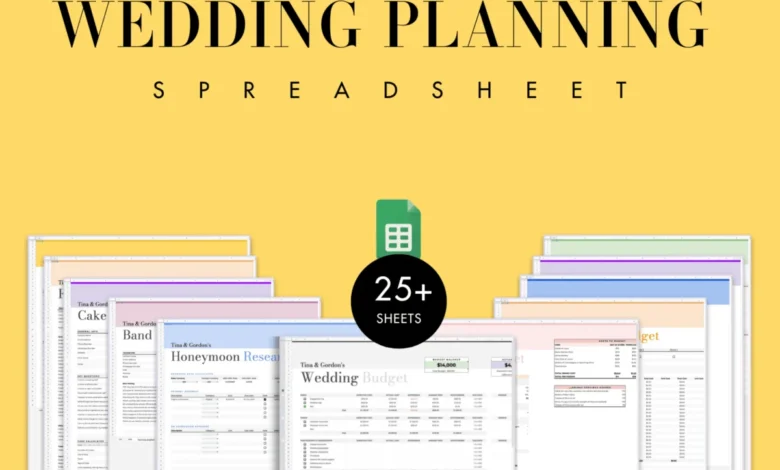
Priced competitively with introductory promotional rates—reduced from a standard $105 to $69—these premium all-in-one wedding planning spreadsheets represent a significant shift toward holistic event management. Developed in collaboration with specialized design and curation shops such as The Creations, these comprehensive suites incorporate upwards of 25 custom-designed sheets tailored to every conceivable logistical requirement.

Anatomy of an Advanced Planning Suite

The breadth of features included in modern premium spreadsheets reflects the multifaceted nature of contemporary event production. Rather than relying on disparate applications, couples can utilize an interconnected suite of tools categorized by functional domain:

Planning and Administrative Modules: At the core of the advanced suite are robust guest list managers and dynamic seating plan generators. These modules utilize conditional formatting and automated counting formulas to track RSVP statuses, dietary restrictions, and household groupings, directly influencing catering estimates and spatial layouts.

Vendor Research and Cost Analysis: Securing reliable service providers is often the most financially significant aspect of wedding preparation. Premium spreadsheets provide dedicated research tabs for venues, photographers, videographers, florists, and catering services. These sheets allow couples to compare quotes side-by-side, analyzing line-item costs against predetermined budgetary limits before executing binding contracts.

Specialized Calculators: Recognizing that specific expenditures often catch planners off guard, advanced tools integrate precision calculators. Notable among these are the drinks and alcohol cost calculator—which estimates consumption based on guest counts and event duration—and the wedding cake cost calculator, which factors in serving sizes, tier counts, and design complexity.

Wedding Weekend and Travel Logistics: Modern celebrations frequently extend beyond a single afternoon. Comprehensive planning suites feature specialized itineraries for rehearsal events, wedding day timelines, and exhaustive packing lists tailored separately for brides and grooms. Additionally, dedicated honeymoon research and budget trackers ensure that post-wedding travel remains financially secure.

Gifts and Registry Integration: Managing incoming gifts, tracking thank-you note distribution, and inventorying registry items are streamlined through automated tracking sheets designed to prevent oversight during the hectic post-wedding period.

Economic Implications and Market Trends

The introduction of scalable, tech-enabled planning tools reflects broader economic trends within the multi-billion-dollar wedding industry. As inflation impacts goods and services across all sectors, consumers are increasingly adopting a do-it-yourself (DIY) managerial approach while retaining professional execution where necessary. Financial analysts indicate that couples who utilize structured digital budgets are significantly less likely to incur high-interest consumer debt or wedding-related loans, thereby protecting their long-term financial health as they enter marriage.

Furthermore, the availability of dual-platform compatibility—supporting both cloud-based Google Sheets and desktop Excel environments—ensures that planning partners can collaborate in real time, regardless of their geographic location or technical proficiency. This collaborative transparency helps mitigate interpersonal stress, fostering early financial communication and alignment between partners.

Looking Forward: Accessibility and Implementation

As digital resource providers continue to refine their offerings through seasonal promotions and user-feedback integration, the barrier to entry for professional-grade event planning continues to drop. Whether utilizing a streamlined, complimentary budget tracker or investing in a comprehensive 25-sheet planning ecosystem, the modern engaged couple is better equipped than ever to navigate the complexities of event coordination.

By prioritizing transparency, organization, and early data collection, couples can transform the traditionally daunting task of budgeting into a manageable, empowering component of their wedding journey. As the industry adapts to the demands of 2024 and beyond, the integration of smart, accessible digital tools remains a cornerstone of successful, stress-free matrimonial planning.