
Boot Barn Accelerates National Footprint Expansion Despite Q2 Weather Headwinds and Lowered Near-Term Outlook

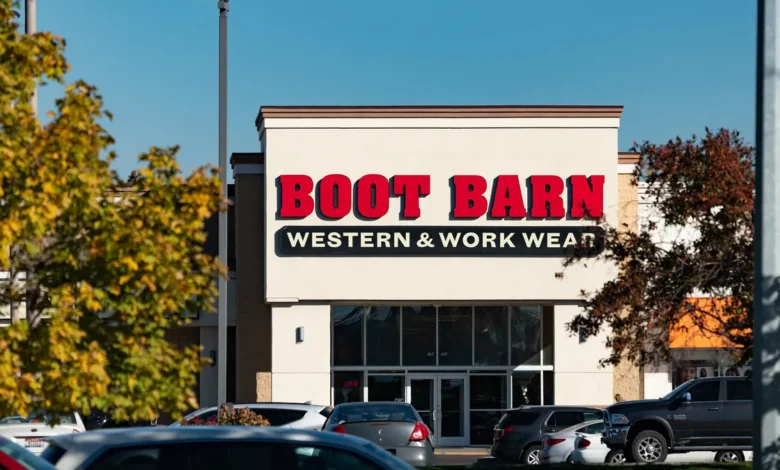
Boot Barn Holdings, Inc., the nation’s foremost specialty retailer of western and work-related footwear, apparel, and accessories, is pressing forward with aggressive long-term growth initiatives even as unseasonably warm weather patterns and sluggish performance in key merchandise categories weighed on financial results during the second quarter.
During an earnings call with analysts and investors, company leadership detailed a multifaceted strategy designed to offset near-term macroeconomic and climate-driven disruptions. This strategy involves targeted merchandising overhauls, an aggressive store-refresh schedule, and a steadfast commitment to a nationwide physical footprint expansion plan that targets a long-term goal of 1,200 locations.
The retailer’s recent financial disclosures and executive commentary illuminate the complex challenges facing specialty apparel and footwear chains, offering a window into how resilient brands navigate seasonal volatility while pursuing multi-year brick-and-mortar growth trajectories.
Second-Quarter Performance and Weather Disruptions
The second quarter of fiscal 2027 presented notable hurdles for Boot Barn, largely driven by environmental factors beyond management’s control. Unseasonably warm autumn weather across large swaths of the United States significantly dampened consumer demand for heavy seasonal items, particularly traditional western boots and cold-weather work apparel. Because these core product categories traditionally command strong margins and high sales volume during the transition from late summer into fall, the uncooperative weather created a noticeable drag on top-line revenue growth.
Compounding the weather-related headwinds, the retailer experienced a soft patch in its women’s boot category. While men’s and women’s western boots have historically served as reliable anchors for the business, executive leadership acknowledged that execution and trend alignment within the women’s segment fell short of internal expectations during the period.
Despite these setbacks, the underlying financial metrics of the company’s new store openings continue to validate its expansion model. CEO John Hazen emphasized to analysts that newly minted locations are consistently hitting performance benchmarks, preserving the brand’s confidence in its broader brick-and-mortar strategy.
A Steadfast Commitment to Footprint Expansion

Central to Boot Barn’s corporate strategy is its continued investment in physical retail expansion. Amid murmurs of retail saturation and a broader industry pivot toward purely digital channels, Boot Barn remains fundamentally committed to a brick-and-mortar-led growth model.
"While recent results demonstrate the opportunity to outperform our projections, we continue to underwrite new locations to approximately $3.2 million in first-year sales, consistent with our historical approach," Hazen stated during the post-earnings conference call. "With a long-term opportunity to expand to 1,200 locations nationwide, we remain confident in our ability to sustain new store growth for years to come."
This underwriting target of $3.2 million in average first-year unit volume provides a remarkably stable financial foundation for the retailer’s real estate division. By maintaining disciplined site-selection criteria and focusing on markets where western and workwear lifestyles enjoy strong demographic alignment, Boot Barn has managed to insulate its growth model from localized economic fluctuations. The company’s disciplined approach to real estate has historically yielded strong return on invested capital (ROIC), making store expansion a primary driver of long-term shareholder value.
Merchandising Overhauls and In-Store Experience Enhancements
Recognizing that external headwinds necessitate internal adjustments, Boot Barn has implemented strategic shifts in how merchandise is displayed and curated across its store fleet. One of the most visible changes involves a complete redesign of the retail floor plan regarding denim product placement.
Historically, denim products were distributed across various departments based on brand or price tier without a unified visual hierarchy. Under the newly executed merchandising strategy, Boot Barn has relocated premium, higher-margin denim offerings directly to the front of the store, establishing an immediate visual statement of quality and style as customers walk through the doors. Conversely, value-focused and entry-level denim offerings have been repositioned toward the rear of the selling floor. This deliberate layout shift is designed to capture higher average ticket sizes by putting premium items front and center, ultimately maximizing square-footage productivity.
In tandem with the denim realignment, Boot Barn is aggressively refreshing its inventory mix within the women’s boot category. Recognizing the soft performance observed in recent quarters, the merchandising team has curated a broader, more diversified selection of styles, heel heights, and colorways specifically timed for the lucrative holiday shopping season. By injecting fresh fashion perspectives into a traditionally functional category, management hopes to re-engage fashion-forward consumers and recapture lost momentum.
Outlook and Third-Quarter Projections
Looking ahead, Boot Barn’s guidance for the third quarter of fiscal 2027 reflects a cautious, eyes-wide-open approach that has recalibrated analyst expectations. The retailer anticipates Q3 overall sales growth to land between 11% and 14%, driven largely by the revenue contributions of newly opened stores. However, management projects that same-store sales—a critical metric tracking the performance of existing locations—could experience a decline of up to 1% compared to the same period in the previous fiscal year.

This conservative near-term guidance underscores the reality that retail turnarounds and merchandising realignments rarely take hold overnight. Financial institutions tracking the company have noted that while the long-term thesis remains intact, patience will be required from the investment community as these strategic initiatives scale.
Financial Analyst Perspectives and Reactions
Wall Street analysts have maintained a generally constructive, albeit watchful, stance following the earnings release and subsequent guidance update. Research notes published by prominent financial institutions highlight the duality of Boot Barn’s current operational posture: robust real estate performance countered by near-term consumer sluggishness.
"We don’t anticipate much improvement until December as initiatives take time to scale, but need to see comps inflect exiting Q3 to maintain confidence in the historical durability of the business," analysts at TD Cowen wrote in a post-earnings note to clients. "Meanwhile, we’re constructive on new store ramps, cost control, and share buybacks."
This sentiment is echoed across the broader analyst community, where experts point out that Boot Barn’s disciplined balance sheet and proactive capital allocation strategies—including share buybacks and stringent overhead cost controls—provide a formidable cushion against short-term sales volatility. The ability to generate steady cash flow from established units allows the company to self-fund its national expansion without relying heavily on expensive debt financing.
Chronology of Growth and Strategic Evolution
To understand Boot Barn’s current positioning, it is helpful to examine the chronological evolution of the brand over the past decade. Originally founded as a single store in Orange County, California, in 1978 by Ken Reilly, Boot Barn spent decades operating as a regional western wear supplier.
The turning point toward aggressive national consolidation began in the 2010s under private equity backing and subsequent public market entry in 2014. Through a series of strategic acquisitions—including the purchase of rival chains such as Sheplers and Working Person’s Store—Boot Barn systematically consolidated a highly fragmented western and workwear retail landscape.
By the late 2010s and early 2020s, the company had successfully transitioned from a regional player into a dominant national category killer. Even through the disruptions of the COVID-19 pandemic and subsequent supply chain shocks, Boot Barn demonstrated exceptional pricing power and consumer loyalty, routinely expanding its operating margins and accelerating its real estate footprint. The current push toward the 1,200-store milestone represents the natural maturation of this multi-year consolidation strategy.

Broader Market Implications and Industry Context
Boot Barn’s recent performance and strategic pivots offer broader lessons for the wider retail sector, particularly within specialty apparel and lifestyle niches.
First, the company’s experience highlights the growing vulnerability of apparel retailers to anomalous weather patterns driven by climate volatility. As warm autumns become more frequent, traditional retail calendars that rely on sharp seasonal temperature drops to trigger consumer demand for cold-weather apparel are facing structural stress. Retailers that can successfully diversify their product assortments to bridge the gap between warm and cold seasons will be better positioned to smooth out quarterly revenue volatility.
Second, Boot Barn’s emphasis on store-level design and customer journey optimization underscores the enduring value of physical retail when executed with precision. While e-commerce continues to capture a growing share of overall retail transactions, specialty categories that rely heavily on fit, tactile evaluation, and personalized customer service—such as boots and work gear—continue to thrive in brick-and-mortar environments. By treating the physical store not merely as a warehouse for inventory, but as an interactive showroom that can be dynamically merchandised, Boot Barn is maximizing the productivity of every square foot of real estate.
Conclusion and Future Outlook
As Boot Barn navigates the remainder of fiscal 2027, the company stands at a critical juncture. While unseasonably warm weather and softness in the women’s boot category have introduced near-term friction, management’s decisive actions regarding store merchandising, inventory refreshment, and disciplined real estate expansion suggest a clear path toward long-term stabilization and growth.
With a proven unit-economic model, a clear line of sight toward its ultimate goal of 1,200 nationwide locations, and the financial flexibility to navigate seasonal demand shifts, Boot Barn remains a bellwether for specialty western and workwear retail. Investors and industry observers alike will be watching closely as the crucial holiday shopping season unfolds to determine whether these strategic adjustments succeed in re-accelerating same-store sales momentum.