Nike Moon Shoe: A Protagonistic Prototype’s Reissue Ignites Historical Reflection and Modern Demand

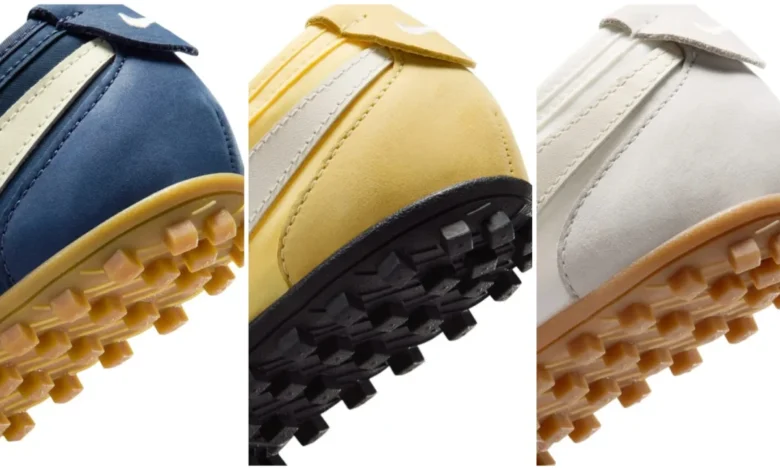
Amidst Nike’s expansive and celebrated archive of iconic footwear, singling out a single model as the most pivotal in the brand’s storied history is a challenging endeavor. However, a compelling argument can undeniably be made for the Moon Shoe. This 1971 prototype, despite never achieving a widespread commercial release in its nascent form, stands as the Beaverton, Oregon-based company’s inaugural running shoe and served as the foundational blueprint for much of its innovative output throughout the subsequent decade. Its recent reintroduction through a high-profile collaboration with French fashion label Jacquemus has heralded its more widely available general release rollout, a development that, while promising broader access, does not necessarily guarantee ease of acquisition for enthusiasts and collectors.
The Genesis of a Giant: From Blue Ribbon Sports to the Moon Shoe’s Birth
To fully appreciate the Moon Shoe’s monumental significance, one must delve into the nascent years of Nike, then operating as Blue Ribbon Sports (BRS). Founded in 1964 by University of Oregon track coach Bill Bowerman and his former student, Phil Knight, BRS initially served as a distributor for Onitsuka Tiger (now ASICS) running shoes. Bowerman, a relentless innovator with an unwavering dedication to enhancing athletic performance, frequently tinkered with existing footwear designs, dissecting them to understand their mechanics and seeking ways to make them lighter, faster, and more supportive for his athletes. His coaching philosophy was deeply intertwined with equipment innovation, believing that marginal gains in footwear could translate into significant competitive advantages on the track.

The early 1970s marked a crucial turning point for BRS. The partnership with Onitsuka Tiger was fraying, and Bowerman and Knight were preparing to launch their own independent footwear brand. This period was characterized by intense experimentation and a fervent desire to create truly revolutionary athletic shoes. The United States was also experiencing a burgeoning running boom, fueled by an increasing awareness of health and fitness, creating a fertile ground for new and improved athletic footwear. It was within this climate of entrepreneurial ambition and athletic aspiration that the Moon Shoe was conceived.
An Epiphany in the Kitchen: The Waffle Sole Innovation
The Moon Shoe’s defining feature, its distinctive waffle outsole, stems from one of the most celebrated origin stories in industrial design history. Bill Bowerman’s ceaseless quest for improved traction on the University of Oregon’s slick, newly installed urethane running track led him to an unconventional source of inspiration. During a breakfast in 1971, while observing his wife Barbara preparing waffles, Bowerman was struck by the grid pattern of the waffle iron. He envisioned this pattern, inverted, as a revolutionary sole design that could provide superior grip without the need for heavy, traditional metal spikes, which often damaged tracks.
The immediate problem Bowerman sought to solve was multifaceted. Traditional track spikes, while offering grip, were often heavy, prone to slipping on wet surfaces, and caused wear and tear on expensive synthetic tracks. Furthermore, road running shoes of the era often featured flat, relatively untextured soles that lacked optimal cushioning and traction on varied terrains. Bowerman’s "waffle" concept promised a lightweight, flexible sole that would distribute pressure more evenly, enhance cushioning, and provide multi-directional traction, effectively "gripping" the running surface.

His initial experiments were famously rudimentary, involving pouring liquid urethane into his wife’s waffle iron. This unconventional approach, though messy and initially unsuccessful (he reportedly ruined several waffle irons), eventually led to the creation of the first prototype waffle soles. These early, handmade units were then affixed to simple shoe uppers, giving birth to the Moon Shoe. The moniker itself is said to derive from the distinctive, crater-like impressions the waffle pattern left in dirt, resembling footprints on the lunar surface – a poetic nod to the era’s space exploration achievements.
Design Details and Proto-Production
The 1971 Moon Shoe prototypes were not mass-produced items. It is estimated that only around 12 pairs were handcrafted, primarily for athletes participating in the 1972 Olympic Trials held in Eugene, Oregon. These shoes were experimental tools, designed to test Bowerman’s innovative outsole concept in real-world competitive scenarios. The construction of these early models featured a mix of nylon and leather, typical materials for athletic footwear of that period, chosen for their lightness and flexibility. The contrasting Swoosh logos, already a nascent but distinctive brand element, provided visual identity. The absence of a formal commercial release meant that these prototypes were incredibly rare, becoming mythical artifacts within the nascent running community and, later, the burgeoning world of sneaker collecting.
The immediate success of the waffle sole among the trial athletes confirmed Bowerman’s vision. While the Moon Shoe itself remained a prototype, its groundbreaking outsole technology was swiftly refined and integrated into subsequent commercial models. This marked a critical juncture, demonstrating Nike’s commitment to athlete-driven innovation and unconventional problem-solving, a philosophy that would define the brand for decades to come.

The Waffle Legacy: Informing a Decade of Innovation
The innovative waffle pattern, born from the Moon Shoe, quickly found its way onto other significant sneakers, solidifying its place as a cornerstone of Nike’s early success. Models like the Oregon Waffle and the iconic Waffle Trainer, both released in the mid-1970s, capitalized on the superior traction and cushioning offered by the new sole design. These commercial successes were instrumental in propelling Nike from a fledgling sportswear manufacturer into a formidable force in the athletic footwear market. The Waffle Trainer, in particular, became a bestseller, beloved by runners for its comfort and grip, and by the general public for its casual appeal. Without the foundational innovation of the Moon Shoe’s waffle sole, Nike’s trajectory in the 1970s, and indeed its entire corporate history, could have played out dramatically differently. The waffle sole didn’t just transform how runners perceived traction and cushioning; it showcased Nike’s unique ethos: solving problems in novel, often unexpected, ways. As Nike running historian Rick Lower aptly stated in a 2025 retrospective, "The waffle sole changed everything. Not only did it transform how runners thought about traction and cushioning but it showed people what Nike was about: solving problems in new ways." This sentiment encapsulates the enduring legacy of Bowerman’s kitchen-table ingenuity.
From Archival Gem to Contemporary Icon: The Re-emergence
The Moon Shoe’s journey from a rare prototype to a coveted collectible and now a re-released icon reflects the dynamic evolution of sneaker culture and Nike’s strategic embrace of its heritage. The recent reintroduction of the Moon Shoe has been meticulously orchestrated, beginning with a highly anticipated collaboration with the French fashion label Jacquemus. This partnership, announced earlier, served as a powerful cultural bridge, blending high fashion sensibilities with raw athletic history. Collaborations of this nature are strategic for Nike, allowing them to tap into new demographics, generate significant buzz, and recontextualize archival designs for a contemporary audience. The involvement of figures like Solange Knowles in the initial promotion further amplified its cultural resonance, positioning the shoe not just as a piece of history, but as a current fashion statement.

Following its exclusive collaborative launch, the Moon Shoe is now transitioning into a more widely available general release rollout. An early April launch saw the "Soft Pearl" colorway (style code II0407-001) hit the market, testing the waters for broader consumer interest. Building on this momentum, Nike has scheduled a more extensive launch in May, which will include the "Soft Pearl" alongside two new colorways: "Soft Yellow" (style code IW0955-700) and "Midnight Navy" (style code IW0955-400). Each of these styles meticulously recreates the original aesthetic, featuring a classic mix of nylon and leather uppers with contrasting Swoosh logos. The "Midnight Navy" and "Soft Pearl" pairs are finished with traditional gum rubber outsoles, while the "Soft Yellow" iteration opts for a striking black outsole, adding a subtle modern twist to the vintage design.
Despite being described as a "general release," the historical significance and cultivated hype surrounding the Moon Shoe mean that securing a pair will likely remain a competitive endeavor for many. Nike’s SNKRS app and official website are expected to be the primary points of sale, and demand is anticipated to be high, driven by both seasoned collectors and new enthusiasts drawn to its unique story and aesthetic.
The Auction Phenomenon: Sneakers as High Art and Investment
The Moon Shoe’s transition from a historical artifact to a modern collectible was dramatically underscored in 2019 when a pristine, unworn pair made history at a Sotheby’s auction. The shoe sold for an astounding $437,500 to Canadian investor and automobile collector Miles Nadal, becoming, at the time, the most expensive sneaker ever sold at auction. This landmark sale catapulted the Moon Shoe into the global spotlight, cementing its status not just as a piece of sportswear history, but as a high-value art object and investment asset.

The 2019 auction was part of a larger trend that has seen the sneaker resale market explode into a multi-billion-dollar industry. Rare and historically significant sneakers, particularly those with a compelling backstory or association with iconic figures, have become highly sought-after commodities. The Moon Shoe’s record was eventually surpassed by several game-worn Michael Jordan shoes and a Nike Air Yeezy sample, further illustrating the burgeoning value placed on sneakers by collectors and investors alike. Nadal’s purchase of the Moon Shoe, along with a collection of other rare sneakers, highlighted the growing recognition of sneakers as a legitimate asset class, capable of appreciating significantly in value. This phenomenon has been driven by a confluence of factors, including the internet’s ability to connect collectors globally, the rise of dedicated resale platforms, and the increasing cultural cachet of sneaker collecting. The Moon Shoe’s auction success not only validated its historical importance but also underscored the immense financial and cultural power of sneaker heritage.
Broader Impact and Enduring Legacy
The Nike Moon Shoe’s impact extends far beyond its physical design or auction value; it represents the very spirit of innovation that defines Nike. It symbolizes the company’s foundational commitment to addressing athletes’ needs through creative, often unconventional, engineering. This ethos, born from Bill Bowerman’s early experiments, has been a driving force behind Nike’s continuous pursuit of performance excellence and its dominance in the global sportswear market.
The waffle sole, originating with the Moon Shoe, democratized advanced traction technology, making it accessible to a broader range of runners and influencing countless subsequent footwear designs across various sports. It fostered a culture within Nike that valued experimentation, problem-solving, and a willingness to challenge established norms. This approach allowed Nike to rapidly evolve, developing iconic technologies like Air cushioning and Flyknit, which continue to push the boundaries of athletic performance.

Culturally, the Moon Shoe holds a unique place. For sneakerheads and historians, it is a relic – the tangible starting point of a global phenomenon. Its rarity, coupled with its foundational story, imbues it with a legendary status that few other shoes can rival. The recent re-release, therefore, is not merely a commercial endeavor; it is a celebration of Nike’s roots, a reaffirmation of its core values, and an opportunity for a new generation to connect with a pivotal piece of design history. It speaks to the power of storytelling in brand building and the enduring appeal of authenticity and innovation.
The decision to bring the Moon Shoe back to a wider audience, albeit still with limited availability, also signals Nike’s ongoing strategy of leveraging its vast archive to maintain relevance and connect with its consumer base. By reissuing heritage models, Nike reinforces its legacy while simultaneously engaging with contemporary trends, finding a balance between honoring its past and shaping its future.
The Nike Moon Shoe OG will be released May 7 on nike.com for $105. This general release offers a rare opportunity for enthusiasts to own a piece of footwear history, a tangible link to the ingenious origins of one of the world’s most influential brands, and a testament to the enduring power of a simple, breakfast-inspired idea that changed the course of athletic footwear forever.