A buyer’s guide to checking a second-hand Canada Goose parka, covering the hologram label, the Arctic Disc embroidery and the brand’s fur-free switch.

Navigating the secondary market for luxury outerwear requires a high degree of technical scrutiny, particularly when purchasing high-demand items like Canada Goose parkas. As the popularity of the Toronto-based brand has surged globally, so too has the sophistication of counterfeit manufacturing. Authentication is not a binary process of finding a single flaw; rather, it is a cumulative investigation into the construction, material standards, and evolutionary history of the specific garment in question. Because Canada Goose has consistently updated its branding and manufacturing protocols over the last two decades, a parka produced in 2009 will inherently lack features that are standard on a 2024 model. Discerning the difference between a vintage authentic piece and a modern counterfeit requires a structured approach to inspection.
A Chronology of Brand Evolution and Authentication Markers
The history of Canada Goose is marked by distinct manufacturing shifts that serve as the primary baseline for any authentication effort. Founded as Metro Sportswear in 1957, the company rebranded to Canada Goose in 2001, coinciding with the introduction of the iconic "Arctic Disc" patch. This timeline is critical: any item featuring the current branding but predating 2001 is immediately suspect.
By 2011, the brand began integrating anti-counterfeiting measures, most notably the introduction of hologram labels. However, these were not applied universally across all product lines at the time of inception. The critical pivot occurred in the fall of 2017, when the company implemented a mandatory, standardized hologram label across its entire global inventory. Consequently, a buyer encountering a 2013-era coat without a hologram should not automatically label it as a counterfeit, provided the construction and other hardware align with that specific era’s manufacturing standards.
The Hologram and Internal Labeling Standards
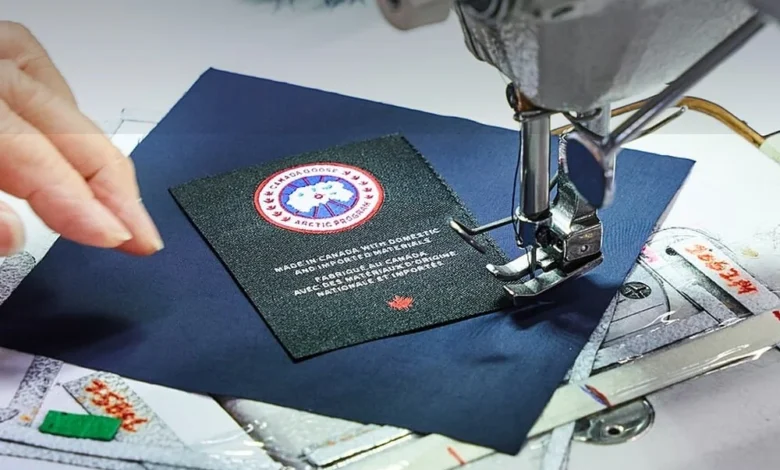
The hologram label, often located near the internal washing instructions, is the most frequently cited indicator of authenticity, yet it remains the most misunderstood. Modern holograms, specifically those implemented from 2017 onwards, feature a sophisticated, multi-angle shifting image of a polar bear. Under controlled lighting, the image should demonstrate a clear transition of depth and color.
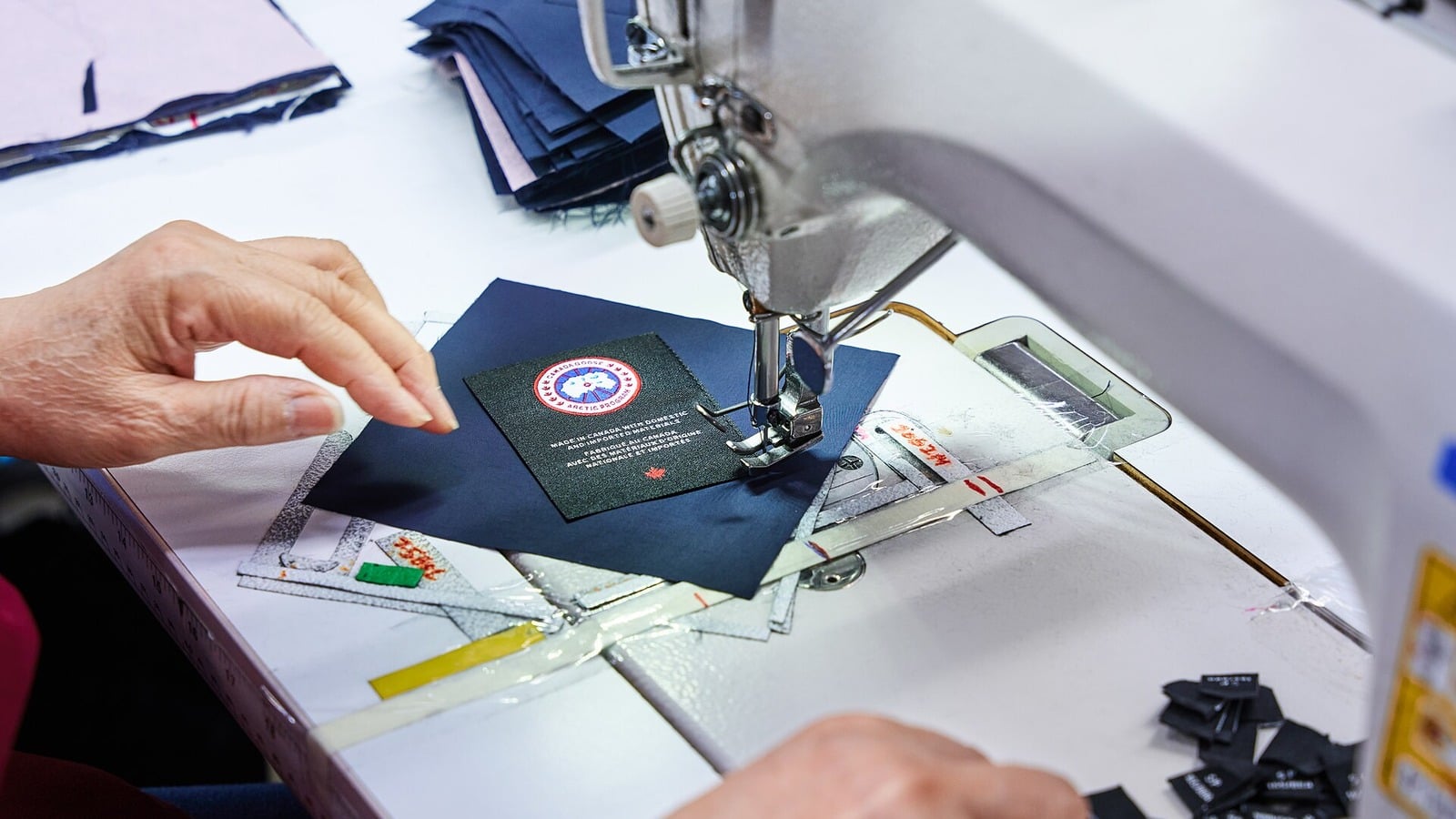
Expert authenticators, such as those at the luxury secondary market platform Veridia, emphasize that the label must be physically sewn into the garment’s lining. A common hallmark of counterfeit production is the use of adhesive or iron-on labels, which lack the structural integrity of factory-stitched tags. Furthermore, the placement of the QR code and serial number has evolved; since 2018, these identifiers have been shifted to the reverse side of the hologram tag. Discrepancies in the font weight, kerning, or the use of incorrect punctuation on internal tags are often the first signs of a production line that lacks the rigorous quality control of a verified Canada Goose facility.
Analyzing the Arctic Disc Embroidery
The Arctic Disc, positioned on the sleeve of most parkas, serves as the brand’s most recognizable emblem. Its evolution from the earlier "Snow Goose" patch necessitates a keen eye for detail. On an authentic garment, the embroidery is characterized by high-density, uniform stitching. The maple leaves, which are central to the design, must be distinct and well-defined, with no "bleeding" of thread color into the background fabric.
Counterfeit versions often fail at the level of fine detail. Common indicators include "chunky" or loose stitching, variations in the thread color that deviate from the standard gold and red, and typographical errors in the words "CANADA" or "ARCTIC." While genuine discs may exhibit minor variations due to the organic nature of textile manufacturing, the level of precision in a genuine piece is consistently high. Buyers are advised to compare the disc against verified high-resolution images of the specific model being purchased, as the size and placement of the patch can vary between different parka styles.
The Impact of the Fur-Free Transition
Perhaps the most significant shift in the company’s recent history is its move away from the use of animal fur. In December 2021, Canada Goose announced a comprehensive update to its animal welfare policy, committing to end the purchase of fur, with manufacturing of fur-trimmed products ceasing entirely by the end of 2022.
For the secondary market, this creates a clear temporal divide. Heritage parkas manufactured prior to the 2022 cutoff may feature authentic coyote fur ruffs, which are characterized by a thick, dense texture and natural color variation. Counterfeiters often substitute this with coarser raccoon fur or low-quality synthetic materials that appear matted or "scraggly." Conversely, a buyer evaluating a coat listed as a "2024 model" should expect it to be entirely fur-free. If a modern-dated coat features a fur ruff, it is almost certainly a counterfeit or a misrepresented vintage item.
The "Feather Mulch" Risk and Internal Fill
While the exterior of the coat is the easiest to inspect, the internal insulation remains a significant concern. Canada Goose utilizes high-quality, sanitized Canadian down. Reports from authorized retailers and industry analysts have repeatedly flagged the prevalence of "feather mulch"—a mixture of low-grade feathers, bacteria, fungus, and even synthetic waste—within counterfeit garments.
Because this material is concealed within the shell of the jacket, it cannot be verified through visual inspection alone. This reality underscores the necessity of relying on the seller’s provenance and the overall quality of the garment’s exterior. If the stitching, zippers, and labels are of inferior quality, the internal insulation is almost certainly compromised.
Broader Market Implications and Official Guidance
The secondary market for luxury goods, while providing accessibility, operates outside the traditional warranty protections offered by brands. Canada Goose maintains a strict policy regarding authentication: the company only provides formal verification for items purchased directly from authorized retailers within a 30-day window, accompanied by valid proof of purchase.
This policy leaves the burden of proof squarely on the buyer in the private resale market. Industry experts and authorized retailers, such as Toronto-based Due West, advise consumers to exercise extreme caution when dealing with unauthorized third-party marketplaces. The proliferation of high-grade counterfeits—often referred to as "superfakes"—has reached a point where even experienced collectors can be deceived by digital images alone.
The implications for the consumer are twofold: financial loss and potential health risks. Beyond the obvious loss of value, the use of unsterilized, "mulch" grade down poses a legitimate hygiene risk. Furthermore, the absence of proper insulation in counterfeit garments means they fail to provide the cold-weather protection for which the Canada Goose brand is renowned.
A Strategy for Informed Acquisition
To mitigate these risks, potential buyers should adopt a multi-layered verification strategy:
- Provenance Verification: Request the original receipt or documentation from the initial purchase. While receipts can be forged, they provide a starting point for tracing the item’s history.
- Comparative Analysis: Use the era of the coat as a filter. Do not judge a 2010 coat by 2024 standards, and conversely, do not accept 2010 features on a modern coat.
- Physical Inspection: If purchasing in person, examine the "feel" of the embroidery and the shift of the hologram. If buying online, demand high-resolution, macro photographs of the internal labels, the Arctic Disc, and the zipper hardware (which should typically be YKK or other high-grade components).
- Seller Reputation: Prioritize platforms that offer independent, third-party authentication services. While not infallible, these services provide a professional layer of scrutiny that individual buyers may lack.
As the secondary market continues to expand, the ability to authenticate luxury assets will remain a critical skill for the conscious consumer. While the allure of a discounted luxury parka is strong, the most effective safeguard against fraud remains an informed understanding of the brand’s technical evolution and a refusal to ignore the subtle inconsistencies that separate an authentic piece of engineering from an imitation.