Fireclay Tile Blends Traditional Textiles and Ceramic Craftsmanship in the New Idyllwild Hand-Painted Collection

The intersection of interior soft furnishings and hard-surface architectural elements has long represented a fascinating design challenge for manufacturers and interior designers alike. While materials like upholstery fabrics, wallpapers, and woven rugs have historically claimed ownership over intricate visual motifs such as plaids, stripes, and botanical
prints, transferring these tactile designs onto permanent architectural mediums requires an intricate balance of artistry, technical precision, and manufacturing innovation. Fireclay Tile, a recognized leader in sustainable and custom-made ceramic solutions, has stepped firmly into this design frontier with the introduction of its latest hand-painted ceramic line, the Idyllwild collection. Named after the picturesque California mountain town, the new offering brings the rich, nostalgic aesthetic of traditional textiles onto durable ceramic tiles, creating an expansive range of decorative possibilities for contemporary and classic residential and commercial interiors.
The Conceptual Genesis: From Grunge Inspiration to Soft Botanical Harmony
The development of the Idyllwild collection did not begin with the delicate floral motifs that ultimately came to define a significant portion of the line. Instead, the creative trajectory underwent several distinct evolutions before arriving at its final form. According to Jamie Chappell, Vice President of Brand and Product at Fireclay Tile, the initial design phase was heavily influenced by broader interior trends that saw contemporary designers layering complex textiles, contrasting colors, and diverse patterns within single spaces.
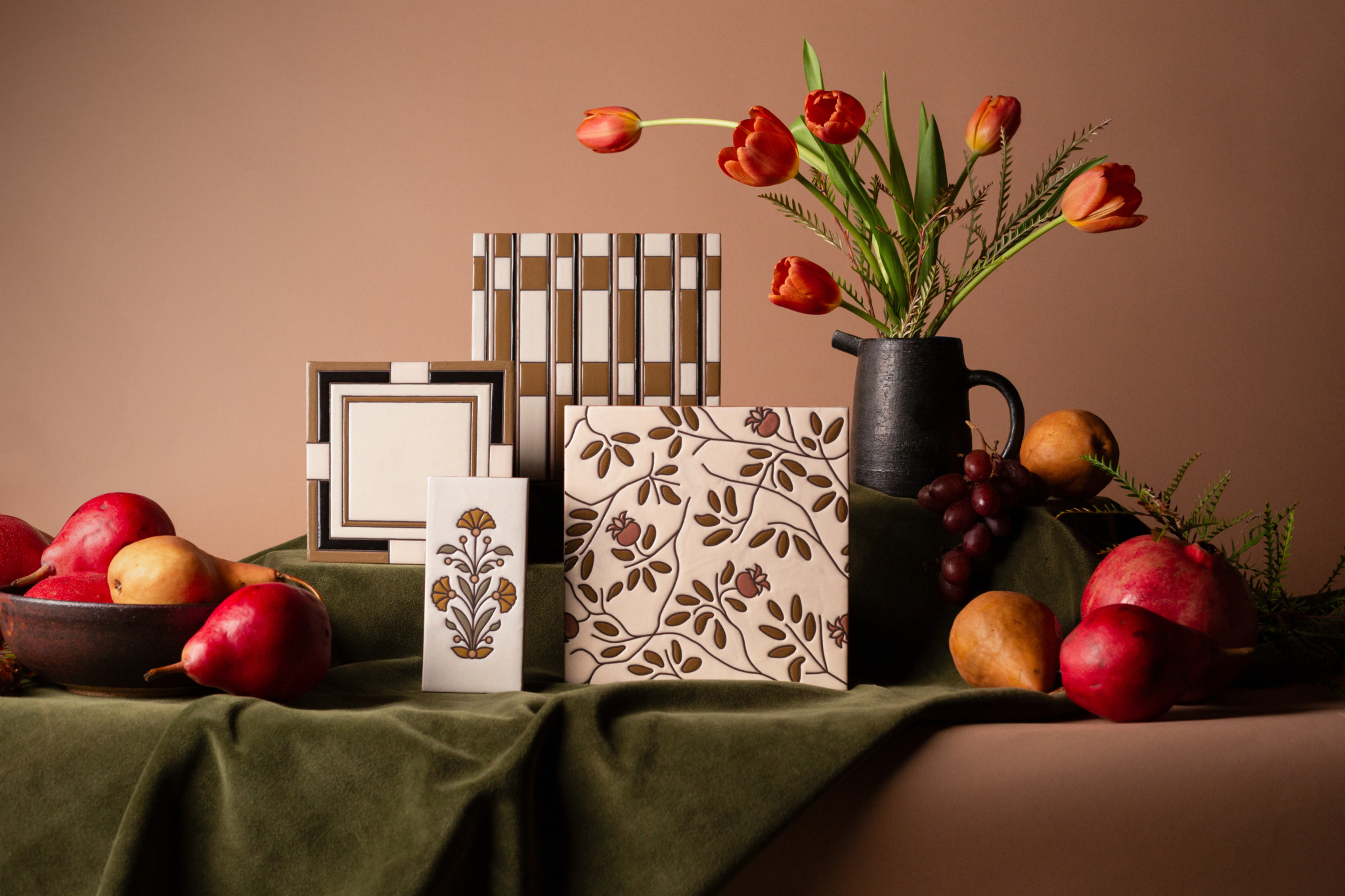
Early explorations by the Fireclay design team focused primarily on structured patterns, including stripes and plaids. Chappell, drawing inspiration from her personal affinity for 1990s alternative rock culture, initially investigated whether the project might take shape as a dedicated "grunge" collection. However, as the design team analyzed the inherent relationship between structured patterns and soft, organic elements in interior environments, the conceptual framework shifted. Recognizing that traditional plaids and stripes are frequently balanced in domestic settings by floral elements, the team integrated botanical illustrations to temper the geometric rigidity of the woven-inspired motifs. This synthesis of structured geometry and organic fluidity ultimately inspired the name Idyllwild, evoking the rustic yet refined ambiance of a mountain retreat nestled among natural surroundings.
Comprehensive Lineup: Exploring the 16 Patterns of Idyllwild
The resulting Idyllwild collection is notably robust, comprising 16 distinct patterns systematically organized into four specific thematic categories: Specimen Flowers, Idyllwild Florals, Idyllwild Stripes, and Idyllwild Plaids. Each category serves a specific compositional purpose, allowing designers and homeowners to mix and match individual elements depending on the desired visual scale and spatial atmosphere.
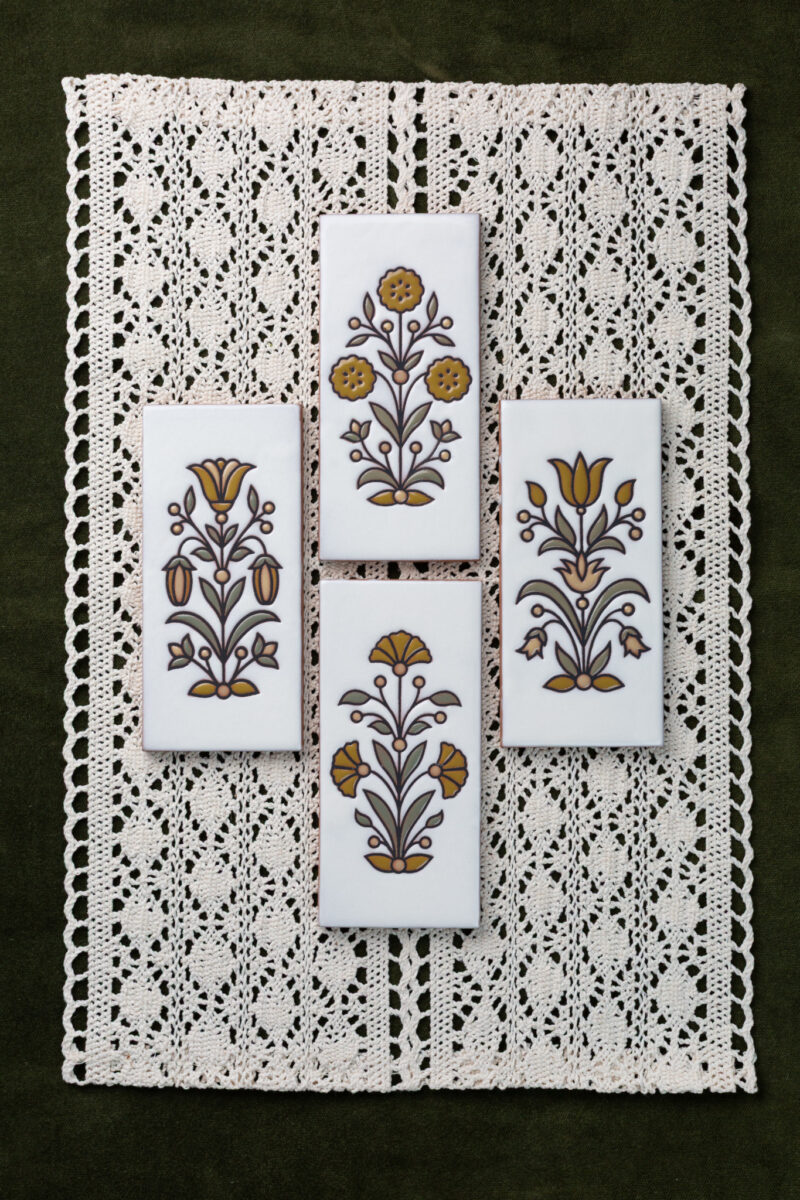
The Specimen Flowers series highlights individual botanical studies, featuring four standalone motifs: Allium, Carnation, Lily, and Bluebell. These individual designs are rendered to function effectively as focal points, making them well-suited for targeted applications such as kitchen backsplashes, shower niches, or prominent accent walls where individual details can be fully appreciated.
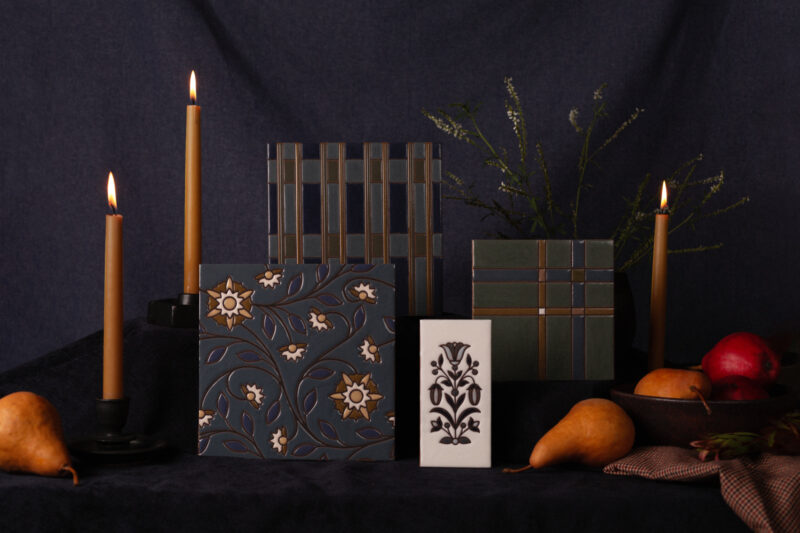
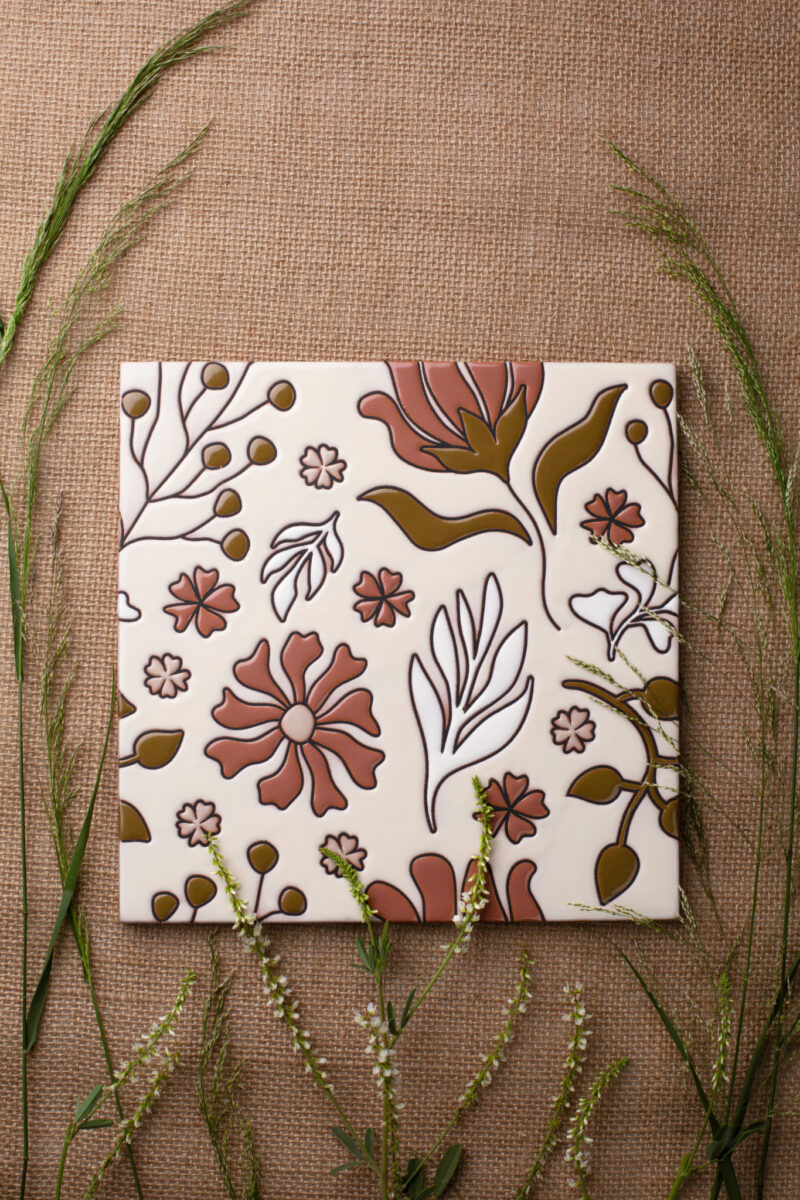
In contrast, the Idyllwild Florals series adopts an expansive, repeating approach. Encompassing patterns named Pomegranate, Tulip, Morning Glory, and Meadow, this category features overlapping stems, leaves, and blossoms designed to create a dense, immersive garden effect capable of spanning larger surface areas without visual interruption.
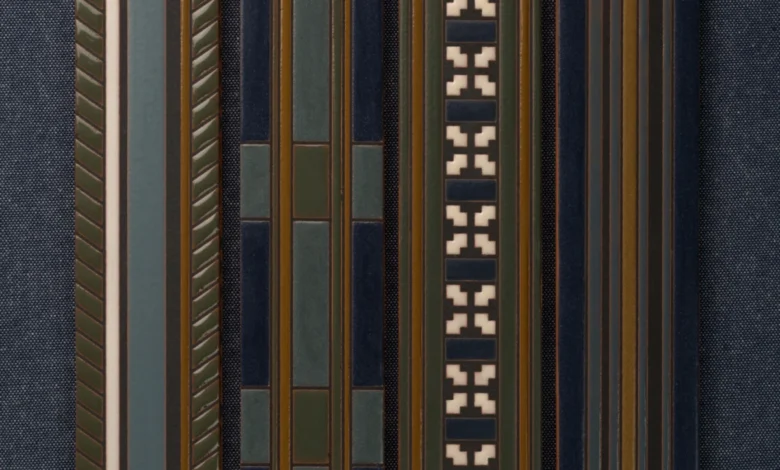
Complementing the botanical offerings, the Stripes and Plaids categories introduce rhythm, structure, and a tactile sense of woven history. The four striped patterns—Stuga, Mokki, Blockhaus, and Thatch—utilize repeated lines and subtle geometric variations to introduce dynamic movement into a space. Meanwhile, the Plaids series—comprising Chalet, Highlands, Minka, and Torp—borrows directly from the visual vocabulary of traditional woven textiles. These intersecting grids can be deployed flexibly, functioning either as understated background textures or as bold, room-enveloping statements depending on the selected color palette and installation scale.
Technical Innovation and the Hand-Painting Process
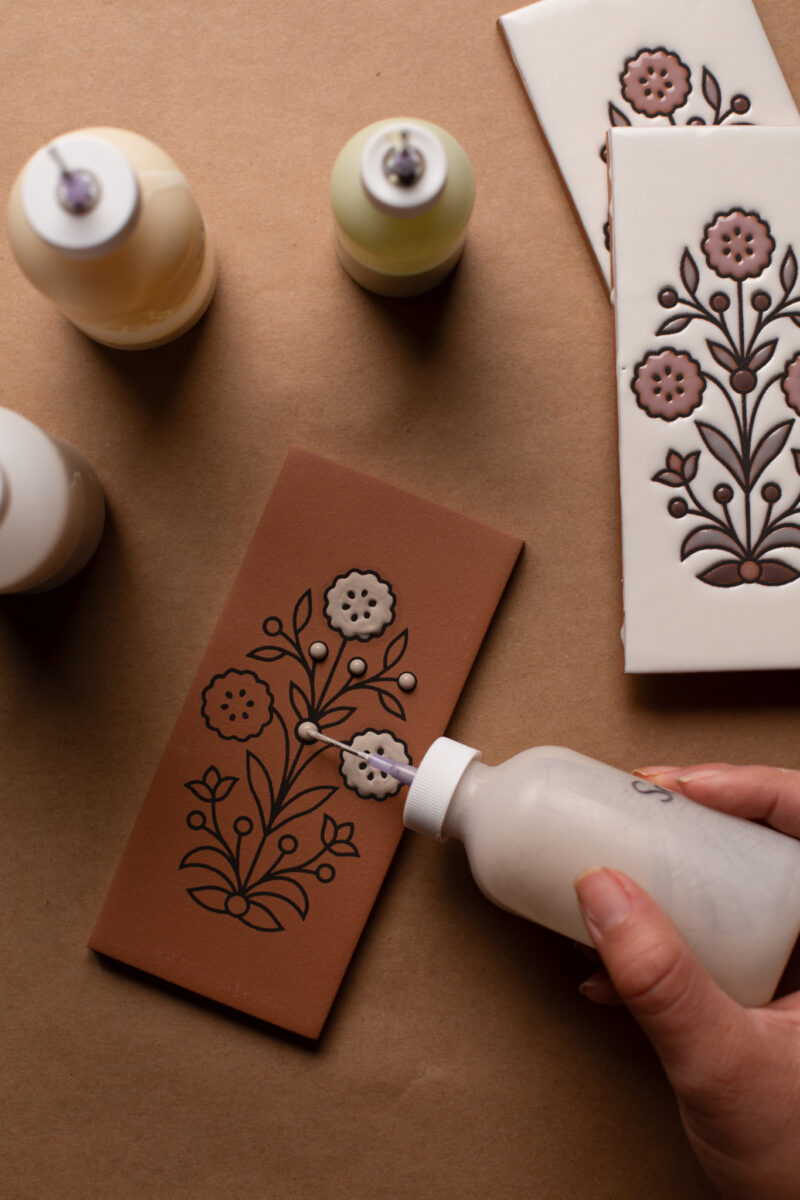
Translating complex textile patterns onto rigid, hand-painted ceramic tile presented substantial manufacturing and engineering hurdles. Unlike digital printing methods, Fireclay Tile relies heavily on human craftsmanship, requiring its internal painting team to execute each design manually using specialized techniques, including resist lines to define distinct fields of color.
Jamie Chappell emphasized that the transition from a piece of fabric or digital artwork to a physical ceramic tile required a rigorous simplification and editing process. The design team had to evaluate the thickness of every line, the physical dimensions of color-fill areas, and the ergonomic realities of the painters’ workflows. Ensuring that artisans had sufficient natural starting and stopping points was critical to maintaining high production efficiency while preserving the organic, hand-crafted quality that defines the brand’s aesthetic.
Throughout the prototyping phase, Fireclay’s painting staff played an active role in product development. Artisans provided critical feedback regarding design elements that featured excessively fine details or areas where traditional ceramic glaze could not be applied smoothly. To resolve these production challenges and elevate the overall quality of the line, the company developed an entirely new glaze base specifically tailored to the demands of hand-application.
Color Expansion and Seasonal Palettes
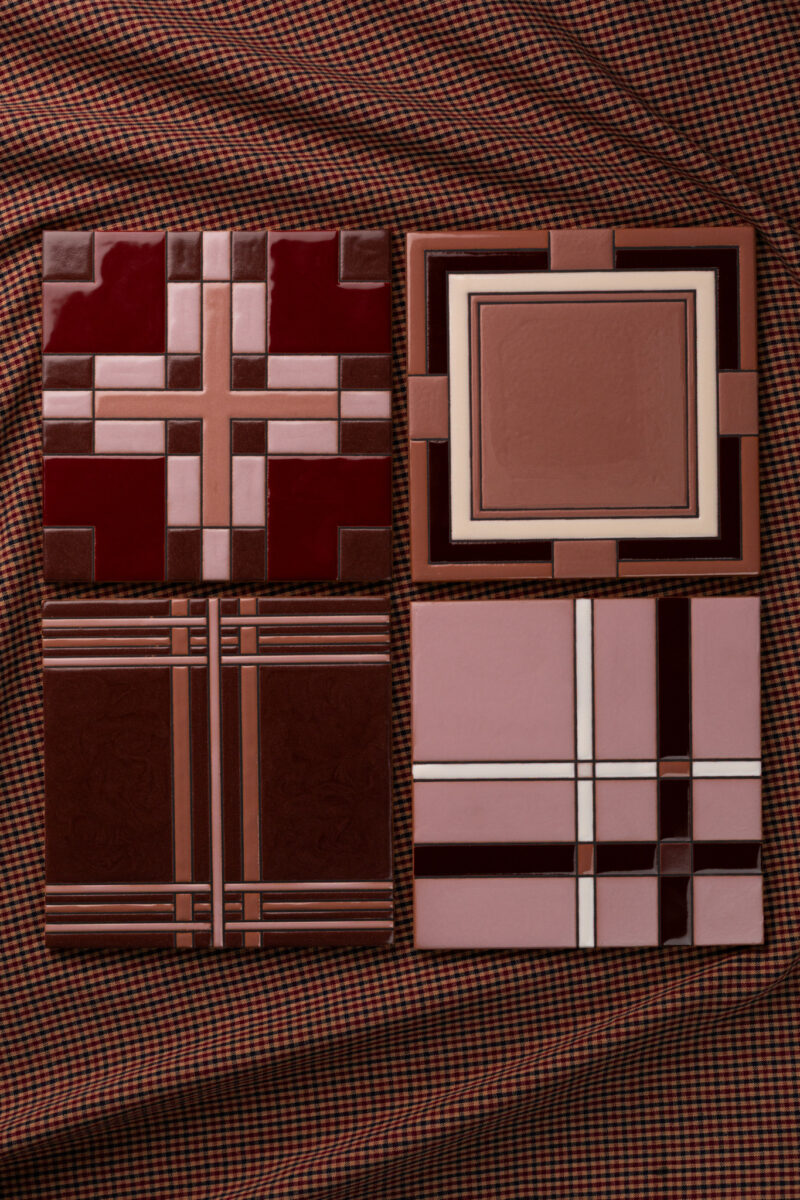
The launch of the Idyllwild collection also coincided with a major behind-the-scenes operational overhaul of Fireclay’s color matching capabilities. Historically, the brand’s hand-painted tile color palette had drifted away from its broader, core ceramic offerings, inadvertently restricting customization potential for clients wishing to combine field tiles with decorative motifs.
To bridge this gap, Fireclay’s production and engineering teams dedicated months to matching the company’s 50 core ceramic colors in both gloss and matte finishes. This extensive technical undertaking yielded 100 distinct finishes that can now be freely combined across the entire Idyllwild collection, granting designers unprecedented freedom in spatial customization.
The 16 patterns within the collection are organized across four curated seasonal palettes, developed through an iterative testing process that utilized physical tile samples alongside high-resolution 4K renderings. These color stories were designed to reflect evolving interior design preferences, specifically noting a growing market appetite for deeper red tones and earthy, grounded blues.
According to product leadership, color application fundamentally alters the psychological impact and personality of each pattern. A classic plaid rendered in soft pastels projects a light, cottage-inspired aesthetic, whereas the exact same geometric layout executed in deep, moody winter tones evokes the visual and tactile comfort of a heavy wool blanket.
Integration, Sizing, and Spatial Versatility
To maximize the architectural utility of the collection, Fireclay Tile introduced new modular dimensions, including 2-by-8-inch and 3-by-6-inch tile formats. These sizes were specifically engineered to integrate seamlessly with standard field tiles, allowing installers to use linear striped patterns as architectural borders or chair-rail accents, while deploying more intricate botanical and plaid designs across full walls or expansive focal zones.
Broader Industry Implications and Future Outlook
The introduction of the Idyllwild collection arrives at a time when the architectural and interior design sectors are increasingly seeking materials that bridge the gap between industrial durability and domestic warmth. As consumers continue to move away from stark minimalism in favor of layered, personalized spaces that incorporate texture, heritage patterns, and handcrafted elements, manufacturers are challenged to provide products that honor traditional craftsmanship while meeting modern technical standards.
By successfully translating the nuanced language of textiles onto ceramic surfaces—and pairing this artistic achievement with a comprehensive overhaul of its core glaze and color matching systems—Fireclay Tile has positioned Idyllwild as a versatile toolkit for modern interior architects. The collection not only demonstrates the viability of hard surfaces as canvases for complex decorative arts but also highlights the ongoing evolution of sustainable American manufacturing, where traditional artisanal labor and contemporary design technology successfully intersect.