The Evolution of the $2.7 Trillion Wellness Economy: How Industry Leaders Plan to Redefine Retail

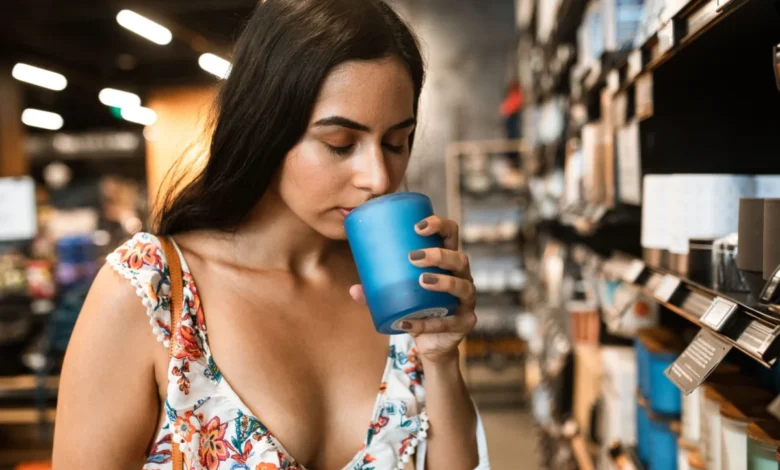
The global wellness marketplace has reached a staggering valuation of $2.7 trillion, propelled by an unprecedented wave of product innovation, category blurring, and legacy brand disruption. As consumers increasingly view health and self-care as integral parts of daily life, retailers and brands face a critical challenge: how to organize the modern wellness aisle for maximum engagement, convenience, and discovery. Industry leaders from major global enterprises, private equity firms, and management consultancies are actively rethinking the physical and digital architecture of retail spaces. Their decisions will shape how consumers interact with wellness products for years to come.
Shifting Consumer Paradigms: Need States Versus Ingredient Trends
For decades, traditional brick-and-mortar pharmacies, department stores, and mass-market retailers organized their health and beauty sections by rigid, functional categories. Shelves were systematically divided into eye care, pain relief, allergy treatments, vitamins, and basic nutrition. However, the rapid expansion of the wellness sector has rendered these legacy categorizations obsolete.
Modern shoppers increasingly navigate wellness through specific "need states"—outcomes-driven desires centered on sleep optimization, gut health, hormonal balance, athletic performance, and mood enhancement. Lorne Lucree, founder and CEO of Wizard Wellness, an allergy-care disruptor operating under a beauty industry playbook, emphasizes the overlap occurring across traditional boundaries.
"It’s so wild because you’re seeing all these wellness categories overlap now," Lucree notes. According to Lucree, while consumers primarily think in terms of need states, a secondary layer of decision-making involves supporting technologies and trending ingredients, such as peptides and probiotics.
This tension creates a philosophical debate for merchants. Organizing entirely by need state offers undeniable convenience, streamlining the path to purchase for busy shoppers. Conversely, hyper-curated, multi-brand assortments anchored in ingredient trends or technological advancements—such as peptide-focused endcaps featuring protein powders, body care, skin serums, transdermal patches, and dietary supplements—encourage cross-category exploration. Shoppers who enter a store seeking one item may discover complementary products they had not previously considered, boosting average basket sizes and fostering deeper brand loyalty.
The Solution-Oriented Retail Strategy
Private equity firms and investors are increasingly backing brands that defy traditional categorization, further complicating legacy retail layouts. Elle Lanning, president of private equity firm Camino Partners, advocates for a merchant model centered entirely around desired life solutions rather than isolated product types.
"When a merchant centers a store’s organization around how the consumer is seeking solutions for their daily life, and the store experience evolves around that, that is certainly where I hope more of it will go," Lanning explains.
Camino Partners has built a portfolio featuring companies like Intake Breathing, Cymbiotika, and Kind bars—brands that effortlessly bridge multiple aisles. Intake Breathing, for instance, manufactures a magnetic nasal dilation tool designed to optimize airflow. Traditionally, such a device might be relegated to the sleep aid section alongside disposable fabric strips. However, Camino positions the tool as a versatile lifestyle accessory suited for high-intensity workouts, meditation, outdoor walks, and allergy-season congestion relief. Similarly, liposomal supplement producer Cymbiotika crosses boundaries into sleep, beauty, immunity, energy, and mood management. Retailers failing to adapt to this solution-driven mindset risk losing market share to agile competitors who better understand modern purchasing behavior.
The Disappearance of the Traditional Wellness Aisle
Looking further ahead, some market analysts predict that the physical wellness section as it currently exists may eventually disappear altogether. Anna Pione, a partner at global management consultancy firm McKinsey & Company, suggests that wellness is becoming so ubiquitous and pervasive throughout consumer culture that it will no longer require a dedicated corral.
Pione points to the beverage industry as a prime example of this phenomenon. Over recent years, the soft drink and energy drink markets have experienced exponential growth driven almost entirely by functional benefits—adaptogens, nootropics, and gut-healthy prebiotics—that historically would not have been classified under wellness. As these functional attributes bleed into everyday consumer packaged goods, the line between conventional groceries and wellness items blurs.
Furthermore, the explosive growth of tech-connected wearables and bulky health devices demands a physical footprint that traditional, narrow store shelves cannot accommodate. These technological advancements require experiential retail
spaces where consumers can test, touch, and learn about products before purchasing.
"The wellness section doesn’t necessarily look the same as it did historically, where you have vitamins on the shelf," Pione states. "The challenge for retailers is going to be determining how they participate in that in a meaningful way and in a way that makes sense from a consumer perspective."
Bridging Digital Discovery with Physical Retail
The evolution of retail merchandising cannot be discussed without addressing the profound impact of digital discovery and social commerce. Rani Al Hajji, chief growth and transformation officer at Unilever Personal Care, emphasizes that physical retail remains a cornerstone of the consumer journey, provided it adapts to contemporary dynamics.
"There is an evolution happening today in terms of where and how people are discovering products," Al Hajji says. "Brick-and-mortar is a very big and very important part of this, and here to stay, but we have to take into account other dynamics as well."
Social commerce platforms have trained modern consumers to seek holistic solutions and narrative-driven brand experiences rather than mere functional commodities. To capture this demographic, physical retailers must reinvent their spaces to mirror the seamless integration of content, community, and commerce found online. Achieving this synergy requires unprecedented levels of collaboration between merchants, vendors, and brand founders. As Lanning notes, the retailers who successfully navigate this transition will do so through genuine strategic partnerships.
Broad Hospitality Trends: The Rise of Restorative Travel
The cultural shift toward holistic well-being extends far beyond brick-and-mortar retail shelves and into the travel and hospitality sectors. A comprehensive global study released by hospitality juggernaut Hilton—which manages more than 9,000 properties worldwide—highlights how consumer priorities have fundamentally transformed regarding leisure and vacationing.
According to the Hilton report, 34% of surveyed consumers stated that a trip centered explicitly around rest, recovery, and holistic wellness helped them achieve personal growth or meaningful life changes. Furthermore, nearly eight in ten respondents identified fresh air and outdoor access as essential components of relaxation while traveling. Concurrently, 61% of travelers expressed a heightened interest in participating in water-based wellness experiences, including advanced hydrotherapy, soaking rituals, and cold-water plunges, during their time away from home. These statistics underscore a broader cultural macro-trend: consumers are permanently reallocating disposable income toward experiences and products that promise deep physical and mental restoration.
Market Implications and the Road Ahead
As the global wellness economy continues its rapid ascent toward the $3 trillion threshold, the stakes for brands and retailers have never been higher. The transition away from rigid, product-based categorization toward dynamic, need-state and solution-oriented merchandising is no longer optional—it is a commercial imperative.
Retailers that successfully synthesize digital discovery platforms with immersive, experiential physical layouts will capture the loyalty of modern, highly discerning shoppers. Conversely, legacy operators tethered to outdated aisle arrangements risk marginalization in an increasingly crowded marketplace. Ultimately, the future of wellness retail belongs to those who recognize that health is not a singular product category, but an overarching lifestyle philosophy permeating every facet of modern commerce.