Poundland enters administration: The collapse of a high street titan weeks before Christmas

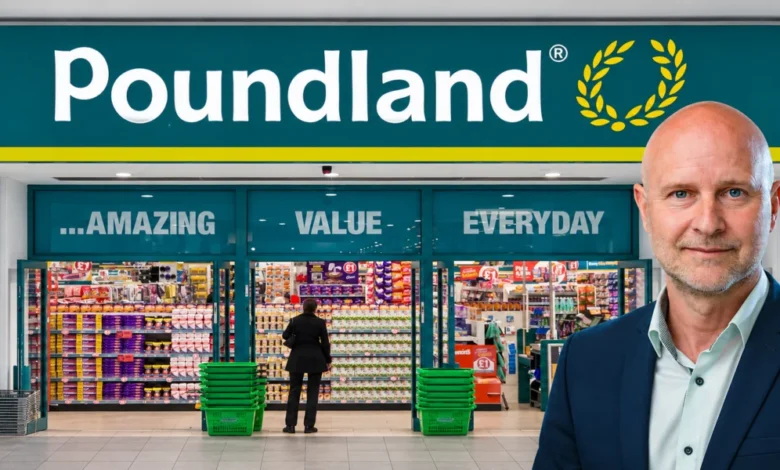
The collapse of Poundland into administration on November 25 marks one of the most significant and disruptive retail failures in recent British history. Falling just four weeks before the critical Christmas trading period, the insolvency process leaves thousands of employees, a sprawling national store estate, and a complex web of suppliers in a state of profound uncertainty. While the retailer had reported recent strides in cost-saving measures—totalling £100m over the last year—the inability to secure fresh capital has ultimately forced the hand of its leadership, leaving administrators the unenviable task of managing a multi-million-pound retail operation during its most volatile season.
A Chronology of Decline: From Growth to Insolvency
Poundland’s journey to this point has been marked by a blend of operational success and financial instability. Acquired by the investment firm Gordon Brothers just last year for a symbolic £1, the retailer was tasked with a rapid turnaround. Over the past 12 months, management, supported by £85m in fresh financing from its owners, successfully streamlined operations and cut overheads. However, the retail sector is notoriously unforgiving, and inflationary pressures combined with a cooling consumer market created a "liquidity crunch" that the cost-saving initiatives could not overcome.
The timeline of the current crisis accelerated throughout the autumn. In September, internal reports suggested that Poundland was struggling to replenish stock at the necessary velocity, a direct result of tightened working capital. By October, rumors of a potential administration filing began to circulate as rescue talks with various investment groups failed to materialize. By the third week of November, it became clear that the business could no longer sustain its debt obligations or its ongoing operational costs, leading to the formal appointment of administrators on November 25.
The Operational Paradox: Trading Through the Festive Peak
The timing of the administration is, by all professional accounts, a "worst-case scenario." In the retail calendar, the four weeks leading up to Christmas account for a disproportionate share of annual revenue. For a discount retailer, this period is essential for clearing seasonal inventory and generating the cash flow required to meet early-year obligations.
Ben Wright, managing partner at consultancy Argon & Co, notes that the decision to keep stores open is the only logical path, yet it is fraught with risk. "Right before Christmas in the retail world is usually about the biggest no-no," Wright observes. "The obvious thing to do would be to try and keep things going for the next four to five weeks, but the success of that strategy relies entirely on the cooperation of the supply chain."
Administrators are now tasked with the delicate balance of maintaining staff morale and stock levels. If employees perceive that their jobs are at risk—or if suppliers refuse to ship goods without upfront payment—the "going concern" status of the business could collapse overnight. Legal experts, including Katie James of Howes Percival, suggest that the public should not expect any major structural announcements until at least January. "The administrators will want to maximize the Christmas trading period, which requires staff and stock," James explains. "I would expect any decisions regarding closures or mass redundancies to be held until after the New Year."
The Supply Chain Shockwave
The impact of Poundland’s insolvency extends far beyond its headquarters. The retailer relies on a vast network of manufacturers, logistics providers, and wholesalers, many of whom operate on razor-thin margins. For these companies, the administration is not merely an inconvenience; it is an existential threat.
The immediate problem is the status of "unsecured creditors." When a business enters administration, the order of payout is strictly governed by law, with secured creditors (usually banks or major lenders) at the front of the queue. Smaller suppliers, who may have delivered goods just weeks before the filing, often face the reality of receiving only pennies on the pound for their unpaid invoices.
Molly Monks, a specialist in personal finance and insolvency, highlights the severity for SMEs: "For smaller suppliers operating on tight margins, losing a major customer and potentially millions of pounds in unpaid invoices could be extremely damaging. Unlike the pandemic, where government support schemes provided a safety net, there is no such mechanism here." The loss of future purchase orders from Poundland also leaves these suppliers scrambling to find new revenue streams in an already saturated market.
Financial Viability vs. Liquidity: The Core Failure
The case of Poundland serves as a stark academic study on the difference between a profitable business model and a solvent one. Critics of the administration have pointed to the fact that Poundland, in its core retail proposition, remained popular. The discount sector, featuring competitors like Home Bargains and B&M, has demonstrated consistent growth, proving that the British consumer has a high appetite for value-based retail.
However, as Ben Wright points out, retail is a high-velocity game. "You’re buying at the right price point, you’re seasonal, you’re in tune with the shoppers, and you drive the footfall," he says. "But if you lose the ability to finance the stock that drives that footfall, the model dies, even if the customers are still at the door."
Gordon Brothers has defended its stewardship, citing the £100m in savings and the $85m in capital injection. They argue that the external economic environment—specifically the rise in input costs and the volatility of the UK retail market—created a set of circumstances that even the most efficient turnaround plan could not survive. This raises a critical question for the administrators: Is there a "core" Poundland that can be saved, or has the business model become too bloated for the current economic reality?
The Path Forward: M&A and Asset Liquidation
The administration process has fundamentally changed the power dynamics regarding a sale. Under the control of administrators, the pressure to reach a deal that satisfies historical shareholders is removed, and the primary objective shifts to maximizing value for creditors. This could, ironically, make the company more attractive to potential buyers.
"Crucially, the administrators now decide whether an offer is acceptable or not," says Katie James. "It is possible that they may decide to sell to one of the interested parties because they can now offer a ‘cleaner’ deal, unburdened by some of the historical liabilities that may have scuppered previous negotiations."
Potential buyers are likely to conduct a "yard sale" approach. While the brand name carries significant weight, the real value for a buyer lies in the prime real estate of the store locations and the existing supply chain infrastructure. It is increasingly unlikely that the business will emerge in its current, expansive form. A more probable outcome is a "pre-pack" style sale, where the most profitable stores and logistics assets are carved out and sold, while the less profitable segments of the business are liquidated.
Broader Implications for the British High Street
The collapse of Poundland is a bellwether for the wider health of the British high street. For years, the sector has been grappling with the "digital shift" and the rise of online competition. While discounters were once seen as the "saviors" of the high street—filling the void left by department stores—this event proves that no segment of retail is immune to structural pressures.
The disappearance of Poundland from town centers would leave significant gaps, not just in terms of retail presence, but in the social fabric of local communities that rely on these stores for affordable, daily essentials. However, as industry analysts observe, the high street is not dying; it is evolving. Consumers still value physical touchpoints, but they demand a more seamless, well-stocked, and efficient experience.
Ultimately, the administration of Poundland is a cautionary tale of how even a beloved brand with a strong customer base can lose its footing when the underlying operational and financial infrastructure becomes misaligned. As the administrators navigate the next few months, the retail industry will be watching closely. Whether the outcome is a corporate rescue or a piecemeal sell-off, the repercussions for the thousands of people involved and the communities served will be felt for years to come. The holiday season of 2024 will likely be remembered not just for the festive period, but as the moment a retail giant faced its final, most difficult, test.