Pets at Home bolsters full-year outlook as strategic pivot delivers significant profit surge and retail recovery

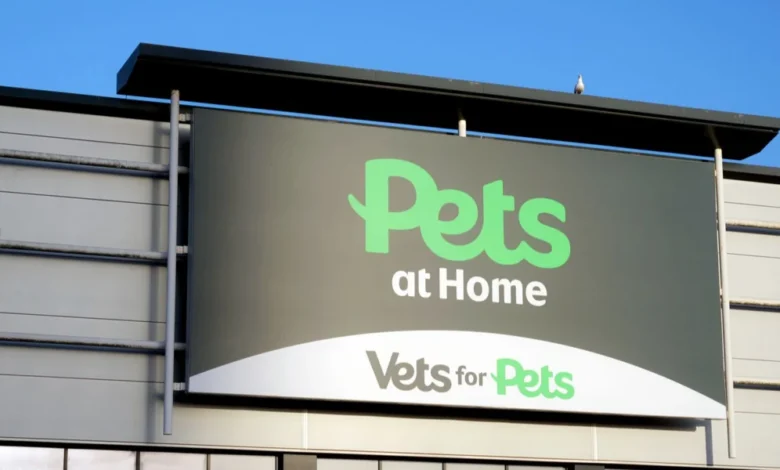
Pets at Home, the United Kingdom’s leading pet care specialist, has signaled a period of robust recovery and operational efficiency, reporting a substantial 44.2% increase in underlying pre-tax profits for the first half of the fiscal year. The company’s latest financial disclosures for the 28-week period ending 8 October reveal a business successfully navigating a complex consumer landscape by synthesizing its retail footprint with high-margin veterinary services. With underlying pre-tax profit reaching £52.2 million and a notable uptick in earnings per share, the group is now positioning itself toward the upper end of market expectations for the full year.
Financial Performance and Market Metrics
The group’s financial health is underpinned by a dual-stream revenue model that has demonstrated resilience against broader economic headwinds. Statutory revenue for the period climbed 3.9% to £809.1 million, while total consumer-facing revenue reached £1.09 billion, a 3.7% increase. This growth was not merely a byproduct of inflation but a reflection of volume growth outpacing sales increases—a critical metric for retail sustainability.
Retail consumer revenue, which accounts for the lion’s share of the group’s operations, rose by 4.4% to £709.7 million. This recovery was largely driven by a comprehensive relaunch of the retailer’s food ranges, supported by an aggressive nutrition-focused marketing campaign. Notably, the second quarter marked a pivotal turnaround, with both physical store sales and accessory categories returning to growth. The data indicates that while the total number of transactions increased by 1%, the average spend per customer grew by approximately 3%, suggesting that the company’s efforts to upsell through its loyalty program and premium food lines are resonating with pet owners.
Chronology of the Strategic Refresh
The recent results are the culmination of a multi-year effort to transform Pets at Home from a traditional bricks-and-mortar retailer into an integrated, omnichannel pet care ecosystem.
- Early 2023: The company intensified its focus on digital infrastructure, investing heavily in its "Pets Club" loyalty platform and mobile app capabilities.
- Mid-2023: The retailer began the systematic rollout of its revamped food and nutrition ranges, responding to shifting consumer preferences for high-quality pet diets.
- Q1 2024: The company finalized the expansion of its integrated veterinary network, reaching over 460 pet care centers.
- October 2024: The reporting period concludes, showing the first tangible signs of the "refreshed strategy" yielding synchronized growth across retail and veterinary segments.
The strategy, as outlined by Chief Executive James Bailey, centers on three pillars: strengthening the retail backbone, deepening the veterinary service integration, and accelerating the growth of the newly launched insurance business. By leveraging a massive data set derived from seven million active Pets Club members, the company is shifting from reactive sales to predictive customer management.
The Synergy of Retail and Veterinary Services
A recurring challenge for Pets at Home in recent years has been the reliance on the veterinary division to subsidize potential weaknesses in retail. However, the first half of the current fiscal year marks a significant departure from this trend. Veterinary consumer revenue grew by 2.3% to £384.4 million, driven by a combination of higher average transaction values and a steady increase in clinical visits.
Central to this stability is the "Care Plan" subscription model, which has now reached one million active users. These recurring revenue streams provide a buffer against macroeconomic volatility, ensuring that the company maintains cash flow even when discretionary retail spending fluctuates. The recent launch of the company’s proprietary insurance arm is the logical next step in this vertical integration. By capturing the pet owner at the point of purchase (retail), maintaining their health (veterinary), and insuring their wellbeing (insurance), Pets at Home is effectively creating a "moat" around its customer base that is difficult for competitors to penetrate.
Expert Analysis and Industry Implications
Market analysts have responded to the results with a revised optimism. Peel Hunt, in a recent briefing, noted that the results were characterized by "eye-catching profit growth," leading the broker to upgrade its full-year earnings forecasts by 4% to 5%. Analysts suggest that the "medicine is working," referring to the internal operational restructuring that has prioritized stock availability and competitive pricing—two areas where the retailer previously struggled against e-commerce pure-players.
Mark Crouch, a market analyst at eToro, points to the demographic shift in pet ownership as a long-term tailwind. "The pandemic-era surge in pet ownership created a massive cohort of animals that are now aging," Crouch noted. "As pets grow older, their needs shift from basic retail items to more frequent, higher-cost veterinary services and specialized nutrition. Pets at Home is uniquely positioned to capture this shift throughout the entire lifecycle of the animal."
Furthermore, the transition to an omnichannel model has allowed the company to regain market share in the food category. By improving inventory management and utilizing its physical stores as fulfillment centers, the group has successfully narrowed the convenience gap that once favored online-only retailers.
Official Statements and Future Guidance
James Bailey, the Chief Executive, remains focused on the "compelling proposition" of the integrated model. "Our improved performance in the first half builds confidence in our compelling proposition," Bailey stated during the results presentation. "We are operating more consistently and our focus on delivering for customers has driven sales momentum, increased customer satisfaction and market share gains."
Looking forward, the management team has provided clear guidance, confirming that trading momentum has carried into the early weeks of the second half of the year. The company expects its full-year underlying pre-tax profit to land at the top end of the current analyst consensus range, which spans from £90 million to £101 million.
Broader Market Context
The UK pet care market has shown remarkable resilience compared to other retail sectors. Data from the Office for National Statistics (ONS) and independent retail research firms indicates that pet owners typically treat pet-related expenditures as "non-discretionary," placing them in a different category than fashion or luxury home goods. This "recession-proof" nature of the industry provides a stable floor for Pets at Home, even as the broader retail environment deals with the impacts of inflation and cost-of-living pressures.
However, the company faces ongoing challenges, including rising operational costs related to staffing its veterinary clinics and the intense competition in the digital pet food space. Success in the coming years will likely depend on the company’s ability to keep its seven million loyalty members engaged while successfully scaling its nascent insurance business.
As the market continues to consolidate, the Pets at Home model of combining physical convenience with a high-touch service offering remains a significant differentiator. By successfully integrating data analytics into its core operations, the group has transitioned from being a mere vendor of goods to a comprehensive service provider, a pivot that appears to be providing the exact stability and growth investors were seeking in a volatile market. With the strategy firmly in place and the early indicators showing positive growth, the company is well-positioned to maintain its leadership in one of the most stable segments of the British retail economy.
Related posts: