The Art of the Unseen: Mastering Foreground and Background in Photography


The visual impact of a photograph extends far beyond the sharply focused subject. Critical to a compelling image is the meticulous attention paid to the elements that surround and support the main point of interest, encompassing both foreground and background composition. This principle, often overlooked in the pursuit of subject perfection, is a cornerstone of successful photography, influencing everything from the perceived quality of a shot to its ultimate emotional resonance. For both seasoned professionals and aspiring amateurs, understanding and controlling these peripheral elements can elevate a snapshot into a work of art.

In the initial stages of photography education, the emphasis on foreground and background is paramount. It is remarkably easy for photographers to become so fixated on their primary subject – be it a person, a landscape, or wildlife – that they neglect the crucial interplay of elements within the frame. This fixation can be exacerbated by the limitations of certain camera viewfinders, particularly those found in older DSLRs, which may offer a restricted or low-resolution view, making it challenging to fully assess the entire scene. However, the importance of these surrounding elements transcends mere inclusion or placement; the intrinsic quality of the background itself plays a significant role in the image’s overall appeal and effectiveness.
Navigating Occlusions: The Problem of Sprouting Subjects
A fundamental error frequently observed among novice photographers is the unintentional inclusion of distracting elements that appear to merge with or emanate from the main subject. This phenomenon, often termed "occlusion," can manifest as a lamppost seemingly growing out of a person’s head or a tree trunk appearing to sprout from a bride’s crown in wedding photography. This is not an issue confined to beginners; even experienced professionals can fall prey to this compositional pitfall if not vigilant.

The most straightforward solution to such an occlusion is to reposition either the photographer or the subject. A slight shift in perspective can dramatically alter the spatial relationship between the subject and background objects, effectively separating them and eliminating the intrusive alignment. This principle applies universally, not just to human subjects. For instance, a stray twig bisecting the body of a bird perched on a branch, or blades of grass impaling the form of a ground-feeding animal, can significantly detract from an otherwise well-captured moment. In landscape photography, a prominent peak or structure in the background aligning awkwardly with the main subject can also create an unflattering visual connection.
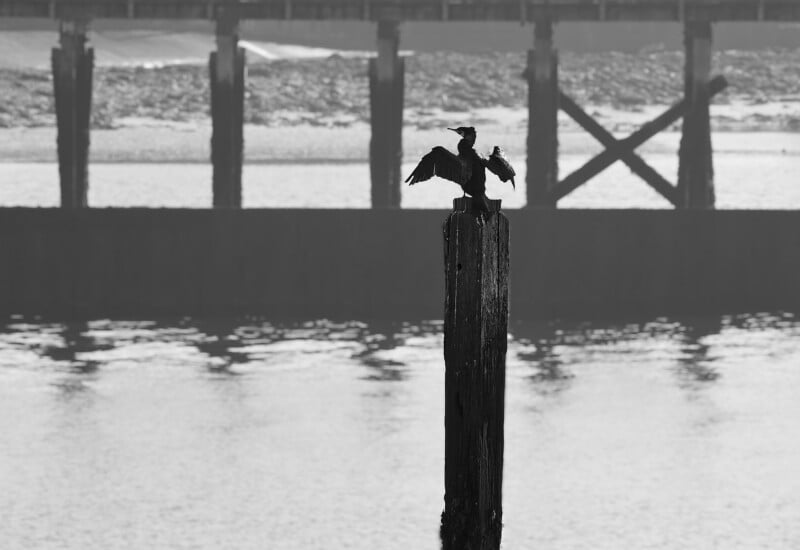
The issue extends beyond direct subject-background interference. Secondary or even tertiary elements within the frame can also clash, creating visual discord. A common example involves the alignment of man-made structures with natural horizons. For instance, when photographing a pier extending into the sea, incorrect camera height can cause the pier’s railings to align precisely with the horizon line. This creates an artificial division, separating the sea into segments below and above the railings, resulting in a visually awkward and unappealing composition. The impact of such misalignments can be profound, turning a potentially striking scene into something visually jarring.
Eliminating Distractions: The Case for a Clean Frame
Beyond structural alignments, the presence of extraneous or unsightly objects within the frame constitutes another significant compositional challenge. Litter, for example, can be a pervasive and unwelcome distraction in landscape photography. While modern editing software offers powerful tools for removing such blemishes, the adage "get it right in camera" remains a guiding principle. Ideally, photographers should take the initiative to clear away visible litter if it is safe to do so, thereby preserving the integrity of the natural scene. However, caution is advised, and photographers should never compromise their personal safety by interacting with hazardous waste.
Natural distractions can similarly disrupt the visual harmony of a photograph. A patch of an incongruous color in an otherwise monochromatic sky, a solitary rock positioned at the edge of the frame, or a bird unexpectedly flying into the scene can all undermine the intended balance and impact of the image. These unintended intrusions can detract from the primary subject and dilute the overall message of the photograph.

The Nuances of Background Blur: Quantity and Quality
The strategic use of background blur, often achieved through a shallow depth of field, is a powerful technique for isolating a subject and enhancing its prominence. This effect is primarily influenced by three key variables: the photographer’s proximity to the subject, the focal length of the lens, and the aperture setting.
When photographing subjects like birds, photographers often employ long telephoto lenses and wide apertures (low f-numbers). This combination not only allows for faster shutter speeds to freeze motion but also effectively blurs the background, minimizing distractions and drawing the viewer’s eye directly to the subject. Increasing the subject’s size within the frame by getting closer, while simultaneously managing atmospheric interference, further accentuates this separation.

Conversely, landscape photography typically aims for a deep depth of field, ensuring that elements from the foreground to the distant background are rendered in sharp focus. This is usually achieved using wide-angle lenses, smaller apertures (high f-numbers), and focusing on the hyperfocal distance. The stillness of most landscapes allows for slower shutter speeds, making these settings conducive to achieving front-to-back sharpness and eliminating blur.
However, the mere presence of blur is only half the story. The quality of that blur, known as "bokeh," is equally critical to the aesthetic success of an image. The term "bokeh" originates from the Japanese word "boke" (ぼけ), meaning "blur" or "haze." It refers to the aesthetic quality of the out-of-focus areas in a photograph. Pronounced "boh-kay," it is a two-syllable word with equal emphasis on both parts.

Good bokeh is characterized by smooth, gradual transitions in the out-of-focus areas, free from harsh outlines or distracting patterns. Highlights in the background, such as out-of-focus lights, should appear soft and evenly shaped. This results in a calm, non-intrusive background that effectively separates the subject and makes it stand out.
In contrast, poor or "busy" bokeh can be visually jarring. This "nervous bokeh" can manifest as aggressive, over-defined textures in the background that compete for attention with the subject. Out-of-focus light sources might exhibit bright rims, double outlines, or an "onion-ring" effect within the blur. Chromatic aberrations, appearing as colored lines in high-contrast areas, can also contribute to poor bokeh.

The optical design of a lens is the primary determinant of bokeh quality. Different lenses, due to variations in aberration correction and light distribution in out-of-focus areas, produce distinct bokeh characteristics. Even low-quality lens filters can degrade the quality of bokeh. While subjective preferences exist – for instance, some find swirling bokeh patterns undesirable, while others seek them in vintage lenses – the general consensus favors smooth, pleasing out-of-focus rendering.
Aperture Shape and its Aesthetic Influence
The physical construction of a camera’s aperture, specifically the number and shape of its blades, significantly influences the appearance of bokeh. Lenses with more numerous and curved blades tend to produce smoother, more circular highlights in the blurred areas. Conversely, lenses with fewer, straight blades can result in polygonal highlights, such as hexagons, which can also be aesthetically pleasing.

In recent years, there has been a discernible aesthetic trend in filmmaking and television production to embrace polygonal bokeh. This deliberate choice, often achieved by utilizing older lenses with straight-edged apertures, imparts a vintage or distinctive character to the visuals. This stylistic approach has been observed in critically acclaimed films and series, from classic cinema like Citizen Kane and The Third Man to modern productions such as John Wick and Moonlight, as well as television shows like Breaking Bad and The Crown. This has also led many contemporary photographers to seek out and adapt vintage lenses for their digital cameras, valuing their less clinically perfect rendering and the unique bokeh they produce.
The Prime Lens Advantage: Bokeh vs. Versatility
While it might seem intuitive that more expensive, professional lenses would invariably produce superior bokeh, this is not always the case. Price and brand prestige do not guarantee beautiful out-of-focus rendering. In fact, there are well-documented instances where high-end, professional lenses have been criticized for harsh bokeh, despite excelling in other areas like sharpness and autofocus.

Modern, high-performance zoom lenses, such as the Sony FE 24-70mm f/2.8 GM, Nikon Z 24-70mm f/2.8 S, and Canon RF 24-70mm f/2.8L IS, are often engineered for maximum sharpness across the frame and aggressive aberration control. This pursuit of technical perfection, while beneficial for overall image quality and versatility, can sometimes lead to hard transitions in the blur and less pleasing bokeh. These lenses are typically optimized for the demands of event and photojournalistic work, where reliability and consistent performance are paramount. The compromise often lies in the rendering of out-of-focus areas, where aggressive correction can result in a "busy" or "nervous" bokeh.
In contrast, many affordable prime lenses, such as the ubiquitous "Nifty Fifty" (50mm f/1.8), are celebrated for their ability to produce beautiful, creamy bokeh. While they might sacrifice some sharpness or exhibit more chromatic aberration compared to their professional zoom counterparts, their optical designs are frequently optimized for rendering pleasing out-of-focus areas. This highlights a fundamental trade-off: zoom lenses prioritize flexibility, sharpness, and consistency, while prime lenses often prioritize bokeh quality. Consequently, inexpensive prime lenses can frequently deliver superior bokeh compared to their more expensive zoom counterparts.

Post-Processing: Refining the Unseen
For photographers who find themselves dissatisfied with the bokeh in their images, post-processing offers avenues for improvement. By carefully applying adjustments during the development or editing phase, the quality of the blur can be enhanced. Techniques such as using masks to isolate the background and subtly reducing sharpness, clarity, and texture can help to soften harsh areas and introduce a more pleasing blur. However, restraint is key; overdoing these adjustments can result in an unnatural and undesirable aesthetic.
In conclusion, while the primary subject of a photograph rightly commands significant attention, the surrounding elements are equally vital to the overall success of the image. Avoiding occlusions, diligently removing distractions, and paying close attention to the quality of the bokeh are essential practices for any photographer aiming to create compelling and aesthetically pleasing images. By mastering the art of what lies beyond the immediate focus, photographers can elevate their work from mere documentation to true visual storytelling.