The residential landscape of Los Angeles has long been a laboratory for architectural experimentation, a tradition that continues to evolve within the hilly enclaves of the Silver Lake neighborhood. In a design climate often dominated by the "tyranny of white"—an aesthetic characterized by sterile minimalism, monochromatic palettes, and a strict adherence to the ethos of "less is more"—a recently completed renovation of a 1940s bungalow offers a compelling alternative. Spearheaded by Gabriel Yuri of the firm New Operations Workshop, the project transforms a modest 1,000-square-foot residence into an eclectic sanctuary that prioritizes accumulation, memory, and material friction over the clinical restraint of contemporary trends.
Located on one of Silver Lake’s iconic "stair streets," the bungalow occupies a site steeped in architectural history. These pedestrian-only thoroughfares, originally constructed to provide access to the neighborhood’s steep hillsides before the dominance of the automobile, have become synonymous with the area’s bohemian and artistic identity. The home sits in close proximity to seminal works of high modernism, including Richard Neutra’s VDL Research House and John Lautner’s Silvertop. However, rather than attempting to replicate the glass-and-steel austerity of its famous neighbors, the renovation by New Operations Workshop seeks a "quiet dialogue" with the structure’s 1940s origins, emphasizing a layered interior life that serves as a personal manifesto for its inhabitants.
The Architectural Context of Silver Lake and the 1940s Bungalow
Silver Lake has historically served as a refuge for the creative class in East Los Angeles. During the mid-20th century, the neighborhood became a hub for the International Style and Mid-Century Modernism. The small-footprint bungalow, a staple of Los Angeles residential development in the 1920s through the 1940s, represents a different era of the city’s growth—one focused on accessible, single-family living with a focus on indoor-outdoor connectivity.
The bungalow in question, constructed in 1940, features a traditional single-level, two-bedroom layout. Its most prominent exterior feature is a porch that spans the entire length of the facade, a design element that encourages engagement with the streetscape and the lush, hilly topography. When New Operations Workshop began the project, the primary objective was not a radical structural overhaul but a "calibration." The goal was to modernize the systems and finishes of the home while preserving the modest charm of its original footprint.
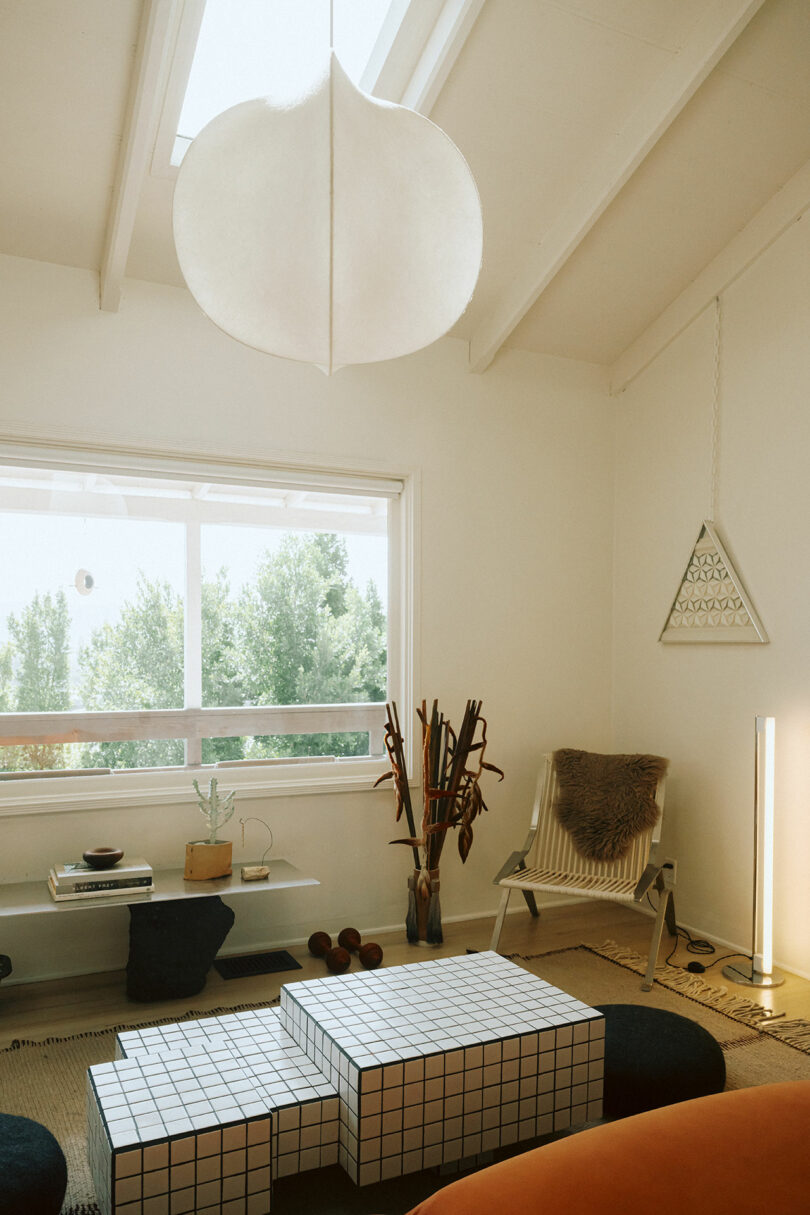
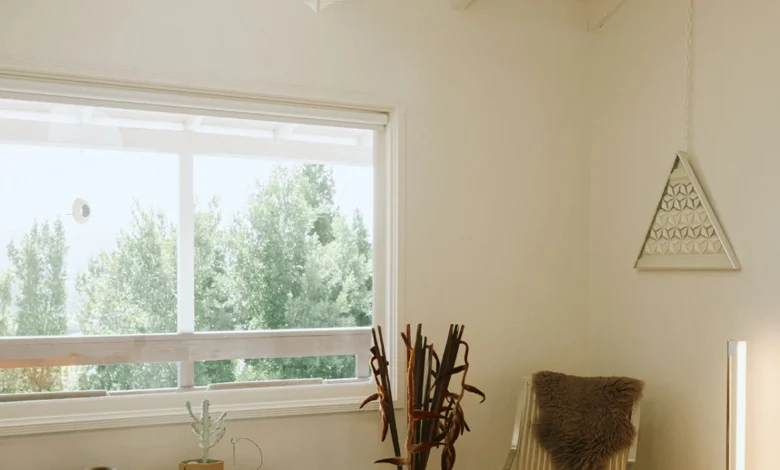
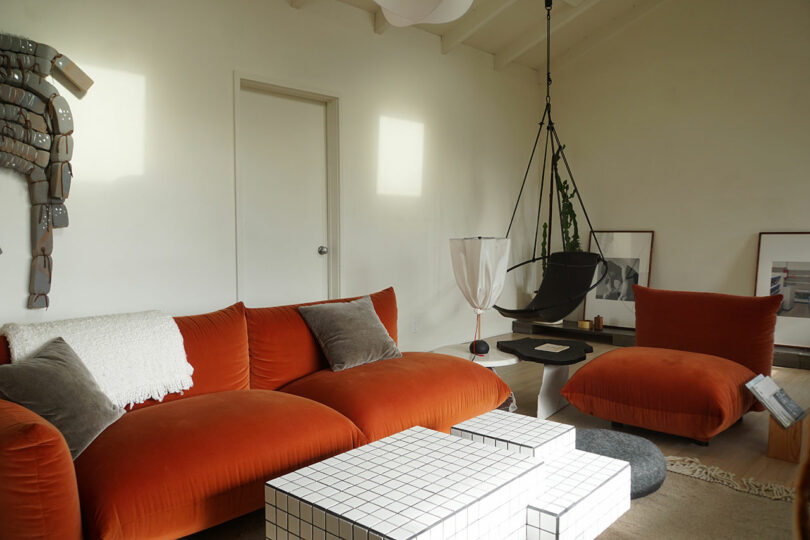
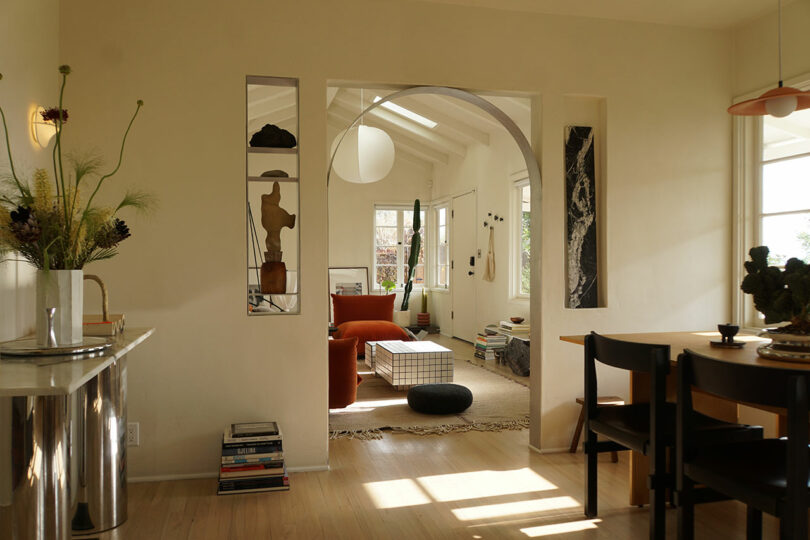
The renovation process lasted approximately one year, during which the design team focused on the interior as a "staged ground." While the envelope remains relatively neutral—with white-painted walls and white oak flooring—this serves as a strategic backdrop intended to amplify the presence of a diverse collection of objects, furniture, and art.
Design Philosophy: Reclaiming Accumulation
The project stands as a rejection of the "white box" aesthetic that has permeated high-end residential design over the last decade. In contrast to minimalism, which seeks to edit life down to its bare essentials, Yuri’s approach leans into the concept of accumulation. The interior functions as a curated salon where the narrative weight is carried by the objects themselves rather than the architecture.
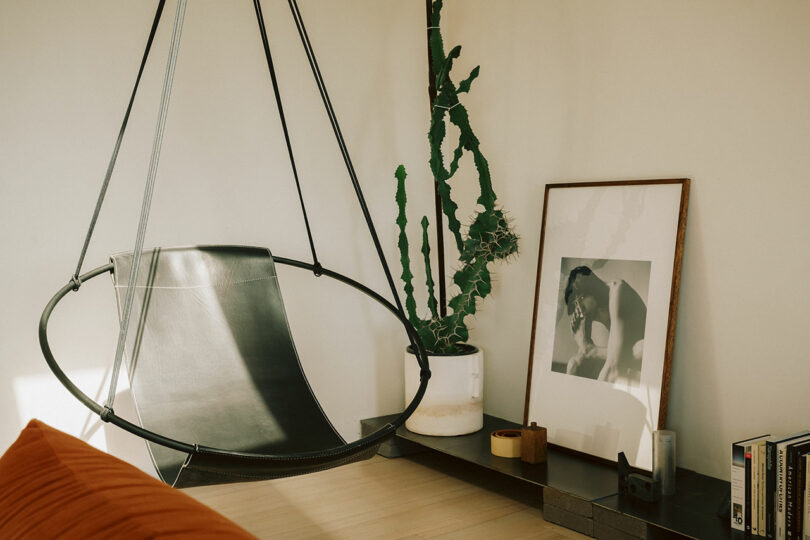
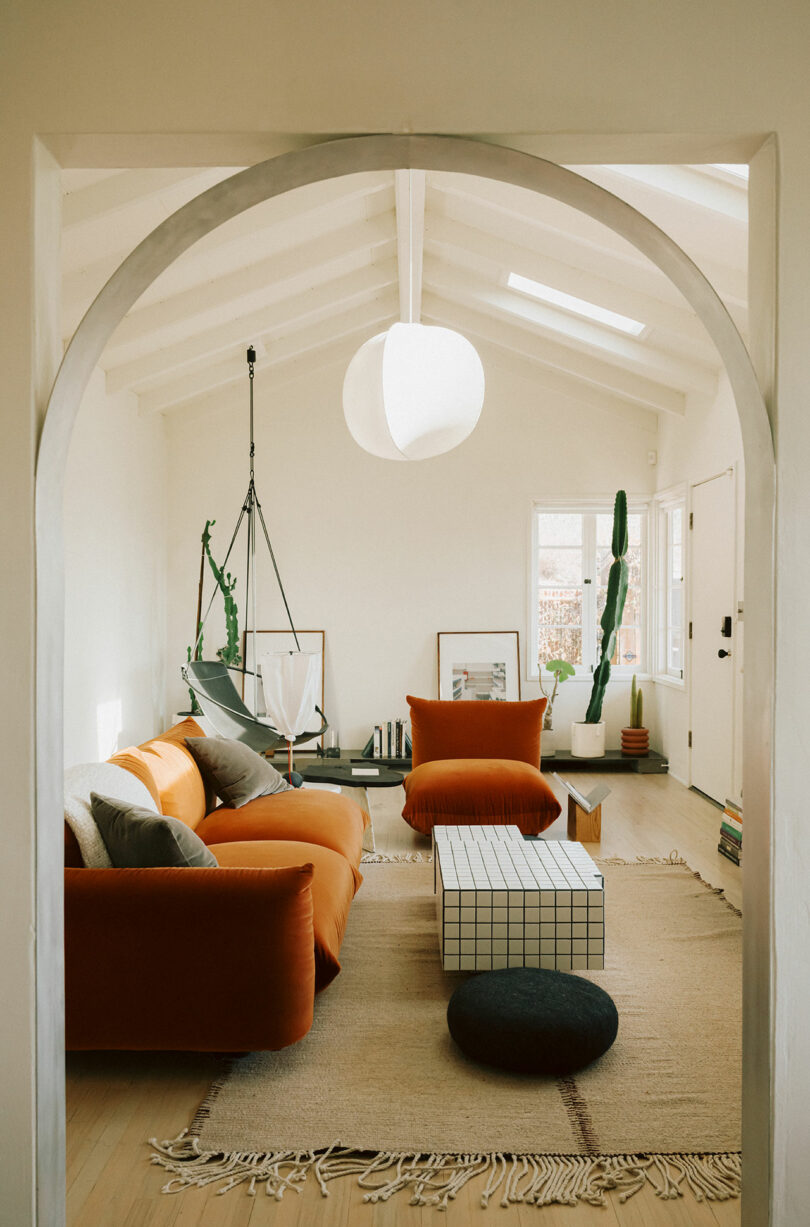
This philosophy draws inspiration from 1970s Italian design, a period characterized by a bold embrace of contradiction. During this era, designers such as Mario Bellini and Gaetano Pesce challenged the rigidity of modernism by introducing soft forms, high-gloss finishes, and industrial materials. The Silver Lake bungalow channels this spirit by pairing steel with velvet, gloss with matte textures, and rigorous geometry with playful irreverence.
The Living Room: A Study in Contrast
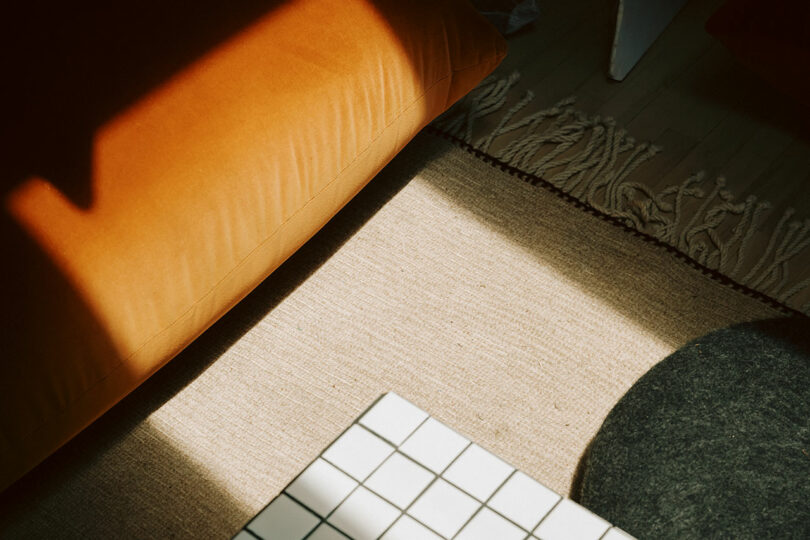
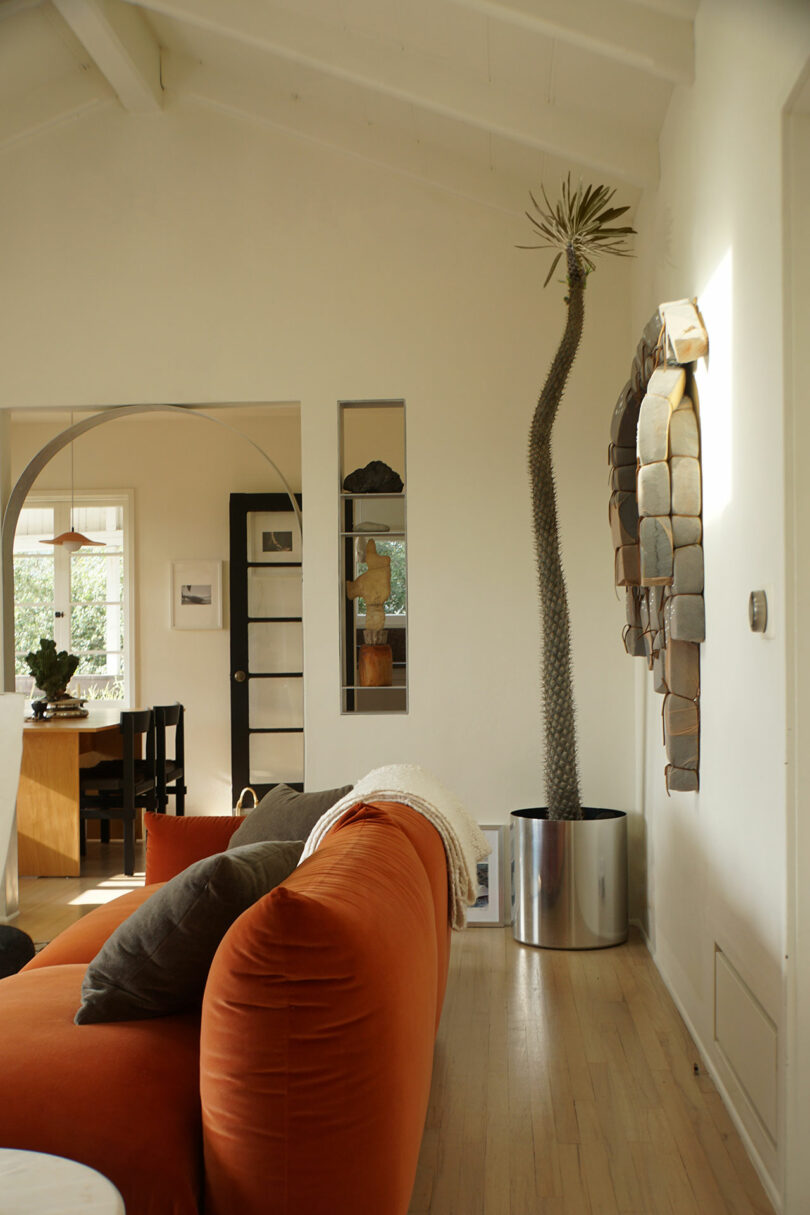
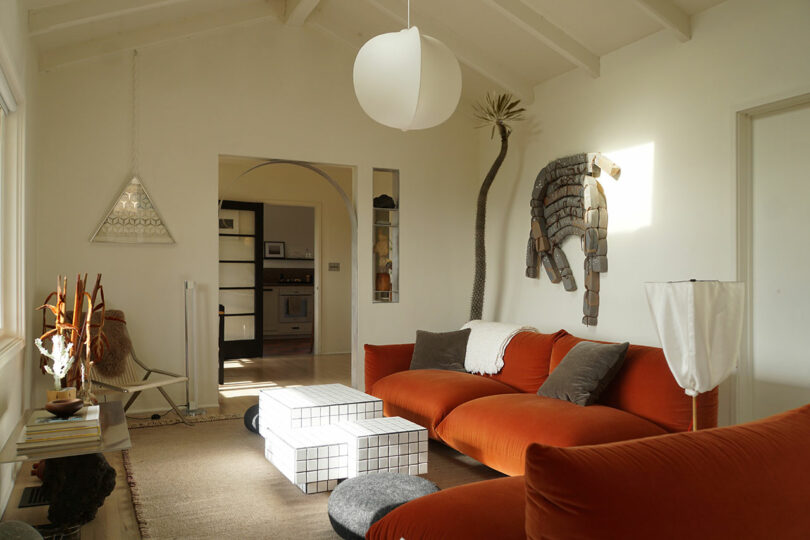
The centerpiece of the living area is a reupholstered vintage Marenco sofa. Originally designed by Mario Bellini for Arflex in 1970, the sofa is known for its plush, modular cushions that suggest a sense of informal luxury. In this project, the sofa is finished in a saturated burnt orange velvet, providing a vibrant focal point that anchors the room and contrasts sharply with the pale oak floors.
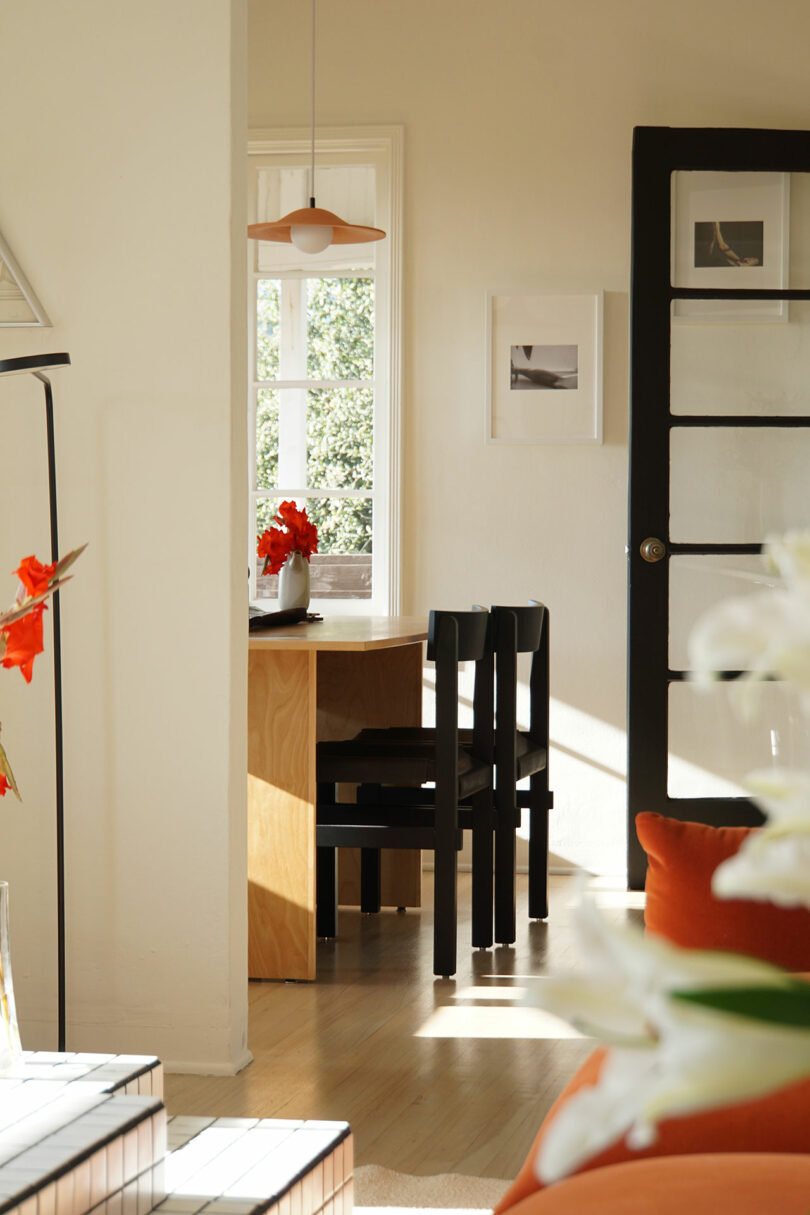
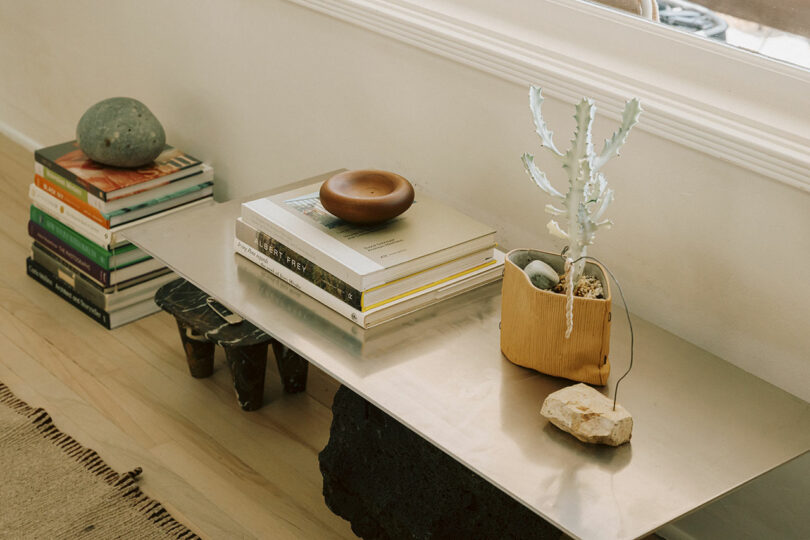
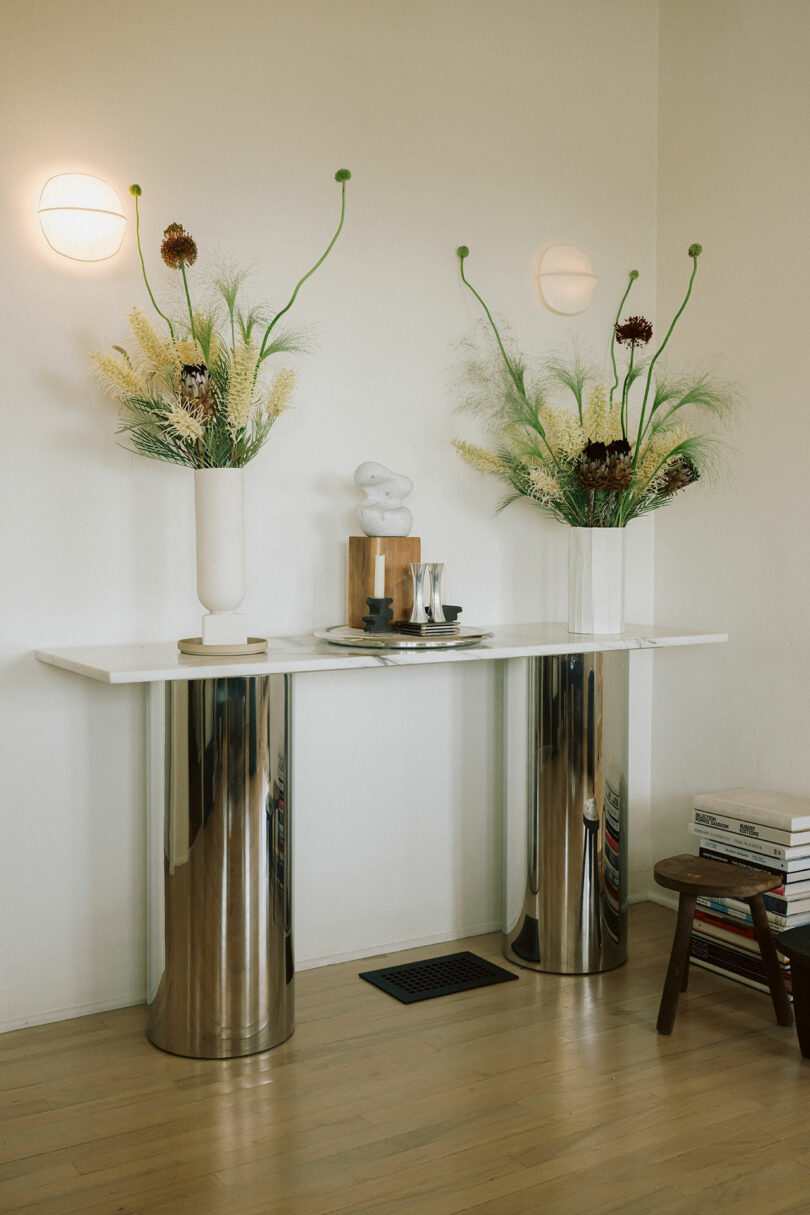
Threaded throughout the home are chrome surfaces—seen in planters, furniture legs, and lighting fixtures—which serve to catch the natural light that pours in through the bungalow’s original window configurations. These reflective elements create a sense of continuity between the disparate rooms, linking the living spaces through a shared material language of industrial gloss.
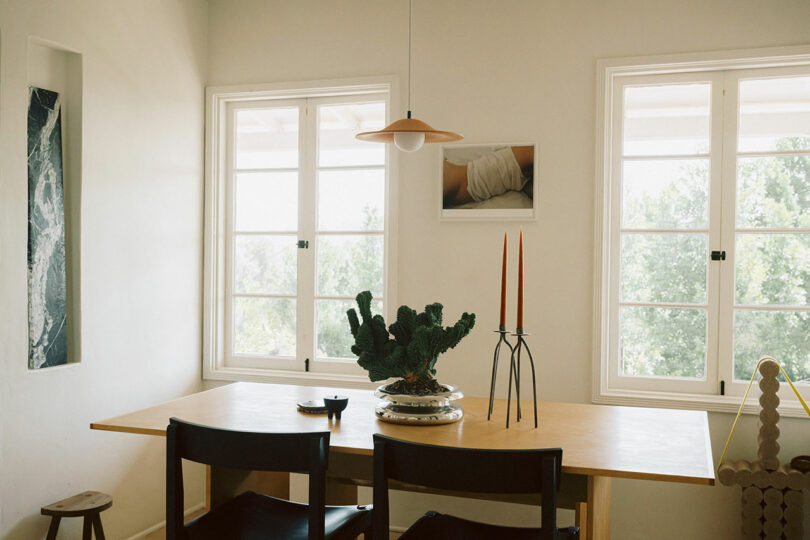
The furniture selection represents a "who’s who" of 20th-century design history, yet it is arranged in a way that feels lived-in rather than institutional. Pieces by Eileen Gray and Charlotte Perriand sit alongside an Isamu Noguchi Akari lamp and a Poul Kjærholm PK22 lounge chair. By mixing these canonical mid-century pieces with contemporary artworks from emerging artists and personal artifacts, the design dissolves the traditional hierarchy between "collectible design" and domestic comfort.
The Chronology of Intervention: Kitchen and Bathroom Recovery
The renovation’s most significant interventions occurred in the functional spaces of the home, where the design team had to reconcile previous, poorly executed updates with the home’s original character.
The Kitchen: Subtle Modernization
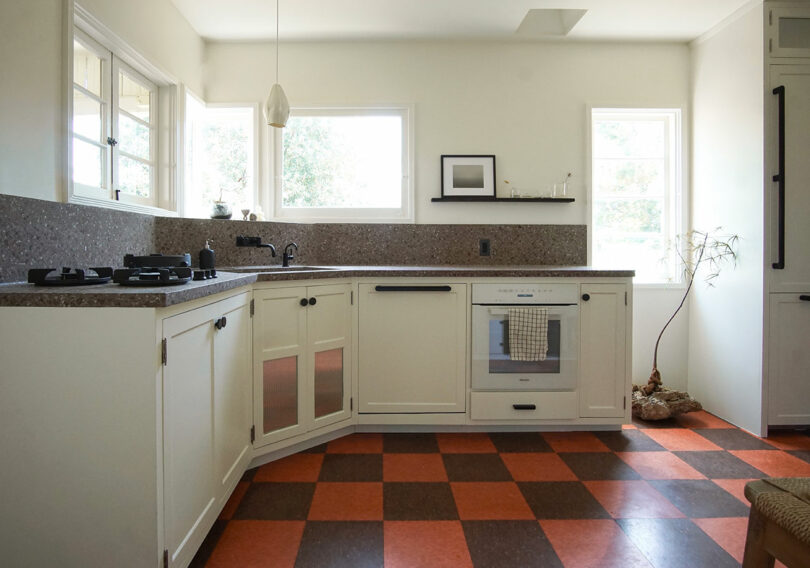
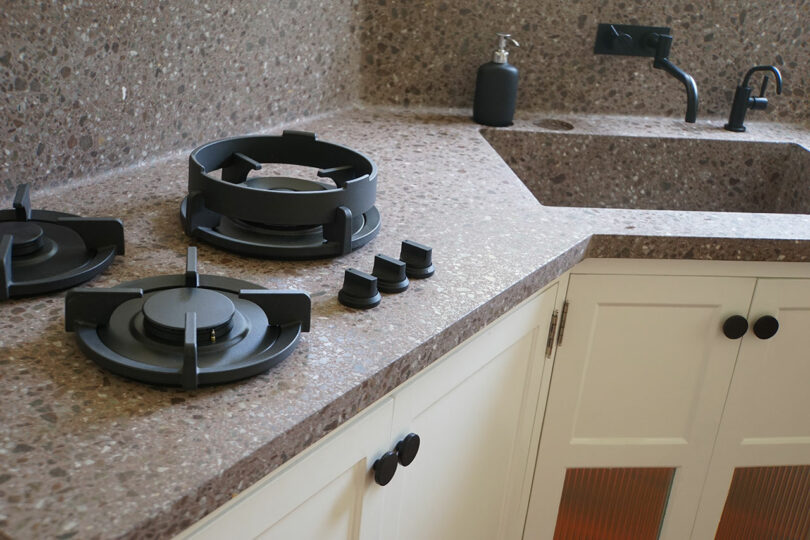
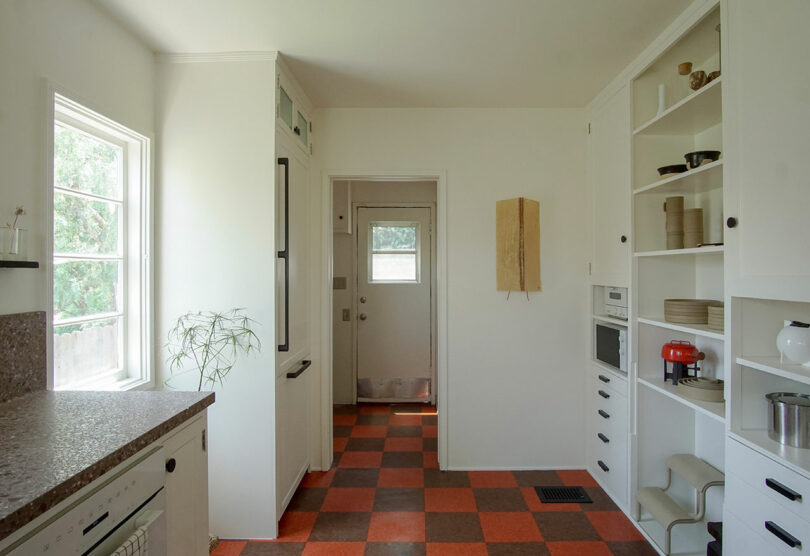
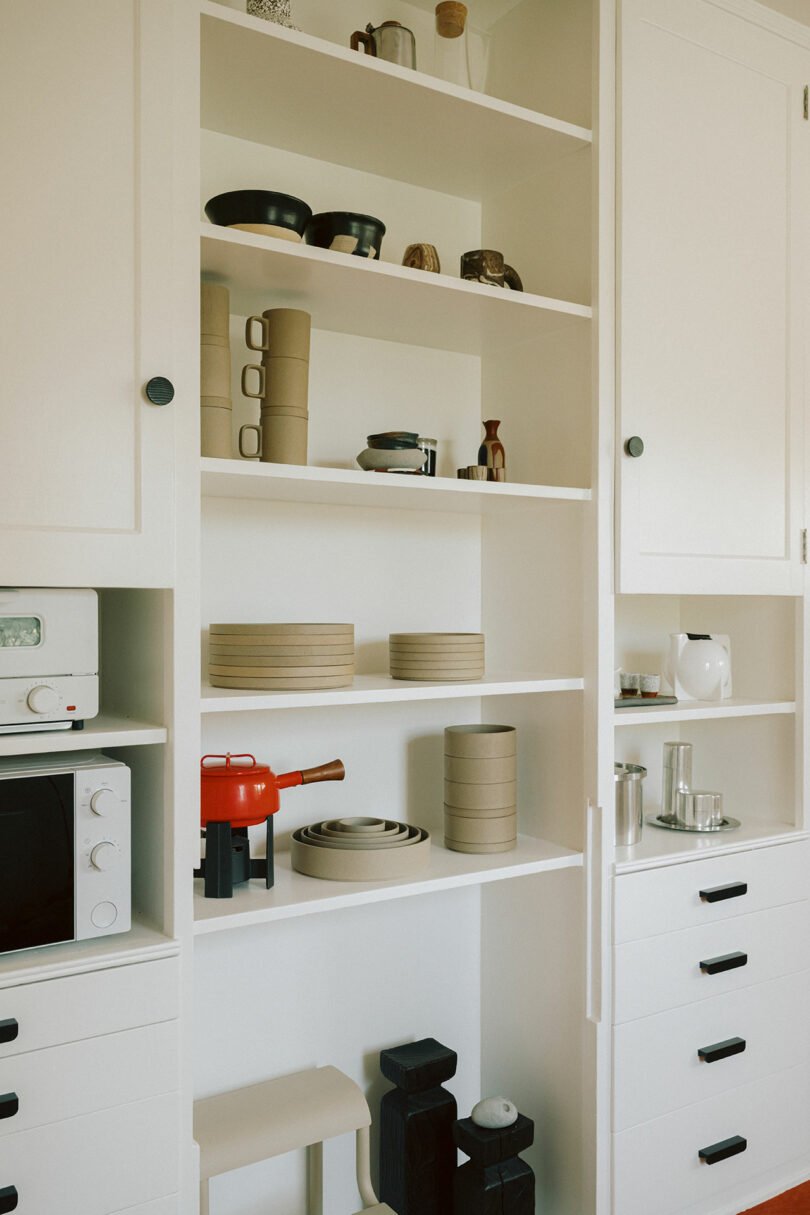
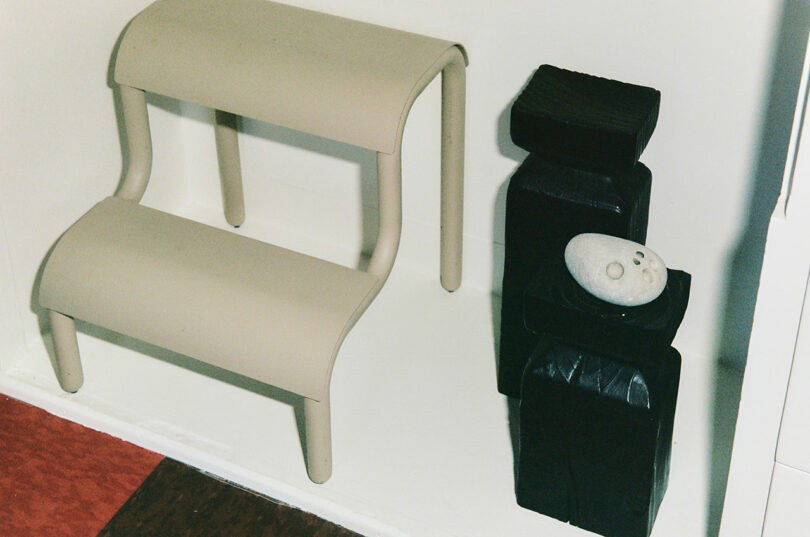
In the kitchen, New Operations Workshop opted for a strategy of restraint that nods to the home’s 1940s roots. While many modern renovations favor heavy contrast or dark cabinetry, Yuri chose all-white millwork to maintain a sense of airy openness. However, the design avoids blandness through the use of hardware and flooring. Blackened wood handles and matte black fixtures introduce a subtle tension, while a checkered floor in shades of orange and brown provides a rhythmic, vintage-inspired foundation that complements the warmth of the living room’s palette.
The Bathroom: From Atrocity to Art
The bathroom renovation was perhaps the most challenging aspect of the project. Yuri described the previous state of the room as an "atrocious" 1990s-era remodel that had stripped the space of its character. During the demolition phase, the team discovered the only surviving element of merit: a glass block wall.
Rather than replacing the glass block—a material often associated with 1980s and 90s commercial architecture—the design team chose to celebrate it. The new bathroom was built around this feature, pairing it with clean white tiling, chrome fixtures, and plywood accents. The most distinctive addition is a yellow latex sink skirt, a gesture that Yuri describes as introducing a note of humor and irreverence. This choice exemplifies the project’s broader goal: to create a space that feels personal and unpretentious, even as it adheres to high design standards.
Supporting Data and Market Trends
The Silver Lake bungalow renovation reflects broader shifts in the Los Angeles real estate and design markets. According to data from the Los Angeles Department of City Planning, there has been a 15% increase in "rehabilitation and adaptive reuse" permits for small residential structures in the Silver Lake-Echo Park district over the last five years. This suggests a growing preference among homeowners to preserve the character of historic neighborhoods rather than opting for "mansionization"—the practice of replacing modest homes with oversized, lot-filling modern structures.
Furthermore, interior design trends in 2024 and 2025 have shown a marked move away from "Millennial Gray" and extreme minimalism. A recent report by the International Interior Design Association (IIDA) highlights "Curated Eclecticism" as a top-tier trend, with consumers increasingly seeking homes that reflect individual identity and history through the display of collected objects and bold color choices. The Silver Lake bungalow is a textbook example of this shift, demonstrating how a small footprint can be maximized through thoughtful curation rather than physical expansion.
Broader Implications for Modern Living
The success of the Silver Lake sanctuary lies in its ability to balance relaxation with refinement. It serves as a reminder that a "creative" interior does not need to be a blank canvas or a perfectly resolved, static composition. Instead, it can be a dynamic archive—a living record of the owner’s influences, relationships, and aesthetic evolution.
For the design industry, the project reframes the conversation around small-space living. In a city like Los Angeles, where housing density is a constant point of contention, the renovation of a 1,000-square-foot bungalow proves that quality of space and richness of detail are more valuable than raw square footage. Gabriel Yuri’s work suggests that by leaning into the history of a site and allowing for a certain amount of "aesthetic friction," designers can create homes that feel both timeless and profoundly contemporary.
As Silver Lake continues to gentrify and evolve, projects like this bungalow serve as essential anchors to the neighborhood’s past. They preserve the architectural scale that made the area desirable in the first place while proving that the "tyranny of white" is not the only path to a modern, sophisticated home. By embracing color, texture, and the beauty of the "things" we collect, New Operations Workshop has created a space where history and design are allowed to breathe together.