Delfyd Farm: A Masterclass in Contextual Architecture and Sustainable Heritage Preservation in the Gower Peninsula

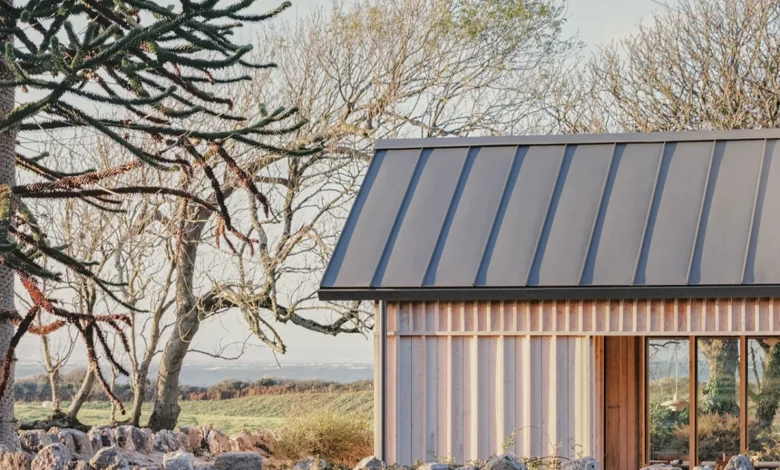
Situated within the ruggedly beautiful landscape of the Gower Peninsula in South Wales, Delfyd Farm stands as a sophisticated testament to the enduring relationship between human habitation, agricultural heritage, and the natural environment. Designed by the UK-based architectural practice Rural Office, the project represents a meticulous renovation and extension of a late-Victorian farmhouse, successfully balancing the preservation of 19th-century stonework with the demands of 21st-century thermal efficiency and modern aesthetic sensibilities. The Gower Peninsula, recognized in 1956 as the United Kingdom’s first Area of Outstanding Natural Beauty (AONB), provides a challenging yet inspiring backdrop for this architectural intervention, which has recently garnered significant acclaim within the British architectural community, including multiple 2025 RSAW Welsh Architecture Awards.
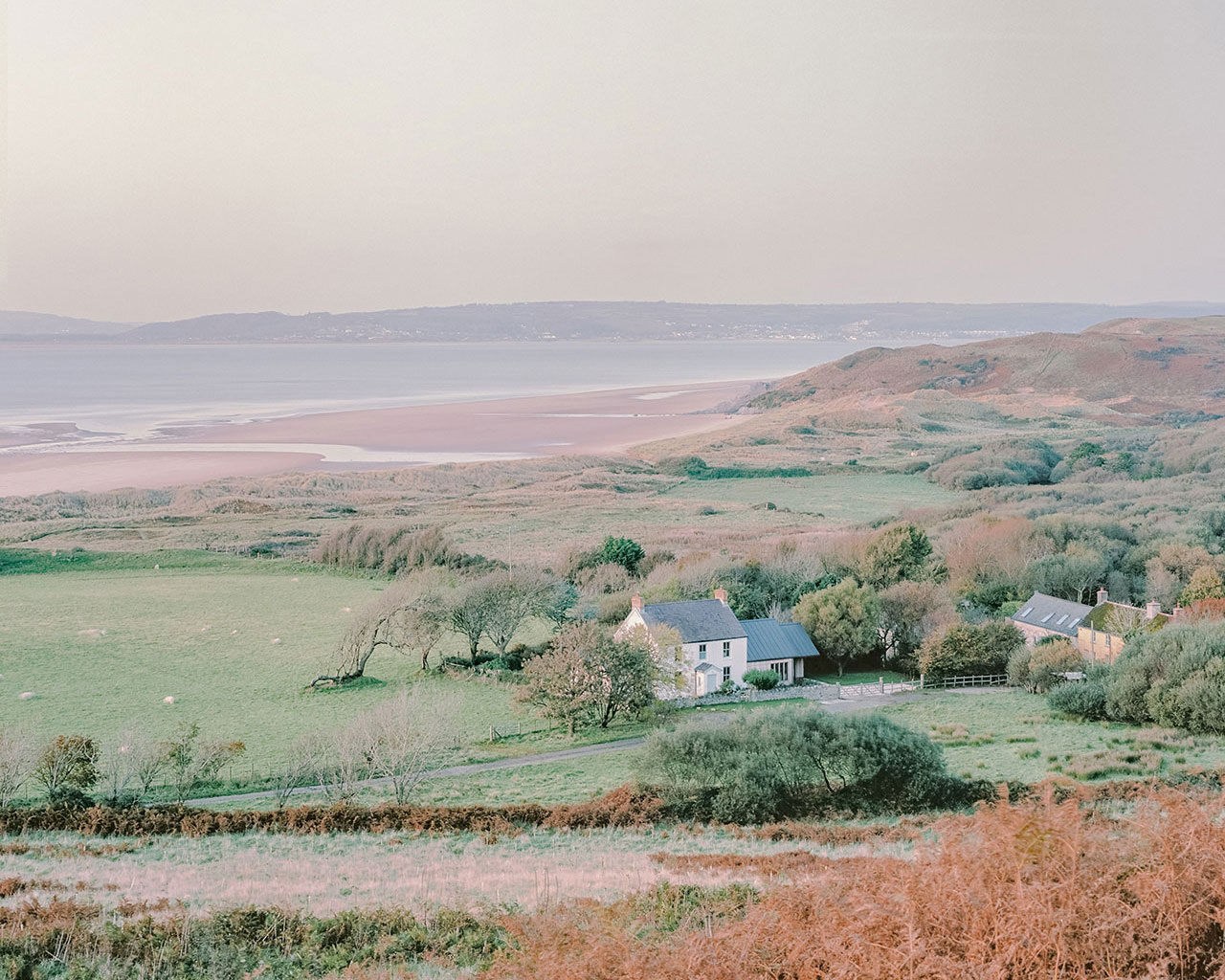
Historical Context and the Evolution of Delfyd Farm
The narrative of Delfyd Farm begins in 1895, a period when the Gower Peninsula was defined primarily by its agricultural industry and the resilient communities that managed the land. The original structure was a modest, rectangular farmhouse constructed from traditional Gower stone, a material known for its durability and its ability to withstand the fierce Atlantic weather systems that frequently sweep across the Welsh coast. For over a century, the building served as a functional hub for the surrounding farmland, characterized by a simple floor plan and a protective porch designed to mitigate the impact of the elements.
As the agricultural requirements of the region shifted over the decades, many such farmsteads faced the risk of falling into disrepair or undergoing unsympathetic modernizations. However, the intervention by Rural Office sought a different path: one of "critical regionalism." This approach prioritizes the specific geographical and cultural context of a site, ensuring that new additions do not merely mimic the past but rather engage in a constructive dialogue with it. The transformation of Delfyd Farm involved the retention of the original 1895 stone core, which now serves as the anchor for a series of contemporary wings that expand the living space while honoring the scale and materiality of the historic site.

Architectural Design and Materiality
The architectural strategy employed by Rural Office centered on the creation of four distinct volumes organized into two new wings. These additions are clad in vertical larch beaded cladding, a choice that provides a striking yet harmonious contrast to the original Gower stone. Larch is prized in rural British architecture for its longevity and its tendency to weather into a silver-grey hue over time, eventually mirroring the tones of the surrounding stone walls and the often-overcast Welsh sky.
The integration of old and new is further unified through the careful calibration of light and scale. The main south-facing facade retains its Georgian sash windows, which dictated the proportions of the new builds. By echoing these traditional apertures, the architects ensured that the extensions felt like a natural evolution of the house rather than an alien imposition. Inside, the design shifts toward a minimalist, airy atmosphere. Lofty ceilings create a sense of generosity and openness, a deliberate departure from the traditionally cramped and dark interiors of 19th-century rural dwellings.

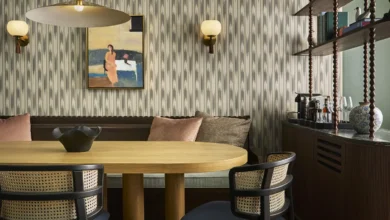
The interior palette is defined by blonde wood paneling and vertical mullions, which introduce a rhythmic visual lightness. This "blonde" aesthetic is grounded by red tile flooring, a choice that is as practical as it is aesthetic. In a working farm environment—where residents may frequently move between the muddy outdoors and the interior—the tile provides a durable, easy-to-clean surface that also serves a critical role in the home’s thermal management.
Technical Specifications and Environmental Performance
In an era of increasing climate volatility, the environmental performance of rural renovations has become a primary concern for architects and homeowners alike. Rural Office prioritized thermal efficiency at Delfyd Farm, recognizing that the "breezy" and "light" interiors desired by the clients had to remain viable through the harsh Welsh winters.

The project utilizes a north-south orientation to maximize solar gain during the colder months. To prevent the common pitfall of overheating during the summer, the architects integrated passive cooling features, including vertical louvres and deep window reveals. These elements allow the low-angled winter sun to penetrate deep into the living spaces while shading the glass from the high-angled summer sun.
Supporting Data and Technical Highlights:

- Orientation: Optimized north-south axis for passive solar heating.
- Thermal Mass: High-density red tile floors act as a thermal heat sink, stabilizing internal temperatures.
- Glazing: High-performance units integrated into both traditional sash frames and modern sliding systems.
- Cladding: Sustainably sourced vertical larch, providing a breathable rainscreen.
- Sustainability Goal: Reduction of operational carbon through improved insulation envelopes and passive ventilation.
The success of these measures demonstrates that historic preservation and high-performance sustainable design are not mutually exclusive, but can instead be synthesized to create a home that is both comfortable and ecologically responsible.
Recognition and Industry Impact
The architectural community has responded with high praise for Delfyd Farm, citing its sensitivity to context and its technical execution. The project has secured a prestigious sweep of accolades, reflecting its status as a benchmark for contemporary rural design in Wales.

In 2025, the Royal Society of Architects in Wales (RSAW) honored the project with the Welsh Architecture Award and the Welsh Architecture Small Project of the Year. These awards are particularly significant as they recognize projects that contribute to the "cultural and environmental wealth of Wales." Furthermore, Delfyd Farm has been shortlisted for the Architects’ Journal (AJ) Award for Projects Under £500,000. This shortlisting highlights the project’s ability to deliver exceptional design quality and architectural innovation within a relatively modest budget, a feat that is increasingly difficult in a period of rising construction costs.
Industry analysts suggest that the success of Delfyd Farm lies in its "quiet" architecture. Rather than seeking to make a loud, ego-driven statement, Rural Office has produced a work that feels as though it has always belonged to the Gower landscape. This "knowing" approach—built on observation, a sharp eye for detail, and a willingness to listen to the site—has positioned Rural Office as leading figures in the regionalist movement.

Broader Implications for Rural Architecture and Heritage
The Delfyd Farm project arrives at a critical juncture for rural development in the United Kingdom. As urban flight continues to drive demand for homes in protected areas like AONBs, the pressure on local planning authorities and architects to balance growth with conservation has never been higher.
The Gower Peninsula, with its strict "Area of Outstanding Natural Beauty" status, requires a level of design scrutiny that often discourages innovation in favor of safe, conservative replication. Delfyd Farm provides a counter-narrative, suggesting that modernism can be a tool for conservation. By utilizing contemporary forms and sustainable technologies, Rural Office has extended the life of the 1895 structure, ensuring it remains a functional residence for another century rather than becoming a museum piece or a derelict ruin.

Furthermore, the project emphasizes the importance of the "humble flock"—the sheep and the agricultural industry—as a foundational element of the landscape. The design does not seek to hide the farm’s identity; instead, it incorporates elements like the durable flooring and the framing of the countryside to celebrate the industry that built the Gower. This holistic view of architecture—as something that encompasses community, industry, and landscape—is a hallmark of the Rural Office philosophy.
Conclusion: A Blueprint for the Future
Delfyd Farm stands as a definitive example of how small-scale residential architecture can have a large-scale impact on the discourse of heritage and sustainability. Through the use of traditional materials like Gower stone and larch, combined with modern passive solar strategies and an acute sensitivity to the Welsh vernacular, Rural Office has created a space that reflects the soul of its location.

As the project continues to receive accolades and serve as a case study for architects working in sensitive landscapes, its legacy will likely be defined by its balance. It is a house that is both old and new, light and warm, functional and poetic. In the windswept hills of the Gower Peninsula, Delfyd Farm remains a steadfast observer of the landscape, framing the countryside in stunning compositions and providing a sustainable sanctuary for its inhabitants. The project confirms that when architects work with a deep understanding of place, the result is not just a building, but a continuation of the cultural fabric of the land itself.