Court of International Trade Strikes Down Latest Trump Tariffs, Citing Overreach of Executive Authority Under Section 122 of the Trade Act of 1974.

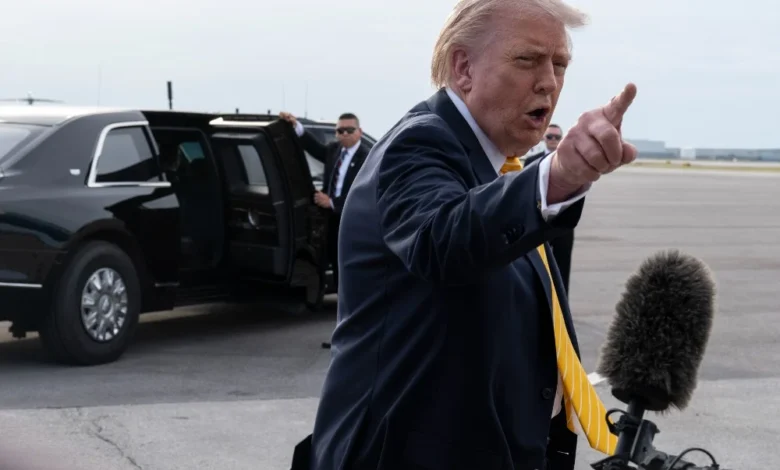
The Court of International Trade (CIT) has delivered a significant legal blow to the trade policy of former President Donald Trump, ruling that the 10 percent tariffs he imposed earlier this year under Section 122 of the Trade Act of 1974 are unlawful. This decision marks another instance where the judiciary has curtailed the executive branch’s expansive use of trade measures, reinforcing the principle that presidential authority, while broad, is not without statutory limits. The ruling, handed down by a three-judge panel with a 2-1 majority, sided with small businesses that argued the administration’s justification for the duties did not align with the specific circumstances outlined in the law.
A Chronology of Challenged Trade Measures
This recent ruling follows a series of legal challenges to the Trump administration’s tariff initiatives. The administration, during its term, frequently employed tariffs as a tool to address perceived trade imbalances and unfair practices by global partners, often invoking various statutory provisions.
The immediate precursor to this CIT decision was a Supreme Court ruling that struck down duties imposed under the International Emergency Economic Powers Act (IEEPA). Days after that significant setback, on February 24, President Trump pivoted, levying the 10 percent tariffs in question under Section 122 of the Trade Act of 1974. The administration’s rationale for these new duties was that America’s substantial trade imbalance with its global partners amounted to a "balance-of-payments issue," a condition that Section 122 is designed to address. This swift re-imposition of tariffs demonstrated the administration’s unwavering commitment to its "America First" trade agenda, even in the face of judicial scrutiny.
However, this new legal ground proved equally contentious. The lawsuit, Burlap and Barrel, Inc. v. Trump, was filed collectively by Burlap and Barrel, a New York-based spice importer, and Basic Fun!, a Florida-based toy company. These small businesses, like many others, found themselves directly impacted by the additional costs and uncertainties introduced by the tariffs. Oral arguments in the case were presented on April 10, setting the stage for the CIT’s careful deliberation on the scope of presidential trade authority.
The Legal Distinction: Trade Deficit vs. Balance of Payments
At the heart of the CIT’s ruling lies a critical legal distinction between a "trade deficit" and a "balance-of-payments deficit." The Liberty Justice Center, representing the plaintiffs, successfully argued that while Section 122 of the Trade Act of 1974 indeed authorizes the President to impose tariffs, this power is strictly confined to specific circumstances not met in this instance.
Jeffrey Schwab, senior counsel and director of litigation at the Liberty Justice Center, articulated the core of their argument: "Congress authorized the President to impose tariffs where the United States experienced fundamental international payments problems and needed to respond to large and serious balance-of-payments deficits." He emphasized, "That is not the situation here. The United States has a trade deficit, not a balance-of-payments deficit, and does not have international payments problems. The President cannot impose these tariffs under Section 122."
To understand this distinction, it’s essential to define the terms:
- Trade Deficit: This occurs when a country imports more goods and services than it exports. It is a component of the broader balance of payments. For instance, in 2023, the U.S. goods and services deficit was $994.5 billion, reflecting a persistent imbalance in the exchange of physical products and services with other nations.
- Balance of Payments (BOP): This is a comprehensive record of all economic transactions between residents of a country and the rest of the world over a specific period. It includes not only the trade balance (current account) but also capital account transactions (investments, loans, transfers of capital). A "balance-of-payments deficit" typically refers to a situation where a country is unable to finance its international transactions, often leading to a depletion of foreign exchange reserves, currency instability, and a potential inability to meet its international financial obligations. Such crises are rare for major economies like the U.S., which benefits from the dollar’s status as the world’s primary reserve currency and deep capital markets.
The CIT’s majority opinion effectively agreed with the plaintiffs’ interpretation, concluding that the substantial trade deficit experienced by the U.S., while a concern for the administration, did not constitute the "fundamental international payments problems" or "large and serious balance-of-payments deficits" that Section 122 was specifically enacted to address. This ruling underscores that the executive branch must adhere to the precise legislative intent when exercising delegated powers, rather than broadly interpreting statutes to fit policy objectives.
The Economic Burden on Small Businesses
The plaintiffs in Burlap and Barrel, Inc. v. Trump were representative of thousands of small and medium-sized enterprises (SMEs) across the United States that bear a disproportionate share of the burden imposed by tariffs. These businesses often lack the extensive legal and financial resources of larger corporations to absorb increased costs or navigate complex international trade regulations.
Ethan Frisch and Ori Zohar, co-CEOs of Burlap and Barrel, hailed the ruling as a "major victory for small businesses" that depend on "fair and predictable trade policy" to thrive. They elaborated on the tangible impact, stating, "These tariffs created real challenges for our company and for the farmers we partner with around the world." For a spice importer, even a 10 percent tariff can significantly inflate the cost of goods, squeezing profit margins or forcing price increases that could deter consumers. This, in turn, can negatively impact the livelihoods of international farmers who rely on stable export markets.
Similarly, Jay Foreman, CEO of Basic Fun!, emphasized the broader implications for American companies. "This decision is an important win for American companies that rely on global manufacturing to deliver safe and affordable products. Unlawful tariffs make it harder for businesses like ours to compete and grow," Foreman stated. He added, "We are encouraged by the court’s recognition that these tariffs exceeded the President’s authority. This ruling brings needed clarity and stability for companies navigating global supply chains." Toy companies, like many consumer goods manufacturers, rely heavily on intricate global supply chains to produce items efficiently and affordably. Tariffs disrupt these established networks, leading to higher production costs, which are often passed on to consumers in the form of higher prices, or absorbed by businesses, impacting their investment capacity and growth.
Data from organizations like the National Retail Federation and the American Action Forum have consistently shown that tariffs, particularly those on consumer goods, largely translate into higher costs for American consumers and businesses, rather than being borne by foreign producers. Studies during the Trump administration’s various tariff regimes estimated that American households faced hundreds of dollars in increased annual costs due to tariffs on goods from countries like China. Small businesses, in particular, often struggle to find alternative suppliers quickly or absorb the additional duties, putting them at a competitive disadvantage.
Broader Economic and Political Implications
The CIT’s decision has several significant implications. First, it reinforces the judiciary’s role as a check on executive power, particularly in the realm of trade policy. By consistently scrutinizing the statutory basis for tariff actions, courts ensure that presidents operate within the bounds set by Congress. This is crucial for maintaining the balance of power and predictability in trade relations.
Second, the ruling offers a degree of relief and certainty to businesses that have been grappling with fluctuating trade policies and unexpected costs. The removal of these specific tariffs, while perhaps temporary, provides a window for companies to adjust their supply chains and pricing strategies without the immediate burden of the 10 percent duty.
From a political standpoint, the decision underscores the challenges faced by administrations that seek to implement aggressive trade protectionist policies without clear and explicit congressional authorization. It highlights the inherent tension between a president’s desire for swift action on trade and the legislative framework designed to govern such interventions.
The Administration’s Response and Future Strategies: The Pivot to Section 301
While the immediate tariffs under Section 122 have been struck down, the battle over duties is far from over for American businesses. The Trump administration, anticipating the July 26 expiration of the Section 122 tariffs, had already begun exploring alternative legal avenues to continue its trade agenda. This proactive shift demonstrates the administration’s determination to maintain leverage in its trade negotiations and address what it viewed as persistent issues in global commerce.
The administration has now turned its attention to Section 301 of the Trade Act of 1974, a provision historically used to combat "unfair trade practices" by foreign governments. Unlike Section 122, which focuses on balance-of-payments issues, Section 301 grants the U.S. Trade Representative (USTR) broad authority to investigate and retaliate against foreign trade practices deemed unjustifiable, unreasonable, or discriminatory, and which burden or restrict U.S. commerce.
The USTR, at the administration’s behest, has launched two expedited investigations under Section 301: one into "forced labor" practices in certain U.S. trading partners and another into "industrial excess capacity" in various sectors globally. These investigations encompass dozens of U.S. trading partners, signaling a potentially far broader application of tariffs than those previously imposed.
The potential tariffs resulting from these Section 301 investigations could be "hefty," possibly well exceeding the 10 percent imposed under Section 122. Hearings with stakeholders impacted by these probes have already been conducted by the USTR in recent weeks, allowing businesses, trade associations, and other interested parties to present their cases and concerns. The outcome of these investigations and any subsequent tariff impositions will be closely watched by the global business community, as they could significantly reshape international supply chains and trade flows.
Expert Analysis and Industry Outlook
Economists and trade policy experts generally view tariffs as a double-edged sword. While proponents argue they can protect domestic industries and create leverage in trade negotiations, critics often point to their regressive nature, increased costs for consumers, and potential for retaliatory measures from trading partners. Dr. Mary Lovely, a senior fellow at the Peterson Institute for International Economics, has frequently highlighted how tariffs primarily act as a tax on domestic consumers and importing businesses, rather than being paid by the exporting country.
Industry groups, such as the National Foreign Trade Council and various manufacturing associations, have consistently advocated for stable, predictable trade policies based on established rules. They argue that frequent shifts in tariff regimes create uncertainty, deter investment, and complicate long-term business planning. The current ruling, while offering temporary relief from one set of tariffs, is immediately followed by the looming threat of others under Section 301, maintaining a climate of apprehension.
Legal scholars specializing in international trade law emphasize the importance of these judicial reviews. They serve to clarify the boundaries of executive authority and ensure that trade actions are not arbitrary but are grounded in specific legislative mandates. The consistent judicial pushback against overly broad interpretations of presidential trade powers sends a clear message about the need for careful adherence to statutory language.
In conclusion, the Court of International Trade’s decision to strike down the latest round of Trump-era tariffs under Section 122 is a pivotal moment in the ongoing debate over executive power in trade policy. It provides a measure of relief for small businesses and reinforces the judiciary’s critical oversight role. However, the administration’s swift pivot to Section 301 investigations signals that the landscape of U.S. trade policy remains volatile, with the potential for new and even more substantial tariffs on the horizon. Businesses must continue to navigate a complex and uncertain global trade environment, closely monitoring legislative developments and judicial rulings that will undoubtedly shape their future operations.