Harlem’s Fashion Row Navigates Economic Headwinds to Champion Inclusive, Evolving Sustainability

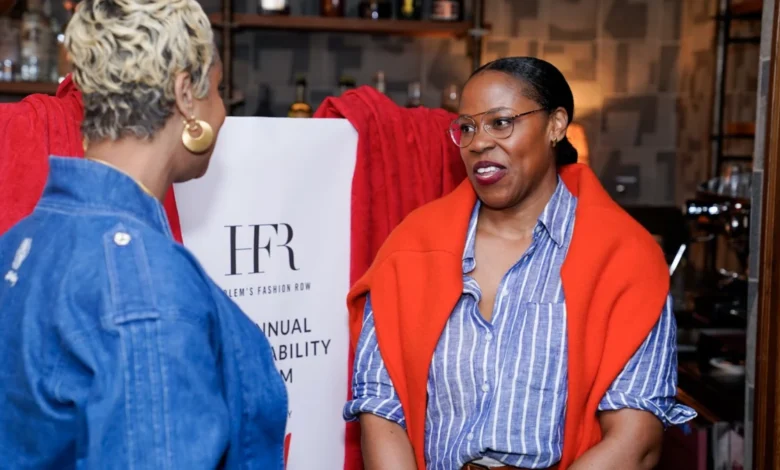
As global sustainability initiatives confront a landscape marked by economic pressures and intensified scrutiny, Harlem’s Fashion Row (HFR) opened its annual event with a discerning and pragmatic tone, emphasizing collective progress over unattainable perfection. Founded in 2007 by Brandice Daniel with the foundational mission to elevate and showcase designers of color, HFR has consistently carved a unique niche within the fashion industry, advocating for diversity and inclusion at every level. Its fifth annual Sustainability Forum, held on Earth Day in New York City in partnership with Swedish retail giant H&M, underscored a crucial shift in the sustainability dialogue: moving beyond rigid standards to embrace adaptable, actionable strategies rooted in diverse participation.
HFR’s Vision: Redefining Sustainability Through Inclusion
The forum’s opening remarks by Brandice Daniel, founder and CEO of HFR, immediately set the stage for a candid discussion. "This is not the most ideal time for us doing sustainability work," Daniel acknowledged, reflecting the widespread challenges businesses face in allocating resources to environmental initiatives amidst a fluctuating global economy. Despite these headwinds, she stressed the imperative to "recognize people who have intention to do this work," acknowledging that "not any of us are going to get it 100 percent right." This pragmatic approach, validating sincere effort over flawless execution, resonated deeply with attendees.
Daniel further elaborated on the critical role of representation in shaping the discourse around sustainability. "A lot of times in this space, not all voices are heard," she observed, highlighting a persistent systemic flaw within broader industry conversations. For HFR, inclusion is not merely an add-on but a fundamental component of how sustainability is defined, understood, and ultimately practiced. This framing permeated the subsequent discussions, positioning sustainability less as a fixed, prescriptive standard and more as an adaptive, evolving ecosystem. This encompasses a broad spectrum of considerations, from material choices and innovative business models to, increasingly, cultural inclusion and equitable access to resources and opportunities within the sustainable fashion movement.
HFR’s commitment to showcasing designers of color naturally extends to its sustainability focus, arguing that marginalized communities often bear the disproportionate brunt of environmental degradation and have unique, often overlooked, perspectives on sustainable practices. By integrating these voices, HFR aims to foster solutions that are not only environmentally sound but also socially just and economically viable for a wider array of stakeholders. This approach challenges the often homogenous narratives prevalent in mainstream sustainability dialogues, advocating for a truly global and equitable transition towards a circular economy.
H&M’s Strategic Partnership and Tangible Progress
H&M, a recurring and committed partner to the HFR Sustainability Forum, has consistently leveraged the platform to share its ongoing efforts and demonstrate its dedication to fostering a more sustainable and inclusive fashion future. Donna Dozier Gordon, Head of Inclusion & Diversity for H&M Americas, reflected on the longevity of the collaboration, stating, "It’s hard to believe that it’s been five years and we have been on this journey with you for four years." This enduring partnership signifies a mutual commitment to advancing both diversity and sustainability, recognizing their inherent interconnectedness.
For the multinational retailer, sustainability efforts are increasingly anchored in measurable outcomes and transparent reporting. H&M recently announced a significant 25 percent reduction in greenhouse gas (GHG) emissions across its extensive supply chain. This achievement brings the company closer to its ambitious target of a 30 percent reduction by 2030, a goal aligned with global climate targets and increasing regulatory pressure. These reductions are critical given the fashion industry’s substantial environmental footprint. According to the United Nations Environment Programme (UNEP), the fashion industry is responsible for 8-10% of global carbon emissions, more than all international flights and maritime shipping combined. A substantial portion of these emissions originates from the supply chain, particularly during raw material extraction, processing, and manufacturing.
Randi Marshall, Head of Sustainability and Public Affairs at H&M Americas, elaborated on the strategic focus of their efforts. "A lot of the work that we do is on the back end," Marshall explained, emphasizing the pivotal role of collaborating with suppliers. "Working with suppliers… That’s really where the big impacts are." This highlights a crucial understanding within large-scale retail: true sustainability transformation requires deep engagement across complex global supply chains, fostering innovation and improved practices from the ground up. This involves everything from promoting sustainable agricultural practices for natural fibers to investing in energy-efficient manufacturing processes and reducing waste generation at various production stages.
Marshall also underscored the burgeoning intersection between environmental targets and regulatory frameworks. Policy considerations, she noted, are increasingly shaping crucial business decisions concerning material sourcing, manufacturing processes, and overall compliance. As governments worldwide intensify their focus on environmental protection, companies like H&M must proactively adapt their strategies to meet evolving legal and ethical standards, demonstrating that sustainability is no longer merely a corporate social responsibility but a core business imperative influenced by external policy drivers.

The Resale Revolution: A Pillar of Circularity
A central and dynamic theme throughout the forum was the burgeoning role of resale as a key driver of circularity in fashion. H&M, recognizing this significant market shift, has strategically expanded its "pre-loved fashion" inventory through innovative in-store concepts. These initiatives include partnerships with local secondhand retailers, such as Awoke Vintage in New York and Wasteland in Los Angeles, to source and offer curated resale items. This model represents a departure from merely reselling its own previous collections, instead embracing a broader ecosystem of secondhand goods.
The rationale behind this expansion is multi-faceted. "We’re targeting the fashion-aspire customer," Marshall explained, identifying a demographic keen on style and uniqueness, often found outside traditional retail channels. This model provides shoppers with access to a wider array of brands and styles, fostering experimentation and individual expression while promoting a more sustainable consumption pattern. The shift also directly aligns with evolving consumer behaviors, particularly among younger generations. Marshall cited compelling data: approximately 65 percent of Gen Z consumers have purchased resale items in the past year. This statistic underscores a profound cultural shift, where secondhand is no longer stigmatized but embraced as a fashionable, economically sensible, and environmentally conscious choice. The continued growth in this category is undeniable, with market analyses projecting significant expansion for the global secondhand apparel market in the coming years, potentially reaching hundreds of billions of dollars.
Despite the immense potential, Marshall candidly acknowledged the operational complexities inherent in scaling resale within the existing framework of a traditional retail giant. "Getting the right products to the right person at the right time is completely different than it is for our regular assortment," she stated. The logistics of sourcing, authenticating, pricing, and distributing unique, pre-owned items present a distinct set of challenges compared to managing standardized new inventory. This requires sophisticated reverse logistics, quality control, and an adaptable supply chain infrastructure. Overcoming these operational hurdles is paramount for mainstream retailers aiming to integrate circular models effectively.
Looking ahead, Marshall pointed to the transformative impact of regulatory developments, particularly within the European Union. Upcoming eco-design requirements, for instance, are poised to establish stringent standards for materials, durability, and reparability of products. "If you do not meet the threshold, you cannot put it on shelves," she warned, highlighting the potential for these proposed regulations to dictate market access based on product criteria. Such policies aim to fundamentally reshape product design and manufacturing, incentivizing brands to create items that are inherently more sustainable, durable, and easily recyclable or reusable from the outset, thus mitigating waste and environmental impact across the product lifecycle.
Shifting Perceptions and the Future of Circularity
Beyond operational logistics, the forum also delved into the evolving perceptions of resale across diverse communities. Historically, secondhand clothing has carried stigmas in certain cultures, often associated with economic hardship or lack of hygiene. However, these perceptions are rapidly changing, driven by heightened environmental awareness, the influence of social media, and the rising cost of living. Marshall illustrated this shift with a personal anecdote: "I have a gold mine in my closet," she remarked, encapsulating the growing consumer recognition of the inherent value in existing garments. This mindset encourages reuse as a priority within broader sustainability frameworks.
In the context of waste hierarchy principles – a foundational concept in environmental management that prioritizes waste prevention, reuse, and recycling over disposal – Marshall unequivocally stated that the "highest and best use is reselling or reusing what you already have." This principle underscores the importance of extending the lifespan of products already in circulation, reducing the demand for new production, and minimizing the environmental burden associated with manufacturing new goods and managing waste. It’s a powerful argument for a systemic shift towards circularity.
As brands continue their journey to implement and scale circular initiatives, Marshall reiterated the significant difficulty of establishing robust secondhand sourcing and distribution networks. Achieving true sustainability, she emphasized, demands persistent effort, innovative thinking, and unwavering creativity in overcoming persistent operational barriers. The logistical challenges of collecting, cleaning, repairing, and redistributing used items at scale remain formidable. This complexity underscores the need for industry-wide collaboration, technological advancements in sorting and material identification, and consumer education to facilitate participation in circular systems.
Peering into the future, Marshall offered a prescient insight: "Sorting is going to be the next big thing." This statement highlights the critical role of advanced sorting technologies in enabling effective textile recycling and reuse. The ability to efficiently and accurately sort garments by material composition, fiber type, and even color is essential for unlocking the full potential of textile-to-textile recycling. Currently, mixed-fiber garments and the sheer volume of discarded textiles pose significant challenges for recycling infrastructure. Innovations in automated sorting, powered by AI and advanced sensors, promise to revolutionize this bottleneck, making large-scale textile circularity a more tangible reality and paving the way for a truly sustainable fashion industry.
The Harlem’s Fashion Row Sustainability Forum served as a vital platform for frank discussion and strategic envisioning. In a challenging economic climate, HFR’s commitment to inclusive, actionable, and evolving sustainability, supported by partners like H&M, offers a hopeful and realistic pathway forward for an industry grappling with its environmental and social responsibilities. By championing diverse voices, embracing measurable progress, and innovating in areas like resale and regulatory adaptation, HFR continues to lead the charge towards a fashion future that is not only sustainable but also equitable and resilient.