Port of Virginia Completes Harbor Deepening Project for Ultra-Large Container Ships

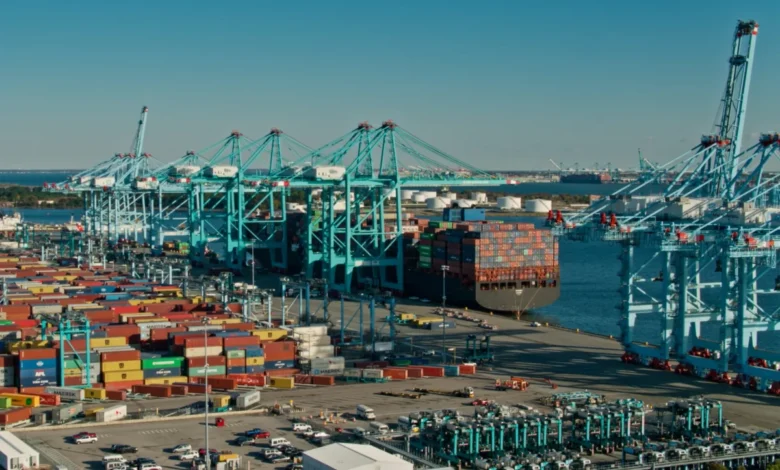
This monumental project culminates years of planning and execution, cementing Virginia’s strategic position in global maritime trade. The dredging, which wrapped up its primary phase in February, added five crucial feet of depth to the Thimble Shoal Channel, bringing its total navigable depth to an unprecedented 55 feet. In the subsequent months, the meticulous efforts of the U.S. Army Corps of Engineers focused on ongoing maintenance and clean-up, ensuring the project’s full operational readiness. Crucially, by February 2024, the channel had also been widened to facilitate the safe, two-way transit of container ships capable of carrying more than 16,000 20-foot equivalent units (TEUs), a capability that dramatically improves operational efficiency and reduces transit times for the world’s largest vessels. This new depth notably surpasses the Port of Charleston’s 52-foot harbor, a project completed in 2022, marking a significant shift in the competitive landscape of East Coast ports.
A New Era for East Coast Shipping: The 55-Foot Channel
The achievement of a 55-foot depth for the Thimble Shoal Channel represents a pivotal moment for maritime logistics on the Atlantic seaboard. This depth is not merely an incremental improvement; it is a strategic imperative in an era dominated by mega-ships. Modern ultra-large container vessels (ULCVs), often exceeding 1,300 feet in length and 160 feet in beam, are designed to maximize economies of scale, carrying upwards of 18,000 or even 24,000 TEUs. These behemoths require deep drafts, typically ranging from 45 to 50 feet when fully loaded, to operate safely and efficiently. A 55-foot channel provides an ample under-keel clearance, allowing these vessels to enter and depart the port regardless of tidal conditions and with full loads, which was previously a significant operational constraint for many ports.
The ability to handle these ULCVs without tidal restrictions translates directly into enhanced schedule reliability for ocean carriers, a critical factor in today’s intricate global supply chains. Furthermore, the channel’s expanded width, now capable of accommodating two-way traffic for ships exceeding 16,000 TEUs, significantly reduces congestion and transit delays. This dual capability allows for smoother traffic flow, optimizing port operations and minimizing waiting times for vessels entering and exiting the Norfolk Harbor, which connects the Atlantic Ocean to the Chesapeake Bay. This combination of depth and width is a powerful draw for shipping lines, offering a competitive advantage that few other East Coast ports can currently match.
A Decades-Long Vision: Project Genesis and Execution
The journey to achieve this historic depth was a long and complex undertaking, rooted in a foresightful understanding of global shipping trends. The project, officially known as the "Norfolk Harbor Widening and Deepening Project," was initially conceived more than a decade ago as a necessary adaptation to the increasing size of container ships. The total investment of $450 million was a collaborative effort, primarily funded through a combination of federal appropriations, state contributions from the Commonwealth of Virginia, and direct investments by the Virginia Port Authority. This multi-source funding mechanism underscored the project’s broad strategic importance, recognized at both federal and state levels.
The U.S. Army Corps of Engineers, Norfolk District, played a central role in the project’s planning, design, and oversight. Their expertise was crucial in navigating the intricate technical and environmental challenges inherent in such a massive dredging operation. Dredging involves the removal of sediment and debris from the seabed, a process that requires specialized equipment such as cutter suction dredges and hopper dredges. Contractors mobilized significant fleets of these vessels, working systematically to deepen the designated sections of the Thimble Shoal Channel and the Norfolk Harbor. Throughout the construction phase, rigorous environmental protocols were observed to minimize ecological impact. This included careful management of dredged material, with much of it repurposed for beneficial uses such as habitat restoration or beach nourishment, rather than simply being discarded. The project officially broke ground in late 2019, with various phases tackling different sections of the channel. The primary dredging of the main channel was largely completed by February, with the subsequent months dedicated to final surveys, environmental remediation, and the removal of temporary navigational aids, culminating in the official inauguration.
Official Acclaim: Inauguration and Leadership Perspectives
The significance of this infrastructure milestone was underscored by a grand inauguration ceremony held at Norfolk International Terminals, attended by over 200 distinguished guests, including state and local leaders, industry stakeholders, and community representatives. Virginia Governor Abigail Spanberger delivered a keynote address, articulating the profound implications of the deepened channel for the state’s economy and global competitiveness.
"The largest cargo ships in the Atlantic trade, and the next generation coming behind them, they can now safely transit this harbor with a full load," Governor Spanberger stated emphatically during the event. She further highlighted the dual advantage, adding, "And because we widened the channel, they can do it two at a time." This ability to handle fully laden mega-ships simultaneously is a game-changer for trade efficiency. Governor Spanberger also emphasized the broader economic ripple effects, noting that the project empowers ocean carriers to export more agricultural and forestry products from Virginia, thereby reducing shipping costs for producers and bolstering their competitiveness in international markets. She also pointed to the project’s potential to attract new manufacturing industries to the Commonwealth. "When manufacturers are deciding where to relocate, they will have the peace-of-mind knowing that their goods can be moved reliably and efficiently," she affirmed, linking the port’s capabilities directly to business investment and job creation.
Sarah McCoy, CEO and Executive Director of the Virginia Port Authority, echoed the sentiment of strategic foresight. "Delivering projects like the 55-foot channel are important today, but the real value of what we are doing is how it positions us for the future," McCoy stated. Her remarks underscored the long-term vision guiding the port’s investments. "With all of our foundational elements in place, we are assuring our customers and port users that they will be able to expand their operations and cargo volumes at The Port of Virginia without concern for outgrowing our capabilities. We’re prepared today for the demands of decades to come." This unwavering commitment to future-proofing the port’s infrastructure is a powerful message to ocean carriers and shippers seeking stable, high-capacity gateways. Industry analysts also noted that such robust infrastructure investments provide a strong signal of reliability and efficiency, crucial factors for supply chain managers making long-term routing decisions in an increasingly volatile global trade environment.
Redrawing the Maritime Map: Competitive Edge on the East Coast
The Port of Virginia’s new 55-foot depth fundamentally alters the competitive dynamics among East Coast ports. Prior to this, the Port of Charleston’s 52-foot harbor, completed in 2022 after a $573 million federal-state project, held the distinction of being the deepest. While Charleston’s achievement was significant, Virginia’s new benchmark creates a new top tier, offering an even greater margin of safety and flexibility for the largest vessels. This competitive differentiation is vital as ocean carriers increasingly consolidate cargo onto fewer, larger ships to achieve economies of scale and reduce fuel consumption.
The race for depth is a recurring theme among major global ports, particularly on the U.S. East Coast, where the expansion of the Panama Canal in 2016 allowed larger vessels to access the Atlantic. Ports like New York/New Jersey, Savannah, and Baltimore have all undertaken or are planning significant dredging and infrastructure upgrades. For instance, the Port of Baltimore, despite recent challenges following the Francis Scott Key Bridge collapse, is a key player with ongoing infrastructure development, including Mediterranean Shipping Company’s (MSC) plans for a new container terminal capable of handling two ultra-large vessels simultaneously. New York/New Jersey has completed major channel deepening projects to 50 feet and raised the Bayonne Bridge to accommodate larger ships. Savannah, another powerhouse, has also invested heavily in deepening its harbor to 47 feet and is exploring further deepening.
Virginia’s new depth, combined with its two-way traffic capability for ULCVs, provides a compelling proposition for shipping lines looking for optimal efficiency and reliability. This could influence carrier routing decisions, potentially encouraging more direct calls to Virginia, reducing the need for transshipment, and solidifying the port’s role as a primary gateway for cargo destined for the U.S. Mid-Atlantic and Midwest regions. This strategic advantage is not just about raw depth; it’s about the holistic capacity to manage the next generation of global trade.
Economic Catalysts: Beyond the Waterline
The economic ramifications of the deepened channel extend far beyond the immediate port operations, acting as a significant catalyst for regional and state economic growth. Reduced shipping costs for businesses are a direct outcome, as ocean carriers can load more cargo onto a single vessel, spreading fixed costs over a larger volume of goods. This cost efficiency can translate into lower prices for consumers and increased profitability for importers and exporters.
For Virginia’s robust agricultural and forestry sectors, the ability to fully load export vessels is particularly transformative. Products such as soybeans, corn, timber, and various manufactured goods can now be shipped more efficiently, enhancing the competitiveness of Virginia’s producers on the global stage. This is critical in a global market where slight cost advantages can determine market share. Furthermore, the enhanced port capacity and reliability are powerful magnets for attracting new manufacturing and logistics investments to the state. Companies seeking to establish or expand their production and distribution facilities often prioritize access to efficient transportation infrastructure. The Port of Virginia’s expanded capabilities offer manufacturers the assurance that their supply chains will be robust and resilient, minimizing transit times and reducing logistical complexities. This influx of investment translates directly into job creation, not only within the port itself but across the entire logistics, manufacturing, and support services ecosystem. Economic impact studies often suggest a significant multiplier effect for port investments, with each dollar invested generating several dollars in broader economic activity and supporting a substantial number of direct and indirect jobs.
Navigating Headwinds: Context of Recent Cargo Volumes
The completion of the harbor project arrives at a strategic time, following a year in which the Port of Virginia, like many other major ports globally, experienced a dip in cargo volumes. In 2025, the gateway handled approximately 3.23 million TEUs, representing an 8.1 percent decrease compared to the previous year. This decline was attributed by the port to various factors, including ongoing trade uncertainty, shifting tariff deadlines, and broader macroeconomic slowdowns that impacted global trade flows. During periods of uncertainty, shippers sometimes opt to unload cargo at the earliest possible port call – often New York/New Jersey or Savannah – to mitigate potential risks or meet deadlines, even if it’s not their ultimate destination.
The deepened channel and expanded capacity are precisely the types of strategic investments designed to counteract such headwinds and position the port for sustained growth. By offering superior capabilities, Virginia aims to become a preferred "first port of call" for ULCVs traversing the East Coast. This means that instead of cargo being discharged elsewhere and potentially transshipped, it can be brought directly to Virginia, consolidating volumes and enhancing the port’s market share. While global trade dynamics remain unpredictable, the port’s infrastructure upgrades provide a foundational advantage that makes it more resilient to fluctuations and better equipped to capture increased volumes when trade conditions improve. It’s a proactive measure to ensure future relevance and competitiveness, even in challenging economic climates.
The Broader Blueprint: Virginia’s Gateway Investment Program
The $450 million dredging project is not an isolated endeavor but a critical component of a much larger, ambitious initiative: the Port of Virginia’s $1.4 billion Gateway Investment Program, which commenced in 2023. This comprehensive program is designed to modernize and expand the port’s entire operational footprint, ensuring its capacity and efficiency for decades to come.
Key components of this extensive program include:
- Fifth Ultra-Large Container Vessel Berth at Norfolk International Terminals North: A substantial $650 million renovation project is underway at Norfolk International Terminals North, which is past its halfway point and scheduled for service in mid-2027. This modernization includes the construction of a fifth berth capable of handling ULCVs, four new low-profile ship-to-shore cranes, a reconfigured container yard optimized for efficiency, and an expanded technology backbone to support advanced logistics operations.
- Rail Capacity Expansion: An $83 million investment, completed by summer 2024, significantly expanded the port’s annual rail capacity to 2 million TEUs. This enhances intermodal capabilities, allowing for faster and more efficient movement of cargo to inland markets via rail, reducing reliance on truck transport and improving environmental sustainability.
- Portsmouth Marine Terminal Conversion: A $220 million project, finished in March 2025, transformed the legacy Portsmouth Marine Terminal into a state-of-the-art deepwater, heavy-lift facility. This diversification allows the port to handle specialized cargo, including oversized and overweight components, crucial for industries like offshore wind.
- Offshore Wind Hub Development: Complementing the Portsmouth Marine Terminal conversion, this investment also funds the construction of a dedicated offshore wind hub, slated for completion in late 2026. This facility will play a vital role in supporting the burgeoning offshore wind energy sector along the Atlantic coast, positioning Virginia as a key logistical center for renewable energy development.
The synergy between these projects and the newly deepened channel is profound. The channel provides the access, while the new berths, enhanced rail, and specialized terminals provide the capacity and functionality to fully leverage that access. Once all components of the Gateway Investment Program are completed, the wider port complex is expected to achieve an annual container handling capacity of 5.8 million TEUs, a substantial increase that will accommodate projected growth in cargo volumes.
A Future-Proofed Gateway: Long-Term Outlook
The Port of Virginia’s comprehensive investment strategy, spearheaded by the historic dredging project, represents a forward-looking approach to infrastructure development in a rapidly evolving global economy. By proactively addressing the demands of mega-ships and integrating multimodal transportation solutions, the port is ensuring its long-term relevance and competitiveness. The strategic vision articulated by CEO Sarah McCoy — "We’re prepared today for the demands of decades to come" — encapsulates this commitment to future-proofing.
In an era where supply chain resilience and efficiency are paramount, the Port of Virginia’s enhanced capabilities offer a compelling value proposition to shippers and carriers worldwide. The ability to handle the largest vessels with full loads, facilitate two-way traffic, and seamlessly connect to robust rail and road networks positions Virginia as a premier gateway on the U.S. East Coast. This integrated approach not only supports existing trade but also fosters new economic opportunities, from agricultural exports to advanced manufacturing and renewable energy. The Port of Virginia is not just adapting to change; it is actively shaping the future of maritime commerce for the Mid-Atlantic region and beyond, solidifying its role as a critical artery in the global trade network.
Related posts: