Queen Camilla Concludes 2026 Royal Ascot with Signature Blend of Practical Elegance, Shifting Footwear from Chanel to Bespoke Eliot Zed

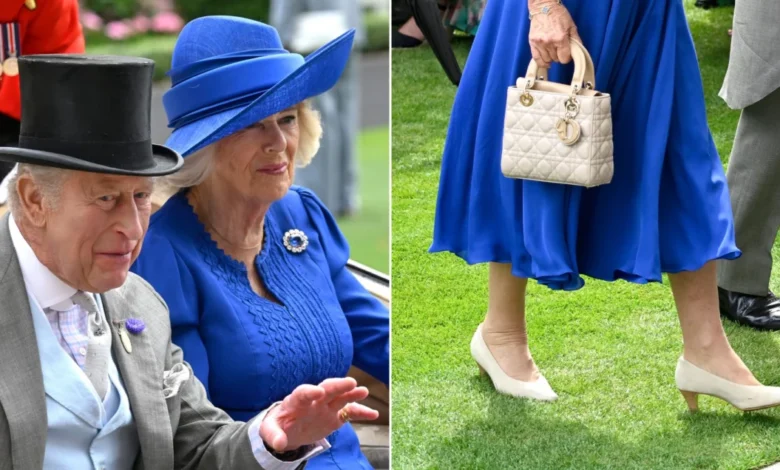
Queen Camilla concluded her appearance at the illustrious 2026 Royal Ascot on Saturday, marking the final day of the prestigious equestrian event with a distinct sartorial choice that underscored her enduring commitment to practical elegance. For the culminating festivities, Her Majesty notably transitioned from the iconic beige-and-black Chanel cap-toe pumps she had favored for the initial three days, opting instead for a return to the understated sophistication of Eliot Zed’s sand suede pumps. This subtle yet significant shift in footwear, observed over the meeting’s final two days, highlighted a consistent approach to royal dressing that prioritizes both comfort and classic style amidst the grand spectacle of Ascot Racecourse.
The 2026 Royal Ascot, a cornerstone of the British social and sporting calendar, commenced on Tuesday, June 16th, and ran through Saturday, June 20th. Throughout the week, the event served as its usual vibrant showcase of world-class horse racing, high society, and unparalleled fashion. The Royal Family, as custodians of this centuries-old tradition, maintained a prominent presence, with King Charles III and Queen Camilla leading the daily procession and attending various races and presentations. Their participation not only reaffirms the monarchy’s deep connection to British heritage but also places their attire under intense public and media scrutiny, particularly for its adherence to established royal protocols and evolving fashion trends.
Queen Camilla’s Final Day Ensemble: A Masterclass in Refined Practicality
On Day 5, the final day of the 2026 Royal Ascot, held at the historic Ascot Racecourse in Ascot, England, Queen Camilla’s choice of footwear was a pair of bespoke Eliot Zed sand suede pumps, identical to those she had worn on Day 4. These shoes exemplified a refined aesthetic meticulously tailored for both elegance and endurance, a crucial consideration for a royal engagement demanding hours of standing and public interaction.
The design of these particular pumps featured a classic closed toe, gracefully low-cut sides, and a streamlined almond-shaped front that tapered to a subtly squared finish. This careful balance of soft curves and precise lines offered a modern yet timeless appeal. A meticulous stitched seam ran down the center of the toe box, a detail that speaks to the bespoke craftsmanship inherent in Eliot Zed’s creations.

A standout feature of these pumps was the bespoke "Honey" heel color. This warm, wood-toned heel provided a practical yet understated lift, ensuring maximum comfort for Her Majesty throughout the day’s demanding schedule. The choice of this specific hue contributed to the overall warmth and sophistication of the shoe, avoiding any stark contrasts. Further enhancing the shoe’s elegant profile was a narrow brown outsole edge, which added a darker, grounding line beneath the otherwise pale sand suede, completing a harmonious and thoughtful design. This attention to detail underscores Queen Camilla’s discernible preference for custom-made pieces that seamlessly integrate with her wardrobe and meet the practical demands of her royal duties.
Her Majesty’s footwear was perfectly complemented by her main ensemble: a striking cobalt Fiona Clare couture dress. This mid-length gown showcased three-quarter sleeves, a gently flared skirt that offered both movement and grace, and dense tonal trim that meticulously framed the V-neckline before descending in elegant vertical bands along the bodice. The vibrant blue hue was a bold yet regal selection, perfectly suited for the celebratory atmosphere of Ascot. Topping off this stunning dress was a wide-brim Philip Treacy hat, also in a saturated blue, adorned with sweeping bands of fabric that created a dramatic yet sophisticated silhouette. Philip Treacy, celebrated for his innovative millinery, is a favored designer among the British Royal Family, and this particular piece provided a regal flourish to Camilla’s carefully curated look.
To complete her meticulously planned attire, Queen Camilla carried a Small Lady Dior handbag. This iconic accessory, presented in a two-tone Biscuit and Trench Beige Cannage lambskin, subtly picked up the softer palette of her Eliot Zed pumps, creating a cohesive visual link between her accessories and footwear. Her jewelry choices further elevated the outfit’s grandeur: elegant Van Cleef & Arpels bracelets featuring both agate and carnelian, and, most notably, Queen Victoria’s sapphire-and-diamond wedding brooch. This historic piece, prominently pinned near her left shoulder, added a layer of profound historical significance and dazzling sparkle to her majestic appearance.
The Week’s Footwear Narrative: A Chronology of Deliberate Choices
Queen Camilla’s footwear narrative at the 2026 Royal Ascot was meticulously planned, defined by a deliberate and functional approach that revolved around just two distinct pairs of shoes over the five-day event. This limited rotation, while seemingly straightforward, reflects a sophisticated understanding of practicality and personal style essential for such a demanding public role.
For the initial three days of the meeting—Tuesday, June 16th, through Thursday, June 18th—Her Majesty consistently wore the same beige-and-black Chanel cap-toe pumps. These iconic shoes are a hallmark of timeless French luxury, renowned for their elegant design and inherent comfort. Typically featuring a low block heel, a closed toe, and a neutral suede or leather body elegantly contrasted by a sharp black cap toe, these pumps offer both versatility and a touch of classic chic. Their consistent presence for the majority of the event underscored their reliability and comfort, crucial attributes for the extensive standing, walking, and socializing required of a senior royal at Ascot. The sharp black contrast of the cap toe provides a distinct visual element, a signature of the Chanel aesthetic that adds a graphic edge to her ensembles.

The sartorial shift occurred on Friday, June 19th (Day 4), and continued through Saturday, June 20th (Day 5), when Queen Camilla transitioned to the Eliot Zed sand suede pumps. This change, while subtle in its overall aesthetic of a low heel and neutral suede, marked a departure from the strong visual contrast characteristic of the Chanel pair. The Eliot Zed pumps, with their uniform sand suede and bespoke Honey-colored heel, presented a softer, more monochromatic look. This choice suggests a preference for a cleaner line and perhaps a slightly more bespoke, understated feel for the latter half of the event. Crucially, the consistency in the practical proportions—a modest heel, a closed toe, and an emphasis on comfortable design—remained paramount across both designers, reinforcing a foundational principle of her formal wardrobe that balances royal decorum with personal well-being.
Royal Ascot: A Rich Tapestry of History, Sport, and Fashion
Royal Ascot is far more than just a horse race; it is a quintessential British institution, deeply steeped in history and tradition. Founded by Queen Anne in 1711, it has evolved over centuries into one of the most prestigious race meetings in the world, attracting thousands of spectators, including members of the Royal Family, who famously arrive daily in a horse-drawn procession from Windsor Castle. The event is celebrated globally not only for its exceptional flat racing, featuring several Group 1 races that draw the finest thoroughbreds and jockeys from across the globe, but also for its unparalleled social cachet and fashion spectacle.
Beyond the sporting prowess, Royal Ascot is equally renowned for its strict and elaborate dress code, particularly within the exclusive Royal Enclosure. This code dictates meticulous standards for attire, from the length of skirts and dresses to the size and placement of hats, and, crucially, appropriate footwear. For women, open-toed shoes, strapless dresses, and fascinators (rather than hats) are generally forbidden in the most formal areas, reflecting a commitment to traditional elegance. This stringent emphasis on elegant, appropriate attire inherently influences Queen Camilla’s consistent choice of closed-toe pumps with modest heels. Such footwear not only adheres to the decorum and formality of the event but also offers significant practical advantages for navigating the extensive grounds and standing for prolonged periods during royal duties. The fashion at Ascot is a spectacle in itself, with attendees often planning their outfits months in advance, making royal sartorial choices a significant point of interest and a benchmark for formal British style.
Queen Camilla’s Evolving Style Philosophy: Understated Authority and Pragmatism
Queen Camilla’s consistent approach to footwear at Royal Ascot 2026, and indeed in her broader public appearances, reflects a well-defined personal style philosophy: one of understated authority, enduring comfort, and timeless elegance. Since her accession as Queen Consort, and subsequently as Queen, her fashion choices have been increasingly scrutinized, yet she has consistently opted for classic silhouettes, quality fabrics, and eminently practical designs.

Her discernible preference for low heels and closed-toe pumps is a hallmark of her style. Unlike some other royal figures who might occasionally experiment with higher heels or more contemporary footwear trends, Queen Camilla consistently prioritizes comfort and stability, acknowledging the considerable physical demands of her role. Her engagements often involve long periods of standing, walking on varied and sometimes uneven surfaces, and extensive interaction with the public, for which impractical footwear would be a significant hindrance. This unwavering focus on function does not, however, come at the expense of style. By judiciously choosing designers like Chanel and Eliot Zed, she ensures that her practical choices are simultaneously luxurious, impeccably crafted, and quintessentially elegant.
The consistent use of neutral tones, particularly sand, beige, and taupe, in her footwear further underscores this pragmatic philosophy. These colors are inherently versatile, allowing her shoes to complement a wide spectrum of outfits without clashing, and they collectively project an image of calm sophistication and reliability. Her style is less about making overt fashion statements and more about projecting a consistent, dignified, and approachable image, while subtly supporting British craftsmanship through bespoke pieces. This approach suggests an understanding that her role is to embody stability and tradition, which her sartorial choices effortlessly convey.
A Pattern of Practicality: Echoes from Royal Ascot 2025
The pattern observed in 2026 at Royal Ascot was not an isolated incident but rather a clear continuation of Queen Camilla’s established sartorial habits. A similar designer switch was notably documented at Royal Ascot in 2025, providing a clear precedent for her strategic and practical footwear choices at this high-profile event. In 2025, Her Majesty initially wore Chanel shoes on the opening day before making a conscious transition to taupe Eliot Zed pumps on Day 2.
The 2025 Eliot Zed pair, while sharing the brand’s foundational commitment to quality and comfort, presented a slightly different aesthetic from the 2026 version. Those earlier pumps featured glossy tonal cap toes, a softly rounded front, and a sculpted kitten heel. This design demonstrated a slightly more decorative element compared to the cleaner, more elongated, and subtly squared front of the 2026 sand suede pumps. Despite these minor design variations, the core principles underpinning her choice remained identical: a return to suede, a modest heel height, and minimal color contrast. Both instances exemplify her preference for bespoke British craftsmanship and her astute understanding of what constitutes appropriate and comfortable royal attire for an event as demanding as Ascot. This consistent decision to swap brands mid-event suggests a deliberate strategy, possibly to vary levels of comfort, introduce stylistic versatility, or perhaps to showcase different British designers within her preferred functional framework.
Broader Impact and Implications of Royal Fashion at Ascot

The fashion choices made by members of the Royal Family at events like Royal Ascot carry significant weight, extending far beyond mere personal preference. They serve as powerful, albeit subtle, endorsements for designers, influence broader fashion trends, and significantly contribute to the public perception of the monarchy. Queen Camilla’s consistent reliance on British designers like Fiona Clare for her main ensembles and Philip Treacy for her millinery, coupled with her support for bespoke shoemaker Eliot Zed, sends a clear and positive message about her dedication to promoting national talent and craftsmanship. Her judicious inclusion of globally recognized luxury brands like Chanel and Dior balances this with an acknowledgment of international haute couture, demonstrating a blend of tradition and modern elegance.
Her pragmatic approach to footwear, consistently favoring comfort and tradition over fleeting trends, projects an image of reliability, authenticity, and down-to-earth sensibility. This resonates positively with a public that often appreciates genuineness and practicality in their public figures. In an era where royal fashion is meticulously dissected across global media platforms, Queen Camilla’s choices contribute to a narrative of stability and quiet luxury, perfectly fitting for a modern monarch. Her consistent style provides a sense of continuity and tradition, which is a valuable asset for the monarchy in maintaining its relevance and broad appeal in contemporary society.
The Sporting Spectacle: Beyond the Sartorial Splendor
While royal fashion undeniably captures significant headlines, the core of Royal Ascot remains its world-class horse racing. The final day, Saturday, June 20, 2026, culminated with the highly anticipated presentation of the Queen Elizabeth II Jubilee Stakes. This Group 1 sprint race, a highlight of the day’s card, saw a thrilling and closely contested battle. Almeraq, ridden by the talented jockey Tom Marquand, emerged victorious in a nail-biting finish, narrowly defeating Japan’s formidable contender Satono Reve by a nose. The intensity of the race and the incredibly close outcome added an extra layer of excitement and drama to the final day’s proceedings, captivating racegoers and global audiences alike.
The individual accolades for the meeting were also announced, celebrating the outstanding performances of jockeys and trainers throughout the week. Ryan Moore solidified his status as a leading jockey, concluding the five-day meeting with an impressive seven wins, a testament to his exceptional skill, strategic prowess, and consistency in the saddle. Meanwhile, Aidan O’Brien, widely regarded as one of the most successful trainers in horse racing history, claimed the coveted leading trainer title for an astounding 14th time, further cementing his unparalleled legacy at Royal Ascot. These significant sporting achievements, recognized by King Charles III and Queen Camilla during the presentations, underscore the dual nature of Royal Ascot as both a prestigious social event and a top-tier international horse racing festival, where athletic excellence is celebrated alongside sartorial elegance.
In essence, Queen Camilla’s presence and her thoughtful sartorial choices at the 2026 Royal Ascot were a microcosm of her broader role as Queen. Her strategic transition from the globally recognized luxury of Chanel to the bespoke British craftsmanship of Eliot Zed, all while maintaining a foundational commitment to comfort and classic style, speaks to a careful and deliberate balancing act. It is a powerful demonstration of supporting both established heritage and national talent, all wrapped in an elegant and dignified package that perfectly suits the demands of royal life and the grandeur of one of Britain’s most cherished annual events. Her choices reinforce the understanding that royal fashion, while observed for its glamour and aesthetic appeal, is ultimately a potent tool for representation, upholding tradition, and subtly communicating the values of the monarchy.