Lowe’s Deepens Omnichannel Strategy with Marketplace Integration into My Red Vest, Enhancing In-Store Customer Experience and Expanding Assortment

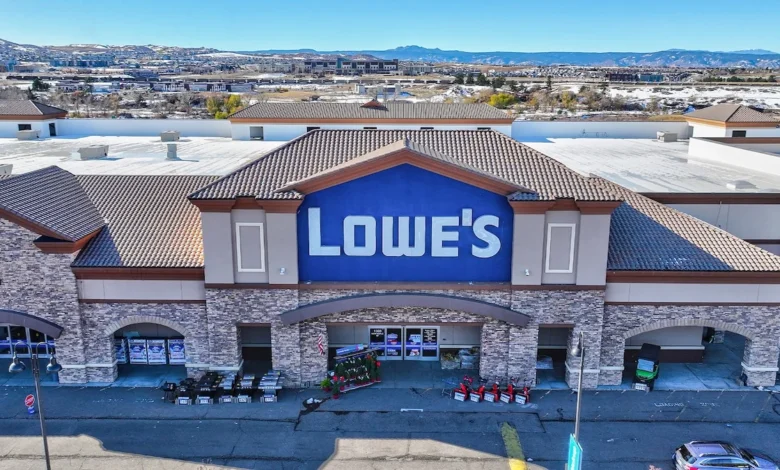
Lowe’s, one of the nation’s leading home improvement retailers, has announced a significant advancement in its omnichannel strategy, integrating its third-party marketplace directly into "My Red Vest," the proprietary software utilized by store associates to assist customers with orders. This strategic enhancement, unveiled at the company’s second annual seller summit held recently in Chicago, empowers Lowe’s associates to seamlessly search for and facilitate purchases of marketplace products alongside the company’s own inventory, with orders conveniently shipped directly to customers’ homes. This move is poised to redefine the in-store shopping experience, offering an unprecedented breadth of product selection and frictionless service.
Strategic Imperative: Weaving the Marketplace into the Core Business
The rollout of this integration marks a pivotal moment in Lowe’s broader effort to deeply embed its rapidly expanding marketplace into various facets of its operational framework. Since its inception in late 2023, Lowe’s third-party marketplace has been a cornerstone of the retailer’s digital transformation, designed to significantly broaden its product assortment and enhance its competitive stance against e-commerce behemoths like Amazon.com and a proliferating landscape of retailers, including Walmart, Target, and Best Buy, that have successfully launched and scaled their own online marketplaces. This latest development extends the reach of this digital strategy directly into the physical stores, bridging the gap between online and offline commerce.
During its most recent earnings call in May, Lowe’s reported a robust 15.5% increase in online sales for the first quarter, a testament to its ongoing investments in digital experience enhancements and fulfillment capabilities. The marketplace has been explicitly identified as a key contributor to this impressive digital growth. This trajectory underscores the critical role that a well-executed omnichannel approach plays in modern retail, where customer expectations for convenience, choice, and integrated experiences are continually rising.
Michael McCluskey, Lowe’s Vice President of Marketplace, emphasized the transformative potential of this integration. "This allows our sellers and the rapidly growing assortment that we have in the marketplace to be directly in the hands of our associates to help customers transact an item in-store and have it shipped directly to their home," McCluskey stated. His comments highlight the dual benefit of the system: empowering associates with comprehensive product knowledge and offering customers unparalleled access to a diverse product range without leaving the store.
A Seamless Customer Journey: Eliminating the 1P/3P Divide
A core objective behind the design of this new functionality was to create a seamless, unified shopping experience for customers, intentionally blurring the lines between products stocked directly by Lowe’s (1P) and those offered by third-party sellers (3P). McCluskey elaborated on this philosophy, noting, "[Customers] almost largely wouldn’t even really know the difference between a stock or drop-ship item and a marketplace item. We really tried to keep that experience frictionless, because what we know is customers don’t see it in terms of 1P or 3P. They’re just looking for the right solution for whatever project or problem that they have."
This customer-centric approach reflects a deep understanding of consumer behavior, prioritizing problem-solving and convenience over the intricacies of supply chain logistics. By presenting a consolidated product view, Lowe’s aims to simplify the purchasing decision, allowing customers to focus on finding the best fit for their home improvement projects or decorative needs, irrespective of the product’s origin. This unified experience is critical for maintaining brand trust and loyalty in an increasingly complex retail environment.
Early Success and Expanded Assortment
Despite being live for only a few weeks, the new integration is already "exceeding the expectations that we had of what we could do with store-driven sales," according to McCluskey. Early traction is particularly evident in product categories that, due to their size, seasonality, or specialized nature, are challenging to stock in every physical store. Above-ground pools serve as a prime example. McCluskey noted, "That’s a category that’s hard for us to carry in the footprint of our stores. We’ve been able to launch thousands of items in this category on Lowes.com via marketplace, and that’s been taking off, not only directly on Lowes.com, but we’re even seeing store-driven sales through My Red Vest in that category." This demonstrates the immediate value proposition of the marketplace: transforming physical limitations into virtual opportunities for sales and customer satisfaction.
Beyond space constraints, the marketplace integration enables Lowe’s to venture into product categories that fall outside its traditional core assortment, responding to emerging trends and niche demands. Decorative geese, a product that has recently surged in popularity across social media platforms, exemplify this flexibility. While not a staple of Lowe’s in-store inventory, these items are available through marketplace sellers, allowing associates to fulfill customer requests for such trending products. This agility in assortment expansion is a significant competitive advantage, enabling Lowe’s to capture new market segments and cater to evolving consumer tastes without incurring the overhead of traditional merchandising.
Empowering the Pro Customer: A Strategic Priority
The integration holds particular promise for Lowe’s professional customers, such as contractors, builders, and tradespeople, who frequently require products in larger quantities or specialized varieties that may not be readily available in standard store inventory. McCluskey reported observing larger marketplace orders originating from professional customers, specifically citing products like air conditioners and various building materials essential for significant projects.
This focus on the Pro segment aligns perfectly with Lowe’s overarching strategic priorities. The company has been aggressively investing in and cultivating its relationship with professional customers, recognizing their significant purchasing power and repeat business. During a recent fireside chat at the Oppenheimer Consumer Growth and E-Commerce Conference, Lowe’s CEO Marvin Ellison highlighted the remarkable growth in this segment, stating that the company’s Pro penetration was "approaching 40%," a substantial increase from just 18% in 2018. This demonstrates a clear, sustained commitment to serving this lucrative customer base, and the marketplace integration provides yet another powerful tool in that effort, offering Pros an expanded, convenient source for their project needs. The ability to order specialized or bulk items directly from the store, delivered to their job site, significantly enhances convenience and efficiency for these critical customers.
Expanding Reach for Sellers and Maintaining Quality Standards
For the numerous third-party marketplace sellers, this integration represents a monumental expansion of their potential customer base. Their products are now effectively exposed to customers visiting over 1,700 Lowe’s locations across the country. McCluskey confirmed that the feature has already been rolled out to approximately 97% of stores and is slated for chain-wide availability within weeks, dramatically increasing the visibility and sales opportunities for these partners.
While declining to disclose the exact number of marketplace sellers or products currently active, McCluskey revealed that Lowe’s has "more than doubled" its marketplace assortment over the past year, adding "tens of thousands of new items every single week." This aggressive expansion speaks to the strategic importance of the marketplace as a growth engine. Crucially, Lowe’s maintains an invite-only model for its marketplace, a deliberate strategy to uphold quality and trust. "We’ve spent decades as a company building trust with customers," McCluskey affirmed. "We set a high bar for the types of sellers that we work with." This curated approach is vital for ensuring that the expanded assortment maintains the high standards of quality and service that customers expect from the Lowe’s brand.
Competitive Landscape and Industry Trends
Lowe’s is not alone in its pursuit of better integrating online marketplaces with physical store operations. The broader retail industry is witnessing a concerted push towards omnichannel convergence, recognizing that customers no longer differentiate sharply between digital and physical touchpoints. Last year, retail giant Walmart, for instance, began experimenting with QR codes placed next to select products in a Texas store. This initiative allowed shoppers to scan codes via the Walmart app to browse additional marketplace items and place orders, showcasing an alternative approach to connecting in-store shoppers with an expanded online assortment. While the methods may vary, the underlying goal for major retailers remains consistent: leverage the strengths of both online and offline channels to create a more comprehensive and convenient shopping ecosystem.
Industry analysts widely agree that a robust omnichannel strategy is no longer a luxury but a necessity for retailers aiming to thrive in today’s competitive landscape. According to recent reports from firms like eMarketer and Forrester, retailers with strong omnichannel capabilities typically see higher customer retention rates and increased average order values. The ability to research online and buy in-store (ROPO), or buy online and pick up in-store (BOPIS), alongside the reverse — browsing in-store and buying online — are all critical components of this strategy. Lowe’s integration of its marketplace into My Red Vest directly addresses the latter, transforming its physical stores into discovery hubs for an even wider digital catalog.
Data-Driven Merchandising: Informing Future Decisions
Beyond immediate sales, the marketplace serves as an invaluable data feedback loop for Lowe’s, influencing future merchandising decisions. McCluskey highlighted that insights gleaned from online marketplace sales can help identify products with high demand that might warrant dedicated shelf space in physical stores. EV chargers, for example, have gained significant traction through the marketplace despite having a relatively small in-store presence today. This demonstrates how the marketplace can act as an incubator for new product categories, allowing Lowe’s to test market demand with minimal risk before committing to substantial in-store inventory.
Furthermore, Lowe’s is leveraging its marketplace relationships to gauge consumer interest in specific brands or product lines. A notable example is its partnership with Stanley Black & Decker, using the marketplace to assess demand for products from the Black & Decker brand, which Lowe’s does not currently stock in its stores. This strategic use of marketplace data enables a more agile and responsive merchandising strategy. "We could see this as a feeder into: ‘Hey, marketplace seller, this has done really well for us, we’d like to work with you as well on a wholesale basis, and bring some of your items directly to store,’" McCluskey explained, indicating an openness to transitioning successful marketplace items into direct wholesale partnerships and physical store placement. "We’re absolutely open to evaluating those opportunities." This illustrates a sophisticated approach to retail, where digital performance directly informs and optimizes physical store strategy.
The Future is Integrated: Marketplace as a Core Digital Pillar
The integration into My Red Vest is a powerful affirmation that the marketplace is far from a peripheral initiative for Lowe’s. As McCluskey unequivocally stated, "This is not a side project at Lowe’s. This has become increasingly core to our digital strategy." This declaration underscores the fundamental shift in Lowe’s operational and strategic outlook, positioning the marketplace as a central pillar of its digital future.
In an era where customer convenience and expansive choice are paramount, Lowe’s strategic decision to embed its marketplace within its in-store associate tools represents a forward-thinking approach to retail. It empowers store teams, delights customers with an expanded product universe, and leverages data to inform future growth. By seamlessly connecting the digital and physical realms, Lowe’s is not merely adapting to the evolving retail landscape but actively shaping a more integrated, efficient, and customer-centric shopping experience for the home improvement market. This move solidifies Lowe’s position as a leader in omnichannel innovation, poised for continued growth in both its online and in-store channels.